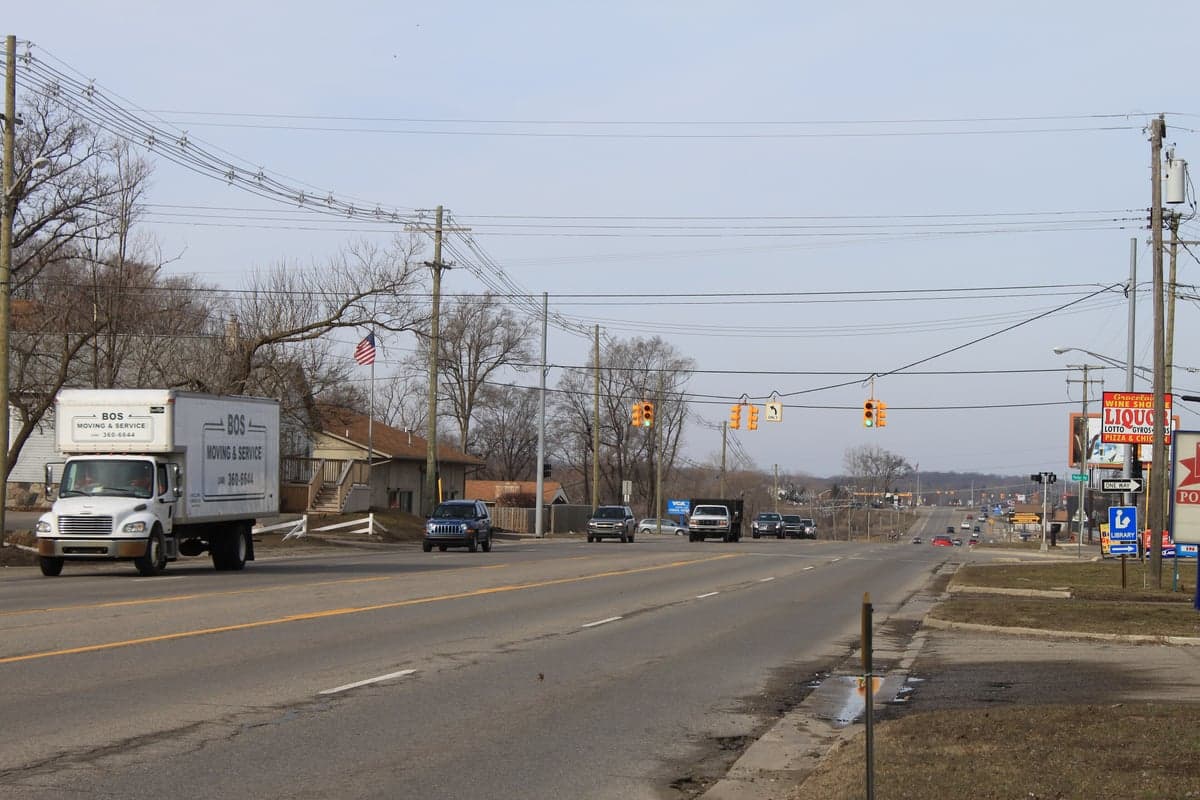
Photo: Wikipedia
Demographics of White Lake, MI
Affluence Level in White Lake, MI
A middle-class area roughly in line with national averages across income, home values, education, and employment.
People of White Lake, MI
White Lake, Michigan, is a small, predominantly white city of 3,236 residents where a strong sense of local identity is rooted in its historic lakeside character and working-class heritage. The population is notably less diverse than the surrounding Oakland County average, with 88.0% of residents identifying as white alone, and a foreign-born population of just 1.4%. This is a community where long-time families and newer arrivals share a quiet, family-oriented lifestyle centered on the area’s four lakes, and where demographic change has been gradual rather than transformative.
How the city was settled and grew
White Lake’s human history begins with the Ojibwe people, who used the area’s chain of lakes for fishing and travel before European-American settlement. The first permanent white settlers arrived in the 1830s, drawn by the promise of fertile farmland and abundant timber. The construction of the Grand Trunk Railroad through the area in the 1850s spurred a small but steady influx of farmers, mill workers, and tradesmen, many of German and Irish descent. These early families built homes in what is now the White Lake Village historic district, a cluster of 19th-century houses and commercial buildings near the intersection of M-59 and Bogie Lake Road. By the early 20th century, the area became a modest summer resort destination for Detroiters, with cottages springing up around Oxbow Lake and White Lake itself. The city was officially incorporated in 1945, consolidating several unincorporated hamlets. The post-World War II era brought a wave of returning veterans and their families, many of whom built modest ranch homes in the Lakeside Estates neighborhood, drawn by affordable lakefront lots and proximity to the booming auto industry in Pontiac and Flint.
Modern era (post-1965)
The post-1965 period saw White Lake evolve from a seasonal resort into a year-round bedroom community. The 1970s and 1980s brought a second wave of domestic in-migration, primarily white families from Detroit and inner-ring suburbs seeking larger lots, lower taxes, and a small-town feel. This growth concentrated in subdivisions like Woodland Shores and Bogie Lake Estates, where new single-family homes were built on former farmland. Unlike many nearby communities, White Lake did not experience significant immigration from the Hart-Cellar Act’s reforms; its foreign-born population remains at just 1.4%, far below the national average. The city’s Black population, now 5.2%, has grown slowly and steadily since the 1990s, with families settling primarily in the White Lake Hills area, a newer subdivision near the city’s western edge. The Hispanic population, at 4.4%, has also increased modestly, largely through domestic migration from other parts of Michigan rather than direct immigration. East and Southeast Asian residents make up 0.4% of the population, and there is no recorded population from the Indian subcontinent. The city’s college-educated share, at 23.1%, is below the Oakland County average of roughly 50%, reflecting a workforce historically tied to skilled trades, manufacturing, and service industries.
The future
White Lake’s population is projected to remain stable or grow very slowly over the next 10–20 years, constrained by limited developable land and a housing stock dominated by single-family homes. The city is becoming slightly more diverse, but at a pace far slower than the broader Detroit metro area. The Hispanic and Black shares are expected to continue their gradual increases, likely reaching 6–7% and 7–8% respectively by 2040, driven by domestic migration from more expensive Oakland County suburbs. The white share will likely decline to the low 80% range, but the city will remain overwhelmingly white and non-Hispanic. New development is concentrated in the White Lake Crossing area near M-59, where a few small townhome and apartment projects have been approved, potentially attracting younger families and some empty-nesters. The city’s cultural identity is likely to remain rooted in its lakeside recreation, low-key pace, and conservative-leaning politics, with little pressure for rapid change. For a family or individual moving in now, White Lake offers a stable, predictable community where neighbors know each other and the biggest changes are likely to be a new coffee shop or a repaved road, not a demographic revolution.
White Lake is becoming a slightly more diverse, steadily middle-class suburb that retains its historic character while slowly absorbing modest demographic shifts. For someone moving in now, the city offers a quiet, family-oriented environment with strong community ties, a low crime rate, and a pace of life that resists the rapid changes seen in larger metro areas. It is a place where the population is stable, the schools are solid, and the future looks much like the present — a deliberate choice for those seeking continuity over transformation.

* Values derived from national, state, county, city and local statistics and may differ in a specific area. Last updated: 2026-08-17T21:31:50.000Z
Narrative content on this page is AI-generated and may contain mistakes. Verify any details that matter before acting on them.
ReloMaps may earn a commission from affiliate links at no extra cost to you.

