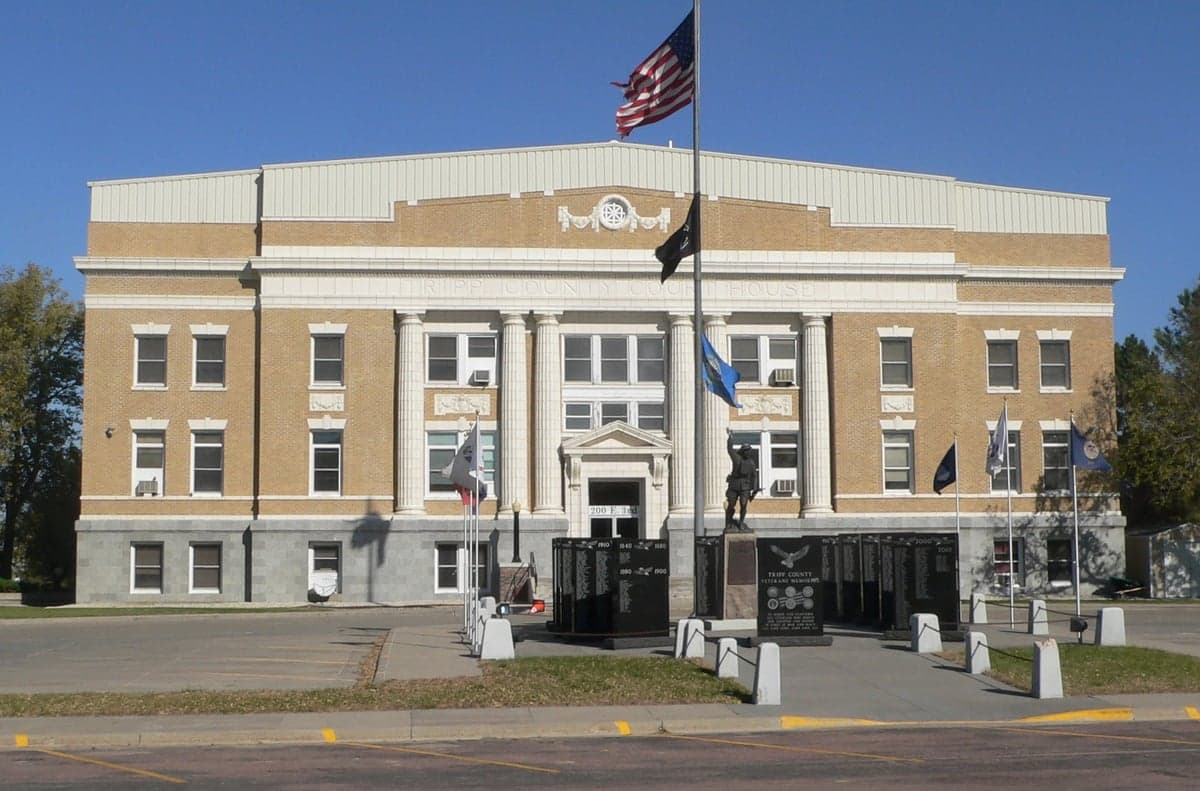
Photo: Wikipedia
Political ClimatePolitical Climate in Winner, SD
District shown is the primary district for this city’s centroid. Cities may span multiple districts.
Inherited from parent state — no local data available.
Local Political AnalysisPolitical Analysis of Winner, SD
Winner, South Dakota, is about as reliably conservative as it gets, with a Cook PVI of R+15 that tells you the area leans hard Republican in just about every election. Locals here have voted for the GOP presidential candidate by comfortable margins for decades, and that trend shows no sign of slowing down. The political climate is rooted in a deep respect for personal responsibility, limited government, and a way of life that doesn't take kindly to outside interference. You won't find much appetite for progressive experiments here—folks tend to see those as a threat to the freedoms they've always enjoyed.
How it compares
Compared to the rest of South Dakota, Winner sits in a conservative stronghold that's even redder than the state average. While places like Sioux Falls or Rapid City have seen some drift toward more moderate or even left-leaning politics—especially among younger transplants—Winner and the surrounding Tripp County have stayed firmly grounded. Drive an hour east to Gregory or north to Murdo, and you'll find a similar mindset, but head west toward the Pine Ridge Reservation, and the political landscape shifts dramatically, with a much stronger Democratic presence. That contrast is a reminder that Winner's brand of conservatism isn't just about party labels; it's about a lived experience where government overreach is seen as a real danger, not a theoretical talking point.
What this means for residents
For people living here, the political climate translates into a daily life that's largely free from the kind of heavy-handed regulations you see in more progressive areas. Property taxes are low, gun rights are respected without endless red tape, and local schools still teach traditional values without the pressure to adopt controversial curricula. The downside is that as the state as a whole inches toward more progressive policies—like expanded Medicaid or renewable energy mandates—Winner residents often feel like they're fighting a rear-guard action to protect their way of life. There's a growing concern that state-level decisions made in Pierre don't always reflect the values of rural communities like this one, and that disconnect is fueling a quiet but determined push for more local control.
One cultural distinction that sets Winner apart is its strong sense of self-reliance. You won't see many people here looking to the government for solutions to personal problems. Instead, neighbors help neighbors, churches and community groups step up, and there's a general expectation that you handle your own business. That ethos extends to politics: candidates who talk about expanding government programs or restricting personal freedoms—whether on healthcare, land use, or education—tend to get a cold reception. The long-term outlook is cautiously optimistic, but there's an undercurrent of worry that if the state or federal government keeps pushing progressive agendas, the character of this town could change in ways that aren't easily undone. For now, though, Winner remains a place where conservative values aren't just a voting pattern—they're the foundation of everyday life.

State Political ClimatePolitical Climate in South Dakota
State Political AnalysisPolitical Environment in the State
South Dakota is a deeply conservative state, with a Republican lean that has only strengthened over the past two decades. The state hasn’t voted for a Democratic presidential candidate since 1964, and in 2024, Donald Trump carried it by over 60 points. The dominant coalition is a mix of rural traditionalists, libertarian-leaning ranchers, and a growing number of conservative transplants fleeing blue states. The trajectory over the last 10-20 years has been a steady march rightward, with the state legislature passing some of the most aggressive pro-life, pro-gun, and tax-cutting laws in the nation. However, there are subtle shifts happening in a few pockets that are worth watching.
Urban vs. rural divide
The political map of South Dakota is stark: the vast, sparsely populated rural areas are deep red, while the two small metro areas—Sioux Falls and Rapid City—are more moderate but still reliably Republican. Sioux Falls, the largest city with about 200,000 people, is the economic engine and a bit of a purple-ish island. It’s home to a growing professional class, a few tech startups, and a sizable immigrant community (mostly from Ethiopia and Sudan), which has nudged it slightly left of the rest of the state. In 2024, Minnehaha County (Sioux Falls) voted for Trump by about 18 points, down from 22 points in 2020. Rapid City, in the west, is more conservative but has a libertarian streak—think less government, not just social conservatism. The rural counties, like Harding, Perkins, and Jones, routinely vote 85-90% Republican. The one notable exception is Brookings, home to South Dakota State University, which is a small blue dot in a sea of red, driven by faculty and younger voters. Vermillion, with the University of South Dakota, is similar but smaller. If you’re moving here, you’ll find the political culture is overwhelmingly conservative outside of those few college towns.
Policy environment
South Dakota’s policy environment is a conservative dream, with a few libertarian quirks. There is no state income tax, and the state sales tax is 4.5%, though local options can push it to 6.5% in places like Sioux Falls. Property taxes are moderate, but there’s no tax on Social Security or most retirement income, which is a huge draw for retirees. The regulatory posture is famously light—permitting for a new business can take weeks, not months. On education, the state has leaned hard into school choice, with a robust voucher-like program (the “Education Savings Account” program, expanded in 2024) that lets parents use state funds for private or homeschool expenses. Healthcare is a mixed bag: the state did expand Medicaid under the 2022 ballot measure (voters approved it 56-44, overriding the legislature’s resistance), but abortion is now banned at all stages except to save the mother’s life, with no exceptions for rape or incest. Election laws are tight—voter ID is required, and there’s no same-day registration. The legislature also passed a law in 2023 banning ranked-choice voting, just in case. Overall, the state is a low-tax, low-regulation haven, but the social conservatism is real and codified.
Trajectory & freedom
South Dakota is becoming more free in many respects, but with some concerning caveats. On the positive side, Governor Kristi Noem signed a series of bills in 2023-2024 that expanded gun rights—constitutional carry (no permit needed) has been law since 2019, and a 2024 law preempts any local gun ordinances, so cities like Sioux Falls can’t pass their own restrictions. Parental rights were strengthened with a 2023 law requiring schools to get parental consent before any health or counseling services (the “Parents’ Bill of Rights”). Property rights got a boost with a 2024 law limiting eminent domain for carbon pipelines, which was a big win for landowners fighting the Summit Carbon Solutions project. On the downside, the state has seen some government overreach in the name of public health. During COVID, Noem famously refused lockdowns, but the legislature later passed a law (SB 90 in 2023) that bans vaccine mandates by private employers—a double-edged sword that some see as protecting freedom and others as government meddling in private contracts. Medical autonomy took a hit with the near-total abortion ban, which some libertarians argue is the ultimate government overreach into personal decisions. The trajectory is toward more conservative policy, but the tension between social conservatism and libertarianism is real and ongoing.
Civil unrest & political movements
South Dakota is not a hotbed of civil unrest, but there have been flashpoints. The most visible was the 2020-2021 protests at Mount Rushmore, where Native American activists and left-leaning groups clashed with Trump supporters over the monument’s meaning and the state’s refusal to remove it. The “Land Back” movement has some traction on the Pine Ridge and Rosebud reservations, but it’s mostly rhetorical. On the right, the “Freedom Rally” in Pierre in 2021 drew thousands protesting COVID mandates, and the group “South Dakota Freedom Fighters” remains active, pushing for nullification of federal gun laws and opposing any form of carbon pipeline. Immigration politics are relatively quiet—the state has a small but growing immigrant population, and the legislature passed a 2023 law requiring all employers to use E-Verify, which is popular with conservatives. There’s no sanctuary city movement; in fact, Sioux Falls has a “welcoming city” resolution but no legal protections. Election integrity controversies are minimal—the state uses paper ballots and hand-counts in small counties, and there’s no widespread distrust. The biggest recent flashpoint was the 2023 impeachment of Attorney General Jason Ravnsborg (a Republican) for a 2020 fatal car crash, which was more about ethics than politics. A new resident would notice the political climate is calm but vigilant—people are polite but ready to fight if they feel the feds or the state overstep.
Projection
Over the next 5-10 years, South Dakota will likely become even more conservative, but with a growing libertarian wing that could cause some internal GOP splits. The demographic shift is key: the state is growing slowly (about 1% per year), mostly from in-migration of conservatives from California, Colorado, and Minnesota. These newcomers are often more libertarian than traditional—they want no income tax and low regulation, but they’re less interested in social issues like abortion bans or book bans. This could lead to a rift between the “Pierre establishment” (the old guard) and the “Sioux Falls libertarians” (new arrivals). The Native American population is growing but remains politically marginalized, though their turnout could increase with more organizing. The biggest wildcard is the carbon pipeline fight—if the Summit Carbon Solutions project goes through, it could trigger a populist backlash that reshapes the GOP. Expect the state to remain deeply red, but with more internal debate over the balance of social conservatism and personal freedom. For someone moving in now, you’ll find a state that’s safe, prosperous, and politically stable, but don’t expect it to stay exactly the same—the libertarian influence is growing, and that could mean even less government in your life, or more fights over what “freedom” really means.
Bottom line for a new resident: South Dakota offers a high degree of personal freedom—low taxes, light regulation, strong gun rights, and a culture that values self-reliance. The trade-off is a deeply conservative social environment, especially outside of Sioux Falls and Brookings. If you’re a conservative or libertarian, you’ll feel at home. If you lean left, you’ll find the state’s policies frustrating, but the people are generally respectful. The key is to pick your location wisely: Sioux Falls for a more moderate, diverse vibe; Rapid City for a rugged, libertarian feel; or a small town like Madison or Yankton for traditional rural conservatism. Just know that the state is trending more conservative and more libertarian, and that’s a good thing for those who value freedom from government overreach.
* Values derived from national, state, county, city and local statistics and may differ in a specific area. Last updated: 2026-04-29T23:23:00.000Z
Narrative content on this page is AI-generated and may contain mistakes. Verify any details that matter before acting on them.
ReloMaps may earn a commission from affiliate links at no extra cost to you.

