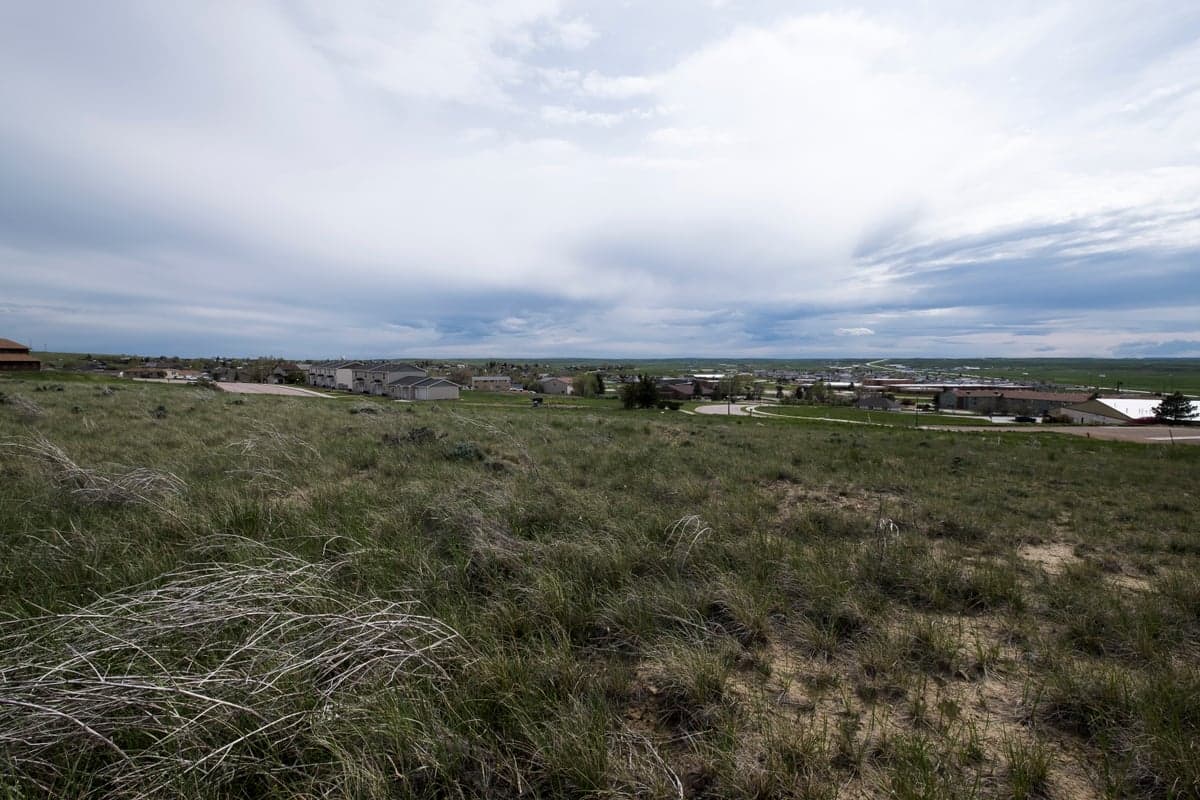
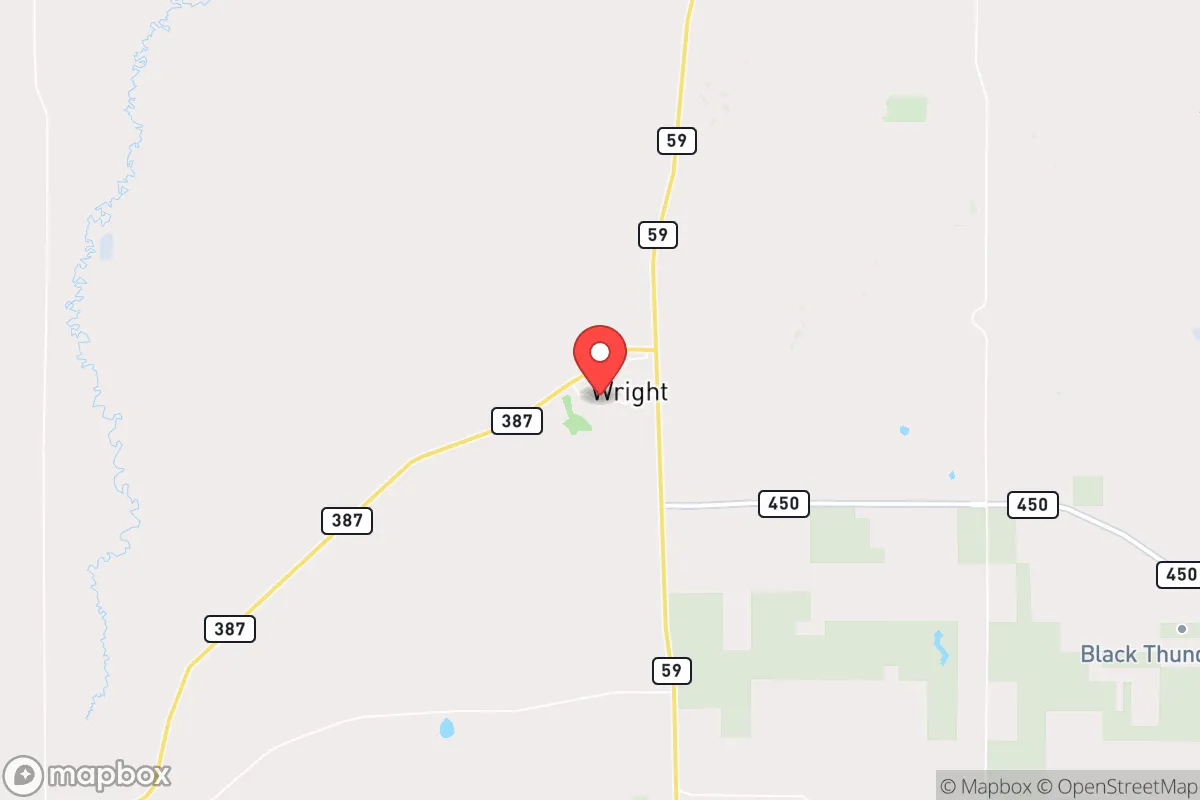
Photo: Wikipedia
Personal Sovereignty in Wright, WY
Viable for self-reliance. Generally workable, though some barriers may limit total independence.
What does Personal Sovereignty tell us?
Personal Sovereignty measures your capacity for self-reliance and independence with minimal government friction. Higher scores mean fewer barriers between you and the way you want to live... but it assumes you have the space you need and good neighbors.
What does this tell us?
Personal Sovereignty measures your capacity for self-reliance and independence with minimal government friction. Higher scores mean fewer barriers between you and the way you want to live... but it assumes you have the space you need and good neighbors.
State Policy
Energy independence: Net exporter (800% of energy produced in-state)
Personal Liberty
Homesteading

Personal Liberty Analysis
Wright, Wyoming, offers one of the strongest personal sovereignty environments in the lower 48, largely because it sits in a state that constitutionally limits government reach and a county (Campbell) that actively resists federal overreach. For the survivalist or prepper, this is not a place of theoretical freedom—it is a place where the legal and cultural framework lets you live by your own rules, provided you can handle the isolation and harsh winters. The town’s small population (under 2,000) and remote location mean fewer layers of bureaucracy, less surveillance, and a community that values self-reliance over state dependency. If your primary concern is preserving autonomy from federal mandates, state-level encroachments, or local zoning busybodies, Wright is a strong candidate.
Tax burden and regulatory posture: How Wyoming’s low-tax structure protects your resources
Wyoming’s tax philosophy is a direct asset to personal sovereignty. There is no state income tax, no corporate income tax, and no inventory tax, which means the state does not reach into your earnings or business holdings. For a prepper or homesteader, this translates into more capital retained for land, supplies, and infrastructure—not siphoned off by government. Property taxes in Campbell County are among the lowest in the nation, with effective rates around 0.6% of assessed value. A 40-acre parcel with a modest home might cost you under $1,500 annually in property tax. The regulatory posture is equally lean: Wyoming has no statewide building code for rural areas (counties may adopt limited codes, but Campbell County’s are minimal), no state-level gun registration, and no state-level vaccine mandates for adults. The state legislature has passed preemption laws that block local governments from enacting stricter gun ordinances or mask mandates, meaning Wright’s city council cannot unilaterally impose restrictions that would infringe on your choices. For someone concerned about creeping government control, this is a jurisdiction that actively pushes back.
Self-defense and gun law specifics: Constitutional carry and stand-your-ground in practice
Wyoming is a constitutional carry state—no permit required to carry a concealed firearm for anyone 21 or older legally allowed to possess a gun. Wright has no local ordinances that restrict open or concealed carry, and the town’s culture treats firearms as normal tools, not political symbols. The state also has a strong stand-your-ground law (Wyoming Statute § 6-2-602), which removes any duty to retreat before using deadly force if you are lawfully present and reasonably believe force is necessary to prevent death or great bodily harm. For the survivalist, this means your home, vehicle, and campsite are legally defensible without fear of prosecution for standing your ground. Additionally, Wyoming does not require registration of firearms, has no magazine capacity limits, and does not ban any class of weapons (including NFA items like suppressors and short-barreled rifles, though federal tax stamps still apply). The state also has a preemption statute that prohibits any city or county from passing gun laws stricter than state law, so Wright cannot suddenly ban carry in parks or impose waiting periods. If you value the right to arm yourself without bureaucratic hurdles, this is as close to a free zone as you will find in the contiguous U.S.
Self-reliance and homesteading viability: Lot sizes, zoning, and off-grid feasibility in Wright
Wright’s zoning code is deliberately minimal. Residential lots in town can be as small as a quarter-acre, but the real opportunity lies in the unincorporated areas of Campbell County surrounding the town, where you can purchase 5- to 40-acre parcels with no zoning restrictions on what you build or how you live. There are no county-level building permits for rural construction, no mandated inspections for off-grid systems, and no prohibition on alternative energy sources. Solar panels, wind turbines, and battery banks are common, and the county does not require grid connection. Water rights are a separate issue—you must file for a permit to drill a well (Wyoming State Engineer’s Office), but the process is straightforward and fees are low. Septic systems require a county permit and basic health department approval, but there is no requirement for municipal sewer hookup. For the prepper looking to establish a self-sufficient homestead—growing food, harvesting rainwater (allowed with a permit), raising livestock, and storing supplies—Wright’s regulatory environment is permissive. The town itself has a small grocery store and hardware store, but most serious homesteaders rely on trips to Gillette (40 miles north) for bulk supplies. Winters are long and cold (average January high around 30°F), so off-grid heating and winterized water systems are non-negotiable. The trade-off for freedom is the work required to maintain it.
Personal liberties: Parental rights, medical autonomy, speech, and property protections
Wyoming has some of the strongest parental rights protections in the country. State law (Wyoming Statute § 14-3-201) affirms that parents have the fundamental right to direct the upbringing, education, and medical care of their children, and the state has not adopted any universal vaccine mandates for school attendance—parents can claim a philosophical or religious exemption without a notarized form. During the COVID era, Wyoming was one of the few states that never issued a statewide mask mandate for schools, and the legislature has since passed laws prohibiting vaccine passports and limiting emergency powers of governors. Medical autonomy for adults is similarly robust: there is no state-level requirement for health insurance, no individual mandate, and no state-run vaccine database. The state also has a broad health freedom statute that allows individuals to purchase and use dietary supplements and herbal remedies without FDA-style interference at the state level. Speech protections are strong—Wyoming has no hate speech laws that criminalize political or religious expression, and the state constitution explicitly protects the right to keep and bear arms as part of free speech. Property rights are reinforced by Wyoming’s “right to farm” law, which shields agricultural operations from nuisance lawsuits, and by the state’s stance on eminent domain, which is limited to public projects and requires just compensation. For someone concerned about government overreach into family decisions, medical choices, or land use, Wright sits in a state that has consistently legislated to minimize that interference.
Compared to the rest of the country, Wright, Wyoming, ranks in the top tier for personal sovereignty. The combination of no income tax, constitutional carry, minimal zoning, strong parental rights, and a culture that distrusts centralized authority creates an environment where you can live largely unbothered by government. The trade-offs are real: extreme isolation, brutal winters, limited healthcare access (the nearest hospital is in Gillette, 40 miles away), and a small-town social fabric that may feel insular. But if your priority is maximizing autonomy—from tax collectors, gun laws, school mandates, and zoning boards—Wright offers a level of freedom that few other places in the United States can match. It is not a utopia; it is a place where the government stays out of your way, and you are expected to handle the rest yourself.

* Values derived from national, state, county, city and local statistics and may differ in a specific area. Last updated: 2026-04-21T11:30:04.000Z
Narrative content on this page is AI-generated and may contain mistakes. Verify any details that matter before acting on them.
ReloMaps may earn a commission from affiliate links at no extra cost to you.

