Photo: Wikipedia
Demographics of Wyoming, DE
Affluence Level in Wyoming, DE
A middle-class area roughly in line with national averages across income, home values, education, and employment.
People of Wyoming, DE
The people of Wyoming, Delaware, today form a small, racially diverse community of 1,789 residents, characterized by a dense, walkable town layout and a strong sense of local identity distinct from the larger Dover metro area. With a population that is 58.0% White, 23.2% Black, and 10.3% Hispanic, the city is notably more diverse than many of its Kent County neighbors, yet remains a tight-knit, family-oriented enclave. Its residents are relatively well-educated—36.2% hold a college degree—and the city’s low foreign-born share of just 0.9% indicates a population deeply rooted in multi-generational American life, with little recent international immigration reshaping its character.
How the city was settled and grew
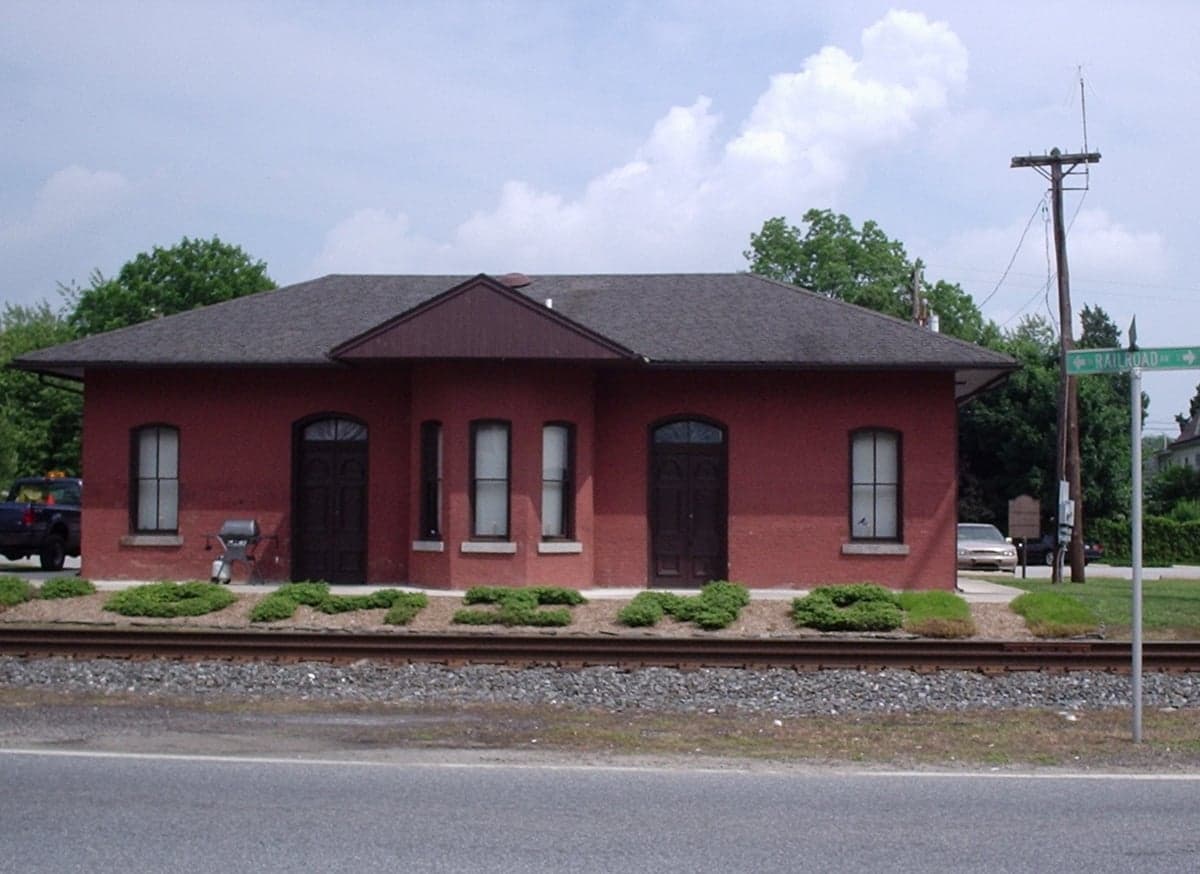
Wyoming was originally settled in the mid-19th century as a small agricultural crossroads, incorporated in 1869. The city’s early growth was driven by the arrival of the railroad and the establishment of local canneries and mills, which drew a mix of native-born white farmers and Black laborers from the surrounding rural areas of Kent County. The historic South Railroad Avenue corridor became the early commercial and residential spine, where the first wave of working-class families—both white and Black—built modest homes within walking distance of the rail depot. By the early 20th century, a small but stable Black community had formed in the area around Pleasant Hill, a neighborhood that remains a historic anchor for the city’s African American population. The original white population concentrated along Main Street and the northern blocks near the town hall, where larger single-family homes were built by merchants and cannery owners. No major immigrant waves arrived during this period; the city’s growth was almost entirely domestic, fueled by natural increase and migration from nearby farms.
Modern era (post-1965)
After the 1965 Hart-Cellar Act, Wyoming saw virtually no new international immigration—its foreign-born share remains below 1%—but experienced significant domestic demographic shifts. The most notable change was the steady growth of the Black population, which rose to 23.2% by the 2020s, as African American families moved from rural Kent County and the city of Dover into established neighborhoods like Pleasant Hill and newer subdivisions along Southwest 5th Street. This in-migration was part of a broader suburbanization pattern, as Black families sought affordable homeownership in a small-town setting with good schools. The Hispanic share, now 10.3%, began to grow in the 1990s and 2000s, driven primarily by Puerto Rican and Mexican-origin families moving from the Mid-Atlantic region for construction and service jobs. These households concentrated in the East Wyoming area, near the intersection of Delaware Avenue and South Street, where rental duplexes and older starter homes offered entry points. The white population, while still the largest single group at 58.0%, has aged in place in the historic North Wyoming district, with younger white families often choosing newer subdivisions outside city limits. The East/Southeast Asian community, at 2.0%, is a small but stable presence, with families living scattered across the city rather than in a distinct ethnic enclave.
The future
Wyoming’s population is likely to continue its gradual diversification, but without the rapid change seen in larger Delaware cities. The Black and Hispanic shares are expected to grow modestly as affordable housing in the Pleasant Hill and East Wyoming neighborhoods attracts more families from the Dover area, while the white population may decline slightly as older residents age out and younger white households move to newer developments in nearby Camden or Felton. The city is not tribalizing into sharply divided enclaves; rather, it is slowly homogenizing into a lower-middle-class, family-oriented community where racial lines are blurring in schools and civic life. The foreign-born share will likely remain below 2%, as Wyoming lacks the rental stock and job base to attract significant international migration. The next decade will probably see the city become more Hispanic and Black, less white, and slightly younger, with the college-educated share holding steady as remote workers discover its low property taxes and small-town pace.
For someone moving in now, Wyoming offers a stable, affordable, and increasingly diverse small town where the population is rooted in multi-generational American life rather than new immigration. The city is becoming more working-class and family-focused, with a growing Hispanic presence adding cultural texture, but it remains a place where most residents share a common language and civic habits. It is not a boomtown or a gentrifying enclave—it is a steady, unpretentious community where the demographic story is one of gradual domestic diversification, not rapid transformation.

* Values derived from national, state, county, city and local statistics and may differ in a specific area. Last updated: 2026-04-23T03:40:00.000Z
Narrative content on this page is AI-generated and may contain mistakes. Verify any details that matter before acting on them.
ReloMaps may earn a commission from affiliate links at no extra cost to you.

