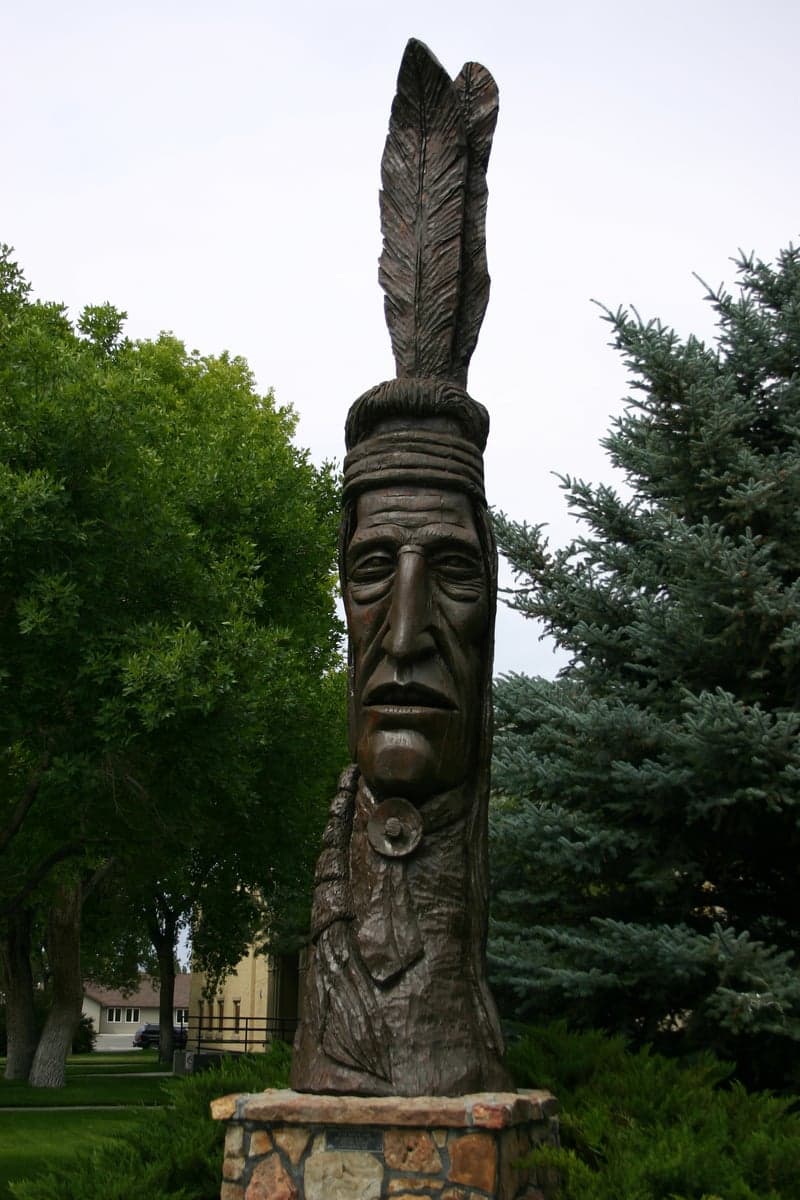
Photo: Wikipedia
Personal Sovereignty in Washakie County
Viable for self-reliance. Generally workable, though some barriers may limit total independence.
What does Personal Sovereignty tell us?
Personal Sovereignty measures your capacity for self-reliance and independence with minimal government friction. Higher scores mean fewer barriers between you and the way you want to live... but it assumes you have the space you need and good neighbors.
What does this tell us?
Personal Sovereignty measures your capacity for self-reliance and independence with minimal government friction. Higher scores mean fewer barriers between you and the way you want to live... but it assumes you have the space you need and good neighbors.
State Policy
Energy independence: Net exporter (800% of energy produced in-state)
Personal Liberty
Homesteading

Personal Liberty Analysis
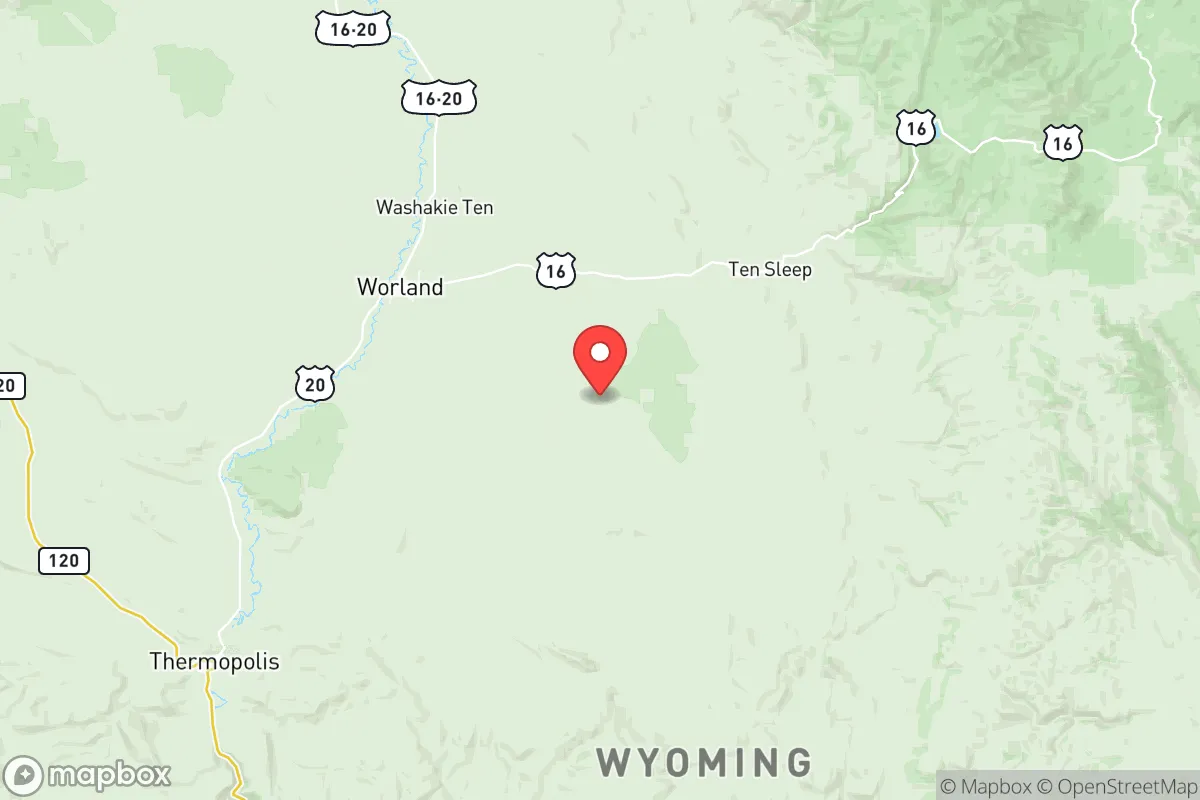
Washakie County, Wyoming, offers one of the most uncompromising personal sovereignty environments in the lower 48, a fact that resonates deeply with those watching federal overreach erode freedoms elsewhere. Here, the state constitution and a deeply ingrained Western libertarian ethos create a buffer against the regulatory creep that chokes autonomy in blue states and even in parts of the Front Range. For the strategic relocator—whether a single prepper or a family seeking to opt out of the system—this county represents a rare pocket where the default answer from government is "yes, unless you harm someone," not "no, unless we permit it." The towns of Worland (the county seat) and Ten Sleep anchor this culture, with the former offering more services and the latter a quieter, more remote frontier vibe that attracts those serious about self-sufficiency.
Tax burden and regulatory posture: How Washakie County compares to surrounding areas
Wyoming has no state income tax, and Washakie County keeps property taxes among the lowest in the nation—roughly 0.55% of assessed value for residential property, with no state-level sales tax on groceries or prescription drugs. The county's regulatory posture is aggressively hands-off: there are no county-wide building codes outside of Worland's limited municipal zoning, and no state-level land-use planning that would dictate what you can do on your own acreage. This stands in stark contrast to places like Teton County or even parts of Fremont County, where environmental regulations and subdivision rules add layers of cost and delay. For the prepper, this means you can build a shop, a root cellar, or a detached living quarters without pulling permits—provided you're outside Worland's city limits. The county's sales tax is a modest 5.5% (state + county), and there are no special district taxes for things like transit or open space, which are common in Colorado or Washington. The message is clear: the government takes a small, predictable cut and otherwise leaves you alone.
Self-defense and gun law specifics: Constitutional carry and castle doctrine in practice
Washakie County is a constitutional carry jurisdiction—no permit needed to carry a concealed firearm for anyone 21 or older who can legally possess a gun. The state's castle doctrine is among the strongest in the nation: no duty to retreat anywhere you are lawfully present, including your vehicle, and the presumption of reasonable fear of death or great bodily harm applies if an intruder unlawfully enters your occupied home or vehicle. Local law enforcement in Worland and the sheriff's office in Ten Sleep are known to be pro-Second Amendment, with no "gun-free zones" beyond the federally mandated ones (schools, post offices). The county has no local ordinances restricting magazine capacity, firearm types, or storage requirements. For the survivalist, this means your defensive capabilities are limited only by your own training and budget. The nearest gun ranges are at the Worland Shooting Sports Complex and informal BLM land south of Ten Sleep, where you can train without interference. Compare this to the constant legal battles in states like New York or California, and the freedom here is palpable.
Self-reliance and homesteading viability: Lot sizes, zoning, and off-grid feasibility
Homesteading in Washakie County is not just viable—it's the norm. Outside of Worland's city limits (which has minimal zoning), the county imposes no minimum lot size for rural residential use, and off-grid living is fully legal with no requirement to connect to municipal water, sewer, or power. The Big Horn Basin's arid climate means you'll need a well (typically 200-400 feet deep, costing $15,000-$25,000) and a septic system, but there are no county health department restrictions on composting toilets or greywater systems for personal use. Solar panels and wind turbines are common sights on properties near Manderson and Ten Sleep, and the county has no net metering caps or punitive fees for grid-tied systems. Zoning is essentially nonexistent: you can keep livestock, operate a home-based machine shop, or store bulk supplies without a conditional use permit. The only real constraint is water rights—you must own or lease a water right for irrigation, but domestic use (household and up to 1 acre of garden) is exempt from permitting. For the prepper looking to buy 20-40 acres and build a self-sufficient compound, Washakie County is one of the last places where that dream doesn't require a lawyer and a zoning variance.
Personal liberties: Parental rights, medical autonomy, speech, and property
Wyoming's parental rights are codified in statute, giving parents the final say on their children's education, medical care, and religious upbringing. Washakie County School District #1 (Worland) and #2 (Ten Sleep) both allow homeschooling with minimal reporting—just a basic intent to homeschool form and annual standardized test results, with no curriculum approval or home visits. Medical autonomy is strong: the state has no vaccine mandate for adults or children beyond the standard school-entry requirements (which have broad philosophical exemptions), and there are no state-level restrictions on alternative or holistic medicine. The county's health department does not enforce mask mandates or business closures, as seen during the 2020-2021 period when Worland remained largely open while other counties locked down. Free speech is protected by the state constitution's strong free expression clause, and there are no local hate speech ordinances or social media monitoring programs. Property rights are sacrosanct: the state has no inheritance tax, no estate tax, and no gift tax, and the county assessor's office is known for reasonable valuations. The only encroachment to watch is the federal Bureau of Land Management's presence—about 60% of Washakie County is federal land, which can complicate mineral rights and access, but private land within the county is fully yours to use as you see fit.
In the broader landscape of American sovereignty, Washakie County ranks among the top 5% of counties for personal freedom, alongside places like Harding County, South Dakota, and Mineral County, Colorado. The combination of no income tax, constitutional carry, off-grid legality, and minimal zoning creates an environment where the individual—not the state—is the primary unit of authority. For those who see the federal government's trajectory as a threat to liberty, this corner of Wyoming offers a tangible alternative: a place where you can live, defend, and provide for yourself without asking permission. The trade-off is isolation and a harsh climate, but for the strategic relocator, that's not a bug—it's the feature that keeps the bureaucrats away.

* Values derived from national, state, county, city and local statistics and may differ in a specific area. Last updated: 2026-05-21T00:56:08.000Z
Narrative content on this page is AI-generated and may contain mistakes. Verify any details that matter before acting on them.
ReloMaps may earn a commission from affiliate links at no extra cost to you.

