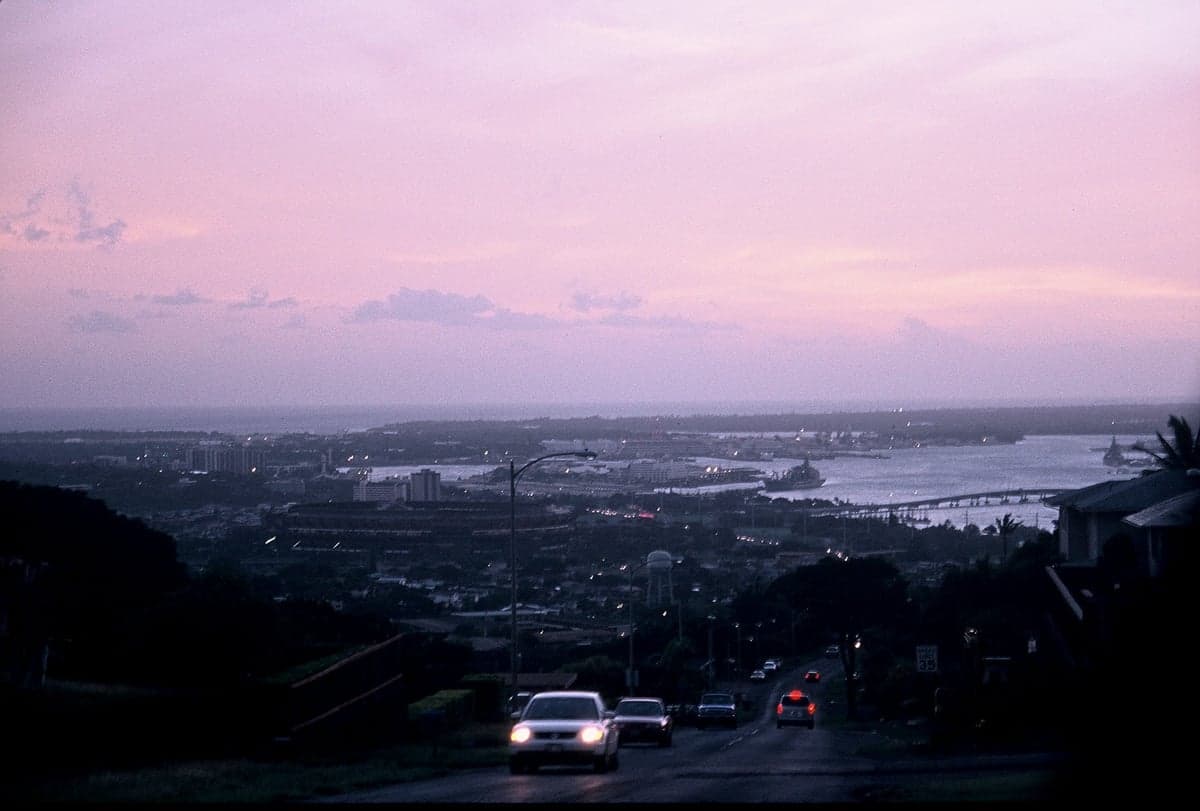
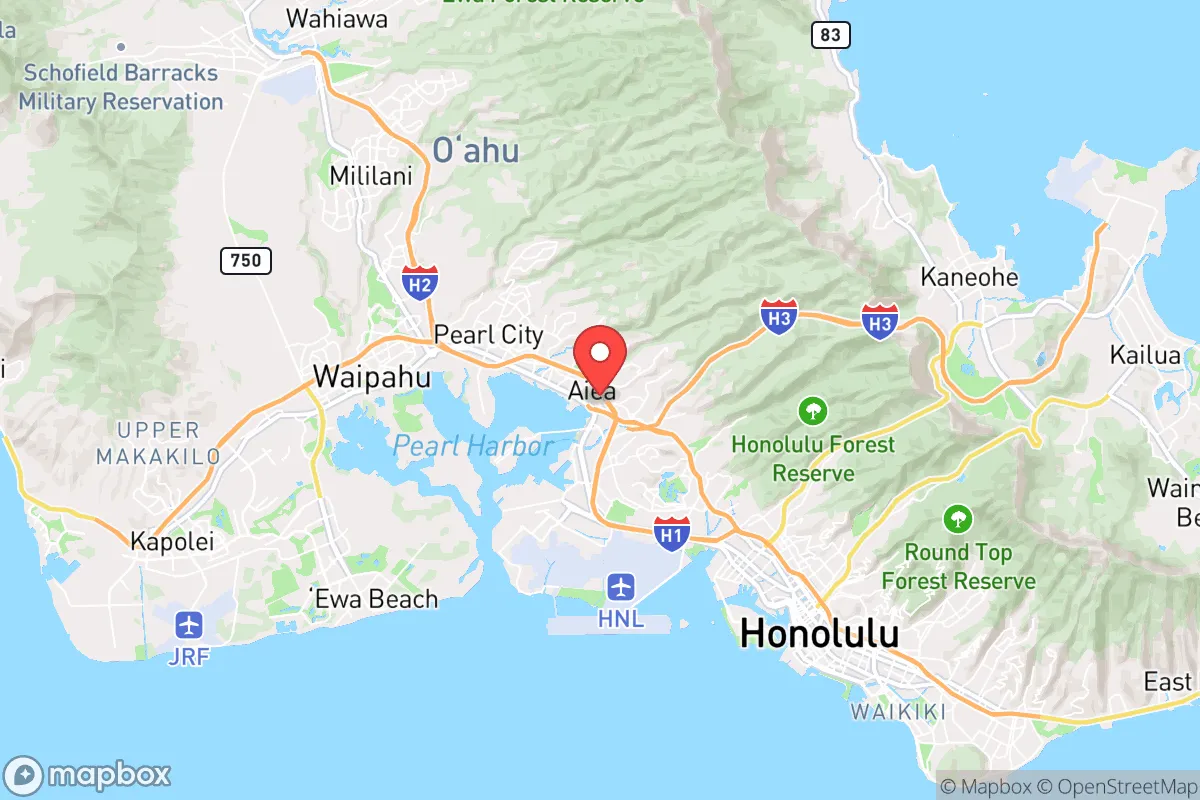
Photo: Wikipedia
Personal Sovereignty in Aiea, HI
Moderate friction. Expect trade-offs in some aspect of personal liberty and independence.
What does Personal Sovereignty tell us?
Personal Sovereignty measures your capacity for self-reliance and independence with minimal government friction. Higher scores mean fewer barriers between you and the way you want to live... but it assumes you have the space you need and good neighbors.
What does this tell us?
Personal Sovereignty measures your capacity for self-reliance and independence with minimal government friction. Higher scores mean fewer barriers between you and the way you want to live... but it assumes you have the space you need and good neighbors.
State Policy
Energy independence: Importer (2% of energy produced in-state)
Personal Liberty
Homesteading

Personal Liberty Analysis
Aiea, Hawaii presents a deeply conflicted environment for personal sovereignty. On one hand, the island’s remote geography and tight-knit community offer a natural buffer against the chaos of the mainland—a genuine strategic advantage for those seeking to opt out of national trends. On the other hand, the State of Hawaii exercises some of the most aggressive government overreach in the nation, with a regulatory and tax posture that systematically erodes individual autonomy. For a conservative-leaning survivalist or prepper, Aiea is not a libertarian haven; it is a place where you must fight for every inch of freedom, and the deck is stacked against you from the start.
Tax burden and regulatory posture: How Hawaii’s state apparatus limits financial autonomy
Hawaii’s tax burden is among the highest in the country, and Aiea residents feel it directly. The state imposes a general excise tax (GET) of 4% on nearly all goods and services, including groceries and medical supplies—a regressive levy that hits fixed-income households and preppers stocking supplies hardest. There is no local sales tax in Aiea itself, but the GET effectively functions as one. Property taxes are comparatively moderate for Oahu (around 0.35% of assessed value), but the state’s income tax brackets are punishing: top marginal rate of 11% kicks in at $200,000 for single filers, and the standard deduction is a paltry $2,200. This means even modest earnings are heavily taxed. Regulatory posture is equally hostile to autonomy. Hawaii has some of the nation’s strictest land use laws under the State Land Use Commission, which classifies most of Oahu into urban, agricultural, or conservation districts. Building a shed, adding a rainwater catchment system, or even clearing invasive vegetation on your own property often requires county permits and inspections. The state also mandates that all vehicles pass safety inspections annually, and modifications like lift kits or aftermarket exhausts are frequently rejected. For a prepper wanting to quietly harden a property or maintain a low-profile vehicle, the regulatory gauntlet is real and costly.
Self-defense and gun law specifics: What Aiea residents can and cannot do to protect themselves
Hawaii’s gun laws are among the most restrictive in the United States, and Aiea is no exception. The state operates a may-issue concealed carry system, meaning the county police chief has near-total discretion to deny a permit. In practice, as of 2025, fewer than 100 concealed carry licenses have been issued across the entire state, and most of those are to retired law enforcement or security contractors. Open carry is effectively banned. To purchase a handgun, you must first obtain a permit from the Honolulu Police Department, which requires a background check, a 14-day waiting period, and a firearms safety course. Long guns require a separate permit, and all firearm purchases are registered with the state. Magazine capacity is capped at 10 rounds, and “assault pistols” (defined broadly) are banned by name. There is no stand-your-ground law; Hawaii imposes a duty to retreat in public spaces before using deadly force. Castle doctrine applies inside your home, but the legal burden is on you to prove you had no alternative. For a prepper, this means your defensive options are severely limited. Stockpiling ammunition is legal but must be stored in a locked container if you have minors in the home. The practical takeaway: self-defense in Aiea relies more on hardened doors, alarm systems, and neighborhood watch than on firearms. If you value the Second Amendment as a core liberty, Aiea will feel like a cage.
Self-reliance and homesteading viability: Lot sizes, zoning, and off-grid feasibility in Aiea
Aiea is a suburban community on the leeward side of Oahu, and its zoning reflects that. Most residential lots are small—typically 5,000 to 7,000 square feet—with homes built close together. There are no large-acreage homesteads available within Aiea proper; for that, you would need to look at rural areas like Waianae or the North Shore, which come with their own access and water challenges. Zoning is strictly residential (R-5 or R-7.5), meaning keeping livestock (chickens, goats, pigs) is prohibited unless you have a special permit, which is rarely granted. Off-grid living is effectively illegal in Aiea. The county requires all homes to be connected to the municipal water and sewer systems; rainwater catchment as a primary water source is not permitted in urban zones. Solar panels are allowed but must be installed by licensed contractors and approved by the Hawaiian Electric Company for grid interconnection. Battery storage is legal but expensive, and net metering policies have been curtailed in recent years. Composting toilets and greywater systems require county health department approval, which is rarely given for residential lots under one acre. For a prepper seeking true self-reliance—growing food, harvesting water, generating power—Aiea is a poor fit. The best you can do is a small vegetable garden, a few fruit trees, and a backup generator. The regulatory environment actively discourages independence from the grid.
Personal liberties: Parental rights, medical autonomy, speech, and property in Aiea
Hawaii’s state government has a track record of overriding local and parental control. In education, the state mandates that all children attend school from age 6 to 18, and homeschooling is legal but requires annual notification and submission of a curriculum plan to the Department of Education. There are no parental rights laws that give you explicit authority to opt your child out of specific lessons or activities without administrative approval. On medical autonomy, Hawaii has some of the most expansive vaccine mandates in the country, including requirements for school attendance that leave little room for philosophical or religious exemptions. COVID-19 vaccine mandates for state employees and healthcare workers remain in effect as of 2025, and the state has shown willingness to enforce them. Medical freedom advocates have little legal recourse here. Free speech is protected under the First Amendment, but Hawaii has a history of restricting speech on public property near schools, hospitals, and government buildings. Property rights are weak: the state’s Land Use Commission can rezone large swaths of land with minimal public input, and the county can impose historic preservation or environmental restrictions on private homes without compensation. For a conservative concerned about government overreach, Aiea’s personal liberties are heavily circumscribed. You are allowed to speak your mind, but the state will tax you, regulate you, and mandate your compliance at every turn.
Overall, Aiea offers a unique strategic position—remote, defensible, and insulated from mainland chaos—but at the cost of severe state control over your finances, your home, and your personal choices. For a survivalist or prepper, the trade-off is stark: you gain geographic security but lose nearly every dimension of personal sovereignty that makes that security meaningful. Compared to states like Texas, Montana, or New Hampshire, Aiea ranks near the bottom for individual autonomy. If your priority is maximum freedom to live, defend, and provide for your family on your own terms, this is not the place. If you are willing to navigate a dense regulatory maze for the sake of island life, Aiea can work—but only if you accept that the state, not you, holds the final say.

* Values derived from national, state, county, city and local statistics and may differ in a specific area. Last updated: 2026-05-04T02:33:39.000Z
Narrative content on this page is AI-generated and may contain mistakes. Verify any details that matter before acting on them.
ReloMaps may earn a commission from affiliate links at no extra cost to you.

