Photo: Wikipedia
Find The Best Places To Live
in Honolulu
PRO TIP! You can paste a Zillow or Redfin link to get info on that property.
What It's Like Living in Honolulu, HI
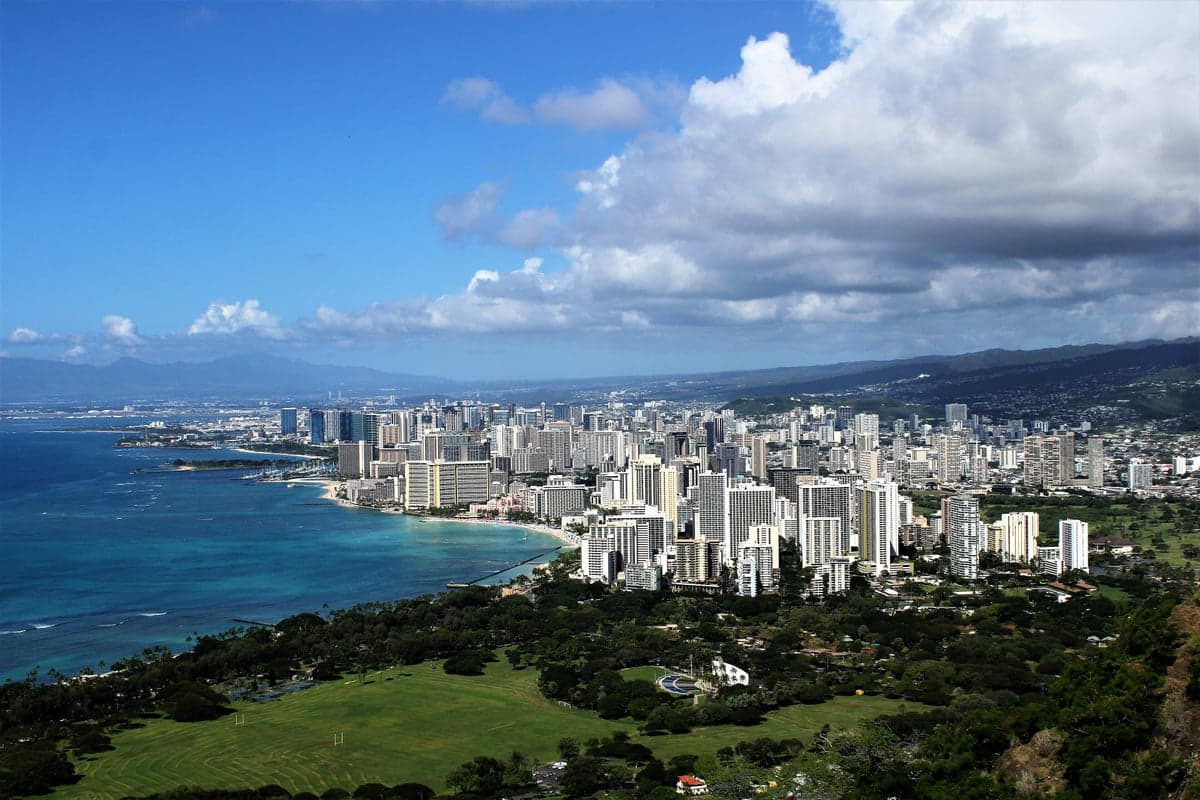
Honolulu is a place that sounds like a permanent vacation on paper but operates like a real, complicated, and expensive American city in practice. It’s a dense urban center of roughly 346,000 people, where the Pacific Ocean is never more than a few miles away, and where the cost of living index sits at 210—more than double the national average. For the conservative-leaning single person or parent considering a move here, the trade-off is straightforward: you pay a premium for year-round 80-degree weather, a strong sense of local community, and a pace of life that resists the mainland’s hustle, but you also deal with traffic that can turn a 22-minute average commute into an hour-long crawl and a housing market where the median home value is $834,100.
Daily Rhythm: What Life Actually Looks Like
Most mornings in Honolulu start early, often before sunrise, because that’s when the heat and humidity are still manageable. People grab coffee at local spots like Kona Coffee Purveyors in Kaka‘ako or a plate lunch from Rainbow Drive-In—a local institution serving loco moco and mac salad that’s been around since 1961. The workday is real, with major employers like the state government, the military (Joint Base Pearl Harbor-Hickam), and healthcare systems like Queen’s Medical Center driving the economy. The median household income here is $85,428, which sounds decent until you realize that a modest two-bedroom apartment in a walkable neighborhood like Kaimukī or Mānoa can easily rent for $3,000 a month. Weekends are often spent at the beach—Ala Moana Beach Park is the go-to for families because of its calm, protected waters—or hiking the Diamond Head trail, which costs $5 to enter and offers a panoramic view of the entire south shore. Grocery shopping is a mix of Costco (the busiest in the nation per square foot) and local markets like Foodland, where a gallon of milk runs about $8. The rhythm is slower than the mainland, but it’s not lazy—people here just prioritize being outside over being in a car.
Sports, Community, and the Local Identity
Sports in Honolulu are less about pro franchises and more about deep-rooted community pride. The University of Hawaii Rainbow Warriors football team is the closest thing to a pro-level draw, with games at the Clarence T.C. Ching Athletics Complex drawing 9,000 fans on a good Saturday. High school football is genuinely huge—Saint Louis School and Kahuku High School consistently produce Division I talent, and Friday night games are a social event where you’ll see three generations of families tailgating. The Honolulu Marathon in December is a massive deal, drawing 30,000 runners annually, and the Pro Bowl (now the Pro Bowl Games) still rotates through Aloha Stadium. Culturally, the biggest event is the King Kamehameha Day Parade in June, where floats and pa‘u riders (women on horseback in traditional dress) line the streets of Waikīkī. The local identity is built on the concept of “aloha” as a mutual respect and obligation, not just a greeting. That means you’ll hear “shaka” hand gestures everywhere, and it’s considered rude to honk your horn aggressively—locals call that “mainland driving.” One quirk: slippers (flip-flops) are acceptable footwear for almost any occasion, including dinner at a nice restaurant, and wearing shoes indoors is a faux pas in many homes.
What’s There to Do: Entertainment, Food, and Outdoors
Entertainment in Honolulu is heavily outdoor-oriented, but there’s a solid nightlife and food scene too. Chinatown on the weekends turns into a mix of art galleries, speakeasies like Bar Leather Apron, and late-night dim sum at Mānoa Grand Restaurant. The Waikīkī Shell hosts free concerts and the annual Ukulele Festival in July. For families, the Bishop Museum is a must—it’s the premier place to learn about Hawaiian history and Polynesian navigation, and it’s not a dry museum; kids love the planetarium and the lava tube exhibit. Outdoor activities are the main draw: Hanauma Bay requires a reservation (and a $25 fee for non-residents) but offers some of the best snorkeling on O‘ahu, while the North Shore (a 45-minute drive from downtown) is world-famous for winter surfing, with waves that can reach 40 feet at Pipeline. The downside is that many of these spots are crowded—Hanauma Bay caps visitors at 3,000 per day, and those slots fill up fast. For a quieter experience, locals head to Lanikai Beach on the windward side, but parking is a nightmare; you’ll often see people circling for 20 minutes. The Koko Head Crater hike is a punishing 1,048-step stair climb that locals do for fitness, and it’s not uncommon to see people running it at 6 a.m. before work.
Pros and Cons of Living Here
Let’s be honest about the trade-offs. On the pro side: the weather is genuinely unbeatable—average highs of 80°F year-round, no snow, no tornadoes, and a constant trade wind that keeps the humidity bearable. The violent crime rate is 165.5 per 100,000, which is lower than many mainland cities of similar size (compare to Memphis at 2,000+ or Albuquerque at 1,200+). The median age is 42.9, meaning it’s not a college party town—it’s a place for established adults and families. The public school system is mixed, but there are strong private options like Punahou School (where Barack Obama attended) and ‘Iolani School, both of which have endowments and college placement rates that rival mainland prep schools. On the con side: the cost of living is brutal. A median home value of $834,100 means a family needs a six-figure income just to afford a mortgage on a modest three-bedroom house. Rent is equally punishing—a one-bedroom in a decent area starts around $2,000. Traffic on the H-1 freeway is a daily grind; the average commute is 22 minutes only if you live and work in the same district, but anyone commuting from Kapolei to downtown can expect 45-60 minutes each way. Isolation is real—a round-trip flight to Los Angeles costs $500-$800, and shipping anything large (furniture, cars) adds a premium. Finally, the “local” vs. “haole” (outsider) dynamic can be a subtle but persistent social barrier; it’s not hostile, but it takes years to build genuine trust in tight-knit communities like Waimānalo or Kalihi.

Similar mid-size cities to Honolulu
* Values derived from national, state, county, city and local statistics and may differ in a specific area. Last updated: 2026-04-24T00:01:43.000Z
Narrative content on this page is AI-generated and may contain mistakes. Verify any details that matter before acting on them.
ReloMaps may earn a commission from affiliate links at no extra cost to you.

