Photo: Wikipedia
Demographics of Albany, VT
Affluence Level in Albany, VT
An upper-middle-class area. Household wealth, education levels, and homeownership run ahead of national benchmarks.
People of Albany, VT
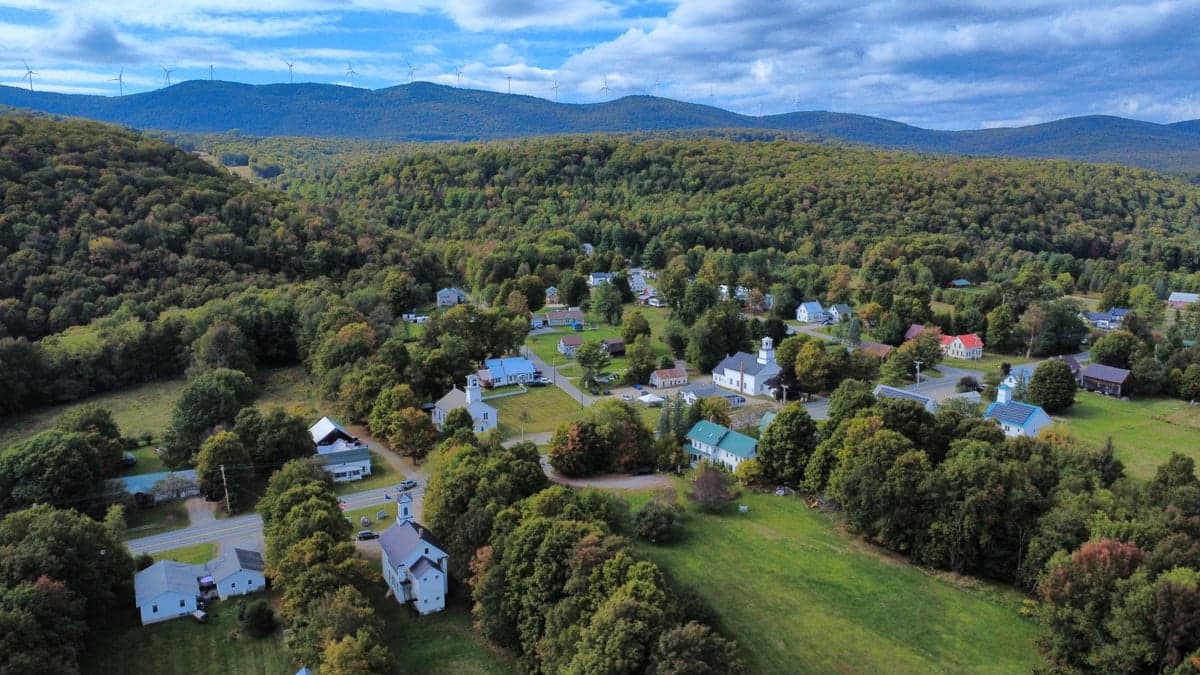
The people of Albany, Vermont, today number just 161 residents, making it one of the state's smallest incorporated communities. The population is overwhelmingly white (94.4%) and native-born, with zero foreign-born residents reported in the most recent data. A notable 40.0% of adults hold a college degree, a figure that stands out for a rural Orleans County town and hints at a small but educated professional class. The community is characterized by its quiet, rural character, with a density of roughly 30 people per square mile, and a population that has remained remarkably stable in its ethnic composition for decades.
How the city was settled and grew
Albany was chartered in 1782 as a New Hampshire grant town, part of a wave of land grants designed to attract settlers to the remote Northeast Kingdom. The earliest settlers were primarily of English and Scottish descent, arriving from southern New England and eastern New York in the 1790s and early 1800s. They were drawn by the promise of affordable farmland and timber rights in the heavily forested valleys. The original settlement clustered around the Albany Village district, where the first sawmills and gristmills were built along the Black River. A second early node formed in the Craftsbury Road corridor, where families established small subsistence farms. The town's population peaked at around 800 in the mid-19th century, then began a long decline as industrialization bypassed the area and younger generations left for factory jobs in Burlington and southern New England. No significant immigrant waves arrived after the initial settlement period; the town's population remained almost entirely native-born white through the 20th century.
Modern era (post-1965)
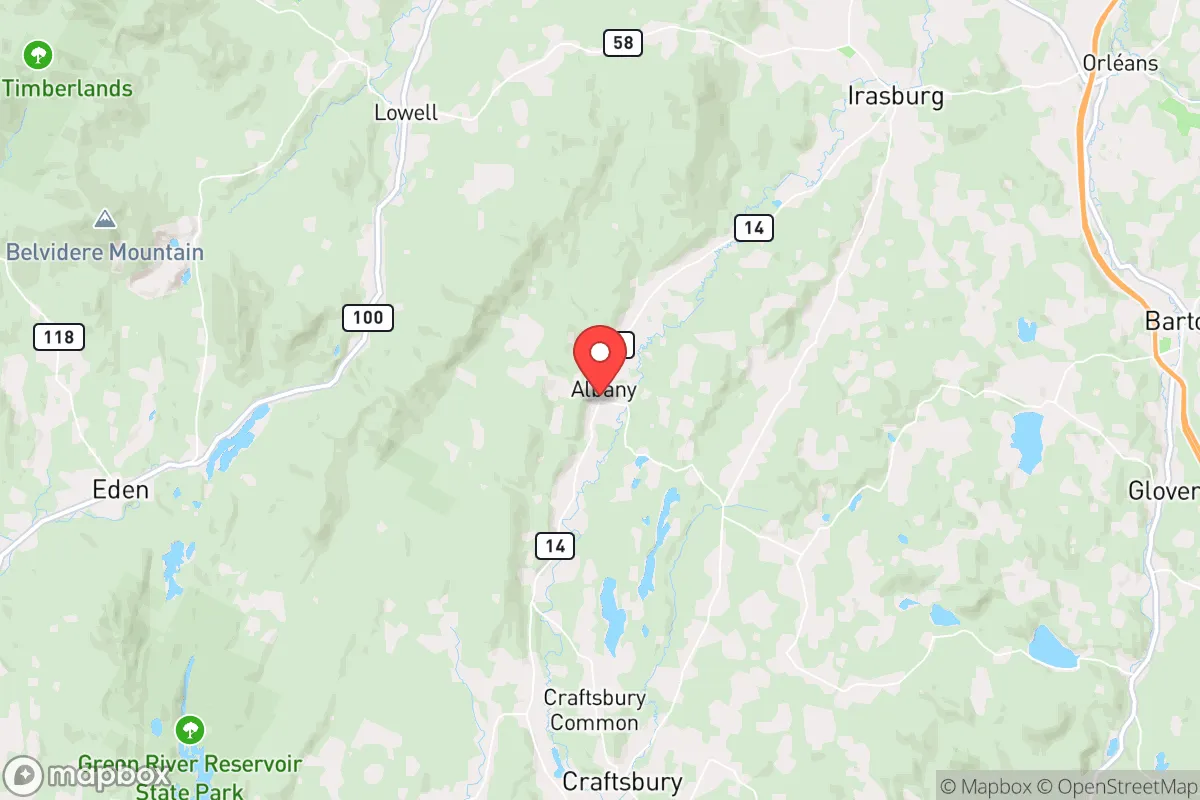
The post-1965 period saw Albany's population continue its slow decline, from roughly 250 in 1970 to 161 today. The Hart-Cellar Act had no measurable effect here: the foreign-born population remains at 0.0%, and the town's racial composition has barely shifted. The small Black population (3.1%) is a recent development, likely tied to a handful of families who moved in during the 2010s, but no distinct ethnic enclave has formed. The most notable demographic change has been the arrival of a small number of out-of-state retirees and remote workers, drawn by low property taxes and the area's natural beauty. These newcomers have concentrated in the Lake Albany area, a seasonal and year-round residential district around the town's namesake lake, and in renovated farmhouses along Route 14. The college-educated share (40.0%) is significantly higher than the county average of roughly 25%, reflecting this in-migration of professionals. However, the town lacks the infrastructure—no grocery store, no gas station, no school—that would attract families with children, so the population skews older.
The future
Albany's population is likely to continue its slow decline or plateau at around 150-170 residents over the next decade. The town is not homogenizing or tribalizing into distinct enclaves; rather, it is becoming slightly more diverse in age and occupation, with a thin layer of remote workers and retirees overlaying the long-standing farming and logging families. The immigrant communities that are growing in larger Vermont towns like Burlington and Winooski are entirely absent here. The Black population may grow incrementally but will likely remain a very small share. The biggest demographic risk is the lack of young families: with no local school and limited employment, the town's median age (estimated at 50+) will continue to rise. The Albany Village district remains the most stable residential area, while the Lake Albany and Route 14 corridors will see the most turnover as older homes are bought by out-of-state buyers.
For someone moving in now, Albany offers a deeply rural, low-cost, and socially homogeneous environment. It is a place where the population is stable but aging, and where the small size means newcomers can quickly become known in the community. The trade-off is limited services, no ethnic diversity, and a long drive to employment centers in Newport (15 miles) or St. Johnsbury (20 miles). It is best suited for those seeking solitude, low taxes, and a tight-knit, predominantly white, native-born community.

* Values derived from national, state, county, city and local statistics and may differ in a specific area. Last updated: 2026-04-22T22:44:33.000Z
Narrative content on this page is AI-generated and may contain mistakes. Verify any details that matter before acting on them.
ReloMaps may earn a commission from affiliate links at no extra cost to you.

