Photo: Wikipedia
Political ClimatePolitical Climate in Albany, VT
District shown is the primary district for this city’s centroid. Cities may span multiple districts.
Inherited from parent state — no local data available.
Local Political AnalysisPolitical Analysis of Albany, VT
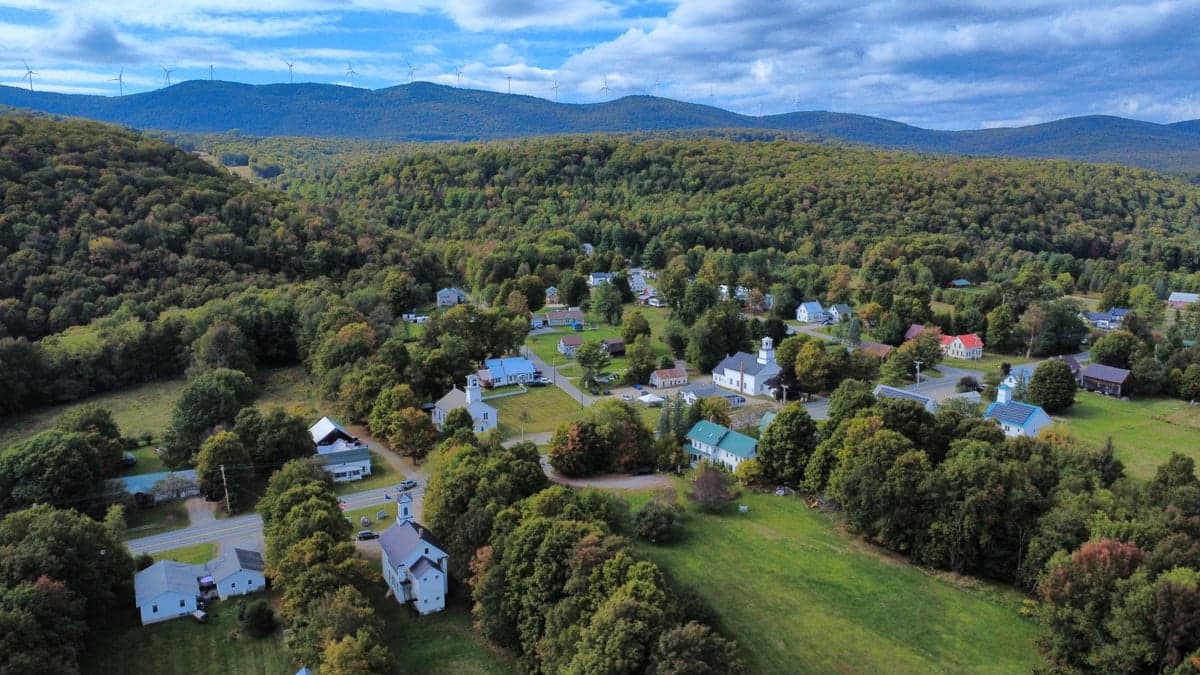
Albany, Vermont, sits in a state that has become one of the most reliably progressive in the nation, and the town itself reflects that reality. The Cook Partisan Voting Index (PVI) for the area is D+17, meaning it votes about 17 points more Democratic than the national average. That’s a pretty strong signal that the political lean here isn’t just a trend—it’s a deeply ingrained part of the local culture now. If you’re looking at this from a perspective that values personal freedoms and limited government, that number should give you pause, because it means the area has shifted hard toward policies that often come with more rules, more taxes, and less room for individual choice.
How it compares
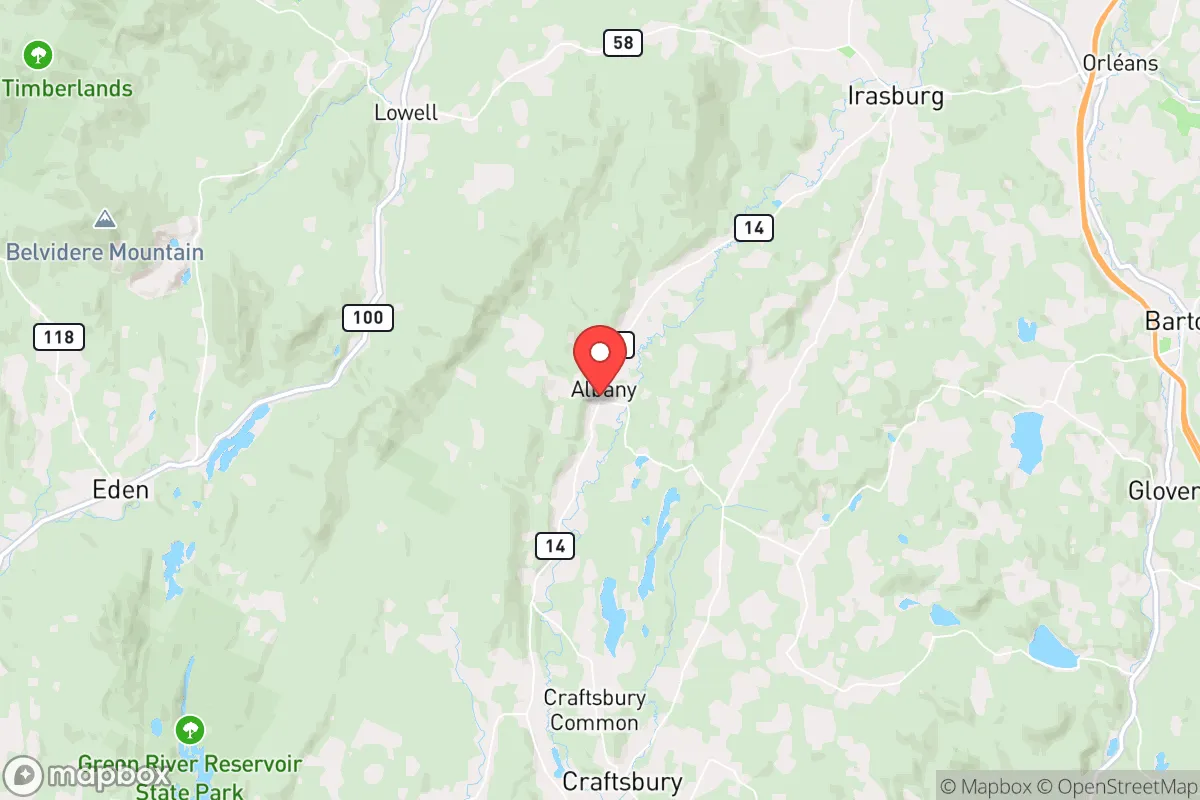
To understand Albany’s politics, you have to look at the surrounding landscape. Drive a few miles west, and you’ll hit places like Newport or even the more rural parts of Orleans County, where the political vibe is noticeably different—more independent, more skeptical of government overreach. But Albany itself is closer in spirit to Burlington or Montpelier than to the conservative pockets of the Northeast Kingdom. The contrast is stark: while some neighboring towns still hold onto a “live and let live” ethos, Albany has embraced the progressive agenda that’s sweeping the state. That means you’re seeing more support for statewide gun control measures, stricter environmental regulations that can affect property rights, and a tax structure that feels heavier every year. It’s not like the old days when folks here just wanted to be left alone; now, there’s a sense that the government is inching into every corner of daily life.
What this means for residents
For someone who values personal freedoms, living in Albany means constantly watching your back. The shift toward progressive ideology here isn’t just theoretical—it shows up in concrete ways. Property taxes are among the highest in the nation, and they keep climbing to fund state mandates on education and social programs that you might not agree with. There’s also a growing push for renewable energy projects that can override local land-use decisions, which feels like a direct hit on property rights. If you’re a hunter, a small business owner, or just someone who doesn’t want the state telling you how to heat your home, you’ll find yourself swimming against the current. The political climate here is increasingly one where conformity to progressive norms is expected, and dissent is often met with social pressure or bureaucratic hurdles. It’s a far cry from the independent spirit that used to define rural Vermont.
Looking ahead, the trajectory doesn’t seem to be reversing. The D+17 rating isn’t likely to budge much in the near term, and if anything, the state legislature in Montpelier keeps pushing further left. You’ll see more laws on everything from carbon taxes to vaccine mandates, and Albany will likely go along with it. For a conservative-minded person, the best move might be to keep your head down, focus on your own property, and maybe start looking at towns just over the border in New Hampshire if the overreach gets too heavy. The cultural distinction here is that Albany has traded its old rugged individualism for a collective approach that prioritizes government solutions over personal responsibility. It’s a change that’s been gradual, but it’s unmistakable now—and it’s probably not going back.

State Political ClimatePolitical Climate in Vermont
State Political AnalysisPolitical Environment in the State
Vermont has long been painted as a deep-blue bastion, and for statewide races that’s largely true—no Republican has carried the state for president since George H.W. Bush in 1988, and Democrats have held the governorship for 16 of the last 20 years. But the reality on the ground is far more fractured than the national headlines suggest. Over the past decade, the state has lurched leftward on social and fiscal policy, driven by the Chittenden County metro (Burlington, South Burlington, Winooski) and a handful of college towns, while vast swaths of the Northeast Kingdom, southern Vermont, and the rural Connecticut River Valley have grown increasingly alienated and, in some cases, actively resistant. The 2022 gubernatorial race saw Republican Phil Scott win re-election with 69% of the vote—a reminder that Vermonters still split their tickets heavily, but the legislature’s supermajority has pushed through a wave of progressive legislation that many residents feel has overstepped.
Urban vs. rural divide
The political map of Vermont is essentially a tale of two states. Chittenden County, home to roughly 25% of the state’s population, is the engine of Democratic power—Burlington, South Burlington, and Winooski routinely vote 75-85% Democratic in presidential years. The University of Vermont and Champlain College anchor a young, educated, and activist base that drives local politics. Just 30 miles south, Addison County (Middlebury) and Windsor County (Woodstock, Hartford) lean blue but with more moderation. Meanwhile, the Northeast Kingdom—Orleans, Essex, and Caledonia counties—votes reliably Republican, often by 20-30 point margins. In 2024, towns like Newport, St. Johnsbury, and Derby Line saw Trump gain ground compared to 2020, reflecting a rural backlash against Montpelier’s policy direction. The southern tier—Bennington, Rutland, and Windham counties—is a mixed bag: Rutland City has a Republican mayor, but the surrounding towns are purple, while Brattleboro remains a progressive stronghold. The divide isn’t just partisan; it’s cultural. Rural residents feel ignored by the Burlington-dominated legislature, and that resentment is palpable at town meeting days and in local school board elections.
Policy environment
Vermont’s policy environment has shifted sharply left in the last five years, and the consequences are measurable. The state has the second-highest property tax burden in the nation, with effective rates around 1.8% of home value—a direct result of Act 127 (2023), which overhauled education funding and shifted more cost onto residential property owners. Income taxes are progressive, topping out at 8.75% for individuals earning over $231,000, but the state also imposes a 6% sales tax and a 9.6% rooms and meals tax that hits tourists and small businesses hard. In 2023, the legislature passed Act 76, creating a paid family and medical leave program funded by a 0.88% payroll tax split between employer and employee—a mandate that many small business owners in places like Stowe and Manchester say is driving up costs. On healthcare, Vermont operates a state-based exchange and has a public option (Green Mountain Care), but premiums remain among the highest in New England. Education policy is dominated by Act 46 (2015) and its successors, which forced school district mergers and centralized control, stripping local boards of authority—a move that sparked fierce resistance in towns like Danville and Chelsea. Election laws are among the most accessible in the country: universal mail-in ballots, same-day registration, and no voter ID requirement. For a conservative-leaning reader, the regulatory posture is a clear red flag—Montpelier shows little restraint in expanding government’s reach into daily life.
Trajectory & freedom
Vermont is becoming less free by nearly every measure tracked by the Cato Institute’s Freedom in the 50 States index, which ranks the state 38th overall—dragged down by fiscal policy and regulatory burden. The most concerning recent legislation for personal liberty is Act 68 (2023), which banned the sale and transfer of many semi-automatic firearms, magazines over 10 rounds, and raised the purchase age to 21. This came on top of Act 69 (2018), which created “extreme risk protection orders” allowing firearms to be seized without a criminal conviction. On parental rights, Act 1 (2024) codified “gender-affirming care” as a protected right for minors, overriding parental consent requirements in some circumstances—a flashpoint that has driven families to consider leaving. Medical autonomy took a hit with Act 57 (2022), which expanded the state’s vaccine mandate for healthcare workers and school staff, though it was later softened after legal challenges. Property rights are under pressure from Act 181 (2024), a sweeping land-use bill that imposes statewide zoning standards and limits local control over development—a move that rural towns see as a direct assault on their autonomy. The tax burden continues to climb: in 2024, the legislature passed a 0.44% payroll tax for the new child care subsidy program (Act 76’s companion), adding another layer of cost. For someone valuing personal freedom, the trajectory is unmistakably downward.
Civil unrest & political movements
Vermont’s political activism is visible but rarely violent. The left is well-organized through groups like the Vermont Progressive Party and the Vermont Workers’ Center, which have staged protests at the Statehouse for single-payer healthcare and rent control. In 2020, Burlington saw weeks of Black Lives Matter protests, some of which turned destructive—statues were toppled and storefronts damaged, leading to a lasting rift between the city’s progressive leadership and its business community. On the right, the Vermont Republican Party has been largely moderate under Phil Scott, but a grassroots movement called the Vermont Liberty Alliance has gained traction in the Northeast Kingdom and southern counties, pushing for school choice, gun rights, and tax caps. The “Secession of the Northeast Kingdom” rhetoric, while fringe, has appeared in local op-eds and town meeting discussions, reflecting deep frustration with Montpelier’s one-party rule. Immigration politics are relatively quiet—Vermont has a sanctuary state law (Act 58, 2017) that limits local cooperation with ICE, but the state’s small immigrant population (about 4% foreign-born) means it’s not a daily flashpoint. Election integrity concerns have been raised by conservative groups over the universal mail-in system, but no major fraud has been documented. The most visible flashpoint for a new resident would be the constant tension at local school board meetings over curriculum, library books, and transgender policies—a microcosm of the national culture war playing out in towns like Essex Junction and Shelburne.
Projection
Over the next 5-10 years, Vermont is likely to continue its leftward drift, but with growing friction. The in-migration pattern since 2020 has been a mixed bag: remote workers from New York and Boston have moved to Burlington and Stowe, driving up housing prices and reinforcing the blue vote, while a smaller but notable stream of conservative-leaning families has settled in the Northeast Kingdom and southern Vermont, attracted by lower property prices and a slower pace of life. The demographic math favors the left—Chittenden County is growing, while rural counties are shrinking or stagnant. The 2030 redistricting will likely cement Democratic control of the legislature for another decade. However, the fiscal strain is becoming unsustainable: the property tax revolt is real, with towns like Barre and Montpelier seeing residents organize against school budgets. A taxpayer revolt could produce a Republican governor in 2026 or 2028, but the legislature’s supermajority will remain a check on any rollback. The most realistic projection is a state that becomes more expensive, more regulated, and more culturally divided—a place where Burlington and the Northeast Kingdom feel like two different countries. For a conservative-leaning mover, the window for finding affordable, free communities is narrowing, but the Northeast Kingdom and parts of Rutland County still offer a foothold.
Bottom line for a new resident: If you’re moving to Vermont, understand that you’re buying into a state with a powerful, interventionist government that shows no signs of retreating. The rural towns—especially in the Northeast Kingdom (Newport, St. Johnsbury) and southern Vermont (Rutland, Bennington)—offer more breathing room and a like-minded community, but you’ll still pay high property taxes and deal with state-level mandates on everything from firearms to land use. If you value low taxes, local control, and minimal government, Vermont is a tough sell. But if you’re willing to fight for your freedoms at the town level and can afford the cost, there are pockets where the old Vermont spirit still holds on. Just don’t expect Montpelier to have your back.
* Values derived from national, state, county, city and local statistics and may differ in a specific area. Last updated: 2026-04-22T22:44:33.000Z
Narrative content on this page is AI-generated and may contain mistakes. Verify any details that matter before acting on them.
ReloMaps may earn a commission from affiliate links at no extra cost to you.

