
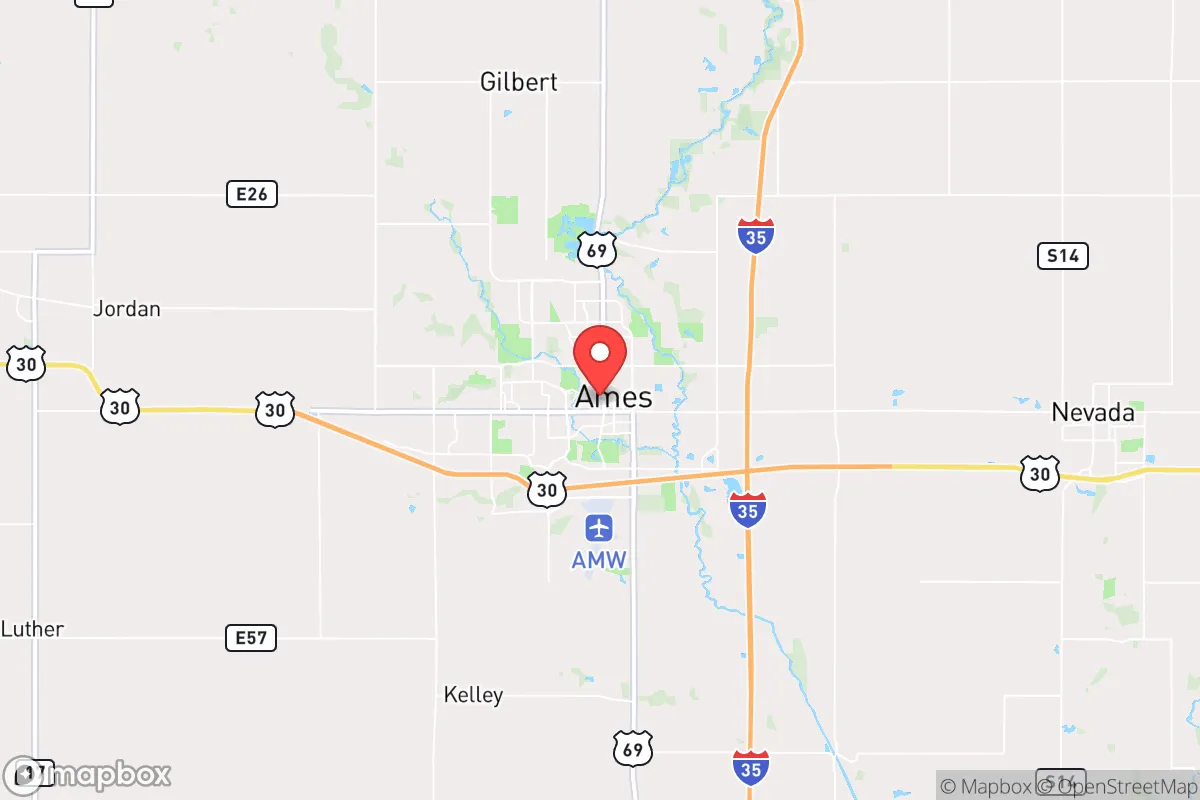
Photo: Wikipedia
Personal Sovereignty in Ames, IA
Viable for self-reliance. Generally workable, though some barriers may limit total independence.
What does Personal Sovereignty tell us?
Personal Sovereignty measures your capacity for self-reliance and independence with minimal government friction. Higher scores mean fewer barriers between you and the way you want to live... but it assumes you have the space you need and good neighbors.
What does this tell us?
Personal Sovereignty measures your capacity for self-reliance and independence with minimal government friction. Higher scores mean fewer barriers between you and the way you want to live... but it assumes you have the space you need and good neighbors.
State Policy
Energy independence: Importer (50% of energy produced in-state)
Personal Liberty
Homesteading

Personal Liberty Analysis
Ames, Iowa, offers a mixed bag for those prioritizing personal sovereignty, with a state-level legal framework that generally supports individual rights but a local governance structure that can feel more restrictive. For the survivalist or prepper, the key tension here is between Iowa's relatively strong constitutional protections and the practical realities of living in a college town dominated by a large public university. While the state leans toward liberty in areas like gun rights and property use, the city's zoning codes and tax policies can create friction for those seeking maximum autonomy. Understanding where Ames fits on the spectrum of personal freedom requires a close look at its tax burden, regulatory environment, and the specific legal tools available to residents.
Tax burden and regulatory posture in Ames and Story County
Iowa's state-level tax structure is a net positive for sovereignty-minded individuals, with a flat income tax rate of 3.8% as of 2025 and a phase-out of the inheritance tax. However, Ames itself imposes a local option sales tax of 1%, bringing the total to 7% in Story County. Property taxes in Ames are moderate but not negligible: the effective rate hovers around 1.5% of assessed value, which is slightly above the state average. For a prepper looking to minimize government dependency, the real concern is the city's regulatory posture. Ames has a reputation for strict zoning and building codes, particularly in its urban core, which can complicate efforts to modify property for self-sufficiency. The city's planning department requires permits for most structural changes, including sheds over 200 square feet and any off-grid energy systems tied to the grid. That said, Iowa's "Right to Farm" laws provide some buffer for agricultural activities on land zoned for it, but within city limits, raising livestock or installing a wind turbine without approval is a bureaucratic headache. The overall regulatory climate in Ames leans toward order and conformity, which can feel like overreach for those accustomed to rural counties with lighter oversight.
Self-defense and gun law specifics in Ames and Iowa
Iowa is a "shall-issue" state for permits to carry, and as of 2021, it became a permitless carry state for both open and concealed carry for anyone 21 or older who can legally possess a firearm. This is a strong point for personal sovereignty. Ames residents can carry a firearm without a permit, and there is no state-level requirement to register firearms or ammunition. However, local restrictions apply: carrying on Iowa State University property, including campus buildings and grounds, is prohibited without specific authorization, which creates a significant no-go zone for armed self-defense in a large portion of the city. Additionally, Ames has a city ordinance that prohibits discharging a firearm within city limits except at approved ranges, so defensive use outside the home carries legal risk. Stand-your-ground laws are in effect statewide, meaning there is no duty to retreat before using deadly force if you are lawfully present. For the prepper, the legal framework is solid for home defense and everyday carry, but the practical reality is that the university's influence creates pockets of restricted access. Magazine capacity and "assault weapon" bans are not on the books at the state or local level, so standard-capacity magazines and common rifle platforms remain legal. Overall, Ames is a gun-friendly city by national standards, but the campus carve-out is a notable limitation.
Self-reliance and homesteading viability in Ames
For those seeking to live off-grid or pursue serious homesteading, Ames presents significant challenges. The city's minimum lot size in most residential zones is 6,000 square feet, which is typical for a suburban setting but insufficient for substantial food production or livestock. Chickens are permitted in Ames, but only for single-family homes on lots of at least 6,000 square feet, and roosters are banned outright. Larger livestock like goats or pigs are not allowed within city limits. Rainwater collection is legal in Iowa, but Ames requires that any system be disconnected from the public water supply to avoid cross-contamination, and permits are needed for cisterns over 500 gallons. Solar panels are allowed, but net metering policies with the local utility, Ames Municipal Electric, are less favorable than in some neighboring communities, with a cap on system size and a lower buyback rate for excess generation. Off-grid living—meaning no connection to municipal water, sewer, or electric—is effectively impossible within city limits due to code requirements for habitable dwellings. For a prepper, the best bet is to look at unincorporated Story County, where zoning is far more permissive and lot sizes can be 1 acre or more. Within Ames, the focus should be on maximizing a small urban lot with raised beds, a small chicken coop, and a backup power system, but true self-reliance will require land outside the city.
Personal liberties in Ames: parental rights, medical autonomy, speech, and property
Iowa has a strong track record on parental rights, with a 2023 law requiring schools to notify parents of any changes to a student's mental, emotional, or physical health, including gender identity discussions. This law is actively enforced in Ames, where the school district has updated its policies to comply. Medical autonomy is a mixed area: Iowa does not have a state-level vaccine mandate for adults, but Iowa State University requires proof of certain vaccinations for enrollment, including MMR and COVID-19 for some programs. There is no state income tax on Social Security benefits, and property tax exemptions exist for disabled veterans and seniors, which supports financial independence. Free speech protections are robust under the Iowa Constitution, which has been interpreted more broadly than the First Amendment in some cases, including a 2022 ruling that struck down a law restricting speech on public university campuses. However, Ames has a "disorderly conduct" ordinance that has been used to curb loud protests and gatherings, so public assembly is not without limits. Property rights are generally strong, but the city's historic preservation commission can restrict modifications to homes in designated districts, which is a direct limit on what you can do with your own land. For the sovereignty-minded, the biggest win is Iowa's lack of a state-level red flag law, meaning no temporary firearm seizure orders without a criminal conviction. Overall, Ames provides a solid baseline for personal liberties, but the university's influence and local ordinances create a more regulated environment than rural Iowa.
In the broader context of the Midwest, Ames ranks as a moderately sovereign city—better than most college towns in blue states, but not as free as rural counties in Iowa or neighboring South Dakota. The state's permitless carry, parental rights laws, and flat tax are genuine advantages, while the city's zoning, campus restrictions, and utility policies are drawbacks for the prepper or survivalist. For someone willing to navigate local bureaucracy and live on the outskirts of town, Ames can work as a base of operations. But for those seeking maximum autonomy with minimal government interference, the surrounding Story County countryside or a move to a less regulated state like Wyoming or Texas would be a more direct path. The bottom line: Ames offers a decent foundation for personal sovereignty, but it requires active engagement with local politics and a willingness to push back against municipal overreach to fully realize it.

* Values derived from national, state, county, city and local statistics and may differ in a specific area. Last updated: 2026-04-30T06:11:12.000Z
Narrative content on this page is AI-generated and may contain mistakes. Verify any details that matter before acting on them.
ReloMaps may earn a commission from affiliate links at no extra cost to you.

