Photo: Wikipedia
Quality of Life in Arkadelphia, AR
A high quality of life with strong walkability, manageable living costs, healthy neighborhood signals, and solid amenity access.
What does Quality of Life tell us?
Quality of Life blends cost of living, nearby amenities, socioeconomic signals, and neighborhood character. City-level scores represent the whole municipality; individual neighborhoods can differ.
What does this tell us?
Quality of Life blends cost of living, nearby amenities, socioeconomic signals, and neighborhood character. City-level scores represent the whole municipality; individual neighborhoods can differ.
Cost of Living
37% below national average
The Real Cost of Living in Arkadelphia, AR for 2026
| Tier | Individual | Family (4) |
|---|---|---|
| Survival | $12k | $22k |
| Comfortable | $34k | $50k |
| Luxury | $77k+ | $119k+ |
| Elite (Top 5%) | $92k+ | $142k+ |
84%
The Area Signal
A metric tracking the socioeconomic signals of the area.
Hobbies
Explore the areaGroceries
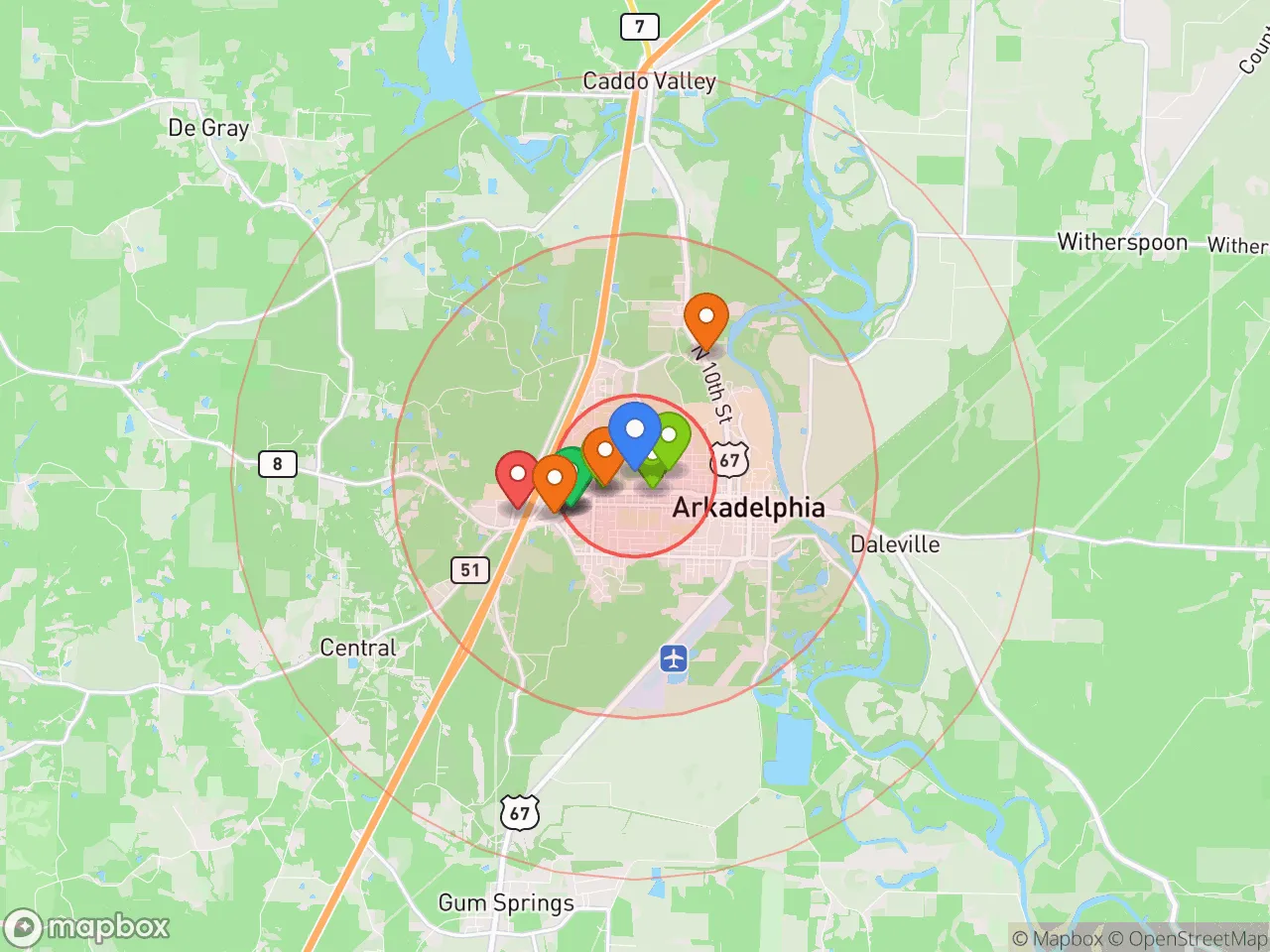
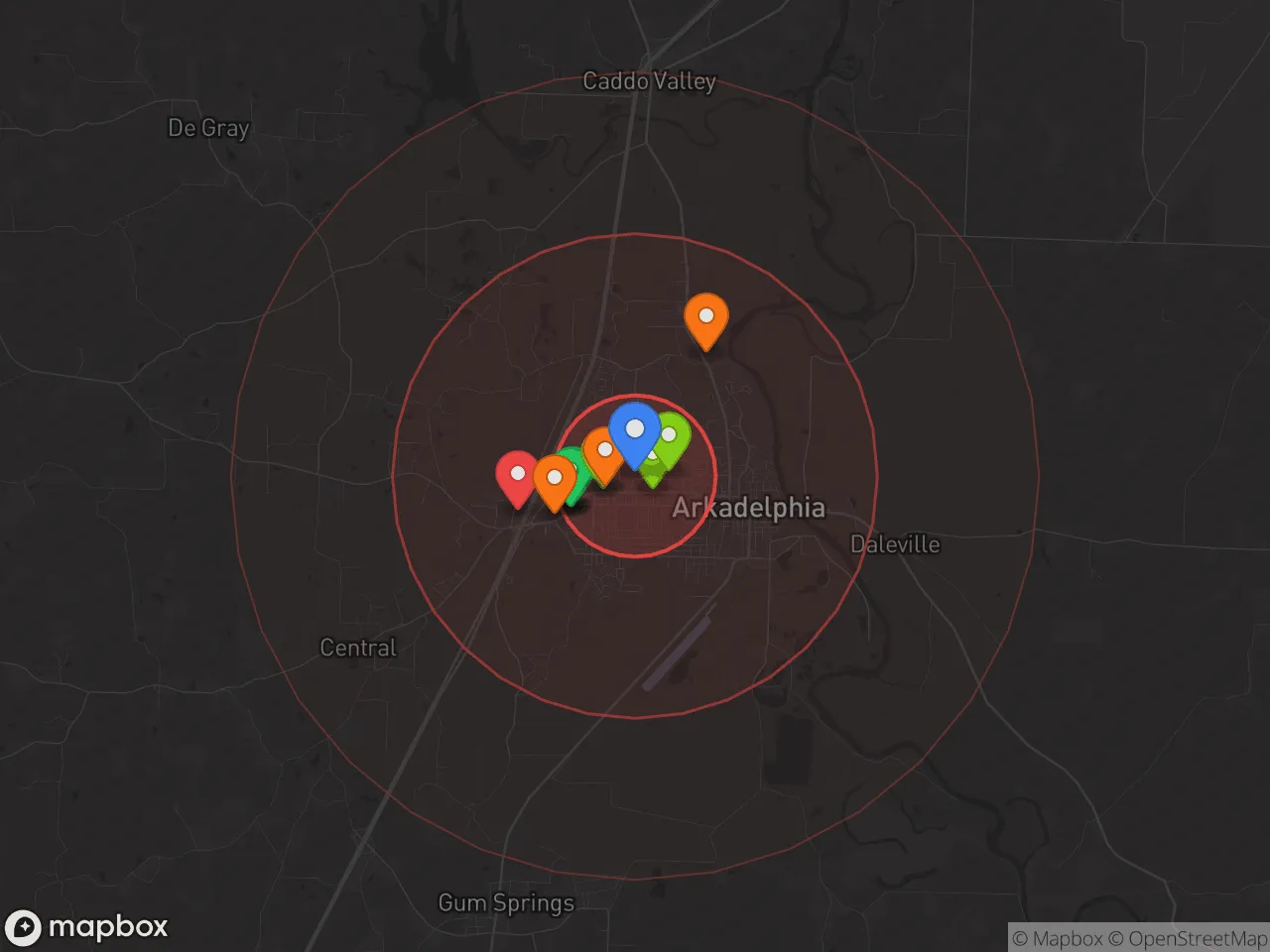
2 within 10 miles
Gas
11 within 10 miles
Hospital
2 within 20 miles
Airport
DFW — Dallas/Fort Worth International
Post Office
USPS — Arkadelphia, AR
Critical Amenities
Quality-of-Life Analysis
Arkadelphia, Arkansas, presents a notably affordable quality of life that attracts a mix of university faculty, healthcare workers, and retirees seeking a slower pace without sacrificing access to basic amenities. With a cost of living index of 63—well below the national average of 100—the city offers a financial cushion that is increasingly rare in the modern South. The population skews slightly older than the state median, reflecting a community where stability and routine matter more than rapid growth or nightlife.
How housing costs and everyday expenses compare to nearby cities
Housing in Arkadelphia is the primary driver of its low cost of living. The median home value sits at $176,000, while the median rent is just $741 per month—figures that are roughly 30–40% lower than in Hot Springs (25 miles north) and less than half of what one would pay in Little Rock (70 miles east). For context, a comparable three-bedroom home in Hot Springs might run $240,000, and in Little Rock’s western suburbs, $350,000 is common. The average commute in Arkadelphia is a remarkably short 15.7 minutes, which not only saves time but also reduces transportation costs significantly compared to the 25–30 minute regional average. Utility costs and grocery prices also track below state norms, meaning a household earning $50,000 annually here can maintain a standard of living that would require $70,000 in a more expensive Arkansas city.
What daily life is like for families, students, and retirees
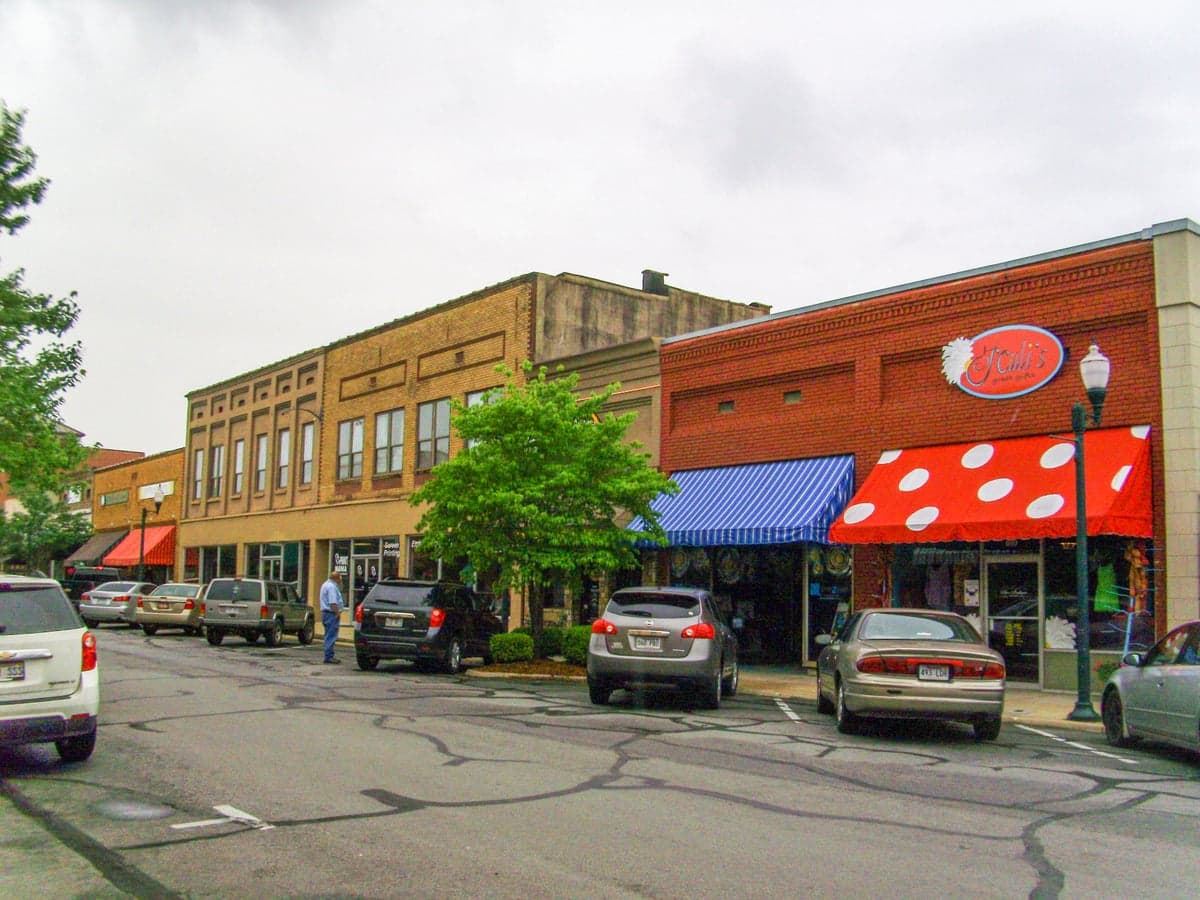
Daily life in Arkadelphia revolves around two major anchors: Henderson State University and Ouachita Baptist University, which together bring a steady influx of students and academic events to a town of roughly 10,700 residents. The public school system, Arkadelphia Public Schools, consistently earns ratings above the state average, with Arkadelphia High School offering Advanced Placement courses and a strong athletics program. For everyday errands and dining, the downtown corridor along Main Street features local staples like Rolando's Restaurante and the Arkadelphia Farmers Market (seasonal), while national retailers cluster near the I-30 interchange. Outdoor recreation is accessible at DeGray Lake Resort State Park, a 13,800-acre lake 10 minutes south that offers fishing, hiking, and a golf course. The city’s rhythm is distinctly unhurried—most businesses close by 6 p.m., and weekend evenings are quiet, with community events like the Clark County Fair and university theater productions providing the main social calendar.
Arkadelphia is best suited for those who prioritize affordability and a predictable routine over urban energy. Retirees on fixed incomes will find the low housing costs and short commutes especially attractive, while families with school-age children benefit from the above-average public schools and safe, walkable neighborhoods. Young professionals or remote workers seeking a lower cost of living should note that the local job market is limited primarily to education, healthcare (Baptist Health Medical Center-Arkadelphia), and retail, though the proximity to I-30 makes commuting to Hot Springs or Little Rock feasible for higher-paying roles. The city is not a destination for nightlife, high-end dining, or cultural diversity, but for those who value financial breathing room and a close-knit community, Arkadelphia delivers a solid, unpretentious quality of life.

Crime in Arkadelphia, AR
Generally safer than 56% of comparable U.S. locations.
Violent CrimeViolent Crime Analysis
Property CrimeProperty Crime Analysis
Crime Analysis
Arkadelphia, Arkansas, reports a violent crime rate of 286.3 incidents per 100,000 residents and a property crime rate of 1,584.7 per 100,000, placing it in a moderate risk category for a small city of roughly 10,000 people. These figures suggest that while serious violent offenses are less common than in many larger urban centers, property crime is a tangible concern for households and businesses. The overall safety picture is mixed, with the city benefiting from a relatively low population density but facing challenges common to small college towns and regional commercial hubs.
Crime in context
Arkadelphia's violent crime rate of 286.3 per 100,000 is roughly 18% below the national average of about 350 per 100,000, but it sits above the statewide Arkansas average of approximately 260 per 100,000. Property crime in Arkadelphia, at 1,584.7 per 100,000, is notably higher than both the national average (around 1,200) and the Arkansas state average (roughly 1,400). This elevated property crime rate is typical of cities that serve as regional retail and service centers, where transient populations and commercial density create more opportunities for theft, burglary, and vehicle break-ins. The presence of Henderson State University and Ouachita Baptist University also introduces a seasonal population flux that can temporarily increase crime reporting, particularly for larceny and vandalism.
What residents experience
For daily life in Arkadelphia, property crime is the most likely safety concern. Residents commonly report thefts from unlocked vehicles, package thefts from porches, and occasional burglaries of storage sheds or garages. Violent crime, while less frequent, does occur and is often concentrated in specific contexts—such as domestic disputes or incidents tied to the downtown bar and nightlife scene on Main Street. The city's police department maintains a visible presence, but response times can vary in outlying neighborhoods. A key factor influencing safety perception is the broader criminal justice environment in Clark County. Arkansas has seen a statewide trend toward more progressive prosecution policies in some jurisdictions, and while Arkadelphia itself has not adopted the most lenient approaches seen in larger metro areas, any shift toward offender-focused rather than victim-focused justice can erode public confidence. Residents should be aware that if local district attorneys or judges adopt policies that prioritize diversion or reduced sentencing for property and drug crimes, the current property crime rate could rise further as repeat offenders face fewer consequences.
Neighborhood-level variation in Arkadelphia is noticeable. Areas near the university campuses, particularly around Henderson State, see higher rates of reported theft and vandalism, while established residential neighborhoods like those along 10th Street and the historic district near the Clark County Courthouse tend to have lower crime incidence. The city's western and southern edges, which are more rural and less densely populated, generally report fewer incidents. Prospective residents are advised to check block-level crime maps and speak with local law enforcement about specific streets, as safety can shift significantly within a mile. Overall, Arkadelphia offers a moderate safety profile where property crime vigilance is essential, and where the local justice system's philosophy will directly shape future risk.
* Values derived from national, state, county, city and local statistics and may differ in a specific area. Last updated: 2026-04-30T04:41:47.000Z
Narrative content on this page is AI-generated and may contain mistakes. Verify any details that matter before acting on them.
ReloMaps may earn a commission from affiliate links at no extra cost to you.

