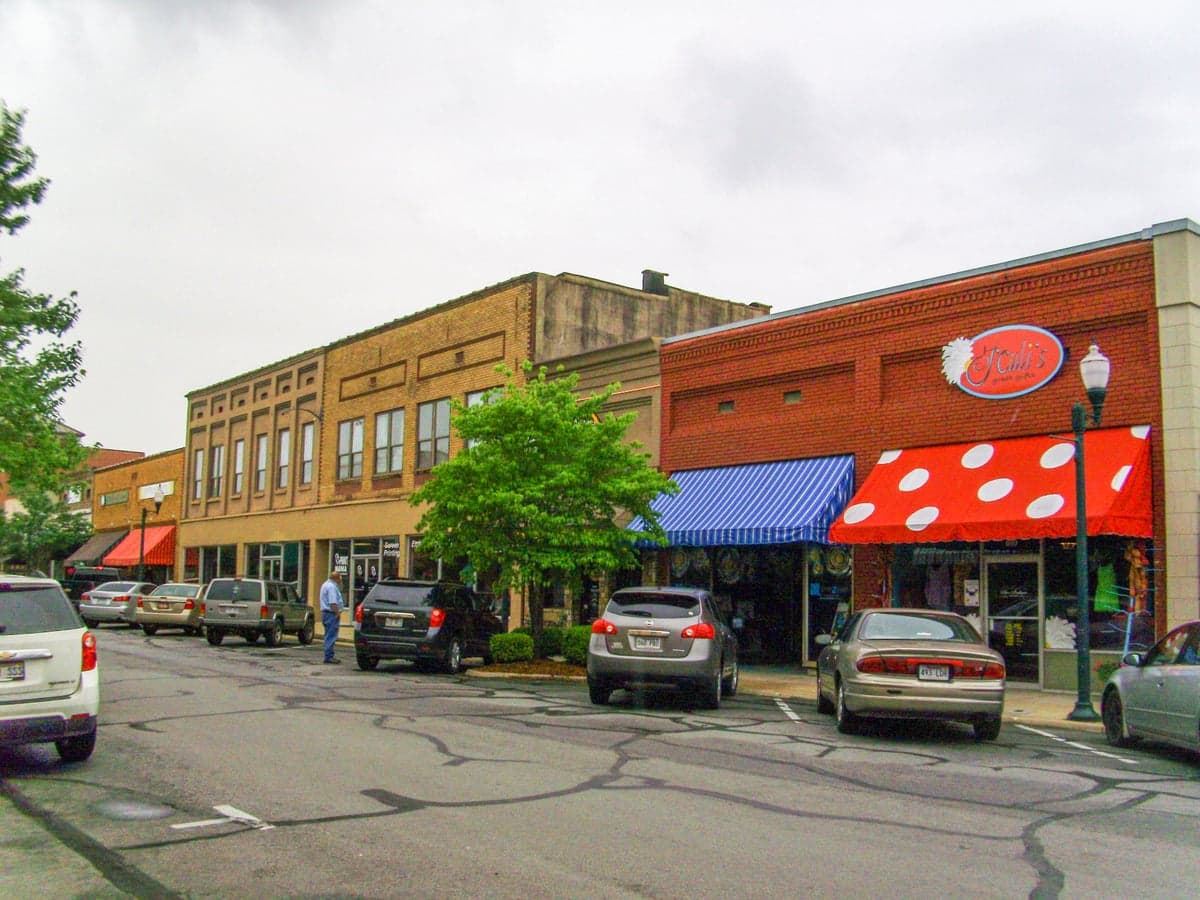
Photo: Wikipedia
Political ClimatePolitical Climate in Arkadelphia, AR
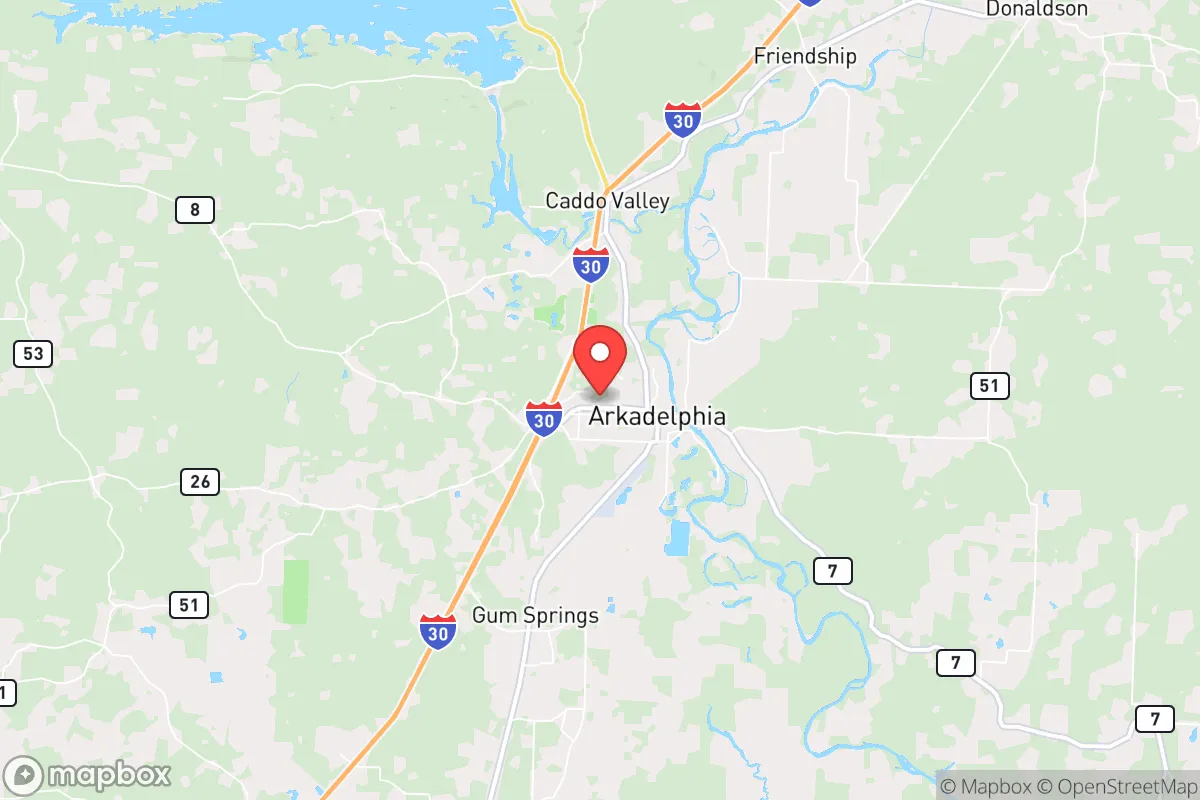
District shown is the primary district for this city’s centroid. Cities may span multiple districts.
Local Political AnalysisPolitical Analysis of Arkadelphia, AR
Arkadelphia leans heavily conservative, with a Cook PVI of R+20 that puts it firmly in the deep-red column of Arkansas politics. This isn't a recent shift—the area has been reliably Republican for decades, and most local offices, from the county quorum court to the state legislature, are held by conservatives who prioritize limited government and individual liberty. If you're looking at the broader political trajectory, it's been stable: while some neighboring college towns like Conway or Fayetteville have drifted leftward over the past ten years, Arkadelphia has held its ground, with voters consistently rejecting progressive ballot measures and candidates who push for expanded government control over personal choices.
How it compares
Drive thirty minutes north to Hot Springs, and you'll find a more mixed political landscape—still conservative overall, but with a noticeable libertarian streak and a few pockets of progressive activism around the tourism and arts scene. Head south to Texarkana, and you're in similar territory to Arkadelphia: solidly red, with a strong emphasis on Second Amendment rights and local autonomy. The real contrast, though, is with Little Rock, about an hour east. The capital city has seen a steady push toward progressive policies on housing, policing, and public health mandates, which many Arkadelphia residents view as a cautionary tale of government overreach. Here, the prevailing sentiment is that local communities know their own needs better than state or federal bureaucrats, and that's reflected in the voting patterns—Arkadelphia consistently backs candidates who promise to keep decision-making close to home.
What this means for residents
For someone moving here, the political climate translates into a few concrete realities. Taxes stay low—Arkansas has a flat income tax that's been gradually reduced, and property taxes in Clark County are among the more reasonable in the state. Gun laws are permissive, with constitutional carry in effect and no red-flag laws on the books, so you won't face the kind of restrictions you'd see in states like California or New York. School choice is expanding, with the LEARNS Act giving families more options beyond the local public system, which is a big deal for parents who want control over their kids' education without government mandates. On the flip side, if you're hoping for a city government that pushes ambitious climate initiatives or social programs, you'll be disappointed—Arkadelphia's leadership tends to focus on infrastructure, public safety, and keeping the budget balanced, not experimenting with new progressive policies. The long-term concern among locals is that as the state's population grows and younger, more urbanized voters move in from places like Dallas or Memphis, there could be pressure to adopt the same kind of top-down regulations that have soured many on larger cities. For now, though, the political culture here remains one of personal responsibility and a healthy skepticism of anyone who says they know what's best for you.
Culturally, Arkadelphia stands out for its emphasis on faith and family as the bedrock of community life, which shapes everything from school board decisions to local ordinances. You won't see mask mandates or vaccine passports being pushed here—those were largely rejected during the pandemic as overreach. The city also has a strong tradition of volunteerism and neighborly self-reliance, which means that when problems arise, residents tend to solve them through church groups, civic clubs, and informal networks rather than looking to the government for a solution. That independent streak is something long-time residents are proud of, and it's a big reason why the political climate here feels more like a throwback to an earlier era of American life—one where your rights are assumed, not granted by the state.

State Political ClimatePolitical Climate in Arkansas
State Political AnalysisPolitical Environment in the State
Arkansas has been a reliably red state for decades, with a solid Republican lean that has only deepened since the early 2000s. The state voted for Donald Trump by a margin of over 30 points in both 2020 and 2024, and Republicans hold supermajorities in both chambers of the state legislature. This wasn't always the case—Arkansas was a Democratic stronghold in the post-Civil War era, but a rapid realignment began in the 1990s and accelerated after 2010, driven by cultural conservatism and a backlash against federal overreach. Today, the dominant coalition is a mix of rural traditionalists, evangelical Christians, and suburban conservatives, with a growing libertarian streak that values limited government and personal autonomy.
Urban vs. rural divide
The political map of Arkansas is sharply divided between its few urban centers and the vast rural expanse. The northwest corner, anchored by Fayetteville and Bentonville, is the state's economic engine and its most politically competitive region. Washington County, home to Fayetteville and the University of Arkansas, has trended purple in recent cycles—it voted for Trump by only 12 points in 2024, down from 18 in 2016, as younger and more diverse professionals move in for jobs at Walmart, Tyson Foods, and JB Hunt. Meanwhile, Little Rock and its suburbs in Pulaski County remain a Democratic stronghold, with the city itself voting heavily blue while the surrounding areas like Maumelle and Sherwood lean Republican but are moderating. The rest of the state is deeply red: counties like Baxter (Mountain Home), Boone (Harrison), and Faulkner (Conway) routinely deliver 70-80% of their votes to GOP candidates. The rural-to-urban divide is stark—drive 20 minutes outside any city and you'll find Trump signs still standing from 2020, a reminder that this is a state where the countryside sets the political tone.
Policy environment
Arkansas's policy environment is aggressively conservative, with a focus on low taxes, deregulation, and cultural traditionalism. The state has a flat income tax of 4.4% (down from 7% in 2015), no estate tax, and a sales tax that averages 9.5% with local add-ons. Governor Sarah Huckabee Sanders, elected in 2022, has pushed through a series of executive orders and laws that roll back government involvement in daily life: she signed the LEARNS Act in 2023, which created a school voucher program and banned "critical race theory" and "indoctrination" in classrooms. On healthcare, Arkansas expanded Medicaid under the private option in 2013, but the state has since added work requirements and a reporting mandate that many conservatives see as a model for balancing compassion with personal responsibility. Election laws are strict: voter ID is required, early voting is limited to 15 days, and absentee ballots require a notarized signature or witness. The state also passed a near-total abortion ban in 2019 (triggered by Dobbs), with no exceptions for rape or incest—a reflection of the legislature's strong pro-life stance. For a conservative relocating here, the policy environment is largely welcoming, though some may find the sales tax burden and the lingering influence of federal programs like Medicaid expansion to be areas of concern.
Trajectory & freedom
Arkansas is trending toward more personal freedom in several key areas, particularly on gun rights, parental rights, and taxation. In 2021, the state passed constitutional carry (Act 777), allowing permitless concealed carry for anyone 21 or older—a move that expanded Second Amendment protections without government permission slips. The LEARNS Act of 2023 also strengthened parental rights by allowing families to use state funds for private or homeschool options, effectively breaking the government monopoly on education. On medical autonomy, Arkansas passed a law in 2023 banning gender transition procedures for minors (Act 626), which conservatives see as protecting children from irreversible medical decisions. However, there are areas where freedom has contracted: the state's medical marijuana program, approved by voters in 2016, remains tightly regulated with a limited number of dispensaries and a strict qualifying conditions list—a frustration for libertarians who see it as government overreach into personal health choices. Property rights are generally strong, with no statewide zoning mandates, but local governments in places like Fayetteville and Little Rock have imposed rental registration and short-term rental restrictions that some view as creeping regulation. Overall, the trajectory is toward more liberty on cultural and economic fronts, but with a heavy hand on social issues that align with traditional values.
Civil unrest & political movements
Arkansas has seen relatively little civil unrest compared to other states, but there are visible political movements that shape the atmosphere. The most active conservative groups are the Arkansas Family Council (focused on religious liberty and anti-abortion advocacy) and local chapters of the Moms for Liberty, which have been vocal at school board meetings in Bentonville and Conway about curriculum transparency and library content. On the left, the Arkansas chapter of the ACLU and Indivisible groups in Fayetteville and Little Rock have organized protests against the abortion ban and the LEARNS Act, but these are small and localized—typically drawing a few hundred people. Immigration politics are less heated here than in border states, but Springdale and Rogers have seen tensions over the growing Marshallese and Hispanic populations, with some local ordinances targeting housing density and language access. There is no sanctuary city movement in Arkansas; in fact, the state passed a law in 2019 (Act 1070) requiring local law enforcement to cooperate with federal immigration authorities. Election integrity controversies have been minimal—Arkansas uses paper ballots and has a robust voter roll cleanup process, which most conservatives trust. The most visible flashpoint a new resident might notice is the occasional protest at the state capitol in Little Rock, but these are rare and usually peaceful. For someone moving here, the political climate feels stable and orderly, with activism mostly confined to social media and church bulletin boards.
Projection
Over the next 5-10 years, Arkansas is likely to become more conservative in its policy direction, but with a growing libertarian undercurrent that could moderate some positions. The key demographic shift is the influx of professionals moving to northwest Arkansas for jobs in tech, logistics, and retail—areas like Bentonville and Rogers are growing at 2-3% annually, bringing younger, more educated voters who are fiscally conservative but socially libertarian. This could lead to a softening on issues like marijuana legalization (a ballot initiative for full legalization failed in 2022 but came close) and a push for more school choice options. Meanwhile, rural counties are aging and shrinking, which will amplify the rural conservative vote share even as the state's overall population grows. The biggest wildcard is the national political climate: if the GOP continues to fracture between populists and traditionalists, Arkansas's solid red status could see internal debates over trade, immigration, and spending. For a new resident, expect the state to remain a safe haven for conservative values, with low taxes, strong gun rights, and a culture of personal responsibility—but also a place where the government is still willing to step in on social issues like abortion and gender policy. The trajectory is toward more freedom on economic and educational fronts, with a firm hand on cultural matters.
For a conservative individual or family moving to Arkansas, the bottom line is this: you'll find a state that largely aligns with your values on limited government, personal responsibility, and traditional morality. The tax burden is low, the schools are increasingly choice-friendly, and the gun laws are among the most permissive in the country. You'll want to be aware of the urban-rural divide—if you settle in Fayetteville or Little Rock, you'll encounter more progressive neighbors and local policies, while the rest of the state feels like a conservative stronghold. The political climate is stable and predictable, with no major flashpoints likely to disrupt daily life. If you're looking for a place where the government stays out of your business on most fronts, Arkansas is a solid bet—just keep an eye on the legislature's tendency to regulate social issues, and be prepared for a sales tax that can sting at the register. Overall, it's a state where you can live freely, raise a family with traditional values, and not worry about the political chaos seen in other parts of the country.
* Values derived from national, state, county, city and local statistics and may differ in a specific area. Last updated: 2026-04-30T04:41:47.000Z
Narrative content on this page is AI-generated and may contain mistakes. Verify any details that matter before acting on them.
ReloMaps may earn a commission from affiliate links at no extra cost to you.

