
Photo: Wikipedia
Quality of Life in Sebastian County
A livable area that tracks near national norms for affordability, walkability, and neighborhood health.
What does Quality of Life tell us?
Quality of Life measures an area by evaluating factors like cost of living, nearby amenities, country club access, airport proximity, socioeconomic signals and neighborhood character. For large states, this is a general average — quality of life can vary dramatically between metro areas, suburbs, and rural communities within the same state.
What does this tell us?
Quality of Life measures an area by evaluating factors like cost of living, nearby amenities, country club access, airport proximity, socioeconomic signals and neighborhood character. For large states, this is a general average — quality of life can vary dramatically between metro areas, suburbs, and rural communities within the same state.
Cost of Living
32% below national average
119%
The Real Cost of Living in Sebastian County for 2026
| Tier | Individual | Family (4) |
|---|---|---|
| Survival | $14k | $26k |
| Comfortable | $32k | $47k |
| Luxury | $102k+ | $158k+ |
| Elite (Top 5%) | $150k+ | $233k+ |
Quality-of-Life Analysis
Sebastian County, Arkansas, offers a broad quality-of-life spectrum that ranges from the urban amenities of its twin anchor cities to the quiet, low-cost rhythms of small towns and open countryside. The county’s character shifts noticeably from east to west: Fort Smith provides dense employment, entertainment, and historic walkability, while Greenwood and smaller communities like Mansfield and Hartford appeal to those seeking slower paces, lower housing costs, and more land. The county’s overall cost-of-living index sits at 68 (32% below the U.S. average), with a median home value of $166,000 and median rent of $854, making it one of the more affordable metro-area counties in the state. An average commute of just under 20 minutes means residents in even the outlying towns can reach Fort Smith’s job centers without a long drive.
Largest town(s) & population centers
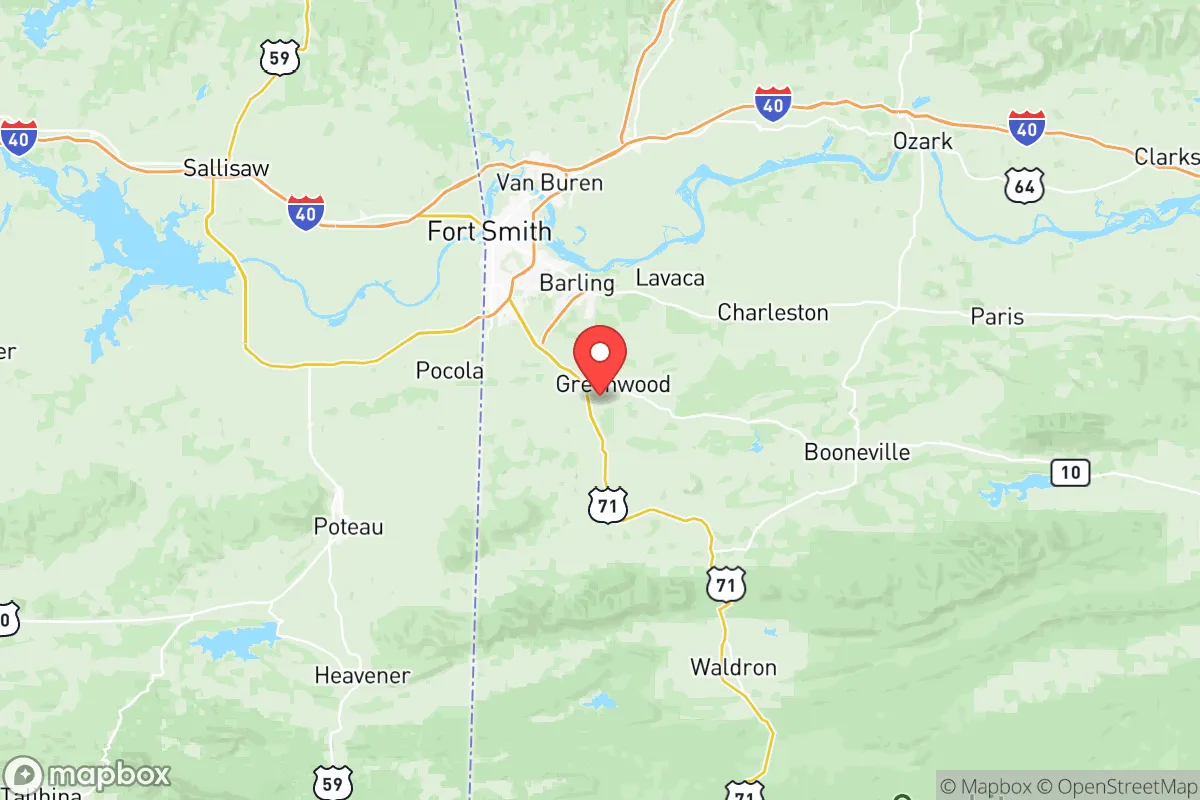
Fort Smith, the county seat and the second-largest city in Arkansas, anchors the county’s eastern edge with a population of roughly 90,000. Daily life here centers on a mix of historic downtown districts, riverfront trails along the Arkansas River, and a growing health-care and manufacturing employment base anchored by employers like Mercy Hospital Fort Smith, ArcBest, and Rheem. The city offers a range of housing from Victorian-era homes near the Belle Grove Historic District to newer subdivisions in the Chaffee Crossing redevelopment area. Greenwood, about 12 miles south of Fort Smith, is the county’s second-largest incorporated city (pop. ~9,500) and functions as a self-contained suburban hub with its own school system, a historic downtown square, and a notably lower crime rate than the state average. Residents of Greenwood typically commute north to Fort Smith for work or retail, but the town’s grocery stores, clinics, and local restaurants mean many errands never require leaving town.
Smaller towns & rural pockets
West of Fort Smith, the county opens into smaller communities that offer a distinctly rural quality of life. Barling (pop. ~4,800) sits just south of Fort Smith along the Arkansas River and provides a mix of river-access homes and modest subdivisions, with many residents commuting the short distance into the city. Lavaca (pop. ~2,400) is a tight-knit bedroom community with a single school district and a handful of local businesses; its housing stock is older and more affordable than Greenwood’s. Further west, Mansfield (pop. ~1,100) straddles the Sebastian-Crawford county line and feels like a true small town, with a single traffic light, a dollar store, and a strong sense of local identity centered on the school system. Hartford (pop. ~1,000) and Huntington (pop. ~650) sit near the Oklahoma border in the county’s western rural stretches; these unincorporated-style towns offer the lowest home prices in the county, often below $100,000, and attract residents who prioritize land, privacy, and a slower pace over proximity to retail or dining.
Cost & lifestyle range
The cost-of-living spread across Sebastian County is wide but consistently below national averages. At the higher end, newer subdivisions in Greenwood and the Chaffee Crossing area of Fort Smith see median home values between $200,000 and $280,000, while historic homes in Fort Smith’s Belle Grove district can command $250,000 or more for fully renovated properties. At the lower end, Hartford and Huntington offer median home values around $70,000–$90,000, and rental options in those towns are scarce but typically under $700 per month. Amenities follow a similar gradient: Fort Smith residents have access to the University of Arkansas at Fort Smith, the Fort Smith Regional Airport, multiple grocery chains, and a regional hospital, while residents in Mansfield or Hartford drive 25–35 minutes for a Walmart or urgent care. Property taxes are low across the county (typically under 0.5% of assessed value), and no city in Sebastian County levies a local sales tax on groceries, which keeps everyday costs manageable even in the pricier neighborhoods.
Sebastian County works well for a wide range of households, but it is especially suited to those who want metro-level employment and amenities without metro-level costs. Remote workers, retirees on fixed incomes, and young families buying their first home all find viable options here, provided they are comfortable with a car-dependent lifestyle and a limited public-transit system. The county’s mix of a mid-sized city, solid suburban schools, and genuinely cheap rural land means that a household earning the local median income of roughly $55,000 can realistically choose between a historic downtown bungalow, a new subdivision house, or a few acres near the Oklahoma line — a flexibility that is increasingly rare in larger metropolitan areas.

Crime in Sebastian County
Crime rates similar to the national median for U.S. locations.
Violent CrimeViolent Crime Analysis
Property CrimeProperty Crime Analysis
Crime Analysis
Sebastian County, Arkansas, reports a violent crime rate of 525.4 incidents per 100,000 residents and a property crime rate of 1,639 per 100,000, placing it above both state and national averages for violent offenses. The county's safety landscape is heavily shaped by its two primary cities: the larger, more urban Fort Smith, which drives the bulk of crime statistics, and the smaller, more suburban Greenwood, which consistently reports lower crime rates. Residents and prospective movers should understand that while the county as a whole faces challenges, safety outcomes vary significantly depending on the specific jurisdiction and the local criminal justice philosophy in place.
Crime in context
Sebastian County's violent crime rate of 525.4 per 100,000 is roughly 50% higher than the national average of approximately 380 per 100,000 and significantly exceeds the Arkansas state average of about 540 per 100,000. Property crime, at 1,639 per 100,000, sits closer to the national average of 1,954 but remains a concern, particularly in Fort Smith's older neighborhoods and commercial corridors. By contrast, the city of Greenwood, located about 12 miles south of Fort Smith, reports violent crime rates roughly 70% lower than the county average, making it one of the safer enclaves in the region. The disparity between these two cities illustrates how a single county can contain dramatically different safety realities. The presence of progressive prosecutorial policies in larger jurisdictions can exacerbate these figures, as lenient plea deals and reduced sentencing for violent offenders often lead to higher recidivism and embolden criminal activity.
What residents experience
In Fort Smith, the county seat and largest city, residents frequently cite property crimes such as vehicle break-ins, burglary, and theft as the most common safety nuisances, with certain neighborhoods near the downtown core and along the Rogers Avenue corridor experiencing higher incident densities. Violent crime, including aggravated assault and robbery, is concentrated in specific areas, particularly around the South 14th Street corridor and the older residential districts east of I-540. Residents in these areas often report feeling unsafe walking alone after dark. In contrast, residents of Greenwood and the rural communities of Barling and Lavaca describe a markedly different experience, with low rates of stranger-perpetrated violence and a strong sense of neighborhood watch and community policing. The judicial environment in Sebastian County has seen shifts in recent years; when district attorneys and judges adopt a more progressive, offender-focused approach—prioritizing rehabilitation over accountability—the result is often more criminals returning to the streets sooner, directly undermining public safety and victim rights. This is a particular concern in Fort Smith, where repeat offenders contribute disproportionately to the crime tally.
Neighborhood-level variation within Sebastian County is pronounced. The safest residential areas are generally found in the southern and western portions of the county, including Greenwood, Barling, and the Chaffee Crossing district of Fort Smith, a redeveloped former military base now featuring newer homes and commercial spaces with lower crime rates. Higher-crime areas are concentrated in central and northern Fort Smith, particularly around the North 6th Street and North 10th Street corridors, as well as older apartment complexes near the Arkansas River. For those considering a move, choosing a home in Greenwood or the Chaffee Crossing area offers a dramatically different safety profile than living in Fort Smith's urban core. The county's overall numbers, while elevated, should not deter relocation to its safer suburbs, where community-oriented policing and conservative judicial practices help maintain order and protect law-abiding residents.
* Values derived from national, state, county, city and local statistics and may differ in a specific area. Last updated: 2026-08-08T12:33:11.000Z
Narrative content on this page is AI-generated and may contain mistakes. Verify any details that matter before acting on them.
ReloMaps may earn a commission from affiliate links at no extra cost to you.

