Photo: Wikipedia
Demographics of Atchison, KS
Affluence Level in Atchison, KS
A below-average socioeconomic profile. Incomes, home values, and educational attainment trail the U.S., with higher poverty and unemployment.
People of Atchison, KS
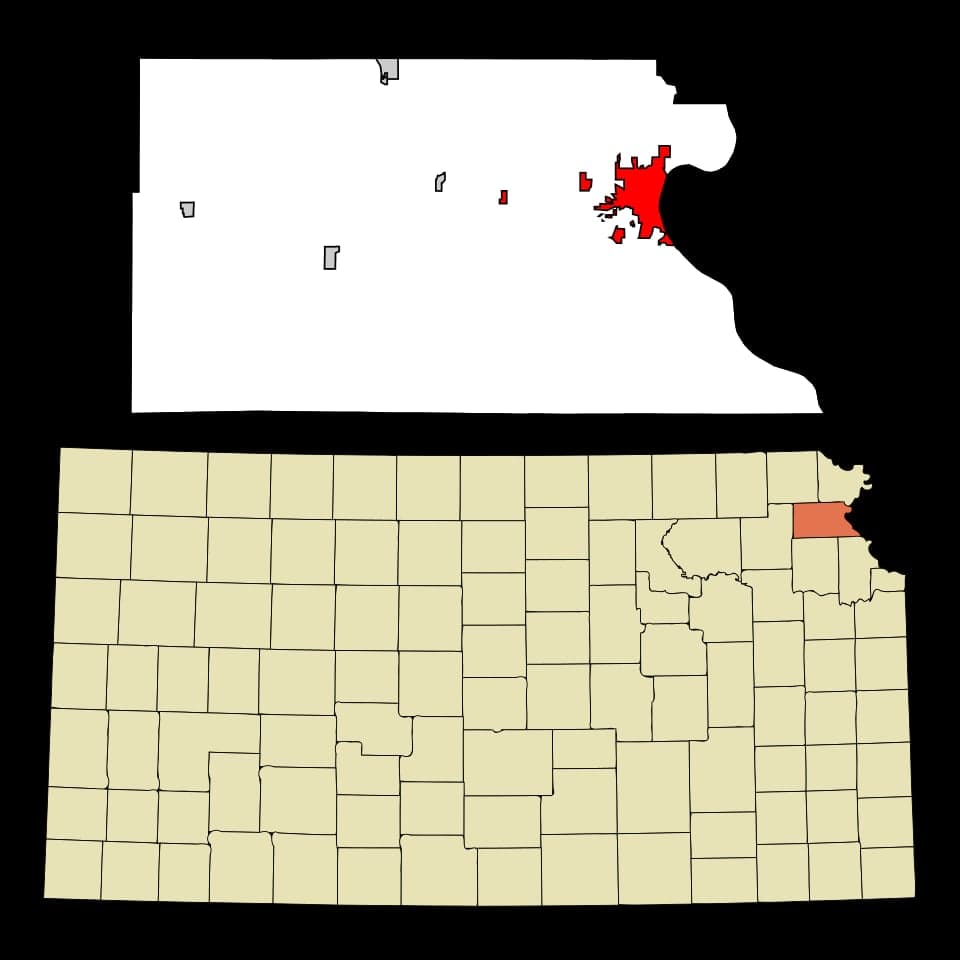
Atchison, Kansas, today is a small, predominantly white community of 10,795 residents, shaped by its history as a river town and railroad hub. The city retains a distinctively historic character, with a population that is 82.2% white, 6.1% Black, and 5.0% Hispanic, while the foreign-born share sits at just 1.0%. Its identity is rooted in Catholic and German heritage, visible in its architecture and annual events, but the population has been slowly aging and declining, with a college-educated rate of 28.4% that lags behind national averages.
How the city was settled and grew
Atchison was founded in 1854 by pro-slavery settlers from Missouri, including the town's namesake, David Rice Atchison, a U.S. Senator. Its location on the Missouri River made it a natural terminus for the Atchison, Topeka and Santa Fe Railway, which drew a wave of German Catholic immigrants in the 1860s and 1870s. These families settled primarily in the North End neighborhood, near St. Benedict's Abbey and the original rail yards, building the city's Catholic institutions and brick homes that still stand. A second wave of Irish immigrants arrived during the same period, clustering in the South Side around the riverfront and the Atchison Union Depot, working as dockhands and railroad laborers. By 1900, the city's population had swelled to over 15,000, driven by flour milling and the Benedictine College seminary, which attracted a steady stream of religious and academic families. The West End, developed in the early 1900s, became home to the city's professional class—bankers, mill owners, and railroad executives—who built the large Victorian homes along parallel streets like Commercial and Santa Fe.
Modern era (post-1965)
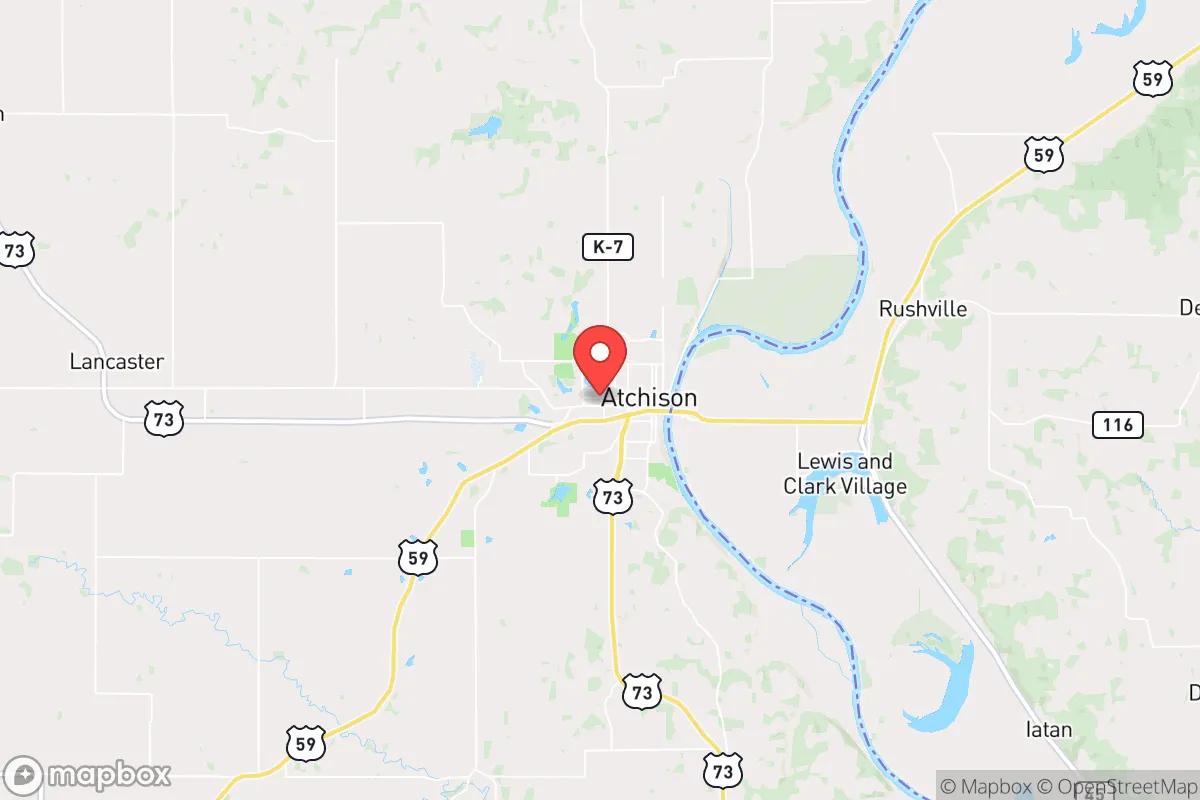
After the 1965 Immigration and Nationality Act, Atchison saw little new foreign-born growth; the foreign-born share remains at 1.0%, far below the national average. The city's Black population, historically small, grew modestly from the 1970s onward as families moved from Kansas City for affordable housing, settling in the East Atchison area near the former stockyards and along parallel streets like Eighth and Ninth. The Hispanic population, now 5.0%, began arriving in the 1990s, drawn by work at the local meatpacking plants and the Atchison Hospital, with families concentrating in the South End near the river and along U.S. Route 73. Domestic out-migration has been the dominant trend since the 1980s, as younger residents left for college or jobs in Kansas City (45 miles south), leaving an older, more settled population. The College Hill neighborhood, surrounding Benedictine College, has seen a slight influx of faculty and staff, but the city's overall population has declined from a peak of 12,655 in 1960 to 10,795 today.
The future
Atchison's population is projected to continue a slow decline, with the median age rising as younger families leave for larger metros. The Hispanic community is the only growing demographic segment, but its share is small and unlikely to drive a major shift without new economic anchors. The city is not tribalizing into distinct enclaves; instead, it is homogenizing as the white population ages and the small Black and Hispanic communities remain geographically dispersed across the South End and East Atchison. The next 10-20 years will likely see further population contraction, with the city's character remaining stable but older. Benedictine College and the local hospital are the primary stabilizing employers, but without a major new industry or in-migration wave, Atchison will continue to shrink slowly.
For someone moving in now, Atchison offers a quiet, historic, and affordable small-town environment with a strong Catholic and German cultural backbone. The population is stable but aging, and newcomers should expect a community that values tradition and local institutions over rapid change. The city is becoming a quieter, older version of itself—a place for those seeking low cost of living and a close-knit, predominantly white community, rather than demographic diversity or economic dynamism.

* Values derived from national, state, county, city and local statistics and may differ in a specific area. Last updated: 2026-05-01T14:27:16.000Z
Narrative content on this page is AI-generated and may contain mistakes. Verify any details that matter before acting on them.
ReloMaps may earn a commission from affiliate links at no extra cost to you.

