Photo: Wikipedia
Demographics of Auburn, ME
Affluence Level in Auburn, ME
A middle-class area roughly in line with national averages across income, home values, education, and employment.
People of Auburn, ME
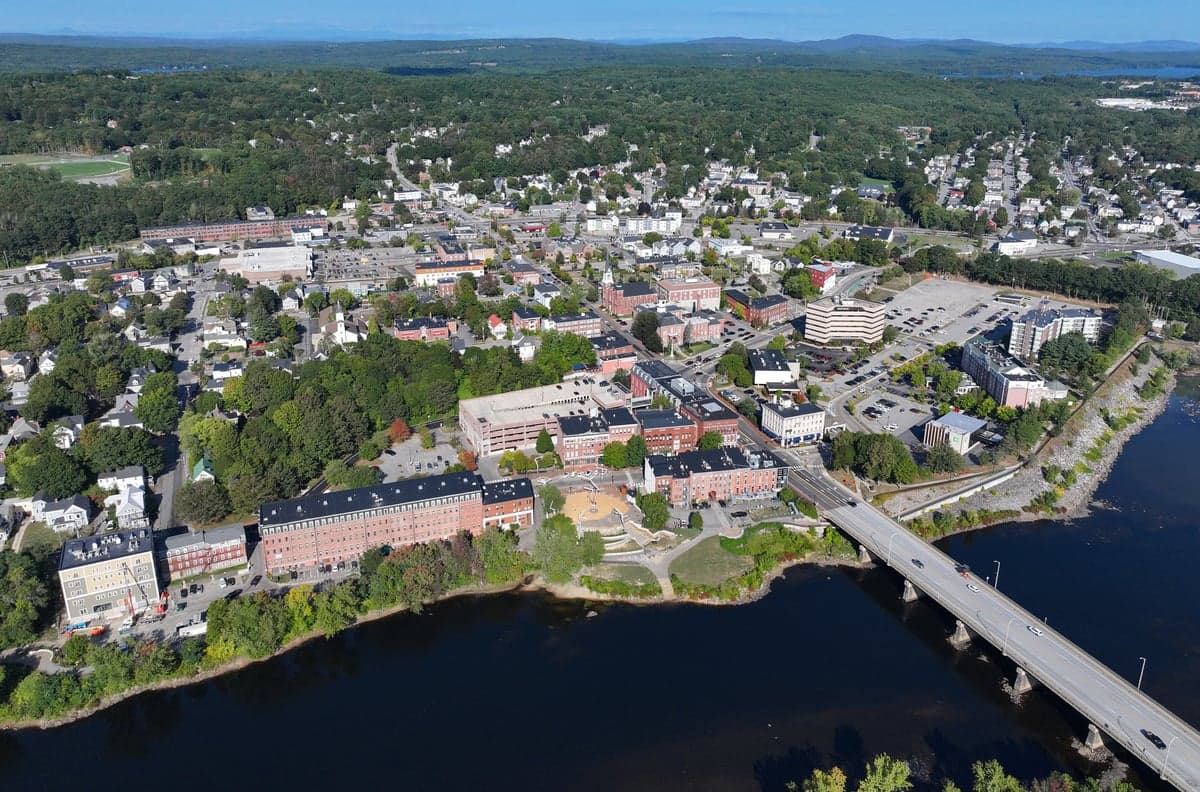
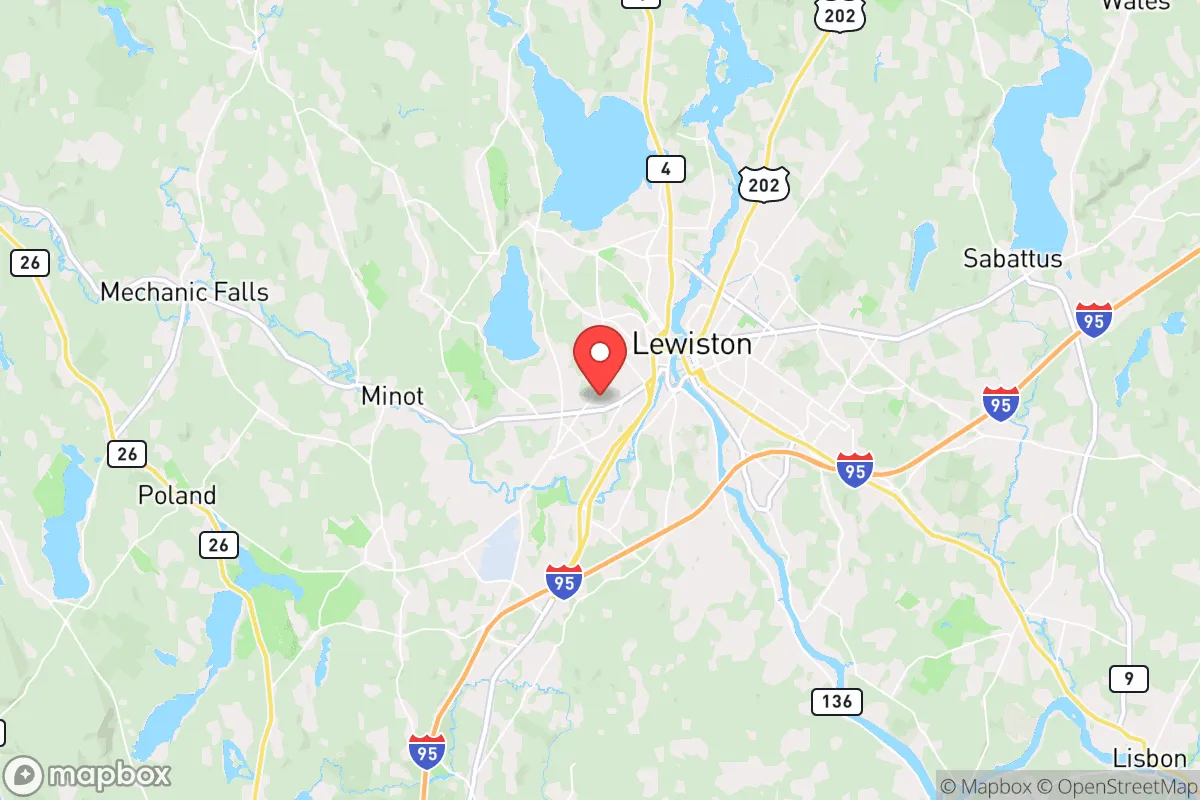
The people of Auburn, Maine today form a predominantly white, working-to-middle-class community of 24,294 residents, characterized by a strong Franco-American heritage and a quiet, family-oriented character. With 90.6% of the population identifying as white and only 2.6% foreign-born, Auburn remains one of the least ethnically diverse cities in southern Maine, a stark contrast to its larger neighbor Lewiston across the Androscoggin River. The city’s identity is rooted in its industrial past and a stable, slow-growing population that values affordability, local schools, and proximity to outdoor recreation.
How the city was settled and grew
Auburn’s population history begins with the Androscoggin people, but the city’s modern human story starts with European settlers drawn by water power and timber. Incorporated as a town in 1842 and as a city in 1868, Auburn grew rapidly as a shoe-manufacturing hub, attracting waves of French-Canadian immigrants from Quebec between 1850 and 1900. These families settled in the Little Canada neighborhood near the river, building tight-knit Catholic parishes like St. Louis Church that still anchor the Franco-American community today. A second wave of Irish immigrants arrived to work in the mills and railroads, concentrating in the New Auburn district, which developed as a working-class enclave with its own schools and shops. By 1900, Auburn’s population had surged past 12,000, overwhelmingly white and native-born or French-Canadian, with the shoe industry employing nearly half the workforce. The city’s growth plateaued after World War II as manufacturing declined, and the population hovered around 24,000 for decades, with little new immigration to alter the ethnic makeup.
Modern era (post-1965)
The post-1965 immigration reforms had minimal impact on Auburn. Unlike Lewiston, which saw a significant Somali refugee resettlement beginning in the 2000s, Auburn attracted almost no foreign-born population. The foreign-born share today is just 2.6%, and the city’s racial composition has shifted only slightly: the Black population rose from near zero to 2.9%, largely through secondary migration from Lewiston’s Somali community into affordable housing in the Lake Auburn area and scattered rentals near the Center Street corridor. The Hispanic share (2.3%) and East/Southeast Asian share (1.0%) remain tiny, with no Indian-subcontinent population recorded. Domestic in-migration has been modest, mostly from other parts of Maine and New England, drawn by lower housing costs compared to Portland. The West Auburn neighborhood, with its newer subdivisions and larger lots, has absorbed most of the city’s limited suburban growth, attracting families seeking better schools and quieter streets. Auburn’s college-educated share (28.9%) lags behind the national average, reflecting a workforce still anchored in manufacturing, healthcare, and retail rather than knowledge-economy jobs.
The future
Auburn’s population is trending older and slightly more diverse, but change is slow. The city’s median age has crept upward as younger adults leave for Portland or Boston, and the school-age population has declined. The foreign-born share is unlikely to rise significantly given the lack of refugee resettlement programs or large employers attracting international workers. The Black and Hispanic populations may grow gradually through continued spillover from Lewiston, but Auburn remains a city where 9 in 10 residents are white, and that ratio is projected to hold for the next decade. The East Auburn area, with its new retail development and highway access, may attract some younger families, but the city lacks the job growth or housing construction to reverse its demographic stagnation. No major immigrant enclave is forming, and the city’s neighborhoods remain largely homogeneous by race and class.
For someone moving to Auburn now, the city offers a stable, predominantly white, working-class community with a strong Franco-American identity and little of the ethnic diversity or tension found in larger New England cities. The population is aging and slow-growing, but the city’s affordability, low crime, and access to Maine’s outdoors make it a practical choice for families and retirees who prioritize stability over diversity. Auburn is not becoming a melting pot—it is remaining what it has been for a century: a quiet, homogeneous mill town adapting slowly to a changing world.

* Values derived from national, state, county, city and local statistics and may differ in a specific area. Last updated: 2026-04-22T23:31:00.000Z
Narrative content on this page is AI-generated and may contain mistakes. Verify any details that matter before acting on them.
ReloMaps may earn a commission from affiliate links at no extra cost to you.

