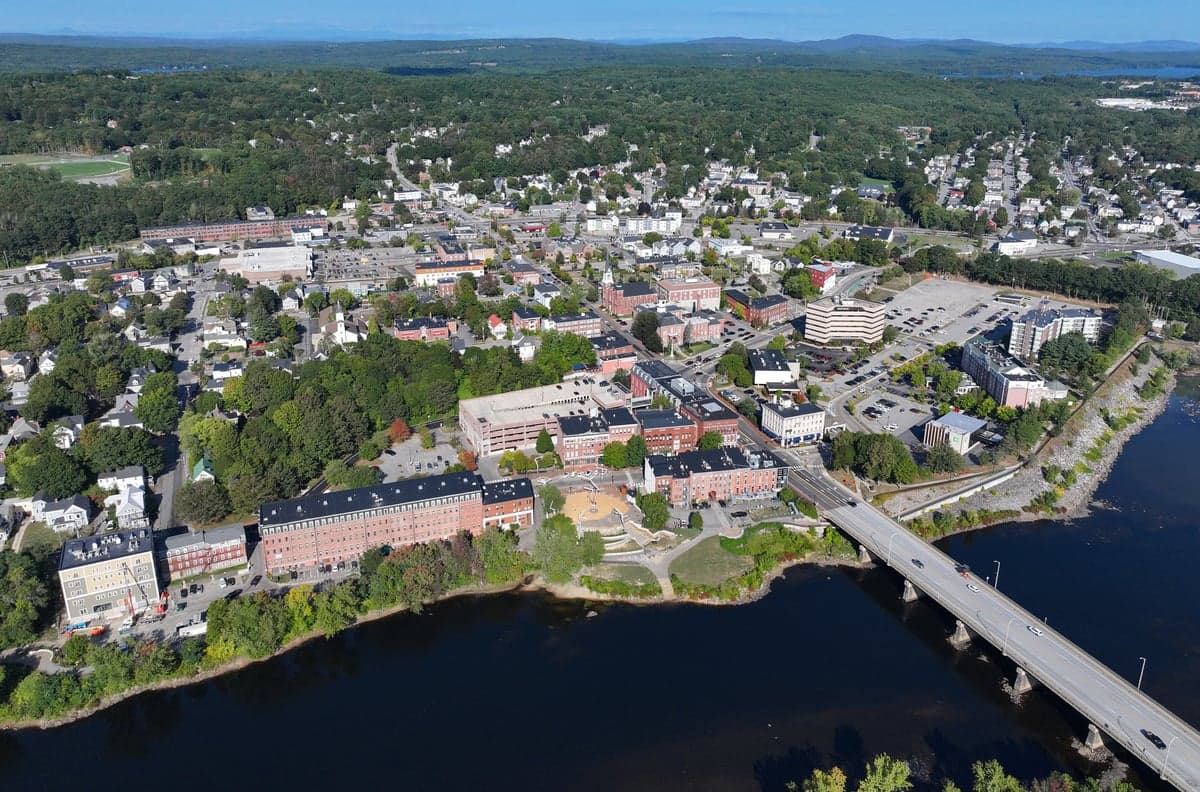
Photo: Wikipedia
Strategic Assessment of Auburn, ME
Meaningful friction. Expect exposure to either population pressure, blast zones, or natural disaster risk. Consider buying a retreat property.
What does the Strategic Assessment tell us?
Our Strategic Assessment grades tactical survivability of an area. Major population centers, military targets, fallout zones, natural disasters, and border exposure all drive risk — lower exposure means a more defensible position in a crisis.
This is heavily inspired by Joel Skousen's Strategic Relocation book. Highly recommended you checkout the book ($)What does this tell us?
Our Strategic Assessment grades tactical survivability of an area. Major population centers, military targets, fallout zones, natural disasters, and border exposure all drive risk — lower exposure means a more defensible position in a crisis.
This is heavily inspired by Joel Skousen's Strategic Relocation book. Highly recommended you checkout the book ($)Strategic Pillars

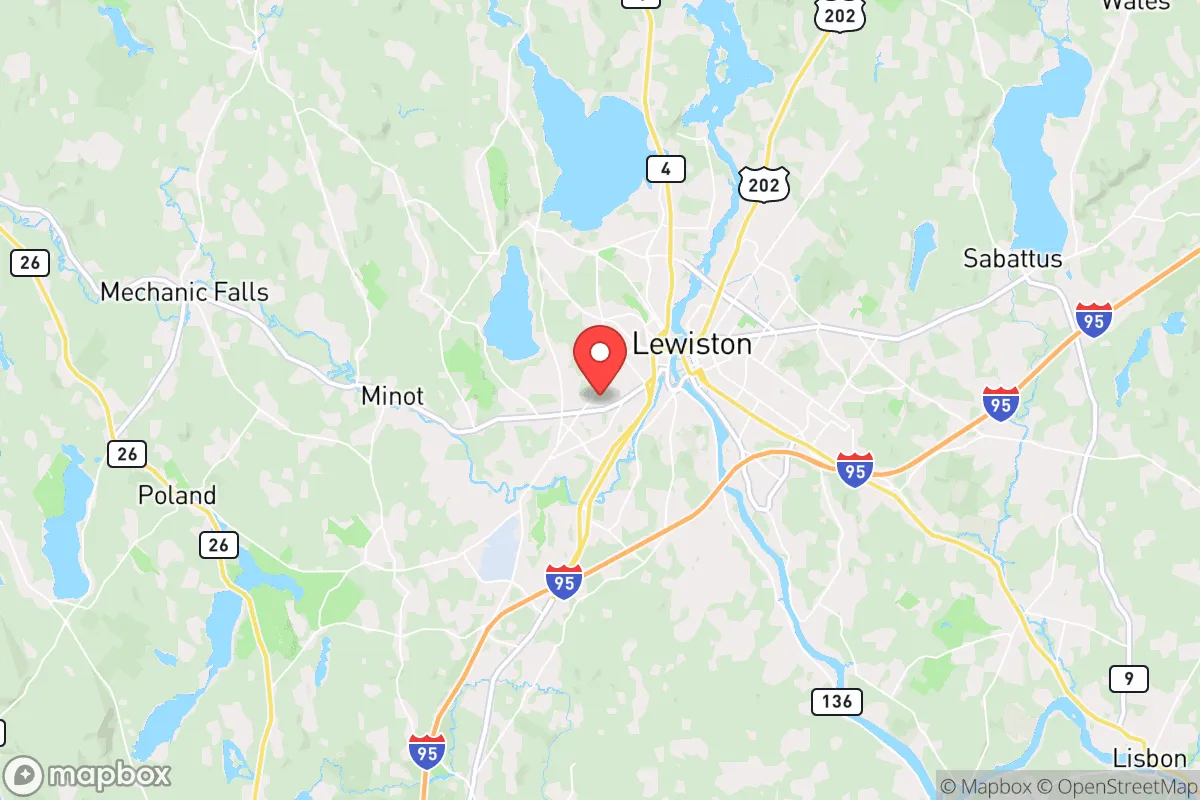
Key Distances
Regional Safe Places
Below is our recommended "safe zones" in Maine and the surrounding area based on our strategic heuristics. For most people, it's unrealistic to live in a “safe zone” full-time due to work, family or other personal reasons. They tend to be more rural. However, many of these areas are perfect for second homes and retreat properties that double as a vacation home or even a short-term rental.
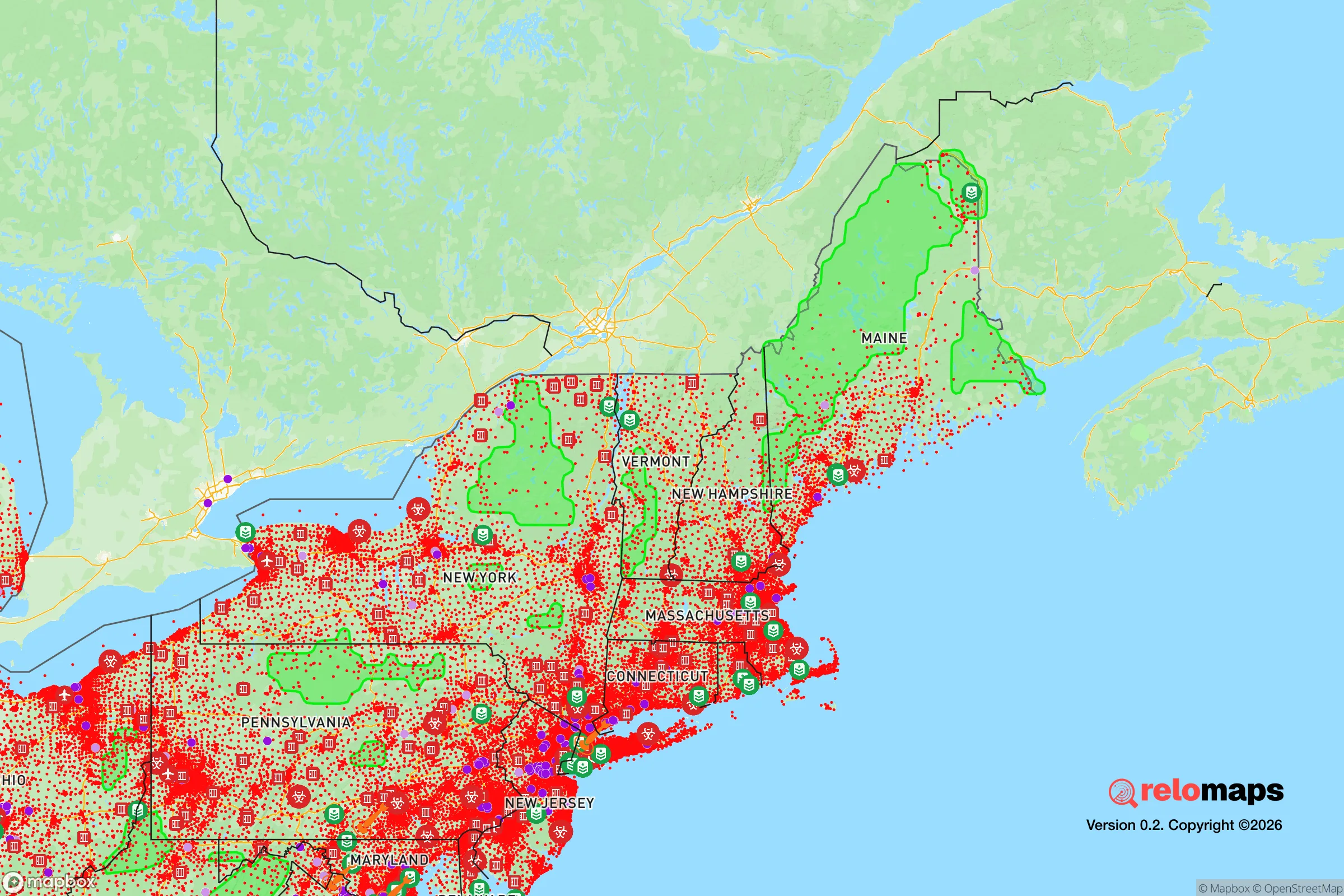
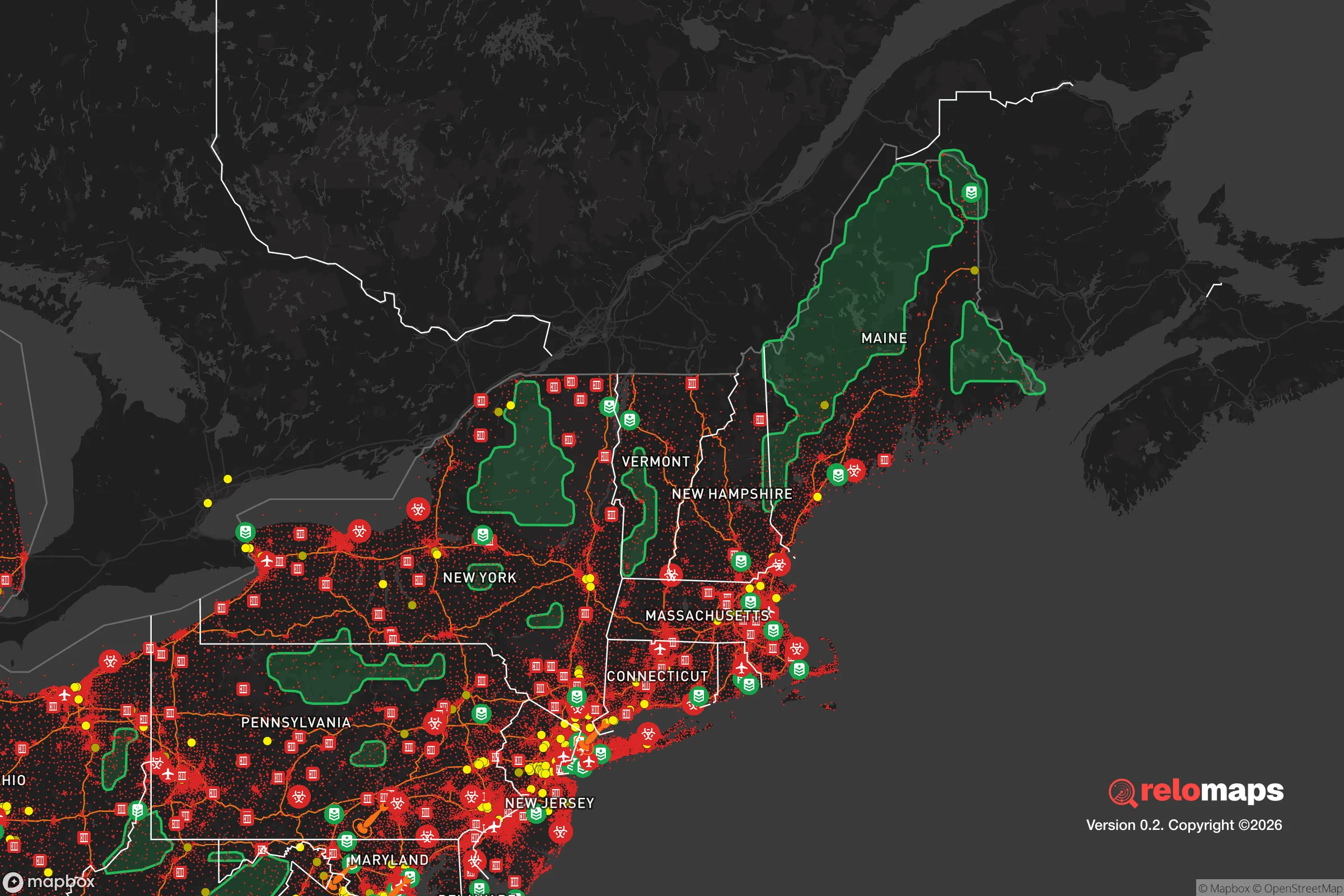


Important Note: For informational purposes only. This does not mean nothing bad ever happens in the green zones. Please use common sense. This is based on public data and modeled with AI. We tried to take a conservative approach but mistakes happen. We update this regularly as new information becomes available.
Solar Generator Recommendations
Backup power matters more here than in safer locations. We've picked three solar generators across budgets and capacity tiers — start with the budget unit if you only need a few essentials, or step up if you want to run a fridge and HVAC for days at a time.

Jackery Portable Power Station Explorer 300
Budget OptionPower on the Go: Weighing only 11 lbs, it's convenient to set up and store with book-sized foldable solar panels

BLUETTI Portable Power Station AC180
Designed for both indoor and outdoor scenarios, AC180 is highly capable as it has a robost capacity and continuous output power.

EF ECOFLOW DELTA Pro Ultra Power Station
Upgraded PickEcoFlow DELTA Pro Ultra is a whole-home energy system designed to grow with your family. Integrated with the Smart Home Panel 2, it scales to meet your evolving energy needs — keeping your home powered, intelligent, and secure through every stage of life.
We earn a commission, at no additional cost to you.
Strategic Assessment Analysis
Auburn, Maine, offers a compelling strategic position for those prioritizing resilience and self-sufficiency, particularly when viewed through a lens of preparedness for civic unrest and large-scale disruptions. Situated along the Androscoggin River in Androscoggin County, this city of roughly 24,000 people sits at a meaningful distance from the densest population corridors of the Northeast, providing a buffer against the immediate fallout of a major event in Boston or Portland. Its location at the intersection of I-95 and I-495, combined with access to rail and the Auburn/Lewiston Municipal Airport, creates a logistical node that is both connected and defensible—a rare balance for a relocator seeking to avoid the chaos of major metropolitan areas while retaining the ability to move people or supplies if needed.
Geographic position and natural advantages for long-term survival
Auburn’s geography is its first line of defense. The city is nestled in the western foothills of Maine, with the Androscoggin River providing a reliable water source and a natural barrier to the east. The surrounding terrain—rolling hills, mixed hardwood and pine forests, and numerous lakes like Lake Auburn and Taylor Pond—offers ample opportunities for off-grid living, hunting, and foraging. The area’s proximity to the White Mountain National Forest to the west and the vast, sparsely populated wilderness of northern Maine means that a relocator can tap into a deep reservoir of natural resources without being immediately adjacent to a major target. The climate is a double-edged sword: harsh winters with heavy snowfall can be a logistical challenge, but they also serve as a natural deterrent to unprepared populations and reduce the risk of year-round mass migration from coastal cities. The growing season is short—roughly 120 days—but the region’s fertile river valleys support small-scale agriculture, and the local soil is well-suited for root vegetables and cold-hardy crops. For a prepper, this means that with proper planning (greenhouses, cold frames, and seed banking), a family can achieve a meaningful degree of food independence.
Risks, exposures, and proximity to fallout-relevant landmarks
No location is without vulnerabilities, and Auburn’s strategic profile includes several significant exposures. The most pressing concern is its proximity to the Maine Yankee nuclear decommissioning site in Wiscasset, roughly 30 miles southeast. While the plant is no longer operational, the spent fuel remains stored on-site in dry casks, making it a potential target for sabotage or a secondary hazard in the event of a regional disaster. Additionally, the city lies within 100 miles of the Portsmouth Naval Shipyard in Kittery, a strategic military asset that could become a target in a conflict scenario. The I-95 corridor, which runs directly through Auburn, is a double-edged sword: it provides supply routes but also funnels displaced populations from Portland (35 miles south) and Boston (150 miles south) during a crisis. A mass evacuation of those cities would likely overwhelm local resources within 48 hours. The area’s industrial base—including paper mills, manufacturing plants, and a major distribution center for Amazon—means that a localized economic collapse or supply chain disruption could hit hard. For the relocator, the key mitigation is to establish a property at least 10-15 miles outside the city core, ideally in the more rural towns of New Gloucester, Poland, or Minot, where terrain and distance provide a buffer against both fallout and human traffic.
Practical resilience for a relocator: food, water, energy, and defensibility
For a single individual or family looking to establish a resilient homestead, Auburn’s practical infrastructure is a mixed bag that rewards careful planning. Water is abundant: the Androscoggin River is a year-round source, but it requires filtration and treatment due to industrial runoff upstream. Lake Auburn, the city’s primary reservoir, is protected and high-quality, but access is restricted to municipal users. A well on private land is the gold standard here, with most rural properties tapping into groundwater at depths of 100-300 feet. Energy reliability is a concern: Central Maine Power’s grid is prone to outages during winter storms, and the region has seen a push toward renewable mandates that could strain supply during a crisis. Solar panels with battery storage are a wise investment, but the region’s low winter sun angle and frequent cloud cover mean that a backup generator (propane or diesel) is essential. Wood heating is ubiquitous and practical—Maine’s forests provide a nearly limitless fuel source if you have a chainsaw and a splitter. Defensibility is strong in the outlying areas: the rural road network is sparse, with many dead-end roads and limited choke points, making it easy to monitor approach routes. The local culture is one of self-reliance and neighborly mutual aid, but it’s also insular—newcomers should expect a probationary period before being fully trusted. The gun culture is robust, with few restrictions on firearms ownership, and the state’s “shall issue” concealed carry laws are favorable. For food, the local farmers’ markets and CSAs are excellent in season, but a serious prepper will want to establish a root cellar and learn to pressure-can, as the winter months can cut off fresh supplies entirely.
The overall strategic picture for Auburn, Maine, is one of cautious optimism for the prepared relocator. It offers a solid foundation: a defensible geography, a resilient local population, and access to critical resources like water and timber. The risks are real—proximity to a decommissioned nuclear site, a major highway corridor, and the potential for coastal evacuation surges—but they are manageable with proper siting and planning. For a conservative-minded individual or family seeking to weather the storms of civic unrest, economic collapse, or natural disaster, Auburn provides a viable base of operations that is far enough from the chaos of the Northeast Corridor to offer breathing room, yet close enough to maintain supply lines and community ties. The key is to treat it as a starting point, not a final destination: secure a property with a well, a wood stove, and a defensible perimeter, and you’ll be well-positioned to ride out whatever comes.

* Values derived from national, state, county, city and local statistics and may differ in a specific area. Last updated: 2026-04-22T23:31:00.000Z
Narrative content on this page is AI-generated and may contain mistakes. Verify any details that matter before acting on them.
ReloMaps may earn a commission from affiliate links at no extra cost to you.

