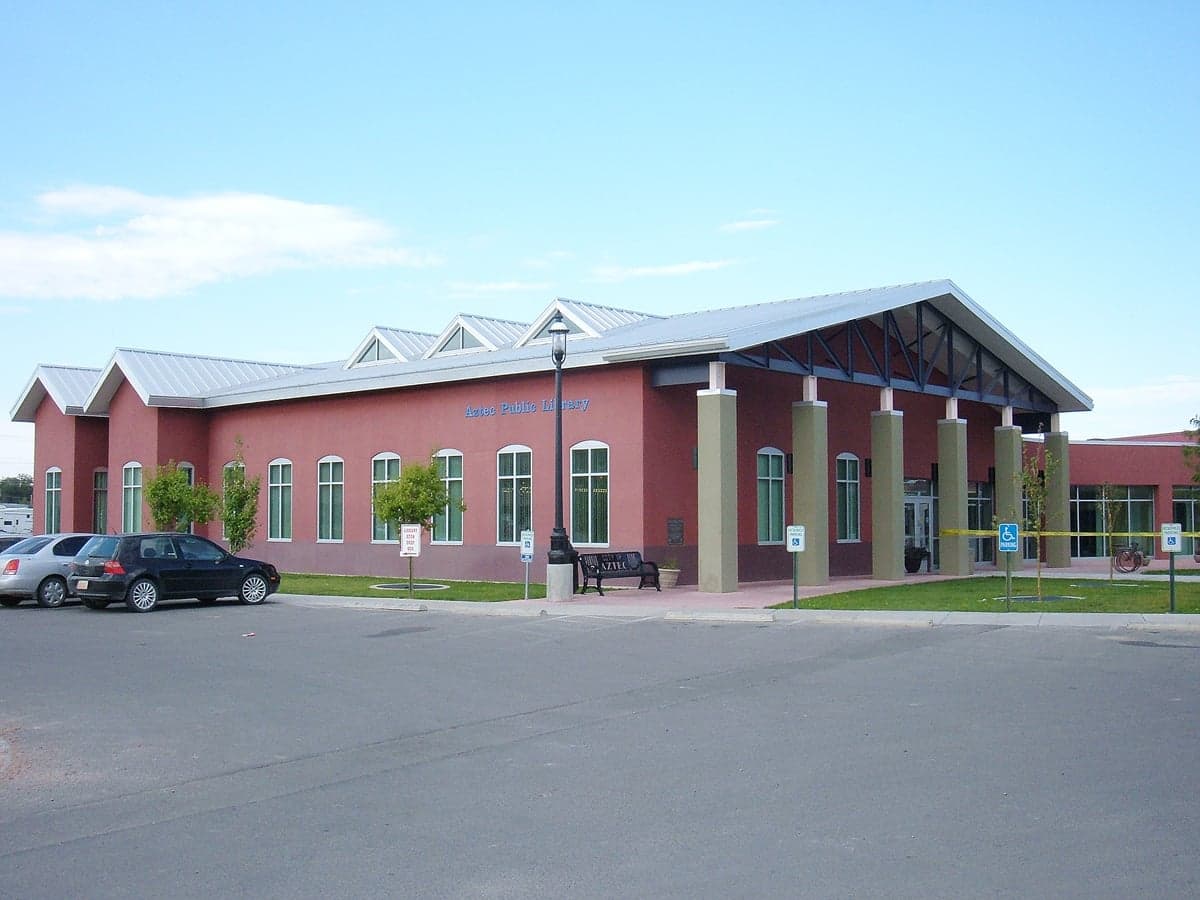
Photo: Wikipedia
Strategic Assessment of Aztec, NM
Workable tactical position. Some exposure to population density or targets, but generally defensible in a crisis.
What does the Strategic Assessment tell us?
Our Strategic Assessment grades tactical survivability of an area. Major population centers, military targets, fallout zones, natural disasters, and border exposure all drive risk — lower exposure means a more defensible position in a crisis.
This is heavily inspired by Joel Skousen's Strategic Relocation book. Highly recommended you checkout the book ($)What does this tell us?
Our Strategic Assessment grades tactical survivability of an area. Major population centers, military targets, fallout zones, natural disasters, and border exposure all drive risk — lower exposure means a more defensible position in a crisis.
This is heavily inspired by Joel Skousen's Strategic Relocation book. Highly recommended you checkout the book ($)Strategic Pillars

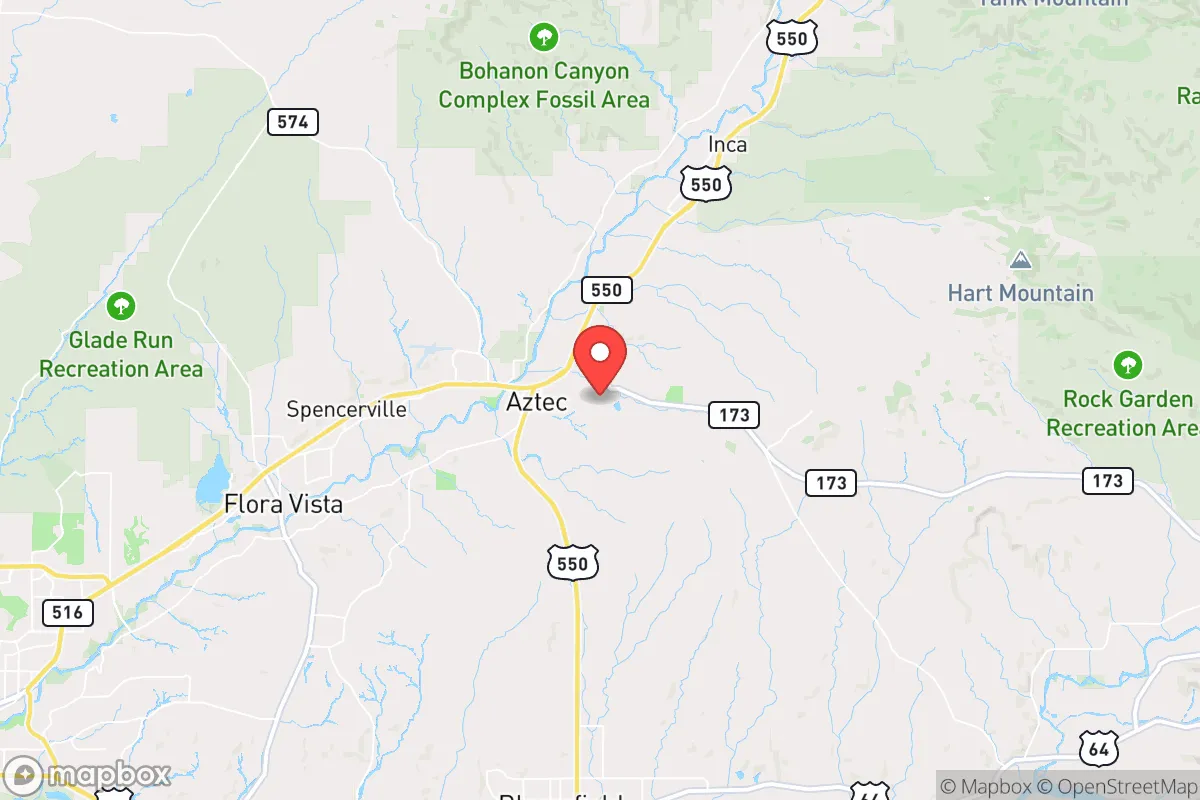
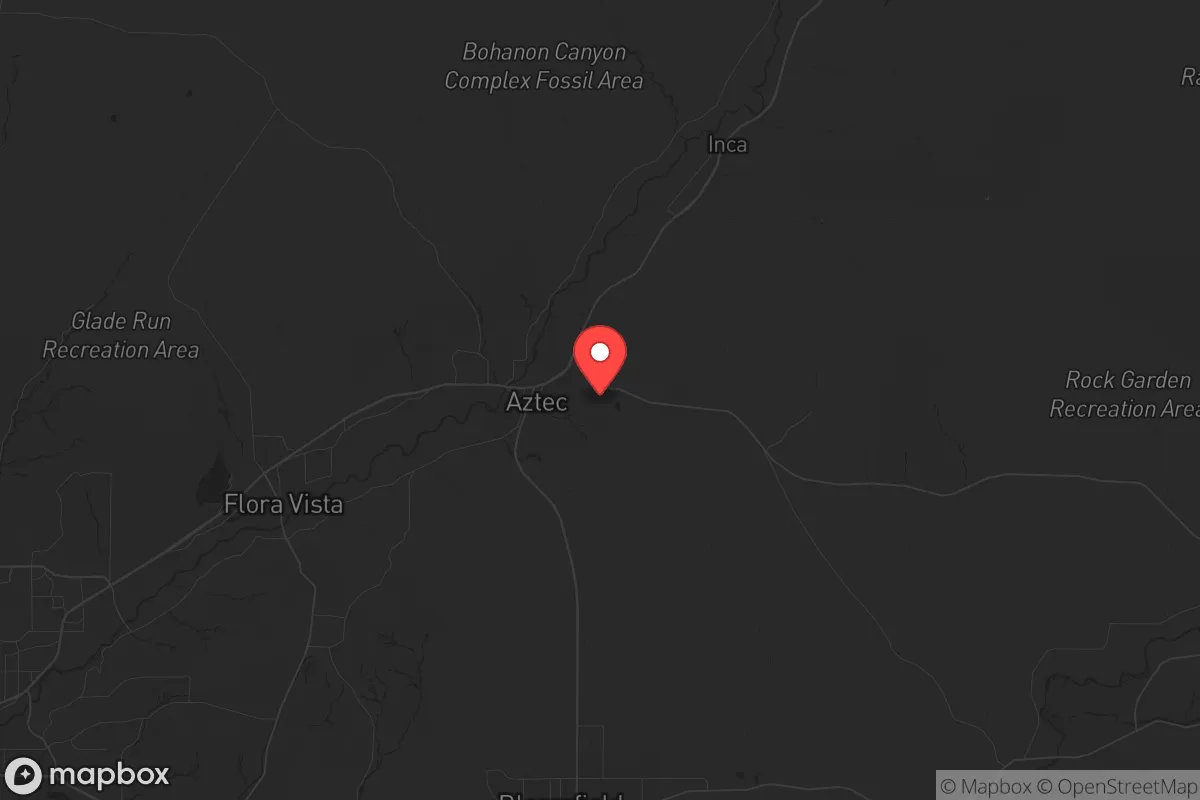
Key Distances
Regional Safe Places
Below is our recommended "safe zones" in New Mexico and the surrounding area based on our strategic heuristics. For most people, it's unrealistic to live in a “safe zone” full-time due to work, family or other personal reasons. They tend to be more rural. However, many of these areas are perfect for second homes and retreat properties that double as a vacation home or even a short-term rental.

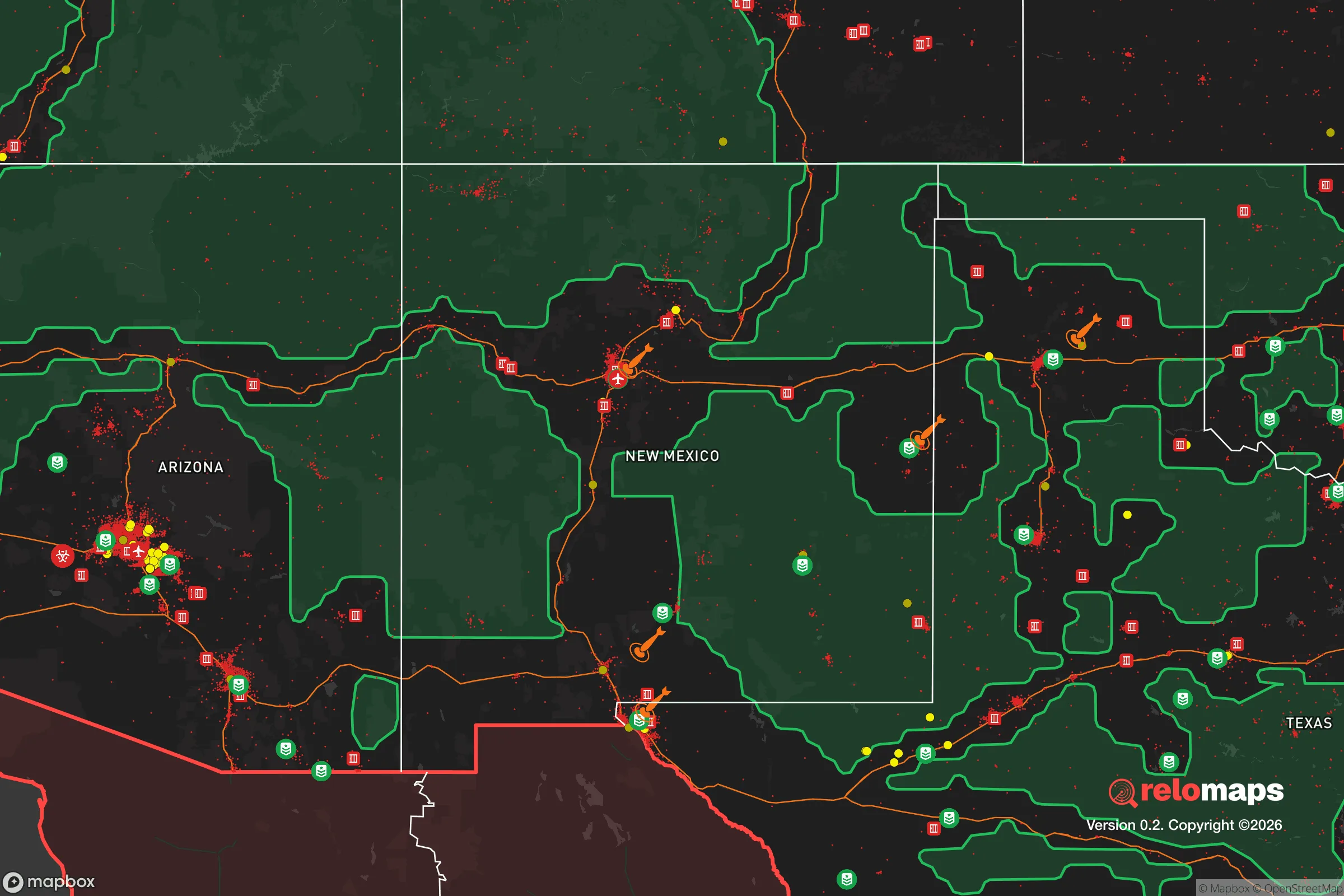


Important Note: For informational purposes only. This does not mean nothing bad ever happens in the green zones. Please use common sense. This is based on public data and modeled with AI. We tried to take a conservative approach but mistakes happen. We update this regularly as new information becomes available.
Solar Generator Recommendations
Backup power matters more here than in safer locations. We've picked three solar generators across budgets and capacity tiers — start with the budget unit if you only need a few essentials, or step up if you want to run a fridge and HVAC for days at a time.

Jackery Portable Power Station Explorer 300
Budget OptionPower on the Go: Weighing only 11 lbs, it's convenient to set up and store with book-sized foldable solar panels

BLUETTI Portable Power Station AC180
Designed for both indoor and outdoor scenarios, AC180 is highly capable as it has a robost capacity and continuous output power.

EF ECOFLOW DELTA Pro Ultra Power Station
Upgraded PickEcoFlow DELTA Pro Ultra is a whole-home energy system designed to grow with your family. Integrated with the Smart Home Panel 2, it scales to meet your evolving energy needs — keeping your home powered, intelligent, and secure through every stage of life.
We earn a commission, at no additional cost to you.
Strategic Assessment Analysis
Aztec, New Mexico, offers a compelling strategic position for those prioritizing resilience and self-sufficiency, sitting at the intersection of the Animas River valley and the high desert plateau. Its location in San Juan County places it roughly 30 miles from the Colorado border and 15 miles east of Farmington, the region's economic hub, yet it retains a distinctly small-town character with a population around 6,500. For a relocator with a prepper mindset, the area's key advantages are its relative isolation from major population centers—over 200 miles from Albuquerque and 150 miles from Durango—combined with access to significant water resources and a low population density that naturally reduces exposure to cascading failures from urban collapse. The community's historical roots in energy production, particularly oil, gas, and coal, also mean a workforce and infrastructure accustomed to hard industry, not just service economies.
Geographic position and natural advantages for long-term survival
Aztec's geography is a double-edged sword, but the edge cuts in favor of the prepared. The Animas River runs directly through town, providing a perennial surface water source that is rare in the arid Southwest—a critical asset for any long-term water security plan. The surrounding landscape is a mix of high desert mesas, piñon-juniper woodlands, and the foothills of the San Juan Mountains to the north, offering multiple terrain types for hunting, foraging, and alternative shelter. The elevation sits at roughly 5,600 feet, which moderates summer heat compared to lower desert areas, though winters bring snow and cold that demand proper heating and insulation. For a relocator, the natural chokepoints—canyons, river corridors, and limited road access—create defensible positions if you choose property outside the immediate town limits. The area is also within a few hours' drive of the vast Carson National Forest and the Southern Rockies, providing bug-out options or secondary resource zones if Aztec itself becomes compromised.
Risks, exposures, and proximity to fallout-relevant landmarks
No strategic assessment is honest without addressing the threats. Aztec's primary risk is its proximity to the Four Corners region's energy infrastructure, including the San Juan Generating Station (a coal-fired plant, now largely decommissioned but still a site with industrial hazards) and numerous natural gas processing facilities near Bloomfield and Farmington. While these are not nuclear targets, a major industrial accident or sabotage event could release toxic chemicals or disrupt regional power and fuel supplies. More significantly, the area sits about 90 miles from the Los Alamos National Laboratory, a high-value target for any adversary seeking to cripple U.S. nuclear capabilities. A ground burst or airburst at Los Alamos could produce fallout that, depending on wind patterns, might reach the Aztec area within hours. The prevailing winds in the region are from the southwest, which would carry fallout northeast toward the Sangre de Cristo Mountains, but a shift could put Aztec in a downwind plume. Additionally, the nearby San Juan Basin is a major natural gas field, and while not a primary target, the associated pipelines and storage facilities could be secondary targets in a coordinated attack. The good news: Aztec is far from the major population centers that would be primary targets—Denver, Phoenix, Albuquerque, Salt Lake City—so the risk of direct blast effects is near zero. The real danger is secondary: refugees fleeing those cities, resource competition, and supply chain collapse.
Practical resilience for a relocator: food, water, energy, and defensibility
For a relocator serious about self-sufficiency, Aztec offers a mix of strengths and gaps that require active preparation. Water is the strongest asset: the Animas River is a reliable surface source, and the local aquifer is productive, with many rural properties having wells. However, the river is also a vector for contamination—upstream mining or agricultural runoff, or deliberate sabotage, could render it unusable without filtration. A prepper should invest in a high-quality gravity-fed or pump-based filtration system (e.g., Berkey or Katadyn) and have at least a 55-gallon drum of stored water per person. Food production is viable but not effortless: the growing season is short (about 120 frost-free days), and the soil is alkaline and rocky, requiring raised beds, greenhouses, or hydroponics for reliable yields. Local farmers' markets and the nearby Farmington area provide some supply chain redundancy, but a serious prepper should plan for at least a year's worth of stored staples (grains, legumes, canned goods) plus the means to produce a portion of fresh food. Energy is a mixed picture: the region has abundant solar potential (over 280 sunny days per year), but winter snow and shorter days require battery storage and backup generation. Natural gas is cheap and available in town, but rural properties may rely on propane or wood. A wood stove with a year's supply of seasoned firewood is a must for winter heating independence. Defensibility is good but not fortress-level: the terrain offers natural cover and chokepoints, but the town itself is spread out with multiple access roads. A property on the outskirts, with a clear line of sight to approach routes and a well-sealed perimeter, is ideal. The local culture is generally pro-gun and self-reliant, which means you'll find like-minded neighbors, but also that you should keep a low profile—loud prepping attracts unwanted attention.
The overall strategic picture for Aztec is one of moderate-to-high resilience for a relocator willing to put in the work. It avoids the worst risks of coastal and urban areas—hurricanes, earthquakes, nuclear targets, and dense populations that become death traps in a crisis—while offering genuine natural advantages in water and defensible terrain. The trade-offs are real: a short growing season, industrial hazards nearby, and a location that could see fallout from a Los Alamos strike under bad wind conditions. But compared to most of the country, Aztec is a solid B+ for a prepper's relocation. It's not a perfect redoubt—that doesn't exist—but it's a place where a prepared individual or family can build a sustainable, independent life with a reasonable margin of safety. The key is to arrive with your own systems in place, not expecting the local infrastructure to save you. If you do that, Aztec can be a quiet, strategic base for weathering whatever comes.

* Values derived from national, state, county, city and local statistics and may differ in a specific area. Last updated: 2026-05-04T02:38:09.000Z
Narrative content on this page is AI-generated and may contain mistakes. Verify any details that matter before acting on them.
ReloMaps may earn a commission from affiliate links at no extra cost to you.

