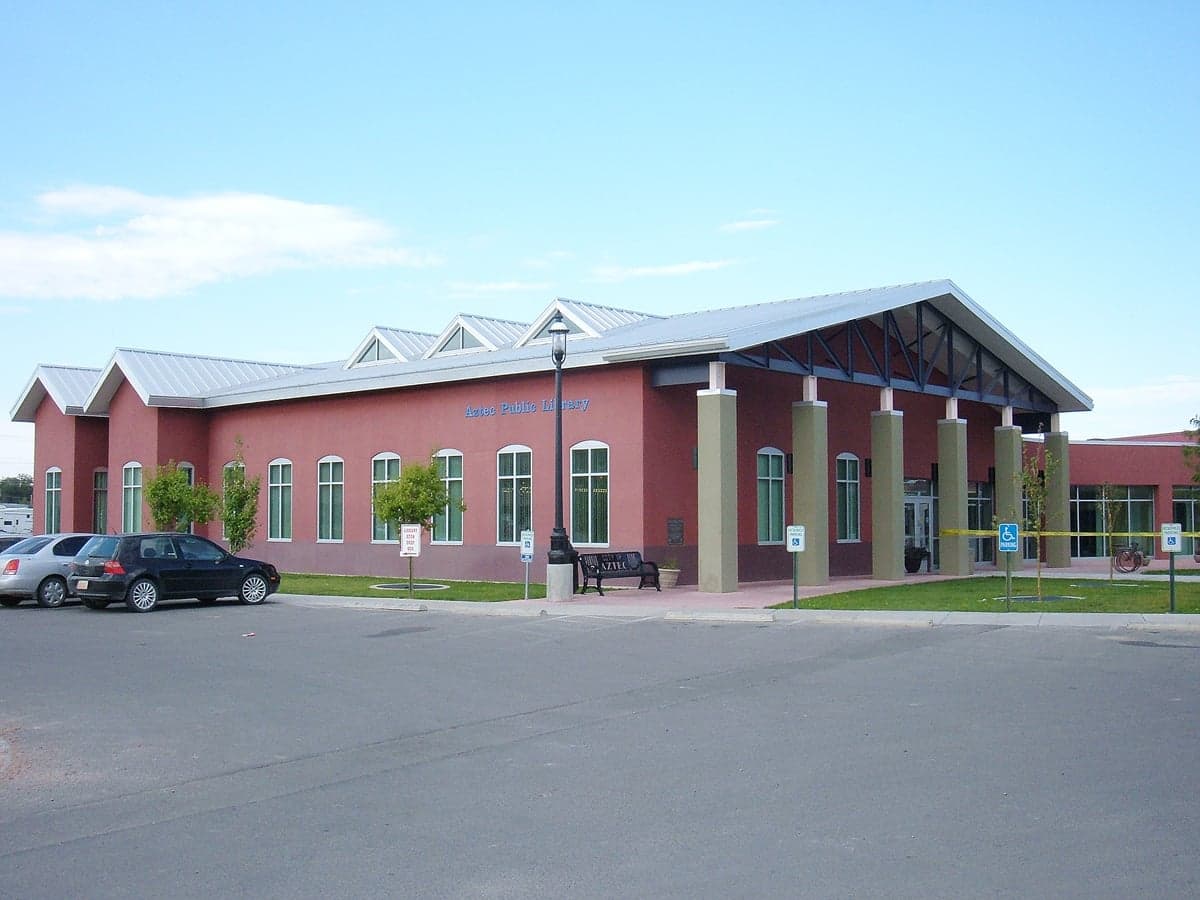
Photo: Wikipedia
Political ClimatePolitical Climate in Aztec, NM
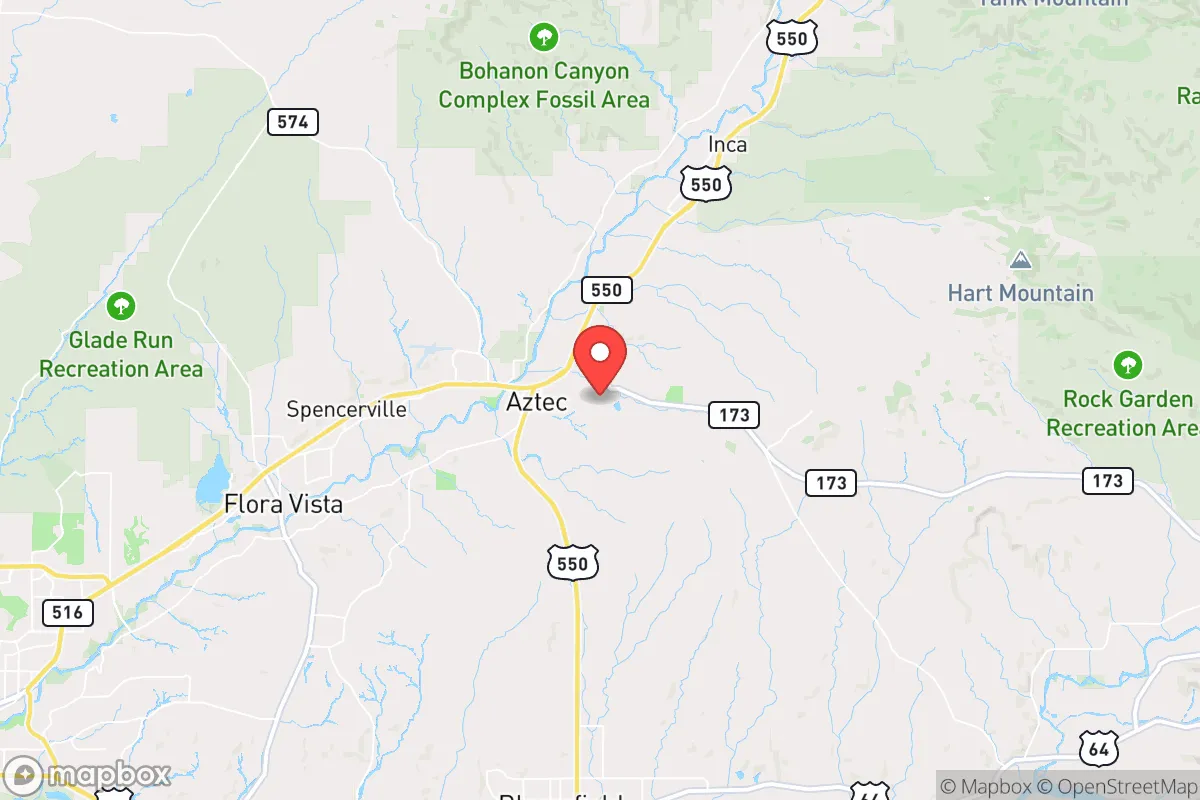
District shown is the primary district for this city’s centroid. Cities may span multiple districts.
Local Political AnalysisPolitical Analysis of Aztec, NM
Aztec, New Mexico, sits in a bit of a political tug-of-war, and if you’ve lived here as long as I have, you’ve felt the ground shift under your feet. The area leans slightly Democratic on paper—Cook PVI of D+3—but that number doesn’t tell the whole story. In reality, Aztec has long been a place where folks value their independence, their guns, and their right to live without a bunch of government telling them how to run their lives. That D+3 rating is more a reflection of the county’s overall registration numbers than the pulse of everyday life here, where you’ll still hear more talk about water rights and property taxes than progressive policy. The trajectory, though, is what worries a lot of us: as nearby Farmington and Durango get more liberal influence, Aztec is starting to see some of that same pressure, especially in local school board meetings and county commission decisions.
How it compares
If you drive ten miles west to Farmington, you’ll find a place that’s more reliably conservative—San Juan County as a whole voted +15 for Trump in 2020, and Farmington’s oil-and-gas economy keeps it red. But Aztec is different. It’s smaller, quieter, and historically more tied to the Animas River valley’s agricultural roots, which gives it a slower, more independent vibe. Compare that to Durango, Colorado, just an hour north, which is a full-on progressive hub with bike lanes, organic co-ops, and a city council that’s all-in on green mandates. Aztec sits in the middle—not as conservative as Farmington, but nowhere near as liberal as Durango. That D+3 rating feels like a compromise, but it’s a fragile one. The real contrast is with the surrounding rural areas: go east into the Navajo Nation or south toward Bloomfield, and you’ll find communities that lean more traditional, with a deep skepticism of government overreach. Aztec’s political climate is a balancing act, and the balance is tipping.
What this means for residents
For folks living here, the biggest concern is how much the government is creeping into daily life. You see it in the push for stricter zoning laws on private property, or in the school board debates about curriculum and parental rights. Aztec’s D+3 lean means there’s enough Democratic influence to push through things like higher local taxes or environmental regulations that can hit small businesses and ranchers hard. A few years back, there was a big fight over a proposed solar farm that would have taken over prime farmland—local conservatives argued it was a land grab disguised as green energy, and they won that round, but the pressure keeps coming. The long-term trend is what keeps me up at night: as more people move in from places like California or Colorado, they bring their ideas about “progress” that often mean more rules, more fees, and less freedom. If you value your right to hunt on your own land, run a small business without a dozen permits, or send your kids to a school that teaches basics instead of ideology, Aztec is still a decent place—but you’ve got to stay involved in local elections to keep it that way.
Culturally, Aztec has a few distinctions that set it apart. The annual Aztec Fiesta is a big deal, and it’s still a community event where neighbors come together without a lot of political posturing. But there’s a growing tension between the old guard—ranchers, farmers, and oilfield workers—and the newer arrivals who want to turn the town into a bedroom community for Farmington or a weekend getaway for Durango. Policy-wise, the biggest flashpoints are water rights (the Animas River is lifeblood here) and land use. The county commission has held the line on most overreach, but every election cycle brings new proposals for “affordable housing” mandates or “climate action plans” that sound good on paper but end up costing locals their livelihoods. If you’re thinking of moving here, just know that Aztec’s politics are a reflection of its people: independent, wary of big government, and determined to keep their way of life intact. It’s a good place, but it’s not immune to the changes sweeping the West, and you’ll want to keep an eye on who’s running for office.

State Political ClimatePolitical Climate in New Mexico
State Political AnalysisPolitical Environment in the State
New Mexico has long been a reliably blue state in presidential elections, voting Democratic by margins of 10-11 points in 2020 and 2024, but the picture is far more complicated beneath the surface. The state’s political identity is a three-way tug-of-war between the heavily Democratic, union-heavy Albuquerque metro area, the ancestrally conservative but increasingly purple rural and oil-patch counties, and the fast-growing, culturally distinct southern border region anchored by Las Cruces. Over the last 20 years, the state has drifted steadily left on social and environmental policy, but a strong libertarian streak and a deep-seated suspicion of government overreach — especially around gun rights and land use — keep the politics here from being a simple copy of coastal blue states.
Urban vs. rural divide
The political map of New Mexico is starkly split. Bernalillo County (Albuquerque) alone casts roughly one-third of the state’s votes and reliably delivers 60%+ margins for Democrats, powered by government workers, University of New Mexico faculty, and a growing Hispanic professional class. Santa Fe County is the state’s most liberal stronghold, with Democratic margins exceeding 70% — think organic co-ops, solar mandates, and a city council that once debated banning plastic bags before most people knew what a plastic bag was. Meanwhile, the southeastern corner — Lea County (Hobbs) and Eddy County (Carlsbad) — votes 75-80% Republican, driven by oil and gas workers who see every new regulation as a direct threat to their paycheck. The rural north, including Taos and Mora counties, is a wild card: ancestrally Hispanic and Catholic, these areas lean Democratic but are culturally conservative on abortion and gun rights, creating a voting bloc that often splits tickets. The Las Cruces area (Doña Ana County) is the state’s fastest-growing Democratic stronghold, driven by young families and retirees from Texas seeking lower housing costs, but it’s also home to a vocal conservative minority centered around the agricultural community and the nearby White Sands Missile Range workforce.
Policy environment
New Mexico’s policy mix is a study in contradictions. The state has a progressive income tax with a top rate of 5.9% and a gross receipts tax (essentially a sales tax on services) that can push combined rates above 8% in some cities. Property taxes are among the lowest in the nation, which is a genuine draw for retirees and families — a $300,000 home might carry only $2,000-$3,000 in annual property tax. But the trade-off is a state government that has aggressively expanded its footprint. In 2023, the legislature passed a clean energy mandate requiring 100% carbon-free electricity by 2045, effectively phasing out the coal plants that power much of the rural economy. Education policy is a flashpoint: the state’s public schools consistently rank near the bottom nationally, and the 2023 “Opportunity Scholarship” law made community college free for all residents, but the state still resists school choice expansion — no vouchers, no robust charter sector. Healthcare is dominated by the state’s Medicaid expansion, which covers nearly half the population, and the 2021 Health Security Act created a public option for health insurance. Election laws are relatively permissive: same-day registration, no-excuse absentee voting, and automatic voter registration at the DMV. The state has no right-to-work law, and union membership remains strong in the public sector.
Trajectory & freedom
On personal freedom, New Mexico is a mixed bag that should give a conservative pause. The state has some of the most permissive gun laws in the nation — no permit required for concealed carry, no magazine capacity limits, and a strong preemption law that prevents cities like Albuquerque from enacting their own restrictions. That’s a genuine bright spot. But the trend line on other freedoms is concerning. In 2021, the legislature passed the Reproductive and Gender Affirming Health Care Protection Act, which shields providers from out-of-state lawsuits and effectively makes New Mexico a sanctuary for abortion and transgender procedures. The 2023 “Red Flag” law (extreme risk protection orders) allows courts to temporarily seize firearms from individuals deemed a threat, which many conservatives view as a due-process end-run. Parental rights took a hit with the 2023 “Safe Schools for All Students” law, which requires schools to adopt policies supporting LGBTQ+ students — critics argue it undermines parental notification about a child’s gender identity. On the plus side, the state has no income tax on Social Security benefits, and the 2024 tax reform package slightly flattened the income tax brackets, a small step toward fiscal sanity. Property rights remain strong outside of tribal lands, but the state’s Oil and Gas Conservation Commission has tightened methane emission rules, adding compliance costs for small operators.
Civil unrest & political movements
New Mexico doesn’t see the large-scale protests of Portland or Seattle, but there are persistent flashpoints. The 2020 protests in Albuquerque over the killing of George Floyd turned violent, with the toppling of a statue of Spanish conquistador Juan de Oñate and a series of arson attacks on police vehicles. The “Abolish ICE” movement has a vocal presence in Santa Fe, and the city declared itself a “sanctuary city” in 2018, limiting local police cooperation with federal immigration authorities. On the right, the “New Mexico Patriots” and similar groups have held rallies at the state capitol, particularly around the 2021 special session on redistricting and the 2023 gun control debates. The Otero County Commission (Alamogordo) made national headlines in 2022 for refusing to certify primary election results over unfounded fraud claims, a sign of deep distrust in the system. The immigration debate is visceral here: the southern border runs 180 miles through New Mexico, and the 2023 surge in crossings near Sunland Park and Columbus has strained local resources and fueled resentment. The “New Mexico Land Grant” movement, which seeks to restore Spanish-era land grants to local communities, occasionally flares up in the northern counties, adding a unique layer of property-rights activism that doesn’t fit neatly into left-right categories.
Projection
Over the next 5-10 years, New Mexico is likely to continue its slow leftward drift on social and environmental policy, but the pace will be constrained by the state’s fiscal dependence on oil and gas revenue — which provides roughly 40% of the general fund. The in-migration from Texas and California is real, with places like Rio Rancho and Las Cruces growing fast, but these newcomers tend to be moderate-to-liberal, not conservative refugees. The Democratic Party’s internal split between the moderate, oil-friendly wing (think Governor Michelle Lujan Grisham) and the progressive, environmentalist wing (think the “Squad”-aligned state legislators) will intensify as the clean energy mandate bites. The Hispanic vote, which makes up nearly half the electorate, is not monolithic — younger, urban Hispanics trend left, while rural, older Hispanics remain culturally conservative and could be a swing bloc if Republicans ever field credible Spanish-language outreach. The Republican Party is weak and disorganized, with no clear statewide leader, and the state’s gerrymandered congressional map (3-0 Democratic after 2021 redistricting) makes it hard for the GOP to gain a foothold. A new resident moving in now should expect a state that remains blue but is not hostile to conservative lifestyles — you can own guns, drive a truck, and send your kids to private school without hassle — but you will pay higher taxes and see your values increasingly marginalized in state policy. The bottom line: New Mexico is a beautiful, affordable state with a live-and-let-live culture, but it is not trending toward freedom. If you’re looking for a place where your vote will move the needle toward conservatism, this is not it. If you’re looking for a place where you can carve out a good life with low property taxes and wide-open spaces, and you’re willing to fight for your values at the local level, it can still work — for now.
* Values derived from national, state, county, city and local statistics and may differ in a specific area. Last updated: 2026-05-04T02:38:09.000Z
Narrative content on this page is AI-generated and may contain mistakes. Verify any details that matter before acting on them.
ReloMaps may earn a commission from affiliate links at no extra cost to you.

