Photo: Wikipedia
Demographics of Badger, AK
Affluence Level in Badger, AK
An upper-middle-class area. Household wealth, education levels, and homeownership run ahead of national benchmarks.
People of Badger, AK
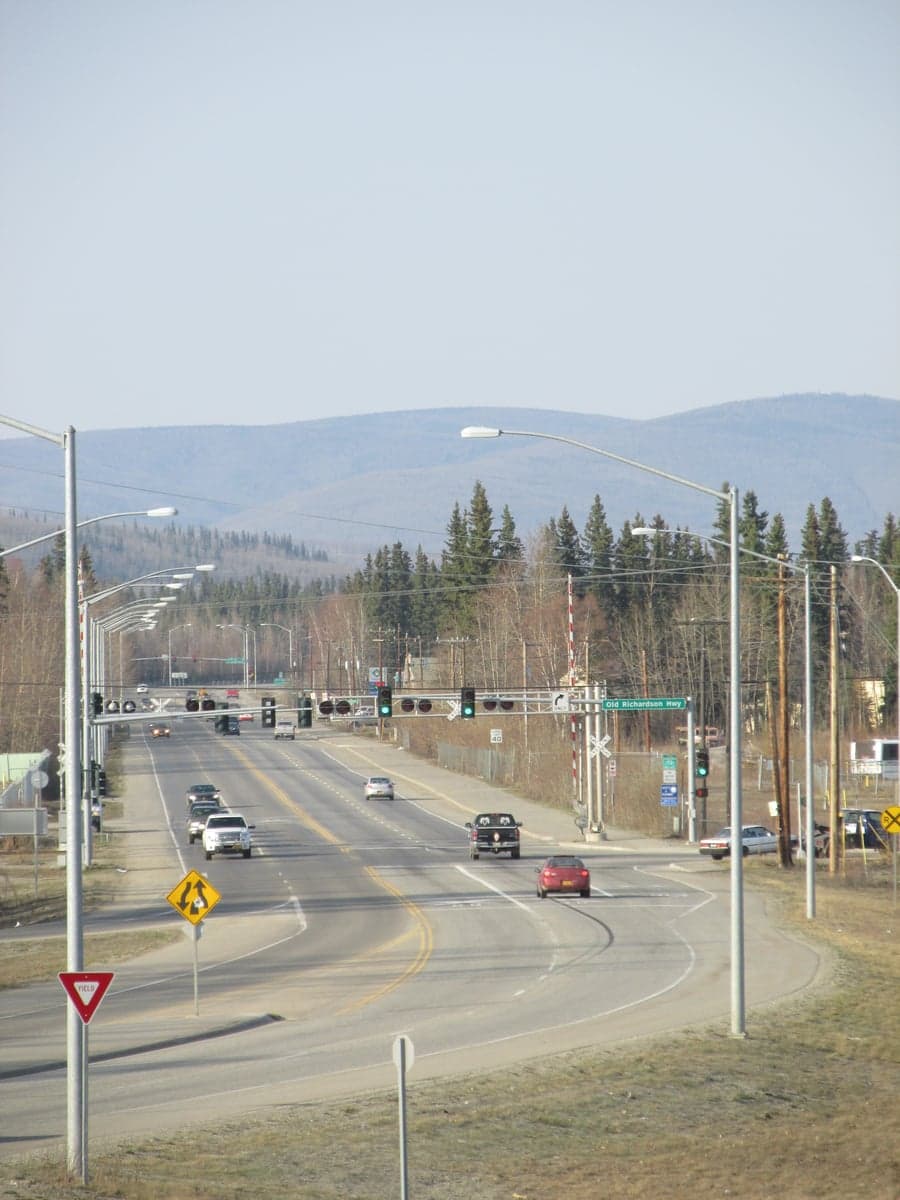
Badger, Alaska, is a small, unincorporated community of 19,033 residents that functions as a tight-knit, family-oriented suburb of Fairbanks. The population is predominantly White (77.7%) and native-born (98.1% U.S.-born), with a strong military and resource-industry presence that gives the area a practical, self-reliant character. Unlike many Alaskan towns, Badger is not a tourist destination but a place where people live and work, centered on the nearby Fort Wainwright Army post and the region's mining and transportation sectors. The community's identity is shaped by its transient military population and a core of long-term residents who value the quiet, rural lifestyle and proximity to Fairbanks.
How the city was settled and grew
Badger's human history is almost entirely a 20th-century story, rooted in the strategic importance of Interior Alaska during and after World War II. The area was originally part of the traditional territory of the Tanana Athabascan people, but no permanent Native village existed on the site. The first major influx of non-Native settlers came with the construction of the Alaska Highway (1942) and the establishment of nearby Ladd Field (now Fort Wainwright) as a lend-lease air base. The earliest residential clusters formed along the Steese Highway corridor, particularly in what is now Badger Road Estates, where military families and civilian contractors built simple homes on large lots. A second wave arrived during the 1970s Trans-Alaska Pipeline boom, when workers and their families settled in the Nordale Road and Chena Ridge subdivisions, drawn by cheap land and the ability to build their own homes. These early residents were overwhelmingly White, working-class, and from other parts of Alaska or the Lower 48, creating a culture of self-sufficiency and minimal government interference that persists today.
Modern era (post-1965)
The post-1965 period saw Badger's population stabilize and diversify modestly, though it remains far less diverse than the national average. The 1980s and 1990s brought a steady stream of military personnel assigned to Fort Wainwright, many of whom chose to live off-post in Badger for its larger lots and lower housing costs. This military presence is concentrated in the Wainwright Estates and Eielson Heights neighborhoods, where rental properties and starter homes dominate. The Hispanic population, now 6.3%, grew primarily through the arrival of construction and service workers from the Southwest and Mexico during the 2000s oil and gas boom; they are most visible in the Badger Loop area, where a small cluster of Hispanic-owned businesses has emerged. The East/Southeast Asian population (1.4%) is largely composed of Filipino and Korean families connected to the military, living scattered throughout the community rather than in a single ethnic enclave. The Black population (1.2%) and Indian subcontinent population (0.0%) are negligible, reflecting the area's limited draw for immigrants outside of military channels. The foreign-born share (1.9%) is among the lowest in Alaska, and the college-educated rate (25.9%) is below the state average, consistent with a blue-collar, trade-oriented workforce.
The future
Badger's population is likely to remain stable or grow slowly over the next 10-20 years, driven primarily by the military cycle at Fort Wainwright and the broader Fairbanks economy. The community is not homogenizing into a single identity but is instead developing distinct enclaves: long-term civilian residents in Badger Road Estates and Nordale Road are aging in place, while younger military families cycle through Wainwright Estates and newer subdivisions like Goldstream Valley. The Hispanic population is growing slowly through natural increase and secondary migration from other Alaskan communities, but it remains too small to form a distinct ethnic neighborhood. The East/Southeast Asian and Black populations are plateauing, as military assignments to Fort Wainwright have not increased significantly. The Indian subcontinent population is expected to remain near zero, as there are no major employers or educational institutions in Badger that attract that demographic. The biggest demographic shift may be a gradual increase in retirees from the Lower 48 seeking affordable land and a low-tax lifestyle, which could slowly raise the median age and college attainment rate.
For someone moving in now, Badger offers a stable, predominantly White, family-oriented community with a strong military and blue-collar character. The population is not diversifying rapidly, and the social fabric remains rooted in self-reliance, outdoor recreation, and a conservative political outlook. New residents should expect a place where neighbors know each other, local government is minimal, and the pace of life is dictated by the seasons rather than by urban trends. It is a good fit for those seeking a quiet, affordable, and safe environment in Interior Alaska, but not for those looking for ethnic diversity or a vibrant immigrant community.

* Values derived from national, state, county, city and local statistics and may differ in a specific area. Last updated: 2026-05-15T01:43:45.000Z
Narrative content on this page is AI-generated and may contain mistakes. Verify any details that matter before acting on them.
ReloMaps may earn a commission from affiliate links at no extra cost to you.

