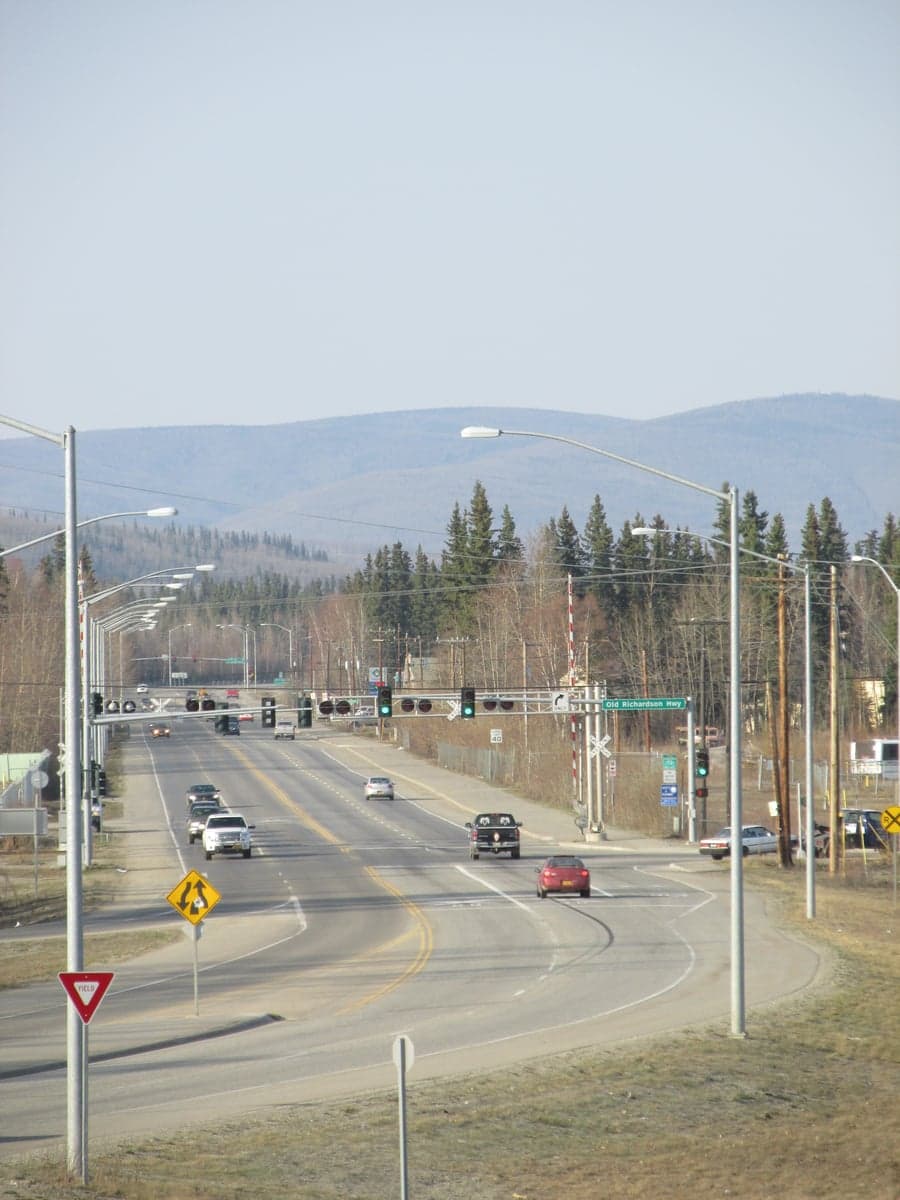
Photo: Wikipedia
Strategic Assessment of Badger, AK
Strong survivability profile. Good buffer from population centers, with manageable environmental and tactical risks.
What does the Strategic Assessment tell us?
Our Strategic Assessment grades tactical survivability of an area. Major population centers, military targets, fallout zones, natural disasters, and border exposure all drive risk — lower exposure means a more defensible position in a crisis.
This is heavily inspired by Joel Skousen's Strategic Relocation book. Highly recommended you checkout the book ($)What does this tell us?
Our Strategic Assessment grades tactical survivability of an area. Major population centers, military targets, fallout zones, natural disasters, and border exposure all drive risk — lower exposure means a more defensible position in a crisis.
This is heavily inspired by Joel Skousen's Strategic Relocation book. Highly recommended you checkout the book ($)Strategic Pillars

Key Distances
Regional Safe Places
Below is our recommended "safe zones" in Alaska and the surrounding area based on our strategic heuristics. For most people, it's unrealistic to live in a “safe zone” full-time due to work, family or other personal reasons. They tend to be more rural. However, many of these areas are perfect for second homes and retreat properties that double as a vacation home or even a short-term rental.
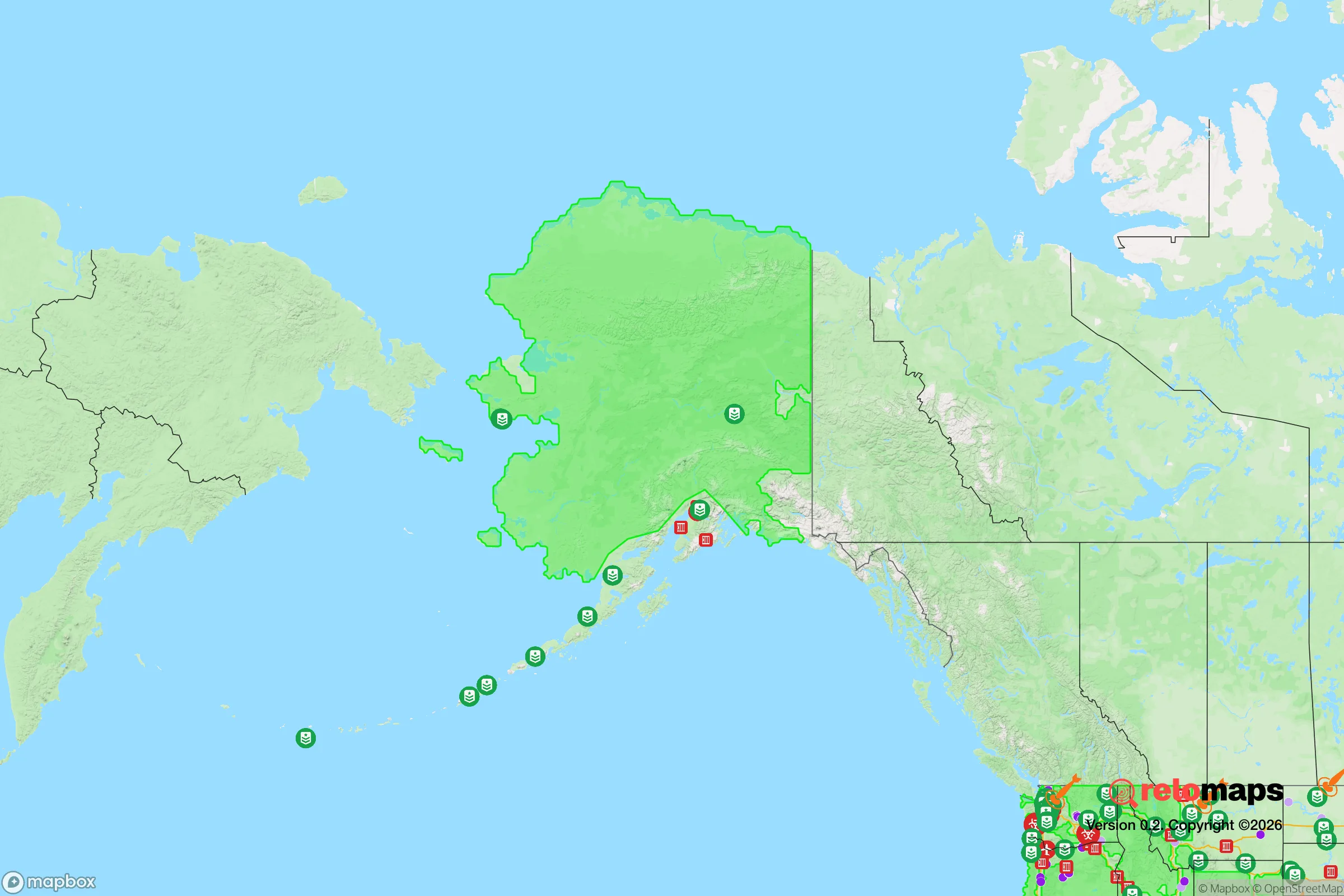
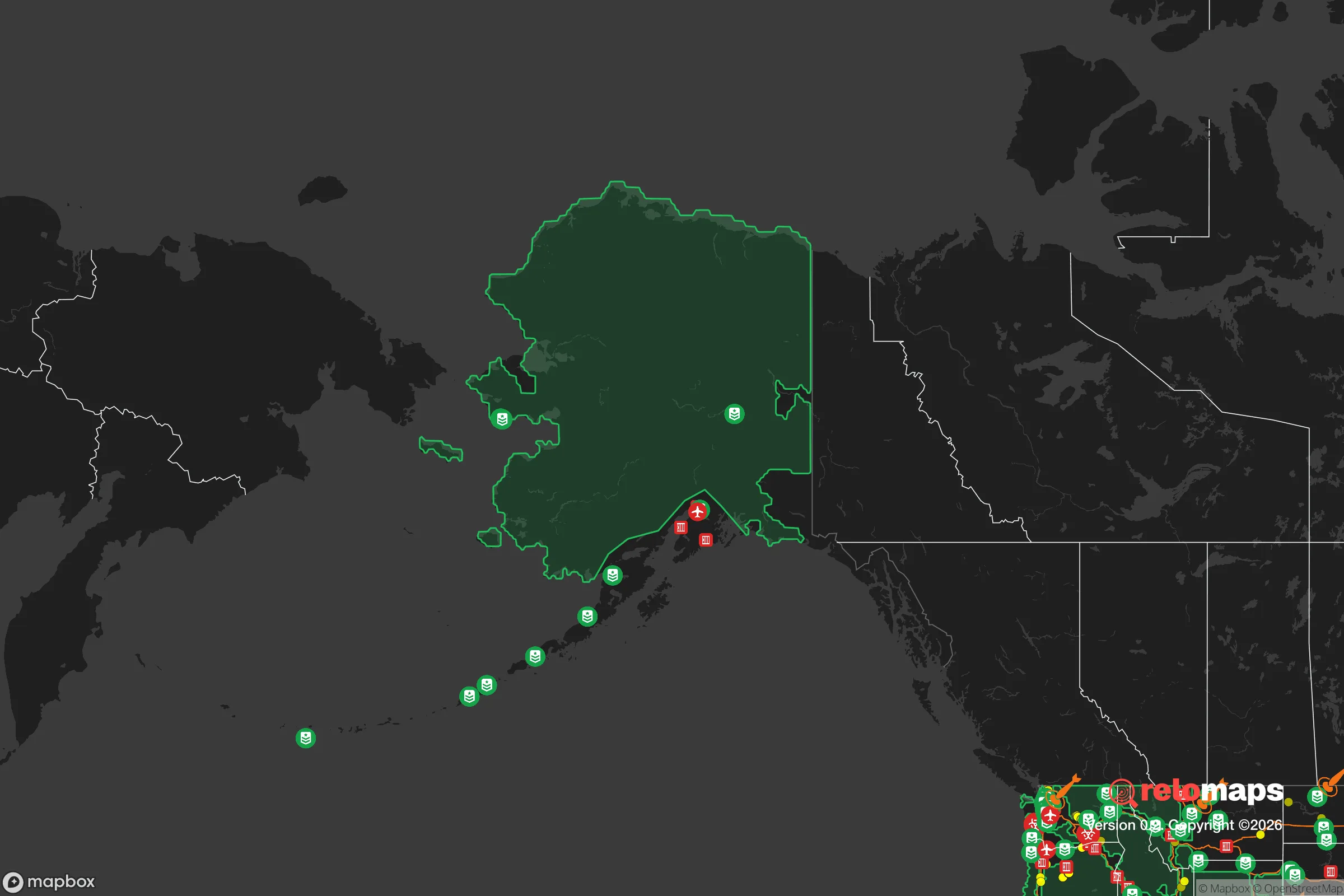


Important Note: For informational purposes only. This does not mean nothing bad ever happens in the green zones. Please use common sense. This is based on public data and modeled with AI. We tried to take a conservative approach but mistakes happen. We update this regularly as new information becomes available.
Solar Generator Recommendations
Backup power matters more here than in safer locations. We've picked three solar generators across budgets and capacity tiers — start with the budget unit if you only need a few essentials, or step up if you want to run a fridge and HVAC for days at a time.

Jackery Portable Power Station Explorer 300
Budget OptionPower on the Go: Weighing only 11 lbs, it's convenient to set up and store with book-sized foldable solar panels

BLUETTI Portable Power Station AC180
Designed for both indoor and outdoor scenarios, AC180 is highly capable as it has a robost capacity and continuous output power.

EF ECOFLOW DELTA Pro Ultra Power Station
Upgraded PickEcoFlow DELTA Pro Ultra is a whole-home energy system designed to grow with your family. Integrated with the Smart Home Panel 2, it scales to meet your evolving energy needs — keeping your home powered, intelligent, and secure through every stage of life.
We earn a commission, at no additional cost to you.
Strategic Assessment Analysis
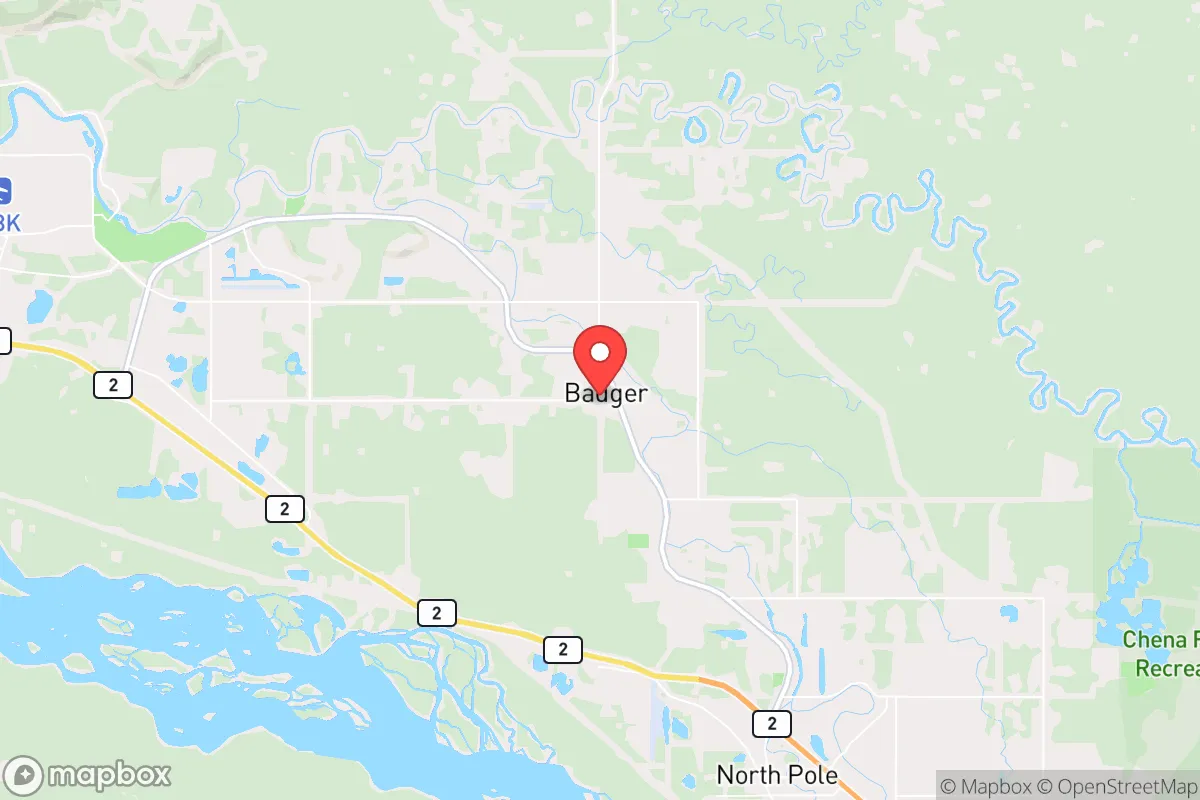
Badger, Alaska, sits in a unique strategic pocket that offers genuine resilience advantages for those prioritizing self-sufficiency and distance from systemic collapse. Located roughly 20 miles southeast of Fairbanks along the Tanana River, this unincorporated community provides a rare combination of remote living with practical access to supply chains and medical infrastructure. For a relocator with a survivalist mindset, Badger’s position within the Fairbanks North Star Borough means you’re not completely cut off, but you’re far enough from the Lower 48’s population centers to avoid the worst fallout from civic unrest or mass casualty events. The area’s low population density—roughly 19,000 residents spread across a vast, forested landscape—means you can maintain operational security while still having neighbors who share a frontier ethos of mutual aid and preparedness.
Geographic position and natural advantages for long-term survival
Badger’s location on the north bank of the Tanana River gives you a natural water source and a defensive buffer against casual intrusion. The surrounding terrain is a mix of boreal forest, muskeg, and rolling hills, offering ample cover and concealment for a homestead or retreat. The Tanana River itself is a major tributary of the Yukon, meaning you have a potential waterborne evacuation route or supply line if roads become compromised. The area’s proximity to the Alaska Range to the south and the White Mountains to the north provides additional geographic insulation—any large-scale movement of people or military assets would have to funnel through limited corridors, primarily the Richardson Highway and the Parks Highway. For a prepper, this chokepoint dynamic is a double-edged sword: it limits your own mobility but also makes it harder for outside threats to project force into the region. The subarctic climate, with winter lows often dipping below -40°F, acts as a natural filter—only those truly committed to self-reliance will stay, which reduces the risk of population surges during a crisis.
Risks, exposures, and proximity to fallout-relevant landmarks
No strategic assessment is complete without acknowledging the liabilities. Badger’s biggest exposure is its proximity to Fairbanks, which at roughly 20 miles away is close enough to be affected by any major event in that city—whether it’s a pandemic, food distribution collapse, or civil unrest. Fairbanks is a regional hub with a population of about 32,000, and it hosts Fort Wainwright, a U.S. Army post that could become a target or a source of martial law enforcement during a national emergency. The Eielson Air Force Base, located about 25 miles southeast of Badger, is another potential fallout landmark. While these military installations provide some security in the short term, they also make the area a higher-priority target for any adversary seeking to disrupt U.S. logistics in the Arctic. Additionally, the Trans-Alaska Pipeline System runs roughly 50 miles to the west, and while it’s not a direct threat, any sabotage or attack on that infrastructure could trigger economic chaos and resource shortages that ripple into Badger. The risk of a major earthquake is moderate—Alaska is seismically active—but the real danger is a prolonged power outage during winter, which would be a mass casualty event in itself if you’re not prepared.
Practical resilience for a relocator: food, water, energy, and defensibility
For a relocator serious about long-term survival, Badger offers a solid foundation for food, water, and energy independence. The Tanana River provides a reliable water source, but you’ll need a filtration system or the ability to melt ice in winter—surface water freezes solid from October to April. The growing season is short, roughly 90 days, but the long summer daylight hours (up to 22 hours near the solstice) allow for intensive gardening of cold-hardy crops like potatoes, carrots, kale, and cabbage. Hunting and trapping are viable year-round: moose, caribou, and small game are abundant, and the Alaska Department of Fish and Game issues permits that are relatively easy to obtain for residents. For energy, firewood is the most practical primary heat source—the surrounding birch and spruce forests provide ample fuel, but you’ll need a chainsaw, a wood splitter, and at least two cords of seasoned wood per winter. Solar panels are less effective in winter due to low sun angles and short days, but a small wind turbine or a micro-hydro setup on a creek can supplement power. Defensibility is strong: the dispersed layout of homes, the dense tree cover, and the lack of a centralized grid mean you can create a low-signature retreat that’s hard to detect from the air or road. However, you’ll need to be self-reliant for medical care—the nearest hospital is in Fairbanks, and during a crisis, that facility could be overwhelmed or inaccessible. Stockpiling antibiotics, trauma kits, and learning basic field medicine is non-negotiable.
The overall strategic picture for Badger, Alaska, is one of high potential paired with serious trade-offs. For a conservative-leaning individual or family who values independence, distance from urban chaos, and the ability to live off the land, this area is a strong candidate. The climate and isolation will weed out the unprepared, which is a feature, not a bug. But you must account for the proximity to Fairbanks and military installations—those are liabilities that could turn Badger from a sanctuary into a staging ground during a national emergency. If you’re willing to invest in winterization, food storage, and a robust water system, and you have the skills to thrive in a subarctic environment, Badger offers a defensible, resource-rich location that few other places in the Lower 48 can match. The key is to treat it as a long-term homestead, not a bug-out location—this is a place you live and build, not just a cache you visit. For those with the grit and foresight, Badger represents a genuine strategic advantage in an increasingly uncertain world.

* Values derived from national, state, county, city and local statistics and may differ in a specific area. Last updated: 2026-05-15T01:43:45.000Z
Narrative content on this page is AI-generated and may contain mistakes. Verify any details that matter before acting on them.
ReloMaps may earn a commission from affiliate links at no extra cost to you.

