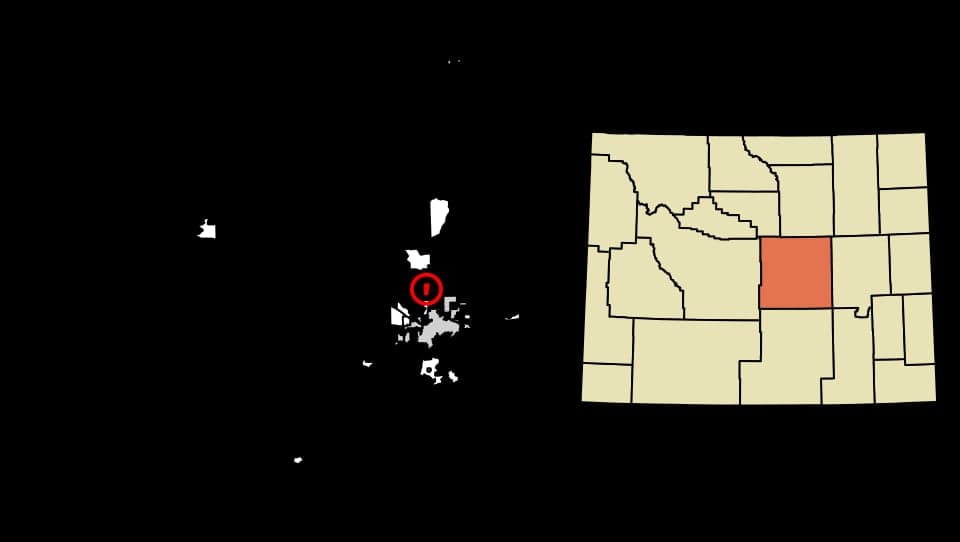
Photo: Wikipedia
Political ClimatePolitical Climate in Bar Nunn, WY
District shown is the primary district for this city’s centroid. Cities may span multiple districts.
Inherited from parent state — no local data available.
Local Political AnalysisPolitical Analysis of Bar Nunn, WY
Bar Nunn is about as solidly conservative as it gets in Wyoming, and that’s not changing anytime soon. The town sits in Natrona County, which has a Cook PVI of R+23, meaning it votes nearly a quarter more Republican than the national average. In 2024, the county went for Trump by a margin of roughly 72% to 24% for Harris. That’s not just a trend—it’s a deep-rooted cultural stance. People here take their Second Amendment rights seriously, and there’s a strong distrust of federal overreach, especially when it comes to land use, energy regulations, and any talk of gun control. The local vibe is “leave us alone to live our lives,” and that’s been the case for decades.
How it compares
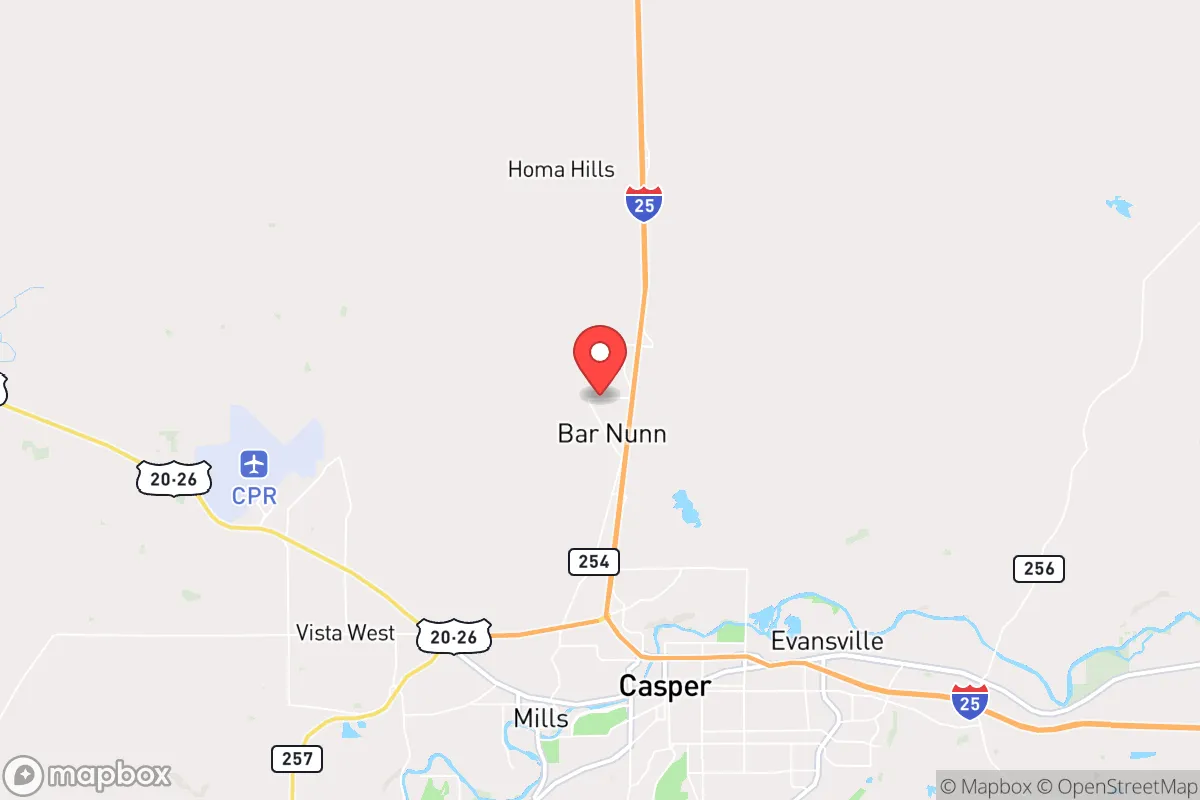
If you drive 15 miles east to Casper, you’ll find a slightly more mixed political scene—Casper has a small but vocal progressive contingent, especially around the college and some downtown businesses. But Bar Nunn is a different animal. It’s a bedroom community where most folks work in the oil fields, trucking, or at the local refineries, and that blue-collar independence shapes everything. Compared to Jackson Hole, which is practically a different state politically (Teton County went +40 for Biden in 2020), Bar Nunn feels like a time capsule of traditional Western values. The contrast is stark: Jackson has bike lanes and organic co-ops; Bar Nunn has pickup trucks and gun shops. That’s not a judgment—it’s just the reality of two Wyomings.
What this means for residents
For the people who live here, the political climate means low taxes, minimal zoning, and a general hands-off approach from local government. The town council is all Republican, and there’s little appetite for new regulations on housing or business. That’s a double-edged sword, though—it also means limited public services and infrastructure investment. But most residents would rather fix their own potholes than deal with a county planning board telling them what color to paint their fence. The real concern is the creeping influence of progressive policies from the state level, like recent debates over property tax increases and energy transition plans. If that trend continues, Bar Nunn could see more pushback from locals who feel their way of life is being threatened by outside interests.
One thing that sets Bar Nunn apart is its strong sense of community self-reliance. There’s no HOA telling you what to do, and the local church and VFW hall are the real centers of social life. People here are friendly but fiercely independent—they’ll help you change a tire but won’t ask for your opinion on their politics. The long-term outlook is stable, but there’s a quiet worry that as Wyoming’s economy diversifies (tech, tourism, renewables), the political winds might shift. For now, though, Bar Nunn remains a place where a “R+23” isn’t just a statistic—it’s a way of life. If you’re looking for a place where the government stays out of your business and your neighbor’s business, this is it. Just don’t expect a lot of change, because that’s exactly how folks like it.

State Political ClimatePolitical Climate in Wyoming
State Political AnalysisPolitical Environment in the State
Wyoming is one of the most reliably conservative states in the Union, with a Republican Party registration advantage that has only grown over the past two decades. The state hasn’t voted for a Democratic presidential candidate since 1964, and in 2024, Donald Trump carried it by over 40 points. The dominant coalition is a mix of rural ranchers, energy-sector workers, and a growing number of conservative transplants fleeing blue states. Over the past 10-20 years, the political trajectory has been a steady march rightward, with the legislature passing some of the most aggressive pro-liberty and pro-life laws in the country, while the state’s small but vocal progressive base remains concentrated in a few enclaves.
Urban vs. rural divide
The political map of Wyoming is starkly divided between its handful of small cities and the vast, sparsely populated rural counties. Laramie County (Cheyenne) and Natrona County (Casper) are the two most populous areas and lean Republican, but not as overwhelmingly as the rest of the state. Cheyenne, as the state capital and home to F.E. Warren Air Force Base, has a slightly more moderate Republican flavor, with a mix of government employees and military families. Casper, historically an energy hub, is reliably red but has seen some in-migration from Colorado that has nudged it slightly toward the center. The real conservative strongholds are the rural counties like Sublette, Lincoln, and Fremont, where Republican margins routinely exceed 80%. Teton County (Jackson Hole) is the glaring exception — it’s the only county that regularly votes Democratic, driven by the ultra-wealthy, ski-resort crowd and a service-industry workforce that leans left. Jackson Hole itself is a political island, with local policies on housing and land use that feel more like Boulder or Park City than the rest of Wyoming.
Policy environment
Wyoming’s policy environment is a dream for conservatives who value low taxes and minimal government interference. There is no state income tax, and the sales tax is a low 4% (with local options adding up to 2%). Property taxes are among the lowest in the nation, though they’ve been a flashpoint recently as assessed values have risen. The regulatory posture is aggressively pro-business, especially for energy extraction — oil, gas, and coal still drive the economy, and the state has fought federal overreach on public lands and emissions standards. Education policy is a mixed bag: the state funds schools well per pupil, but there’s a growing school choice movement, and the legislature passed a school voucher-like program in 2024 that allows families to use state funds for private or homeschool expenses. Healthcare is a concern — Wyoming is one of the few states that hasn’t expanded Medicaid, and rural hospital closures are a real issue. Election laws are solid: voter ID is required, and the state has resisted mail-in ballot expansions. The legislature also passed a constitutional carry law in 2011, meaning no permit is needed to carry a concealed firearm.
Trajectory & freedom
Wyoming is becoming more free in many respects, especially on gun rights, parental rights, and medical autonomy. In 2023, the legislature passed the Wyoming Freedom Act, which explicitly prohibits state enforcement of any federal gun control laws that violate the Second Amendment — a direct nullification play. The same session saw the Parental Rights in Education Act, which requires schools to notify parents of any curriculum involving sexuality or gender identity and allows them to opt their kids out. On medical freedom, Wyoming banned COVID-19 vaccine mandates for state employees and private businesses in 2022, and in 2024, it passed a law prohibiting gender transition procedures for minors. Property rights have been strengthened with the Private Property Protection Act, which limits eminent domain abuse. The only area where freedom has arguably contracted is on abortion: Wyoming passed a near-total ban in 2023, with exceptions only for rape, incest, and the life of the mother. That’s a win for the pro-life movement, but it’s worth noting that the ban was temporarily blocked by a court challenge, and the issue remains litigated.
Civil unrest & political movements
Wyoming is not a hotbed of civil unrest, but there have been notable flashpoints. The Bundy standoff in 2014 over federal land grazing rights happened just across the border in Nevada, but Wyoming ranchers were deeply sympathetic, and the state has a strong county supremacy movement that pushes back on federal land management. In 2020, there were small Black Lives Matter protests in Cheyenne and Jackson Hole, but they were dwarfed by counter-protests and a general sense of public disapproval. Immigration politics are relatively quiet — Wyoming has a tiny foreign-born population (under 4%), and the legislature passed a sanctuary city ban in 2019, requiring local law enforcement to cooperate with ICE. Election integrity controversies have been minimal, but the state did conduct a forensic audit of the 2020 election in 2022, which found no evidence of widespread fraud but did recommend tighter chain-of-custody procedures. The most visible political movement is the “Freedom Caucus” within the state legislature, which has pushed for even more aggressive nullification of federal laws and has clashed with more establishment Republicans over budget priorities.
Projection
Over the next 5-10 years, Wyoming is likely to become even more conservative, driven by two demographic trends. First, the state is seeing a steady influx of remote workers and retirees from Colorado, California, and the Pacific Northwest, many of whom are fleeing high taxes and progressive policies. These newcomers tend to be libertarian-leaning conservatives who want low taxes and minimal government, but they also bring higher housing costs and some cultural friction with long-time residents. Second, the state’s young people are leaving for college and not returning, which is slowly aging the population and reinforcing the conservative tilt. The energy transition away from coal will be a major challenge — the state’s budget is heavily dependent on mineral royalties, and declining coal revenue could force either spending cuts or new taxes. Expect the legislature to continue pushing the envelope on Second Amendment protections, school choice, and parental rights, while fighting federal overreach on public lands and environmental regulations. The wildcard is Teton County: if Jackson Hole continues to grow and attract left-leaning transplants, it could become a more significant political force, but it will never outweigh the rural counties.
For a new resident, the bottom line is this: Wyoming offers one of the highest levels of personal freedom in the country, especially on gun rights, taxation, and parental control over education. You won’t find the culture wars of coastal cities here — most people just want to be left alone. The trade-offs are a limited job market outside of energy and government, harsh winters, and a healthcare system that can feel thin in rural areas. If you’re looking for a place where the government stays out of your life and your wallet, Wyoming is about as good as it gets. Just be prepared for the wind.
* Values derived from national, state, county, city and local statistics and may differ in a specific area. Last updated: 2026-04-23T09:36:52.000Z
Narrative content on this page is AI-generated and may contain mistakes. Verify any details that matter before acting on them.
ReloMaps may earn a commission from affiliate links at no extra cost to you.

