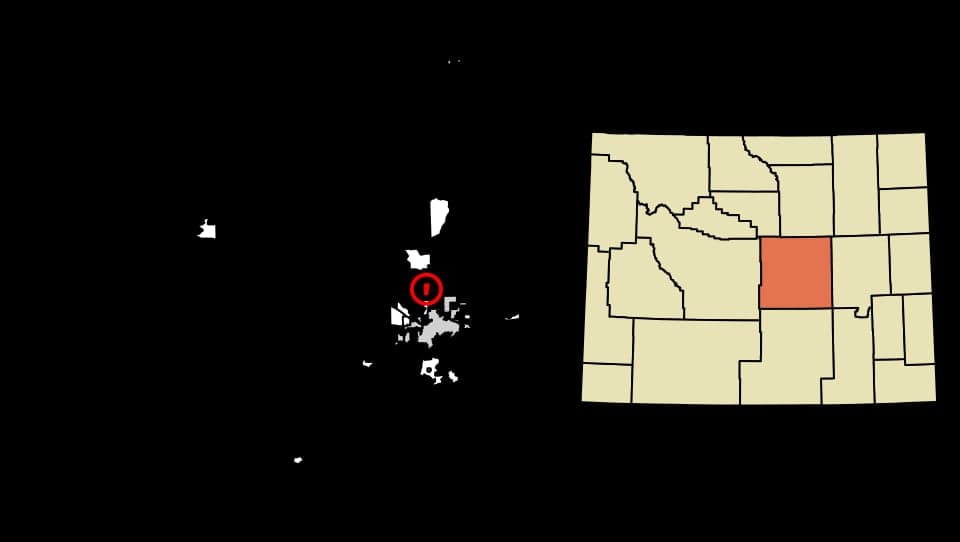
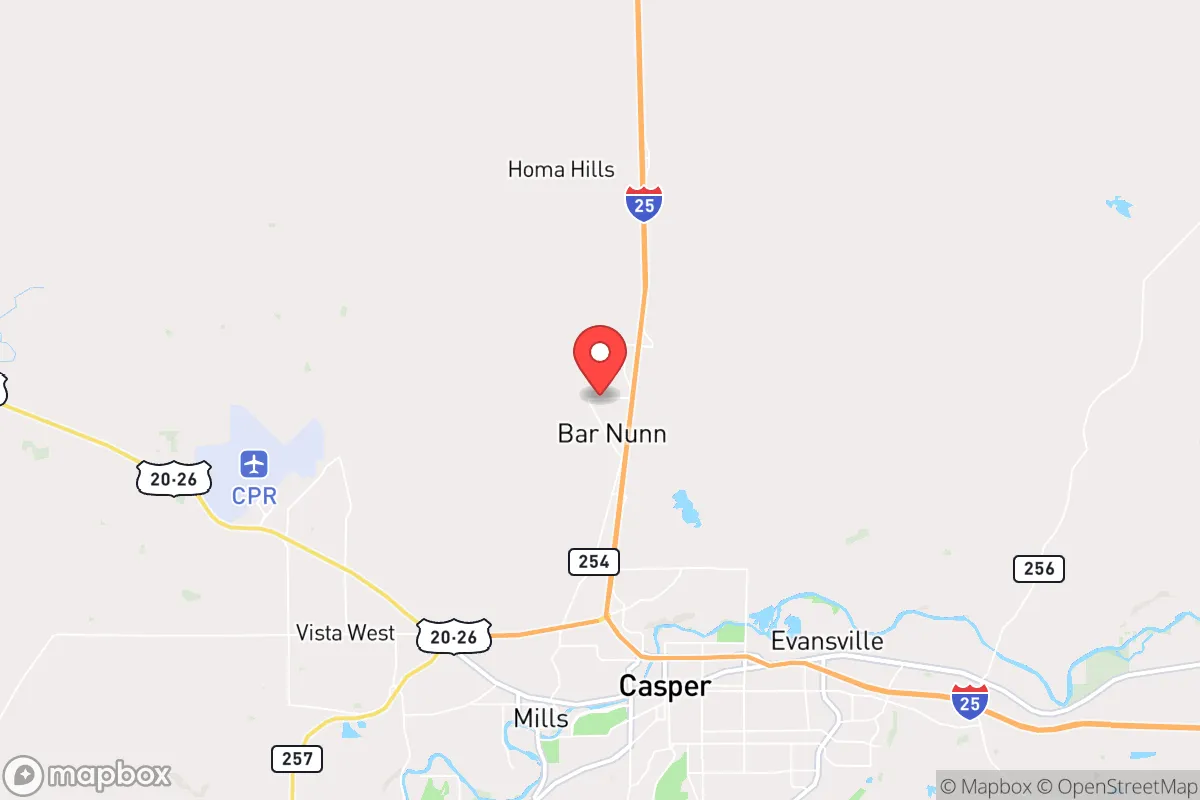
Photo: Wikipedia
Strategic Assessment of Bar Nunn, WY
Workable tactical position. Some exposure to population density or targets, but generally defensible in a crisis.
What does the Strategic Assessment tell us?
Our Strategic Assessment grades tactical survivability of an area. Major population centers, military targets, fallout zones, natural disasters, and border exposure all drive risk — lower exposure means a more defensible position in a crisis.
This is heavily inspired by Joel Skousen's Strategic Relocation book. Highly recommended you checkout the book ($)What does this tell us?
Our Strategic Assessment grades tactical survivability of an area. Major population centers, military targets, fallout zones, natural disasters, and border exposure all drive risk — lower exposure means a more defensible position in a crisis.
This is heavily inspired by Joel Skousen's Strategic Relocation book. Highly recommended you checkout the book ($)Strategic Pillars

Key Distances
Regional Safe Places
Below is our recommended "safe zones" in Wyoming and the surrounding area based on our strategic heuristics. For most people, it's unrealistic to live in a “safe zone” full-time due to work, family or other personal reasons. They tend to be more rural. However, many of these areas are perfect for second homes and retreat properties that double as a vacation home or even a short-term rental.
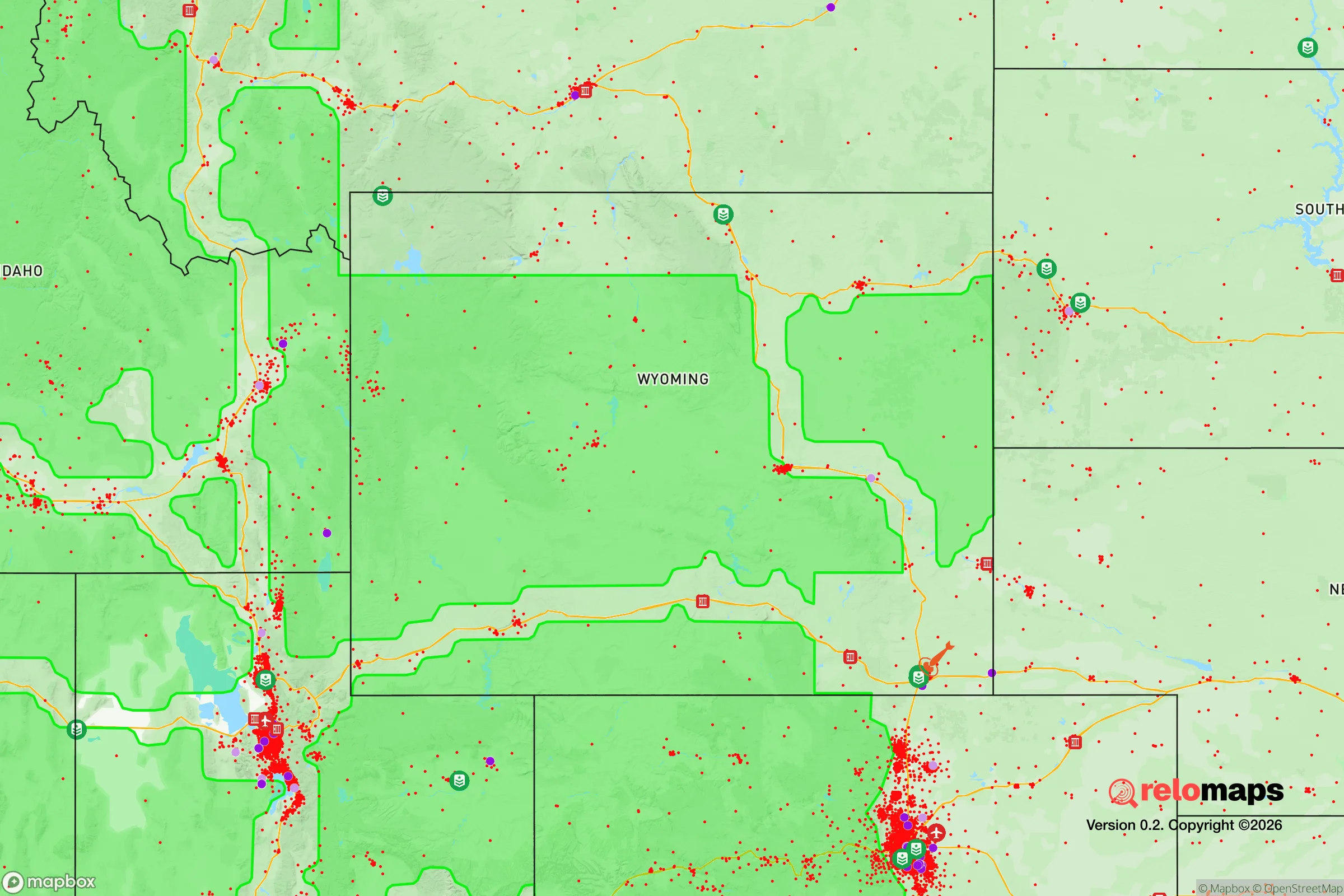
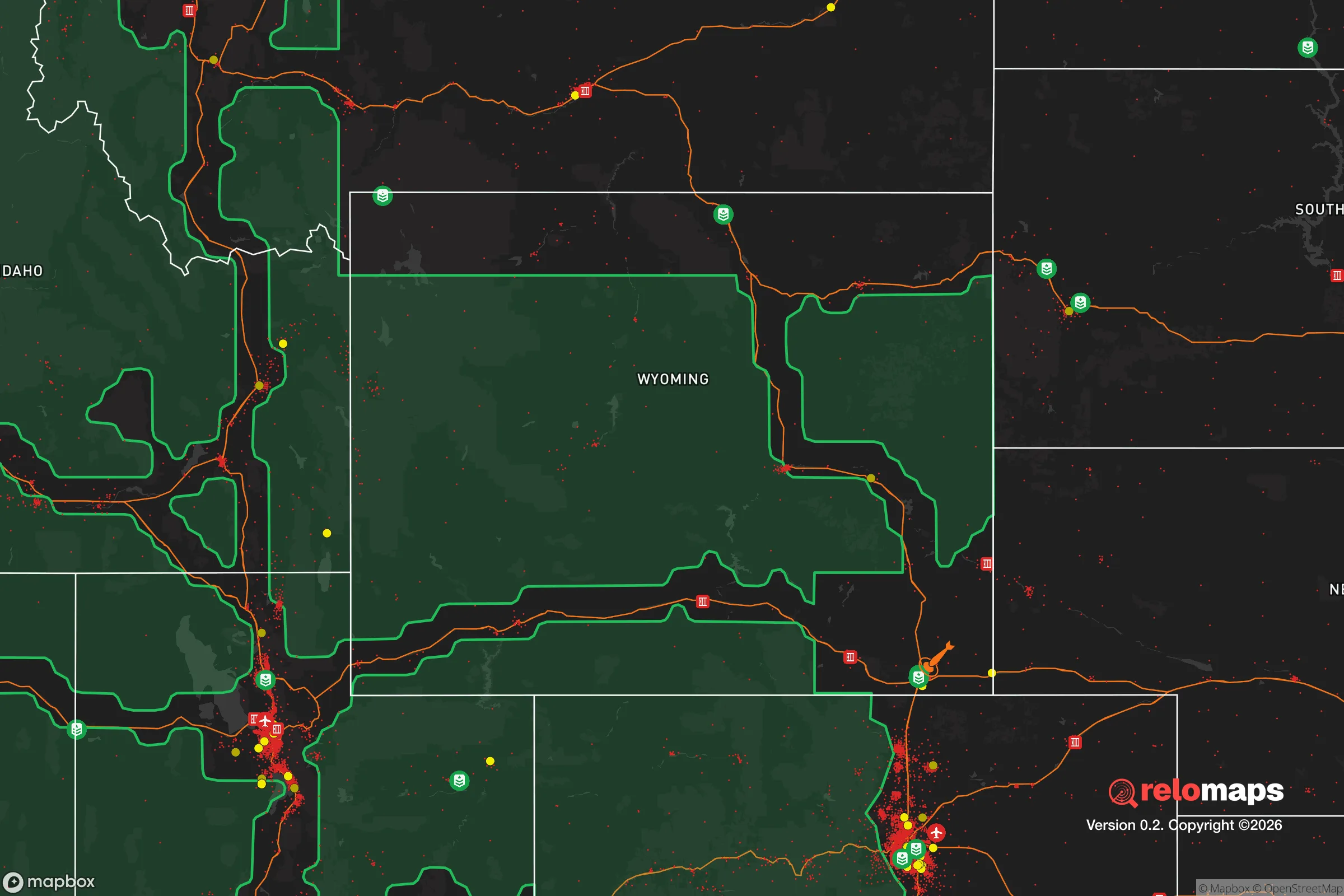


Important Note: For informational purposes only. This does not mean nothing bad ever happens in the green zones. Please use common sense. This is based on public data and modeled with AI. We tried to take a conservative approach but mistakes happen. We update this regularly as new information becomes available.
Solar Generator Recommendations
Backup power matters more here than in safer locations. We've picked three solar generators across budgets and capacity tiers — start with the budget unit if you only need a few essentials, or step up if you want to run a fridge and HVAC for days at a time.

Jackery Portable Power Station Explorer 300
Budget OptionPower on the Go: Weighing only 11 lbs, it's convenient to set up and store with book-sized foldable solar panels

BLUETTI Portable Power Station AC180
Designed for both indoor and outdoor scenarios, AC180 is highly capable as it has a robost capacity and continuous output power.

EF ECOFLOW DELTA Pro Ultra Power Station
Upgraded PickEcoFlow DELTA Pro Ultra is a whole-home energy system designed to grow with your family. Integrated with the Smart Home Panel 2, it scales to meet your evolving energy needs — keeping your home powered, intelligent, and secure through every stage of life.
We earn a commission, at no additional cost to you.
Strategic Assessment Analysis
Bar Nunn, Wyoming, offers a strategic relocation option for those prioritizing resilience and self-sufficiency, sitting just north of Casper in a sparsely populated corridor that buffers against the chaos of larger urban centers. Its location along the North Platte River and near Interstate 25 provides a critical balance—close enough to access supplies and medical care in Casper, yet far enough to avoid the immediate fallout of a major metropolitan collapse. For a prepper or survivalist, this is a rare sweet spot: a small town with a low population density (roughly 2,000 residents) that can leverage nearby resources without being a primary target or a choke point during unrest.
Geographic position and natural advantages for long-term survival
Bar Nunn sits at the edge of Wyoming’s high plains, with the Laramie Mountains to the south and the Big Horn Mountains to the north, creating natural barriers that slow movement and provide defensible terrain. The area’s elevation—around 5,100 feet—means cooler summers and harsh winters, which naturally discourage unprepared transient populations and reduce the risk of disease vectors common in warmer climates. The North Platte River runs just east of town, offering a reliable surface water source for filtration and irrigation, while the surrounding sagebrush steppe and mixed-grass prairie support limited but viable grazing for livestock. The region’s low humidity and frequent winds also mitigate the spread of airborne contaminants, a key advantage if a mass casualty event involves biological or chemical agents. For a relocator, the ability to tap into groundwater via a well is a major plus—most lots in Bar Nunn are on private wells, not municipal systems, giving you control over your water supply if grid power fails.
Risks, exposures, and proximity to fallout-relevant landmarks
The primary strategic risk is Bar Nunn’s proximity to Casper (about 5 miles south), a city of 60,000 that hosts a regional medical center, an airport, and a major rail yard—all potential targets for civil unrest or infrastructure attacks. During a mass casualty event, Casper could become a funnel for refugees fleeing the Front Range (Denver is 250 miles south), and I-25 is the obvious corridor. Bar Nunn sits directly on that highway, meaning you’d need a secondary escape route or a hardened position to avoid being overrun. The nearby Casper-Natrona County International Airport is also a concern—it’s a former Strategic Air Command base with a 10,000-foot runway, making it a likely staging area for federal response or military operations, which could draw unwanted attention. Additionally, the area’s oil and gas fields (the Salt Creek Oil Field is 30 miles north) and the Sinclair Refinery (50 miles east) are industrial hazards; a major accident or sabotage could release toxic clouds or trigger secondary disasters. The wind patterns here are predominantly from the west, so any fallout from the refinery or a rail incident would likely blow east, away from Bar Nunn, but you should still plan for a sealed room and air filtration.
Practical resilience for a relocator: food, water, energy, and defensibility
Bar Nunn’s practical resilience hinges on its small-town infrastructure and the ability to go off-grid without raising eyebrows. Water is the strongest asset: the shallow aquifer under the area (the Arikaree Formation) is accessible via hand-pump wells at 100-200 feet, and the North Platte River provides a backup source for filtration. Most homes here already have private wells, so you won’t stand out by installing a manual pump or rainwater catchment. Food is a challenge—the growing season is short (90-110 frost-free days) and soil is alkaline, but raised beds with imported topsoil and cold frames can yield potatoes, carrots, and hardy greens. Local hunting for mule deer and pronghorn is legal with a license, and the nearby Thunder Basin National Grassland (100 miles east) offers public land for foraging and game. Energy is straightforward: Wyoming has some of the best wind resources in the country, and a small turbine paired with solar panels can keep a home running year-round. Natural gas is cheap here (the area sits on the Jonah Field), but for true resilience, you’ll want a wood stove and a backup generator—winter storms can knock out power for days. Defensibility is decent: Bar Nunn’s layout is a grid of single-family homes on 1-5 acre lots, with open sightlines in all directions. The town has a volunteer fire department and a small police presence, but during a collapse, you’d rely on neighbors and your own perimeter. The lack of dense tree cover means you can see threats coming from a mile away, but it also means you’re exposed to long-range observation—consider berms or earth-sheltered construction for a hardened retreat.
The overall strategic picture for Bar Nunn is one of calculated trade-offs. It’s not a remote bunker in the wilderness—you’re 5 miles from a mid-sized city with all the risks that entails—but it’s also not a suburban sprawl where you’re dependent on fragile supply chains. The area’s low crime rate (Natrona County’s violent crime is about half the national average) and strong gun culture (Wyoming has constitutional carry and no state-level firearm restrictions) mean you can prepare openly without legal hassle. The local economy is tied to energy and agriculture, which are recession-resistant but vulnerable to commodity price swings—something to consider if you’re planning to work remotely or live off savings. For a conservative-minded relocator worried about civil unrest, mass casualty events, or a breakdown of federal systems, Bar Nunn offers a realistic middle ground: enough isolation to avoid the worst of the chaos, enough access to resources to sustain a family, and a community that values self-reliance over government dependency. Just don’t expect to disappear completely—your neighbors will know your business, and that’s exactly the kind of mutual accountability that keeps a place resilient when the lights go out.

* Values derived from national, state, county, city and local statistics and may differ in a specific area. Last updated: 2026-04-23T09:36:52.000Z
Narrative content on this page is AI-generated and may contain mistakes. Verify any details that matter before acting on them.
ReloMaps may earn a commission from affiliate links at no extra cost to you.

