Photo: Wikipedia
Political ClimatePolitical Climate in Barboursville, WV
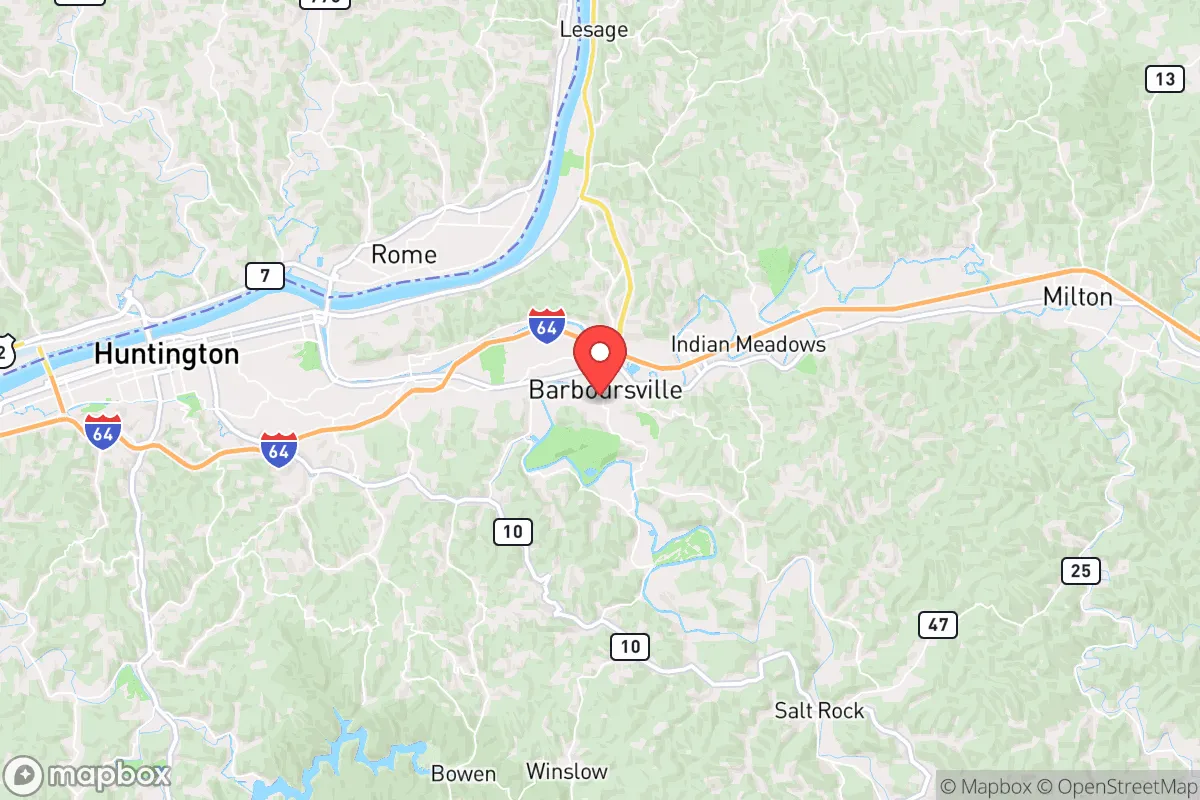
District shown is the primary district for this city’s centroid. Cities may span multiple districts.
Local Political AnalysisPolitical Analysis of Barboursville, WV
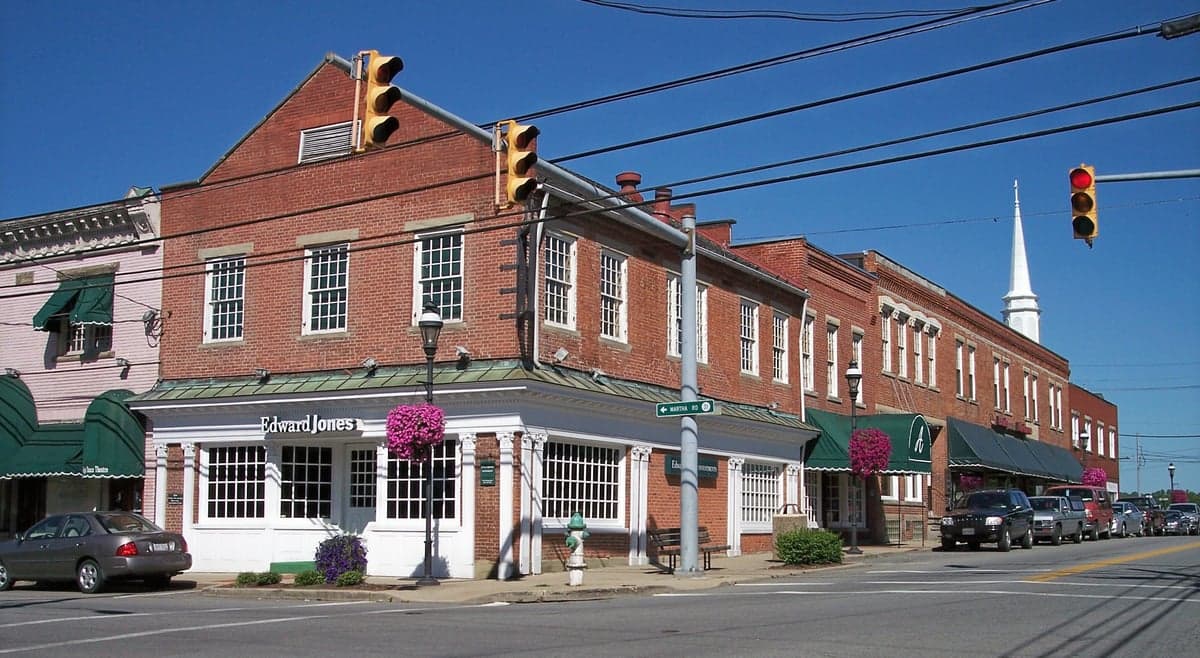
Barboursville, West Virginia, sits deep in solidly red territory, with a Cook PVI of R+22 that reflects a community where conservative values aren't just a preference—they're the baseline. For decades, this town has leaned reliably Republican, and while the national GOP has shifted, Barboursville's core has stayed remarkably steady: folks here vote their conscience, and that conscience is wary of government overreach. You don't see the kind of political whiplash you get in some parts of the country; the trajectory here is one of slow, cautious resistance to any progressive drift, with most residents preferring the old-school idea that local control beats a distant bureaucracy every time.
How it compares
Drive twenty minutes up I-64 to Huntington, and you'll feel the difference. Huntington leans more moderate-to-liberal, especially around Marshall University, where younger voters and faculty push a different energy. Barboursville, by contrast, is the quiet cousin who stays home on election night. Compare it to Charleston, about 45 minutes east, which has a more mixed political scene—some blue pockets in the city proper, but the surrounding Kanawha County still leans red. Barboursville's R+22 rating puts it in the same league as rural counties like Cabell County's outlying precincts, but it's notably more conservative than the state's average of R+20. That extra two points isn't just a number; it means local elections here rarely see serious progressive challengers, and when they do, they don't get far.
What this means for residents
For someone living here, the political climate translates into a daily life where government stays mostly out of your business. You won't find heavy-handed zoning rules or aggressive code enforcement like you might in more progressive towns. Property taxes stay low, and there's little appetite for new regulations on things like firearms, land use, or small businesses. The downside? If you're hoping for rapid public investment in bike lanes or transit, you'll be waiting a while. The local mindset is "if it ain't broke, don't fix it," and that can feel stagnant if you're used to a more activist local government. But for most residents, that's a feature, not a bug. The schools reflect the community's values too—traditional, with an emphasis on local control and parental input, not top-down mandates from Charleston or Washington.
One thing that sets Barboursville apart is its cultural conservatism that goes beyond just voting patterns. You'll see it in the way people talk about property rights, the Second Amendment, and the role of the church in community life. There's a strong sense that personal freedom means being left alone to live your life without a bureaucrat telling you how to do it. That said, there's been a quiet shift over the last decade—more people working from home, a few younger families moving in from out of state, and with them, a slight uptick in discussions about diversity and inclusion. Nothing alarming yet, but it's worth keeping an eye on. If you're considering a move here, know that the political culture is stable, predictable, and deeply skeptical of anything that smells like progressive overreach. It's a place where your vote counts, your voice is heard, and the government is expected to stay in its lane.

State Political ClimatePolitical Climate in West Virginia
State Political AnalysisPolitical Environment in the State
West Virginia has long been one of the most reliably Republican states in the nation, but that wasn't always the case. As recently as the 1990s, the Mountain State was a Democratic stronghold at the state and local level, but a seismic shift began in the early 2000s. The 2024 presidential election saw Donald Trump carry the state by nearly 39 points, a margin that has only grown since 2016. The dominant coalition today is a mix of rural, working-class voters, coal-country conservatives, and a growing number of retirees and remote workers fleeing high-tax states. The state legislature is now a supermajority Republican, and the governor's mansion has been held by the GOP since 2017. The trajectory over the last 20 years has been a steady, accelerating march rightward, driven by cultural and economic alienation from the national Democratic Party.
Urban vs. rural divide
The political map of West Virginia is starkly divided between a handful of small urban centers and the vast, deeply red rural countryside. The largest city, Charleston, and its surrounding Kanawha County lean Republican but are more competitive than the rest of the state—Trump won Kanawha by about 18 points in 2024, compared to 39 statewide. Morgantown, home to West Virginia University, is the most liberal-leaning area in the state, with Monongalia County voting for Trump by only about 12 points, and the city itself often electing Democrats to local office. Huntington and Wheeling are reliably red but with pockets of blue in their older, union-heavy neighborhoods. The real engine of the state's conservatism is the rural expanse: counties like Mingo, Logan, and McDowell routinely deliver 75-80% of their vote to Republican candidates. The divide is less about income and more about culture and economics—rural voters feel abandoned by national Democrats on coal, guns, and social issues, while the university towns and state capital retain a more moderate, service-economy base.
Policy environment
West Virginia's policy environment is aggressively conservative and has become more so in the last five years. The state has no personal income tax on Social Security benefits and has been phasing down its personal income tax—a 2023 law cut rates by 21.25% across the board, with a goal of full elimination. The corporate net income tax is a flat 6.5%, and the state has a right-to-work law, making it a low-regulation haven for business. On education, the 2021 Hope Scholarship program created the nation's most expansive school choice system, allowing any K-12 student to use state funds for private school, homeschooling, or tutoring. Healthcare is a mixed bag: the state expanded Medicaid under the Affordable Care Act, but the legislature has repeatedly blocked efforts to create a state-based exchange or expand abortion access. Election laws are strict—voter ID is required, early voting is limited to 10 days, and no-excuse absentee voting was eliminated in 2021. The state also passed a 2022 law banning transgender girls from participating in female sports and a 2023 law restricting gender-affirming care for minors. For a conservative, the policy environment is a clear win: low taxes, school choice, and cultural protectionism.
Trajectory & freedom
West Virginia is becoming more free in the sense of limited government and personal autonomy, particularly on economic and Second Amendment fronts. The 2021 Constitutional Carry law allows any adult who can legally possess a firearm to carry it openly or concealed without a permit—a major expansion of gun rights. The 2023 "Parental Bill of Rights" (SB 498) requires schools to notify parents of any medical or mental health services offered to their child and prohibits instruction on sexual orientation or gender identity in K-3. On property rights, the 2020 "Right to Farm" law strengthened protections for agricultural operations against nuisance lawsuits. However, there are limits: the state's medical marijuana program is tightly controlled, with no home cultivation and a limited list of qualifying conditions, and recreational cannabis remains illegal. The state also maintains a strict ban on abortion at all stages of pregnancy, with no exceptions for rape or incest, which some conservatives see as a proper protection of life but others view as a limit on medical autonomy. Overall, the trajectory is toward greater personal liberty in the traditional conservative sense—less government intrusion on guns, parenting, and taxes—but with a heavy hand on social and drug policy.
Civil unrest & political movements
West Virginia has seen its share of political flashpoints, but they tend to be more organized and less chaotic than in other states. The 2018 teachers' strike, which shut down all 55 county school systems for nine days, was a rare moment of cross-party labor activism, driven by low pay and rising healthcare costs. More recently, the state has been a hotbed of anti-vaccine mandate and anti-lockdown sentiment, with large protests at the state capitol in 2020 and 2021. The "Don't Tread on Me" ethos runs deep, and you'll see it in the proliferation of "Second Amendment Sanctuary" resolutions passed by dozens of counties. Immigration politics are less visible here than in border states—West Virginia has one of the smallest foreign-born populations in the country—but the legislature passed a 2023 law requiring local law enforcement to cooperate with federal immigration authorities. There is no serious secession or nullification movement, but the state's political culture is fiercely independent. A new resident would notice a general distrust of federal authority, especially around environmental regulations and public health mandates, but the activism is more about local control than street-level unrest.
Projection
Over the next 5-10 years, West Virginia is likely to become even more conservative, but with some interesting wrinkles. The state's population is aging and shrinking—it lost about 3% of its population between 2020 and 2024—but the people moving in are often remote workers from blue states seeking lower taxes and a slower pace. Places like Shepherdstown and Berkeley Springs in the Eastern Panhandle are seeing an influx of former Washington D.C. and Maryland residents, which could introduce a slightly more moderate, libertarian-leaning strain of conservatism. The coal industry will continue to decline, but the state is betting on natural gas, data centers, and outdoor recreation to fill the gap. Politically, the Republican supermajority is unlikely to be threatened, but internal fights may emerge between the "establishment" GOP and more populist, anti-establishment factions. For a conservative moving in now, expect a state that will remain deeply red, with continued tax cuts, school choice expansion, and cultural battles over education and healthcare. The biggest risk is economic stagnation, not political change—the state's future depends on whether it can attract enough new residents to offset its demographic decline.
Bottom line for a new resident: If you're a conservative looking for a state that aligns with your values on taxes, guns, education, and family policy, West Virginia is one of the safest bets in the country. You'll find a government that is actively working to reduce its footprint in your wallet and your home, but you'll also need to accept limited healthcare options, a shrinking population, and a climate that can feel isolated. The politics are stable, the people are friendly, and the cost of living is low. Just be prepared for a state that is proud of its independence and suspicious of outsiders—but once you're in, you're family.
* Values derived from national, state, county, city and local statistics and may differ in a specific area. Last updated: 2026-04-23T05:46:36.000Z
Narrative content on this page is AI-generated and may contain mistakes. Verify any details that matter before acting on them.
ReloMaps may earn a commission from affiliate links at no extra cost to you.

