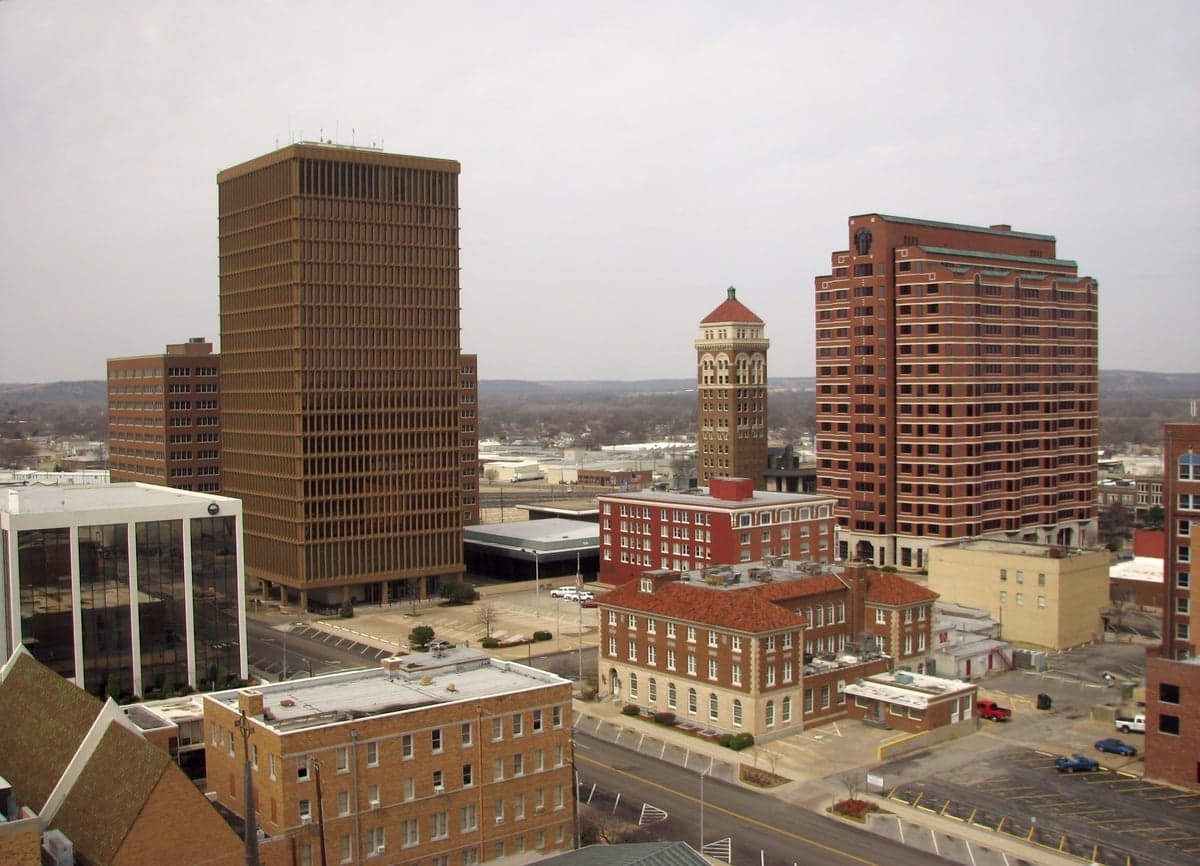
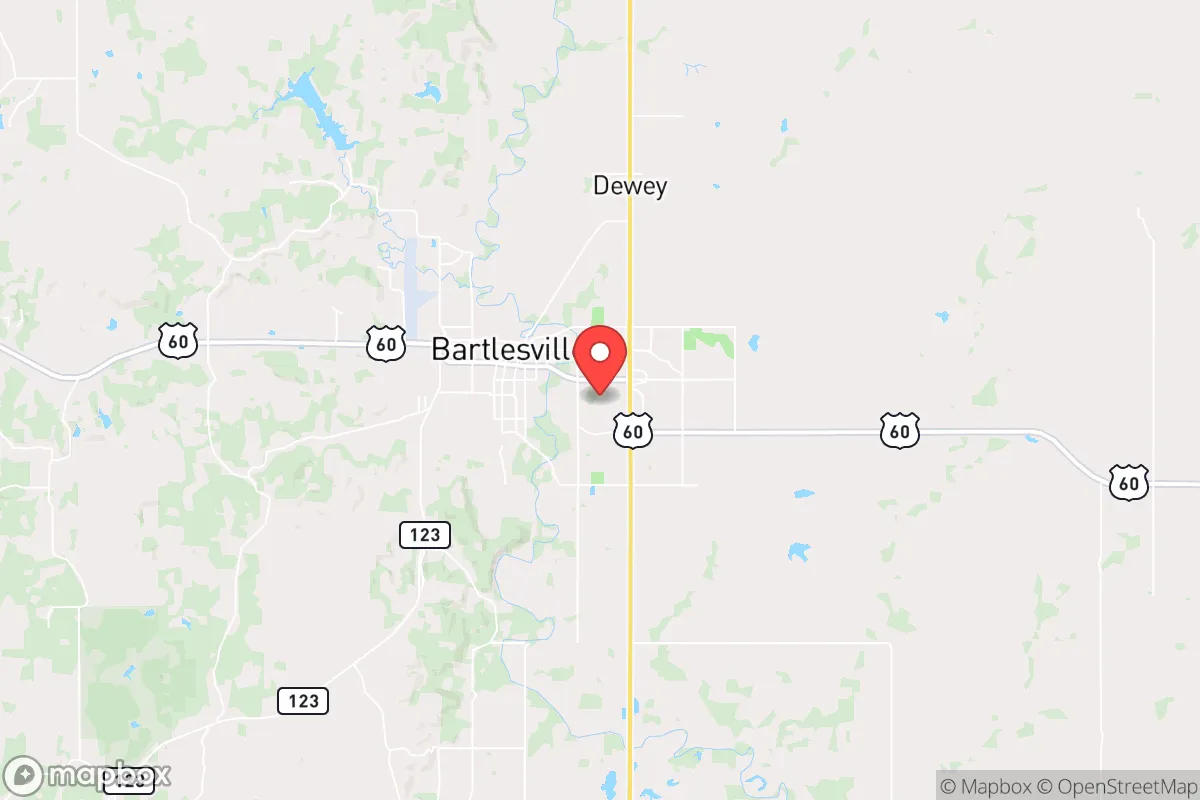
Photo: Wikipedia
Demographics of Bartlesville, OK
Affluence Level in Bartlesville, OK
A below-average socioeconomic profile. Incomes, home values, and educational attainment trail the U.S., with higher poverty and unemployment.
People of Bartlesville, OK
Bartlesville, Oklahoma, today is a city of 37,559 residents that blends a strong oil-industry heritage with a quiet, family-oriented character. The population is predominantly White (71.1%), with a Hispanic community of 7.1%, a Black population of 3.8%, and smaller East/Southeast Asian (1.6%) and Indian subcontinent (0.8%) groups. Only 2.5% of residents are foreign-born, giving the city a notably native-born, culturally conservative feel. The city’s identity is shaped by its history as a company town for Phillips Petroleum and its role as the headquarters of the Cherokee Nation, creating a distinctive mix of corporate professionalism and Native American heritage.
How the city was settled and grew
Bartlesville was founded in the 1870s as a trading post on the Caney River, but its population boom came with the 1897 discovery of oil in nearby Bartlesville-Dewey Field. The city’s early growth was driven by the oil industry, particularly after Frank Phillips founded Phillips Petroleum in 1917. The original settlers were a mix of white entrepreneurs, roughnecks, and tradesmen drawn by the oil boom, along with a significant Cherokee population already living in the area under the post-Civil War Dawes Act allotments. The historic downtown district, centered around Johnstone Avenue and Frank Phillips Boulevard, was built by these early oil workers and merchants, with many of the original brick buildings still standing. The Price Tower neighborhood, anchored by Frank Lloyd Wright’s iconic 1956 skyscraper, became a hub for Phillips executives and white-collar professionals. Meanwhile, the East Bartlesville area, near the Caney River, developed as a working-class enclave for refinery laborers and their families. By the mid-20th century, the city’s population had grown to over 20,000, with a largely white, native-born workforce and a small but established Black community that had arrived during the oil boom’s peak.
Modern era (post-1965)
After the 1965 Hart-Cellar Act, Bartlesville saw minimal immigration compared to larger cities, with the foreign-born share remaining below 3% through the 2020s. The post-1965 period was instead defined by domestic in-migration, particularly from rural Oklahoma and Texas, as Phillips Petroleum expanded its operations. The Silver Lake Village neighborhood, developed in the 1970s, attracted middle-class families and Phillips employees with its suburban-style homes and proximity to the company’s research center. The Rolling Hills area, south of downtown, became a destination for upper-middle-class professionals, including many of the city’s small East/Southeast Asian and Indian subcontinent residents who arrived as engineers and medical professionals in the 1990s and 2000s. The Hispanic population, now 7.1%, grew steadily from the 1980s onward, with many families settling in the West Bartlesville corridor near the industrial parks and service-sector jobs. The Black population, at 3.8%, remains concentrated in the historic North Bartlesville area, near the old refinery sites, though younger families have begun moving to newer subdivisions. The city’s college-educated share (33.5%) is higher than the state average, reflecting the professional workforce tied to ConocoPhillips (which moved its headquarters to Houston in 2014 but retains a large regional office) and the Cherokee Nation’s administrative operations.
The future
Bartlesville’s population is projected to remain stable or decline slightly over the next decade, as the city has not experienced the rapid growth seen in Oklahoma’s larger metros like Oklahoma City or Tulsa. The population is slowly aging, with a median age of 40.2, and the city is seeing modest out-migration of young adults to larger job markets. The Hispanic community is the fastest-growing demographic, driven by natural increase and continued migration for service and construction jobs, and is expected to reach 10-12% of the population by 2035. The East/Southeast Asian and Indian subcontinent communities are likely to plateau, as they are largely tied to specific professional roles at ConocoPhillips and the local medical sector. The city is not tribalizing into distinct enclaves; rather, it is slowly homogenizing as older white residents age in place and younger families of all backgrounds move into newer subdivisions like Prairie Creek and Oak Park. The Cherokee Nation’s growing influence—through its casino, health services, and cultural programs—will continue to shape the city’s identity, but the overall demographic trajectory is one of gradual diversification within a still-predominantly white, native-born framework.
For someone moving to Bartlesville now, the city offers a stable, family-oriented environment with a strong sense of history and community. The population is not undergoing dramatic change, but it is slowly becoming more Hispanic and more diverse in professional backgrounds. The key takeaway is that Bartlesville remains a place where oil-industry roots, Native American governance, and a conservative, native-born culture coexist, making it a predictable and safe choice for families seeking a slower pace of life with solid schools and a low crime rate.

* Values derived from national, state, county, city and local statistics and may differ in a specific area. Last updated: 2026-04-21T08:50:46.000Z
Narrative content on this page is AI-generated and may contain mistakes. Verify any details that matter before acting on them.
ReloMaps may earn a commission from affiliate links at no extra cost to you.

