 Popular
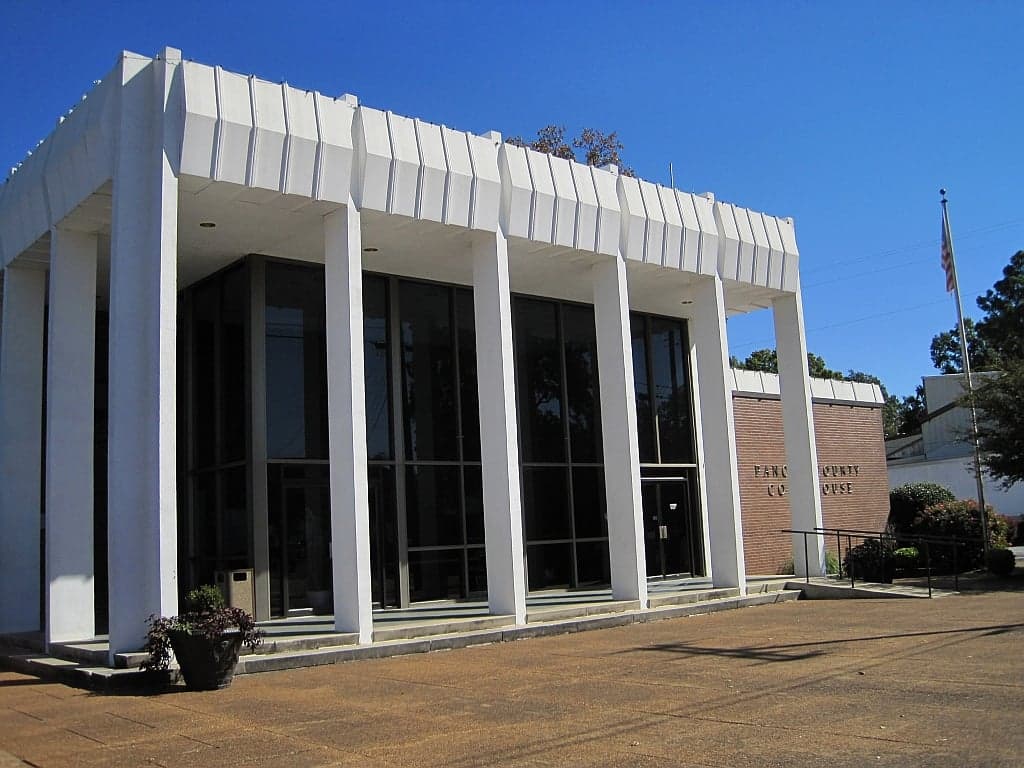
Photo: Wikipedia
Demographics of Batesville, MS
Affluence Level in Batesville, MS
A below-average socioeconomic profile. Incomes, home values, and educational attainment trail the U.S., with higher poverty and unemployment.
People of Batesville, MS
The people of Batesville, Mississippi today form a majority-Black community of 7,432 residents, with a White population of 41.9% and a Hispanic share of just 0.9%. The city is notably less diverse than the national average, with a foreign-born population of only 0.1% and negligible Asian (0.0%) and Indian (0.2%) representation. Batesville’s identity is rooted in its role as a regional trade and manufacturing hub in Panola County, where a quarter of adults (25.9%) hold a college degree, reflecting a workforce oriented toward industrial and service-sector employment rather than a large professional class.
How the city was settled and grew
Batesville was founded in 1850 as a railroad town on the Mississippi and Tennessee Railroad, which connected the cotton-rich Delta to Memphis. The original population was a mix of White planters and merchants who settled near the depot, and enslaved Black laborers who worked the surrounding cotton plantations. After the Civil War, freedmen established the Blackburn Addition neighborhood, a historically Black community east of the railroad tracks where many descendants still live today. By the early 1900s, the town’s economy diversified with timber and sawmills, drawing additional White and Black workers to the West Batesville area, which grew as a working-class district of small homes and churches. The Great Migration (1910–1970) saw many Black residents leave for Northern cities, but Batesville’s population held steady due to in-migration from rural Panola County, where sharecropping collapsed after World War II. The North Batesville neighborhood, developed in the 1940s and 1950s, became a middle-class Black enclave anchored by the historic St. Matthew Baptist Church.
Modern era (post-1965)
The 1965 Hart-Cellar Act had minimal impact on Batesville, as the city’s foreign-born population remains near zero. Instead, the post-1965 era was defined by domestic shifts. The 1970s saw the arrival of manufacturing plants—including a Batesville Casket Company facility and later a Gestamp auto parts plant—which drew White and Black workers from across North Mississippi. The South Batesville subdivision, built in the 1980s, absorbed many of these new residents, becoming a racially mixed area of ranch-style homes. The 1990s and 2000s brought a modest influx of White retirees and remote workers to the Lakewood Estates neighborhood, a newer development near the Sardis Lake recreation area. However, the city’s Black population share grew from roughly 48% in 1990 to 54.2% today, as younger White residents increasingly moved to larger metros like Oxford or Memphis for professional opportunities. The Hispanic population, at 0.9%, remains tiny and is concentrated among a few families in the West Batesville rental corridor, working at local poultry plants.
The future
Batesville’s population is projected to remain stable or decline slightly over the next decade, as the city lacks the job growth or amenities to attract significant in-migration. The Black majority is likely to persist, with the White share continuing a slow decline as older residents age in place and younger adults leave for college towns or cities. The foreign-born population is unlikely to grow meaningfully, given the area’s limited economic draw and lack of established immigrant communities. New residential development is concentrated in Lakewood Estates and a few infill lots in South Batesville, but these are small-scale and cater to local families rather than newcomers. The city’s cultural identity remains deeply rooted in its Black church traditions and local schools, with little pressure from outside groups to change. For a conservative-leaning family moving in now, Batesville offers a stable, low-cost environment where community ties are strong and demographic change is slow.
Batesville is becoming a quieter, more insular version of itself—a majority-Black, low-diversity town where manufacturing and retail anchor the economy. For a relocating family, this means a place where neighbors know each other, schools are small, and the pace of life is unhurried, but where the demographic and economic dynamism of larger Southern cities is absent.

* Values derived from national, state, county, city and local statistics and may differ in a specific area. Last updated: 2026-08-16T13:19:05.000Z
Narrative content on this page is AI-generated and may contain mistakes. Verify any details that matter before acting on them.
ReloMaps may earn a commission from affiliate links at no extra cost to you.

