Photo: Wikipedia
Demographics of Bay Village, OH
Affluence Level in Bay Village, OH
An upper-middle-class area. Household wealth, education levels, and homeownership run ahead of national benchmarks.
People of Bay Village, OH
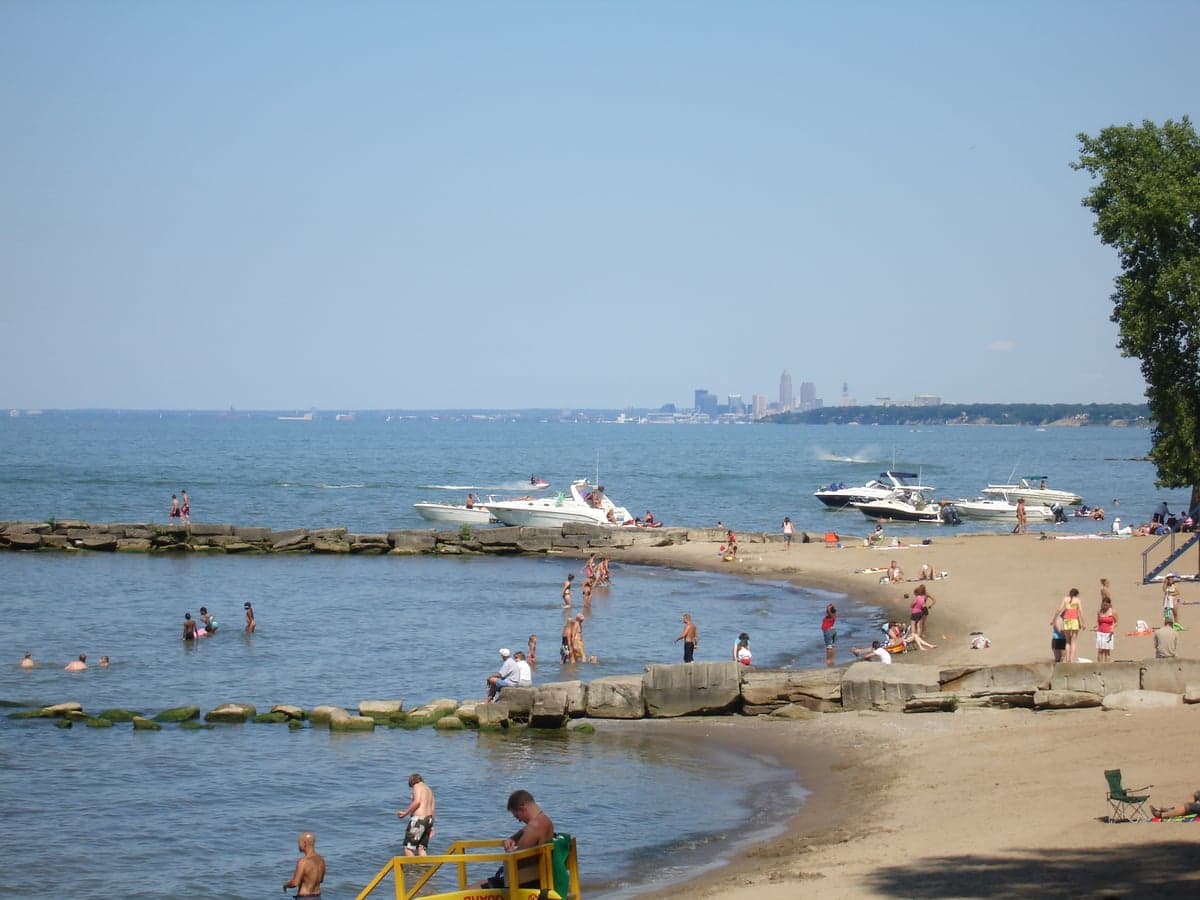
Bay Village, Ohio, is a predominantly white, highly educated lakeside suburb of 15,992 residents where 92.0% of the population identifies as White, 66.4% hold a college degree, and the foreign-born share sits at just 1.5%. The city’s character is defined by its historic single-family homes, strong public schools, and a deeply rooted sense of community that has remained remarkably stable across generations. It is a place where families often stay for decades, and newcomers are typically drawn by the same factors that attracted the original settlers: lakefront access, proximity to Cleveland, and a quiet, safe environment.
How the city was settled and grew
Bay Village’s human history begins with the Erie and Ottawa tribes, who used the Lake Erie shoreline for fishing and trade before European settlement. The first permanent white settlers arrived in the 1810s, primarily Yankees from New England and New York, drawn by the area’s fertile lake plain and the promise of land under the Connecticut Western Reserve. These early families—the Cahoons, the Barkers, and the Porters—established farms along what is now Lake Road and Wolf Road, the city’s two oldest corridors. The village was formally platted in 1819 as “Danbury,” but it remained a sparsely populated farming hamlet through the 19th century. The real transformation came after 1900, when the Cleveland, Cincinnati, Chicago and St. Louis Railway (the “Big Four”) extended service, making Bay Village a commuter suburb. The Bay Village Historic District, centered around the intersection of Lake Road and Cahoon Road, contains many of the late-19th and early-20th-century homes built by these early families and the first wave of white-collar commuters. The city incorporated in 1950, and the post-World War II boom brought a second wave of residents—mostly white, middle-class families of German, Irish, and Polish descent—who filled the new subdivisions like Osborn Acres and Westwood, built on former farmland east of Bradley Road.
Modern era (post-1965)
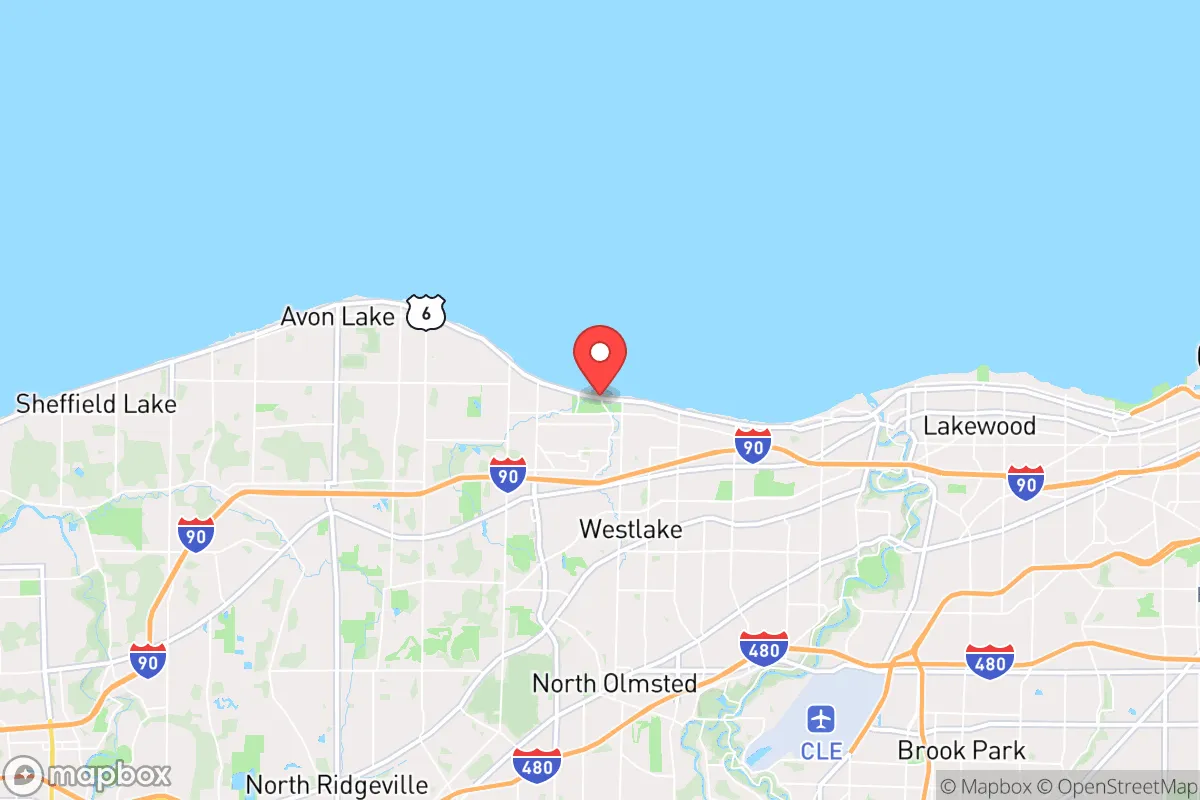
After the 1965 Hart-Cellar Act, Bay Village did not experience the large-scale immigration that reshaped many inner-ring suburbs. The city’s foreign-born population remains just 1.5%, and the racial composition has shifted only modestly. The Hispanic share is 2.8%, the Black share is 0.8%, and East/Southeast Asian communities account for 0.8%, with Indian-subcontinent residents at 0.1%. These small populations are dispersed rather than concentrated in any single neighborhood, though newer Asian and Hispanic families have gravitated toward the more affordable housing stock in the West Bay area, west of Bradley Road near the city’s border with Westlake. The dominant domestic in-migration has been from other parts of Greater Cleveland—families leaving the city for better schools and larger lots. The North Bay neighborhood, hugging the lake between Cahoon Park and the eastern city line, has seen the most turnover, with older lakefront homes being purchased by professionals and empty-nesters from the Cleveland suburbs. The city’s population peaked at 18,163 in 1970 and has since declined gradually, reflecting smaller household sizes and an aging population, but the racial and ethnic profile has remained overwhelmingly white and native-born.
The future
Bay Village’s population is projected to remain stable or decline slightly over the next 10–20 years, with modest diversification driven by second-generation Hispanic and Asian families moving in from nearby suburbs like Westlake and North Olmsted. The city’s housing stock—primarily single-family homes on quarter-acre lots—limits the kind of high-density development that attracts larger immigrant populations. The Lake Erie shoreline and the Metroparks system remain the primary draws for new residents, who are overwhelmingly white, college-educated professionals from within the region. The cultural identity is likely to remain that of a traditional, family-oriented lakefront suburb, with little change in the political or social character. For a mover today, Bay Village offers a stable, low-diversity community with excellent schools and a strong sense of place, but little of the ethnic variety or urban energy found in Cleveland’s inner-ring suburbs.
Bay Village is becoming a slightly older, slightly more diverse version of itself—still overwhelmingly white and native-born, but with a growing Hispanic and Asian presence that is slowly reshaping the edges of its historic identity. For someone moving in now, it offers a predictable, safe, and well-educated community where the past is still very much present, and where change comes slowly.

* Values derived from national, state, county, city and local statistics and may differ in a specific area. Last updated: 2026-08-10T17:36:25.000Z
Narrative content on this page is AI-generated and may contain mistakes. Verify any details that matter before acting on them.
ReloMaps may earn a commission from affiliate links at no extra cost to you.

