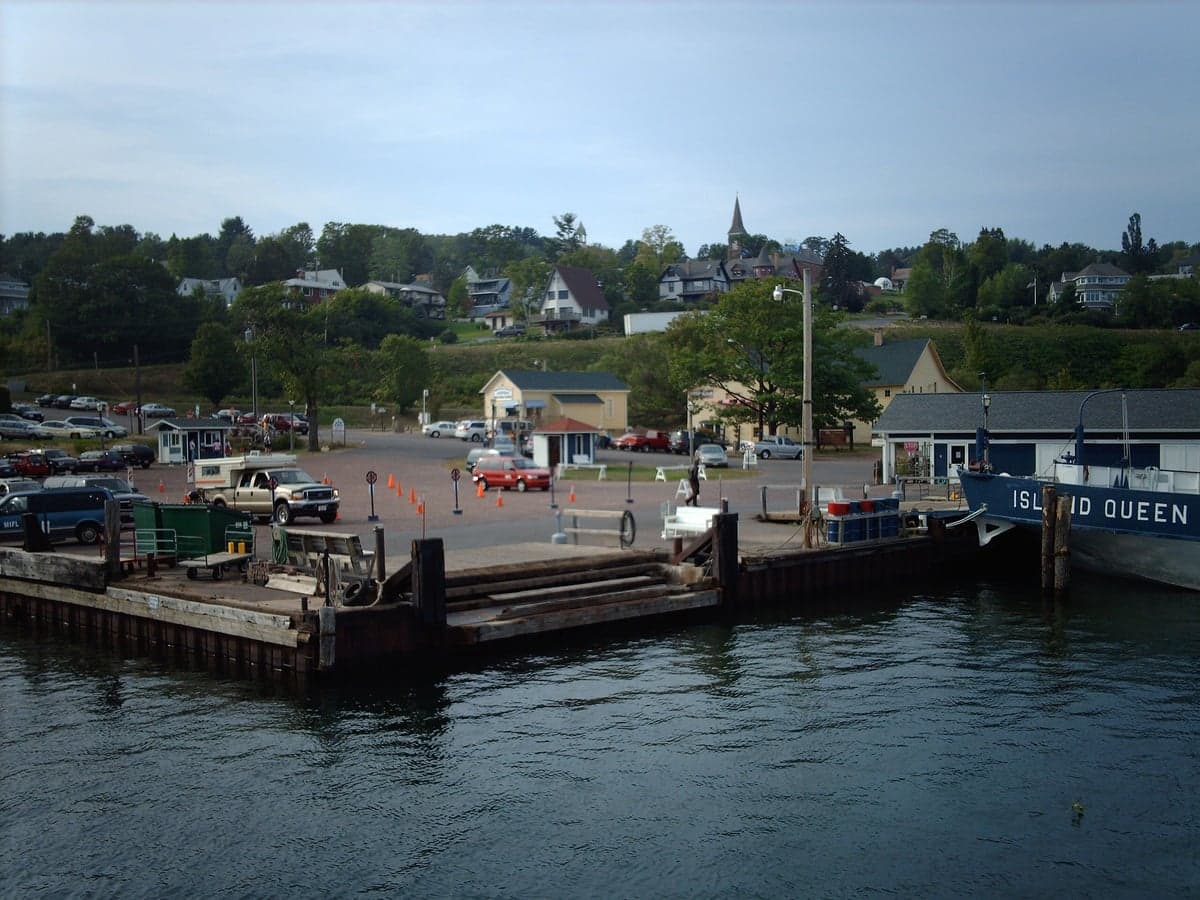
Photo: Wikipedia
Personal Sovereignty in Bayfield, WI
Moderate friction. Expect trade-offs in some aspect of personal liberty and independence.
What does Personal Sovereignty tell us?
Personal Sovereignty measures your capacity for self-reliance and independence with minimal government friction. Higher scores mean fewer barriers between you and the way you want to live... but it assumes you have the space you need and good neighbors.
What does this tell us?
Personal Sovereignty measures your capacity for self-reliance and independence with minimal government friction. Higher scores mean fewer barriers between you and the way you want to live... but it assumes you have the space you need and good neighbors.
State Policy
Energy independence: Importer (15% of energy produced in-state)
Personal Liberty
Homesteading

Personal Liberty Analysis
Bayfield, Wisconsin, offers a notably high degree of personal sovereignty relative to many other small towns in the Upper Midwest, largely due to the state’s strong preemption laws and a local culture that prizes self-reliance. While the town itself leans progressive in local elections, the surrounding Bayfield County and the state of Wisconsin provide a legal framework that protects individual autonomy in areas like self-defense, property use, and taxation. For a relocation-minded individual or family who values personal freedom, Bayfield presents a unique balance: a tight-knit, scenic lakefront community within a state that consistently ranks among the most freedom-friendly in the nation for gun rights, homeschooling, and low regulatory burdens.
Tax burden and regulatory posture in Bayfield and Wisconsin
Wisconsin’s overall tax burden is moderate compared to neighboring Minnesota and Illinois, and Bayfield County benefits from relatively low property tax rates. The effective property tax rate in Bayfield County hovers around 1.1% of assessed home value, which is below the state average of 1.6% and significantly lower than high-tax states like New York or New Jersey. There is no county-level sales tax beyond the state’s 5% rate, and no local income tax—Wisconsin’s state income tax is a progressive structure with a top marginal rate of 7.65% on income over $405,550 (2025 rates), but most residents fall into the 4.4% or 5.3% brackets. The regulatory posture in Bayfield itself is light-touch for residential property: the city has zoning ordinances that primarily address shoreline setbacks and building codes, but does not impose rent control, business licensing hurdles, or excessive permitting delays for single-family homes. The state’s right-to-work law (enacted 2015) and absence of prevailing wage mandates for local projects further reduce regulatory friction for small contractors and tradespeople. For those seeking to minimize government overhead, Bayfield’s combination of low property taxes, no local sales tax, and a business-friendly state environment is a clear advantage over many comparably scenic towns in Minnesota or Michigan.
Self-defense and gun law specifics in Bayfield and Wisconsin
Wisconsin is a shall-issue state for concealed carry, meaning permits are issued to any law-abiding adult who completes a state-approved training course and passes a background check. There is no permit required for open carry of handguns or long guns, and the state preempts all local firearm ordinances—so Bayfield cannot enact its own gun bans, magazine limits, or waiting periods. The state’s Castle Doctrine is robust: there is no duty to retreat in one’s home, vehicle, or place of business, and self-defense is presumed lawful if the intruder is unlawfully entering. Stand Your Ground protections extend to any place where the individual is lawfully present. Bayfield County has a strong culture of hunting and sport shooting, with the Apostle Islands National Lakeshore and Chequamegon National Forest providing ample public land for target practice and hunting. The sheriff’s office is generally supportive of Second Amendment rights, and permit issuance is routine—typically processed within 30 days. For a family or individual prioritizing self-defense autonomy, Bayfield offers a legal environment that is among the most permissive in the Midwest, with no local restrictions to worry about and a state-level framework that respects the right to carry and defend.
Self-reliance and homesteading viability: lot sizes, zoning, and off-grid feasibility
Bayfield’s rural character and county zoning make it a viable location for homesteading and off-grid living, though with some practical constraints. Minimum lot sizes in unincorporated Bayfield County are typically 5 acres for a single-family dwelling without public sewer, and many parcels available for sale are 10 to 40 acres, providing ample space for gardens, livestock, and small-scale agriculture. The city of Bayfield itself has smaller lots (often 0.25–0.5 acres) with municipal water and sewer, but the surrounding township and county areas allow for well and septic systems. Off-grid feasibility is high: Wisconsin has no state-level prohibition on solar panels, rainwater collection, or composting toilets, though you must comply with county health codes for septic systems. The county does not require building permits for structures under 200 square feet (e.g., sheds, tiny cabins), and there is no county-wide ban on tiny houses or yurts, provided they meet basic sanitation requirements. Wood heat is common, with abundant firewood available from national forest permits. The main regulatory hurdle is shoreline zoning: if your property is on Lake Superior or an inland lake, you must maintain a 75-foot vegetative buffer and meet strict setback rules. For those seeking true self-reliance, Bayfield County’s combination of large lots, lenient building codes, and abundant natural resources makes it a strong contender, especially compared to more restrictive counties in the Pacific Northwest or Northeast.
Personal liberties: parental rights, medical autonomy, speech, and property
Wisconsin is a strong state for parental rights in education. Homeschooling is lightly regulated: parents need only file a simple form with the local school district each year, and there are no curriculum mandates, standardized testing requirements, or teacher certification rules. The state also has a robust school choice program, including vouchers for private and religious schools, and open enrollment across district lines. Medical autonomy is more mixed: Wisconsin does not have a state-level vaccine mandate for adults, but it does require certain childhood immunizations for school attendance (with medical and religious exemptions available). The state does not have a right-to-try law for terminally ill patients, but it does allow for direct primary care arrangements without insurance interference. Free speech protections are strong, with no state-level hate speech laws that chill expression, and property rights are well-guarded: Wisconsin has a strong eminent domain protection law that prohibits taking private property for economic development purposes (post-Kelo reform). The state also has a right-to-farm law that protects agricultural operations from nuisance lawsuits, which is relevant for homesteaders. Bayfield’s local government is small and generally non-intrusive; town board meetings are open, and residents regularly speak on issues without fear of retaliation. For a family that values the ability to make independent decisions about education, healthcare, and property use, Bayfield’s legal climate is supportive without being libertarian—it respects individual choice while maintaining basic public health and safety standards.
Overall, Bayfield offers a personal sovereignty profile that is well above average for a Great Lakes tourist town. The state’s preemption laws, low property taxes, and permissive gun and homeschooling regulations create a foundation of autonomy that many coastal or urban areas lack. The main trade-offs are the progressive local political culture (which may clash with some conservative values on environmental regulations) and the practical constraints of shoreline zoning. But for a single individual or family who prioritizes self-reliance, low taxes, and the freedom to live as they see fit, Bayfield ranks among the most sovereignty-friendly small towns in Wisconsin—comparable to areas like Washburn or Ashland, but with better lake access and a more established community infrastructure.

* Values derived from national, state, county, city and local statistics and may differ in a specific area. Last updated: 2026-10-20T08:04:13.000Z
Narrative content on this page is AI-generated and may contain mistakes. Verify any details that matter before acting on them.
ReloMaps may earn a commission from affiliate links at no extra cost to you.

