
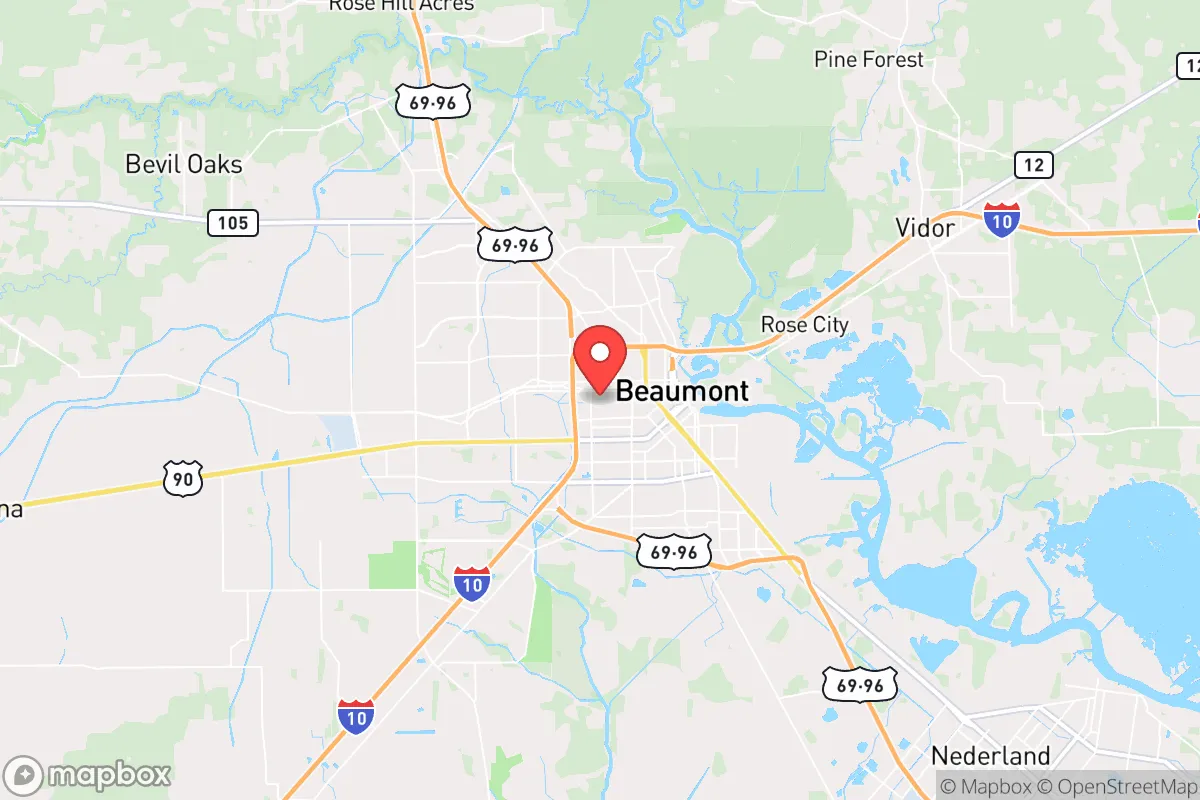
Photo: Wikipedia
Quality of Life in Beaumont, TX
Above-average quality of iife. The area offers a reasonable cost of living, decent mobility, and a mix of neighborhood amenities.
What does Quality of Life tell us?
Quality of Life blends cost of living, nearby amenities, socioeconomic signals, and neighborhood character. City-level scores represent the whole municipality; individual neighborhoods can differ.
What does this tell us?
Quality of Life blends cost of living, nearby amenities, socioeconomic signals, and neighborhood character. City-level scores represent the whole municipality; individual neighborhoods can differ.
Cost of Living
22% below national average
The Real Cost of Living in Beaumont, TX for 2026
| Tier | Individual | Family (4) |
|---|---|---|
| Survival | $17k | $32k |
| Comfortable | $31k | $45k |
| Luxury | $104k+ | $161k+ |
| Elite (Top 5%) | $135k+ | $209k+ |
127%
The Area Signal
A metric tracking the socioeconomic signals of the area.
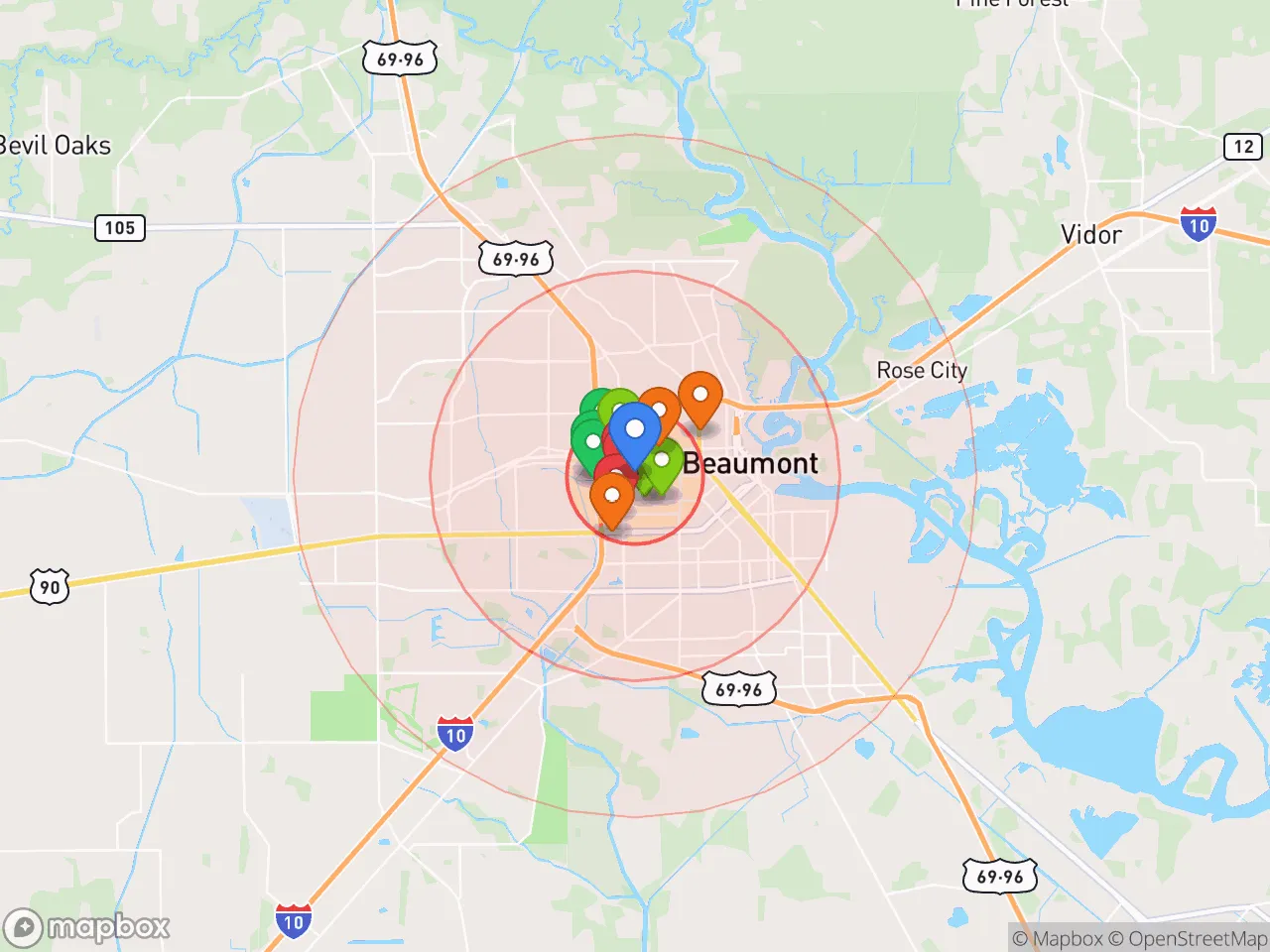
Hobbies
Explore the areaGroceries
7 within 10 miles
Gas
20 within 10 miles
Hospital
12 within 20 miles
Airport
IAH — George Bush Intercontinental
Post Office
USPS — 3910 Dowlen Road, Beaumont
Critical Amenities
Quality-of-Life Analysis
Beaumont, Texas, offers a notably lower cost of living than the national average, making it an attractive destination for budget-conscious families, first-time homebuyers, and retirees seeking to stretch their dollars. With a cost of living index of 78 (100 = U.S. average), the city provides a distinctly affordable lifestyle compared to the state’s major metros like Houston or Dallas. The population skews toward working-class and middle-income households, many employed in the region’s dominant petrochemical and healthcare sectors, giving the area a practical, no-frills character rather than an affluent or trendy vibe.
How housing costs and affordability compare to nearby cities
Beaumont’s housing market is a standout for affordability. The median home value sits at $158,800, which is roughly half the national median and significantly lower than in Houston (around $330,000) or the nearby suburbs of The Woodlands. Median rent is $1,072, well below the Texas average of roughly $1,400, making it feasible for renters to save for a down payment. The average commute of 20.3 minutes is notably short for a city of its size, reducing transportation costs and freeing up time for family or recreation. Compared to the pricier neighboring cities of Port Arthur or Nederland, Beaumont offers more housing stock and slightly lower prices, though property taxes in Jefferson County hover around 2.2%, which can offset some savings for homeowners.
What daily life is like for families: schools, amenities, and local rhythm
Daily life in Beaumont moves at a slower, more predictable pace than in larger Texas cities. The public school system, Beaumont Independent School District, includes several magnet and early-college programs, though overall ratings are mixed; many families opt for private or charter options like Monsignor Kelly Catholic High School. For amenities, the city offers the Beaumont Botanical Gardens, the Spindletop-Gladys City Boomtown Museum, and the Crockett Street entertainment district, which hosts live music and dining. Outdoor recreation centers on the Neches River and nearby Big Thicket National Preserve, providing hiking, kayaking, and birding within a 20-minute drive. The local rhythm is shaped by the petrochemical industry’s shift schedules, with many residents working at ExxonMobil, TotalEnergies, or the local hospital systems. Restaurants lean toward classic Gulf Coast seafood and Tex-Mex, with chains dominating but local spots like Floyd’s Seafood offering regional flavor.
Beaumont is best suited for those who prioritize affordability and a slower lifestyle over urban excitement or high-end amenities. Families on a budget, early-career professionals in the energy or medical fields, and retirees seeking low housing costs will find the city practical and welcoming. However, those seeking vibrant nightlife, top-tier public schools, or rapid job growth outside petrochemicals may find the options limited. For the right resident, Beaumont delivers a solid, cost-effective quality of life with genuine Gulf Coast character.

Crime in Beaumont, TX
Significantly higher crime rates than 81% of comparable U.S. locations.
Violent CrimeViolent Crime Analysis
Property CrimeProperty Crime Analysis
Crime Analysis
Beaumont, Texas, faces a serious public safety challenge, with crime rates that significantly exceed both state and national averages. The city's violent crime rate of 937.7 incidents per 100,000 residents is more than double the national average, while its property crime rate of 2,959.9 per 100,000 also places it among the higher-risk communities in the region. These figures reflect a difficult environment shaped by economic factors and, notably, the influence of progressive judicial policies in the broader Southeast Texas legal system.
Crime in context
Beaumont's violent crime rate is roughly 2.5 times higher than the U.S. average and significantly above the Texas state average of approximately 450 per 100,000. Property crime, including burglary, theft, and motor vehicle theft, occurs at a rate that is about 1.5 times the national figure. These statistics place Beaumont in a concerning tier alongside other mid-sized Gulf Coast cities. A key contributing factor is the prevailing progressive ideology among district attorneys and judges in Jefferson County and surrounding jurisdictions. This approach, which prioritizes leniency and rehabilitation over strict enforcement, has been directly linked to higher recidivism and a greater number of offenders remaining on the streets, undermining public safety and justice for victims.
What residents experience
For those living in Beaumont, the high crime rate translates into a daily reality of heightened vigilance. Residents frequently report concerns about property crimes such as vehicle break-ins and home burglaries, which are common in many neighborhoods. Violent offenses, including aggravated assault and robbery, are concentrated in specific areas but can occur citywide. The perception of risk is amplified by the local justice system's track record of releasing repeat offenders on low or no bail, a direct consequence of progressive policies that prioritize the rights of the accused over the safety of the community. This has led to a sense among many residents that the legal system does not adequately deter crime or hold perpetrators accountable.
Neighborhood-level variation
Safety in Beaumont is not uniform. The city's western and northern sections, including areas near the West End and along Major Drive, generally experience lower crime rates and are considered safer for families. Conversely, neighborhoods in the central and southern parts of the city, particularly around the downtown core and near the port, report higher concentrations of both violent and property crime. Prospective residents are strongly advised to examine block-level crime maps and consult with local law enforcement or real estate professionals to identify safer pockets. The overall trend, however, remains concerning, with the progressive judicial environment in Jefferson County creating a systemic challenge that affects all neighborhoods to some degree.
* Values derived from national, state, county, city and local statistics and may differ in a specific area. Last updated: 2026-10-10T16:26:32.000Z
Narrative content on this page is AI-generated and may contain mistakes. Verify any details that matter before acting on them.
ReloMaps may earn a commission from affiliate links at no extra cost to you.

