Photo: Wikipedia
Demographics of Belen, NM
Affluence Level in Belen, NM
A below-average socioeconomic profile. Incomes, home values, and educational attainment trail the U.S., with higher poverty and unemployment.
People of Belen, NM
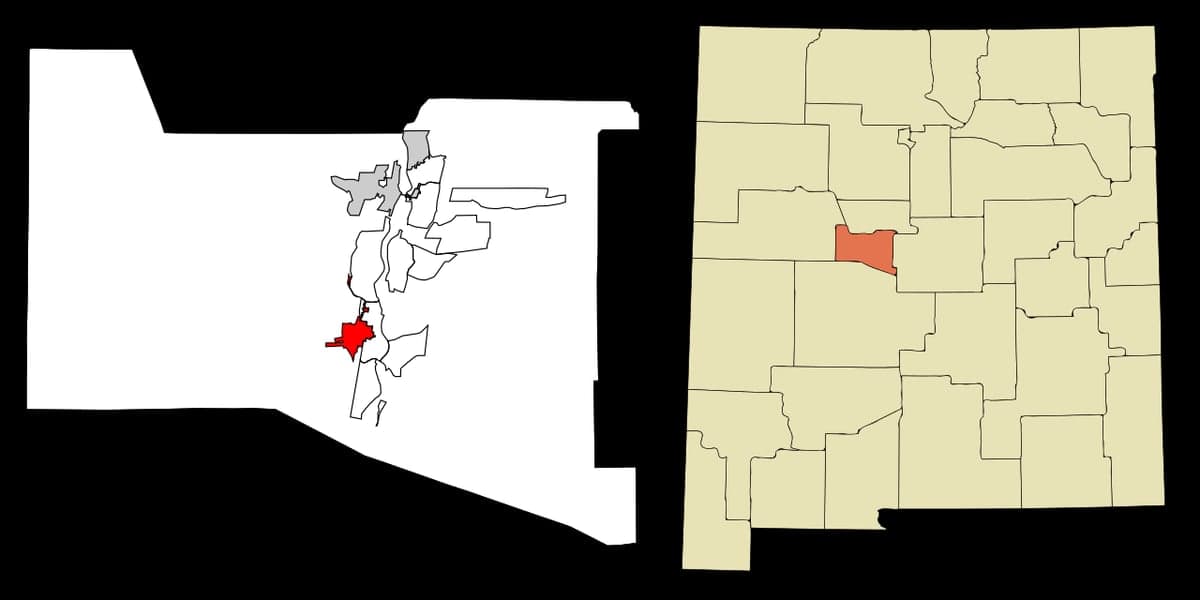
The people of Belen, New Mexico, today form a predominantly Hispanic community of 7,427 residents, with a strong working-class identity rooted in railroad and agricultural history. The city is notably less diverse than the national average, with 70.4% of residents identifying as Hispanic, 28.0% as White alone, and only 4.1% foreign-born. This is a community where generational roots run deep, and the population is older and less college-educated than state averages—just 14.3% hold a bachelor's degree or higher.
How the city was settled and grew
Belen's human history begins with the 1741 Belen Land Grant, awarded to Spanish settlers by the King of Spain. These early families—the Chávez, Baca, and Otero lines—established the original Plaza Vieja (Old Town) neighborhood, which remains the historic core. The city's name, meaning "Bethlehem" in Spanish, reflects this deep Catholic, Hispano heritage. The transformative event came in 1880 with the arrival of the Atchison, Topeka and Santa Fe Railway. The railroad built a major repair yard and depot, drawing a wave of Anglo-American workers and merchants who settled in the Railroad Addition district, just south of the tracks. This created a dual settlement pattern: the original Hispano farming community around Plaza Vieja and a newer Anglo commercial and railroad-worker enclave near the depot. By 1910, Belen had grown to roughly 1,500 people, with the railroad employing a third of the male workforce. The city incorporated in 1918, and through the mid-20th century, the population remained stable and overwhelmingly Hispanic, with the Anglo railroad families forming a small but influential minority concentrated in the South Belen area near the yards.
Modern era (post-1965)
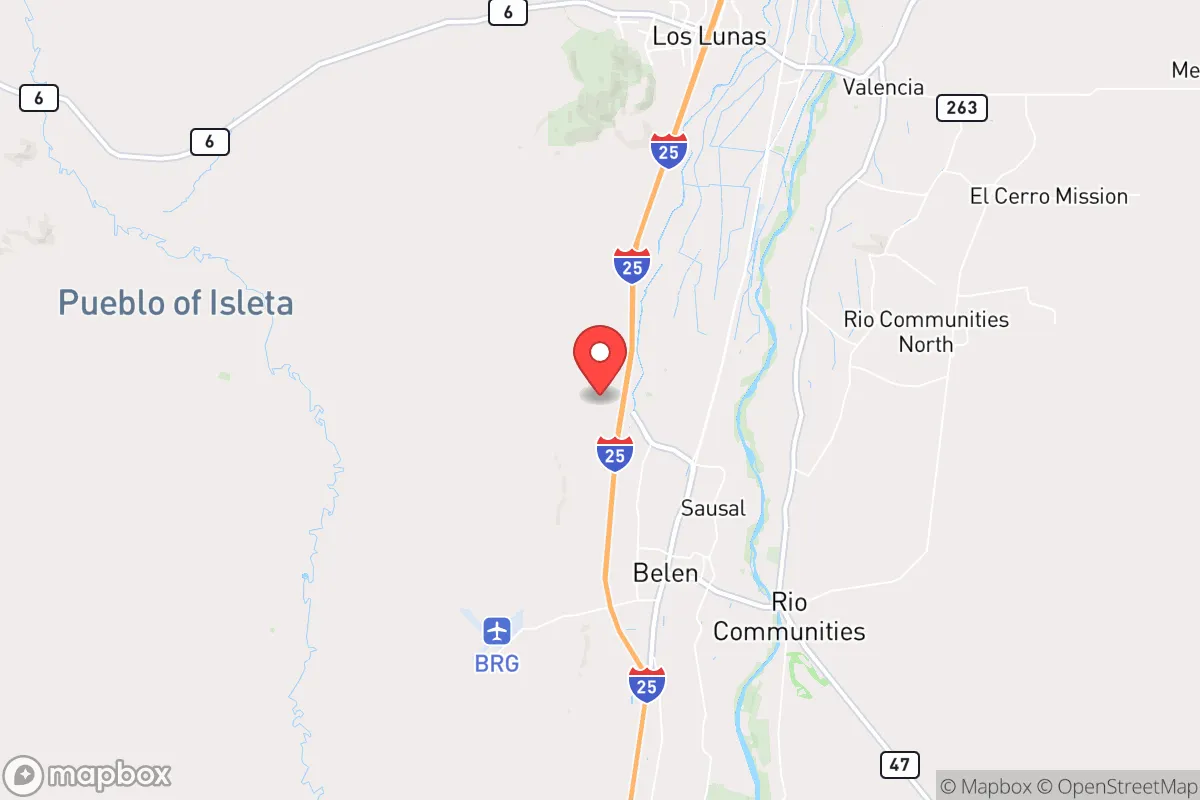
The post-1965 period saw no major new immigrant wave to Belen. Unlike many Southwestern cities, Belen did not experience significant post-Hart-Cellar immigration from Latin America or Asia. The foreign-born share of 4.1% is well below the New Mexico average of 8.7% and the national average of 13.7%. Instead, the modern demographic story is one of domestic out-migration and aging. Young adults have left for Albuquerque (35 miles north) or out of state, while the remaining population has aged in place. The Belen Heights neighborhood, developed in the 1970s and 1980s on the city's east side, absorbed some middle-class Hispanic families moving out of Plaza Vieja, but it remains overwhelmingly Hispanic. The Rio Communities area, an unincorporated subdivision just south of Belen, has attracted a small number of White retirees and commuters, but it is not within city limits. The city's Black population (0.4%) and East/Southeast Asian population (0.2%) are negligible, with no distinct ethnic enclaves. The Indian subcontinent population is 0.0%. Belen has effectively homogenized: the old Anglo railroad families have largely moved away or assimilated, leaving a city that is nearly three-quarters Hispanic and culturally unified around Hispano traditions, Catholic faith, and a slow-paced, rural lifestyle.
The future
Belen's population is heading toward further homogenization and gradual decline. The city lost roughly 5% of its population between 2010 and 2020, and the trend is likely to continue. The median age is 38.5, and the school-age population is shrinking. There is no sign of a new immigrant wave reversing this: the foreign-born share has been flat for decades. The city's economy—dominated by retail, healthcare, and the remaining railroad jobs—does not attract skilled immigrants or young professionals. The Historic District around Plaza Vieja is seeing some reinvestment from local families and a handful of remote workers drawn by low housing costs (median home value ~$130,000), but this is a trickle, not a tide. The most likely scenario for 2035 is a smaller, older, and even more uniformly Hispanic Belen, with the White share continuing to drift downward as retirees pass away or move to larger cities. The city is not tribalizing into distinct enclaves; it is consolidating into a single, culturally cohesive community.
For someone moving in now, Belen offers a deeply rooted, affordable, and culturally homogeneous environment—but one with limited economic opportunity and a shrinking population. It is a place for those seeking quiet, low-cost living within commuting distance of Albuquerque, not for those expecting demographic diversity or rapid growth.

* Values derived from national, state, county, city and local statistics and may differ in a specific area. Last updated: 2026-05-01T03:48:03.000Z
Narrative content on this page is AI-generated and may contain mistakes. Verify any details that matter before acting on them.
ReloMaps may earn a commission from affiliate links at no extra cost to you.

