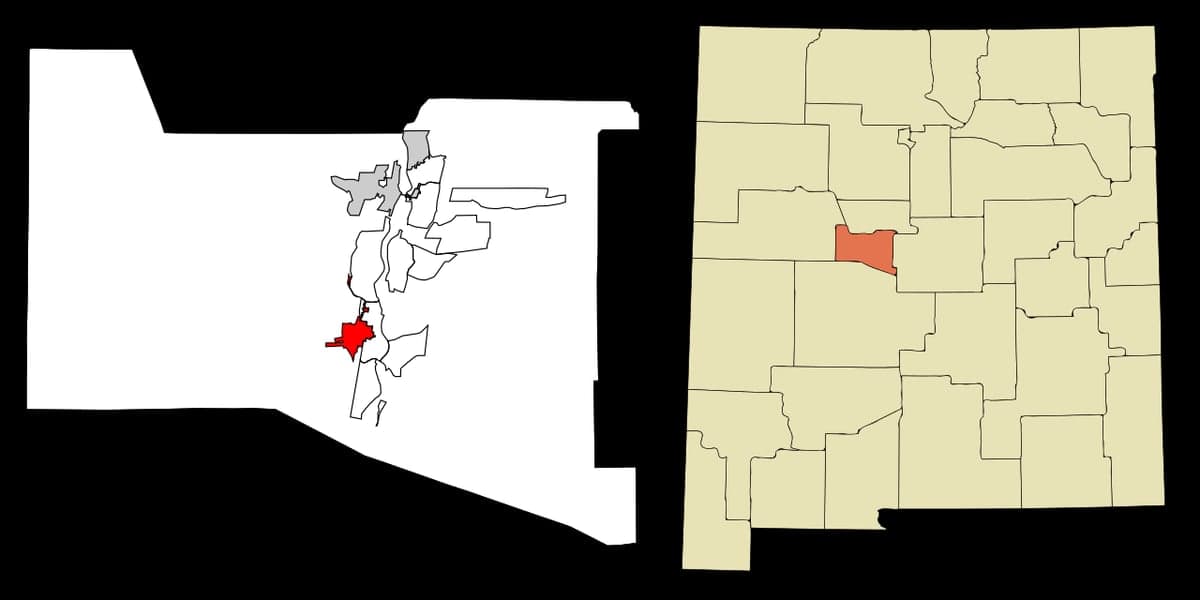
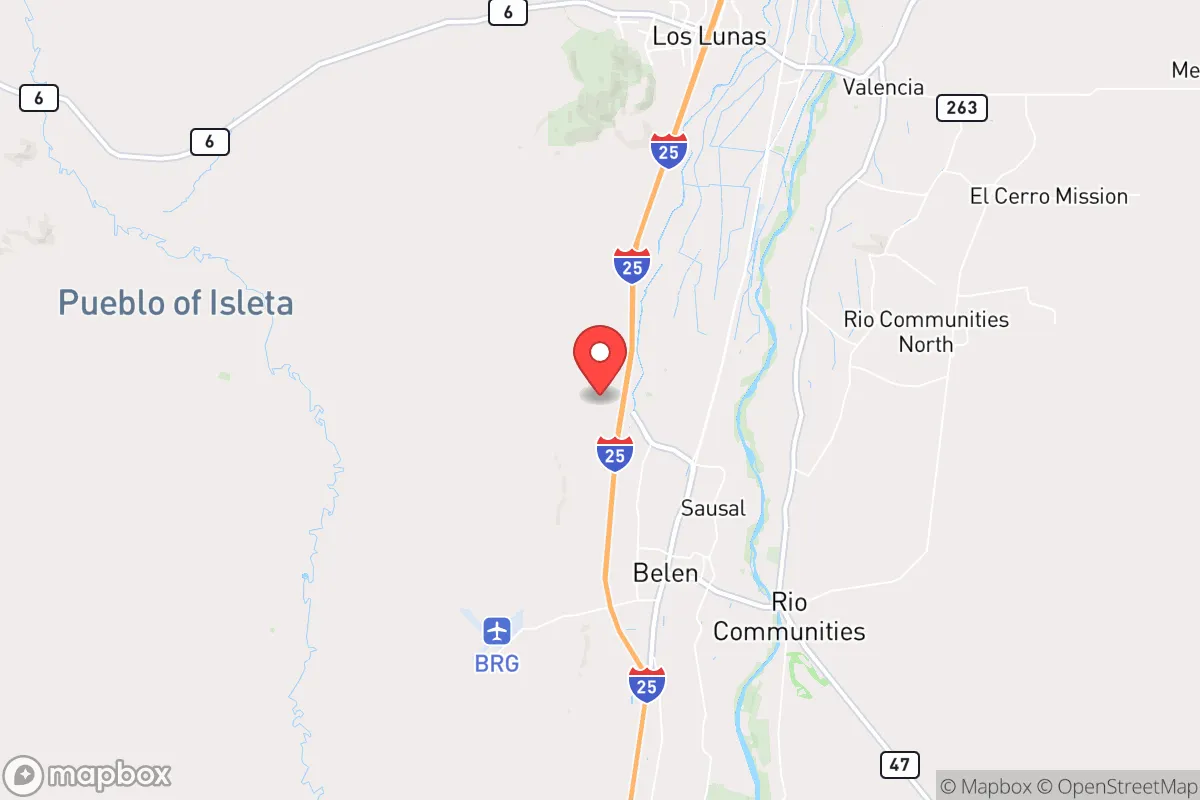
Photo: Wikipedia
Strategic Assessment of Belen, NM
Meaningful friction. Expect exposure to either population pressure, blast zones, or natural disaster risk. Consider buying a retreat property.
What does the Strategic Assessment tell us?
Our Strategic Assessment grades tactical survivability of an area. Major population centers, military targets, fallout zones, natural disasters, and border exposure all drive risk — lower exposure means a more defensible position in a crisis.
This is heavily inspired by Joel Skousen's Strategic Relocation book. Highly recommended you checkout the book ($)What does this tell us?
Our Strategic Assessment grades tactical survivability of an area. Major population centers, military targets, fallout zones, natural disasters, and border exposure all drive risk — lower exposure means a more defensible position in a crisis.
This is heavily inspired by Joel Skousen's Strategic Relocation book. Highly recommended you checkout the book ($)Strategic Pillars

Key Distances
Regional Safe Places
Below is our recommended "safe zones" in New Mexico and the surrounding area based on our strategic heuristics. For most people, it's unrealistic to live in a “safe zone” full-time due to work, family or other personal reasons. They tend to be more rural. However, many of these areas are perfect for second homes and retreat properties that double as a vacation home or even a short-term rental.

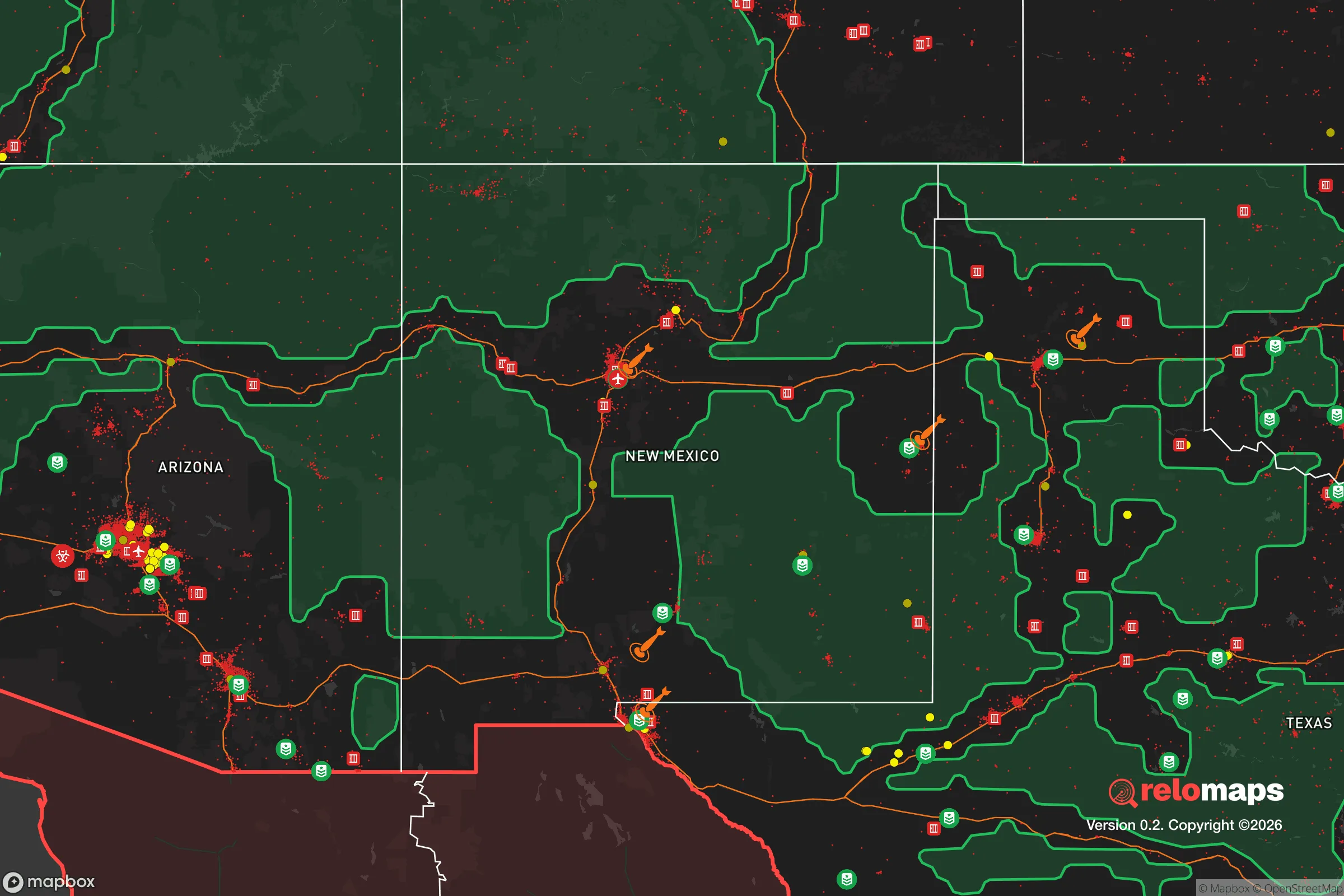


Important Note: For informational purposes only. This does not mean nothing bad ever happens in the green zones. Please use common sense. This is based on public data and modeled with AI. We tried to take a conservative approach but mistakes happen. We update this regularly as new information becomes available.
Solar Generator Recommendations
Backup power matters more here than in safer locations. We've picked three solar generators across budgets and capacity tiers — start with the budget unit if you only need a few essentials, or step up if you want to run a fridge and HVAC for days at a time.

Jackery Portable Power Station Explorer 300
Budget OptionPower on the Go: Weighing only 11 lbs, it's convenient to set up and store with book-sized foldable solar panels

BLUETTI Portable Power Station AC180
Designed for both indoor and outdoor scenarios, AC180 is highly capable as it has a robost capacity and continuous output power.

EF ECOFLOW DELTA Pro Ultra Power Station
Upgraded PickEcoFlow DELTA Pro Ultra is a whole-home energy system designed to grow with your family. Integrated with the Smart Home Panel 2, it scales to meet your evolving energy needs — keeping your home powered, intelligent, and secure through every stage of life.
We earn a commission, at no additional cost to you.
Strategic Assessment Analysis
Belen, New Mexico, sits about 35 miles south of Albuquerque along the Rio Grande, and for the strategic relocator with a prepper mindset, its primary value lies in being close enough to a major city for supply runs but far enough to avoid the worst of urban collapse scenarios. This is a community that has seen economic booms and busts—railroad, agriculture, and now a slow trickle of refugees from blue states—and its resilience is baked into that history. For someone looking to plant roots in a place that isn't on every survivalist blog's radar, Belen offers a blend of geographic isolation, water access, and a cultural conservatism that still values self-reliance over government dependency.
Geographic position and natural advantages for long-term survival
Belen's location in the Middle Rio Grande Valley gives it a few hard-to-overlook natural advantages. The Rio Grande itself is a perennial water source, which in the arid Southwest is the single most critical resource for any long-term holdout scenario. The valley floor is flat and arable, with a growing season long enough for staple crops like corn, beans, and squash—traditional Pueblo agriculture that still works today. To the east, the Manzano Mountains rise up, offering timber, game, and defensible terrain if you need to bug out further. To the west, the Rio Puerco Valley and the vast, empty plains of the Navajo Nation stretch toward Arizona, providing escape routes that most urban refugees won't consider. The climate is high desert—low humidity, 300+ days of sunshine—which means solar panels are viable year-round, and water storage doesn't face the freeze-thaw cycles of northern states. Elevation sits around 4,800 feet, so summer heat is manageable, and winter cold is brief. For a relocator thinking in decades, not months, this is a location that can sustain a family without constant resupply from a fragile supply chain.
Risks, exposures, and proximity to fallout-relevant landmarks
No strategic assessment is honest without naming the threats. Belen's biggest exposure is its proximity to Albuquerque—a city of 560,000 with all the crime, drug trafficking, and civil unrest that comes with a major Southwestern hub. In a national emergency, expect a wave of refugees heading south along I-25, and Belen sits right on that highway. The town itself is small enough (roughly 7,500 residents) that it could be overwhelmed quickly if the exodus is large. There's also the Kirtland Air Force Base in Albuquerque, a nuclear weapons assembly and storage facility. In a major conflict, that's a target. Fallout patterns in the Southwest are unpredictable due to wind patterns, but prevailing winds generally blow east-northeast, which puts Belen in a less direct downwind path than areas east of the base. Still, it's close enough that a major event would require monitoring and possibly a temporary bug-out to the west. On the plus side, Belen is far from the West Coast fault lines, Gulf hurricane zones, and the crowded Eastern Seaboard. No nuclear plants nearby, no major chemical facilities, and the local rail line is primarily freight, not hazardous materials. The biggest day-to-day risk is actually the area's history of flooding along the Rio Grande during heavy snowmelt years—something a savvy relocator can mitigate by building on higher ground east of the river.
Practical resilience for a relocator: food, water, energy, and defensibility
Let's get concrete about what a prepper family can actually do here. Water is the first win: the Rio Grande is surface water, but the local aquifer is also productive. Many homes in Valencia County have private wells, and the water table is shallow enough (50-150 feet) that a hand pump or solar-powered well is feasible. Municipal water comes from the San Juan-Chama Project, which is vulnerable to interstate water compacts, but a well bypasses that entirely. For food, the valley has a long agricultural history—alfalfa, chile, corn, and livestock. The local soil is sandy loam, workable with basic tools, and the growing season runs April through October. A family with a quarter-acre garden, a few chickens, and a couple of goats can produce a significant portion of their calories. The Belen Farmers Market is small but functional for barter and seed stock. Energy is straightforward: the area averages 5.5-6.0 peak sun hours per day, making solar the obvious choice. Net metering is available through PNM, but a grid-down setup with batteries and a backup generator is cheap here compared to coastal states. Defensibility is mixed. The town itself is flat and open, not ideal for a last-stand scenario. But the surrounding rural areas—east toward the Manzanos, west toward the lava flows and mesas—offer natural chokepoints and high ground. A property with a good well, solar, and a view of the approach roads is the gold standard. The local culture is still heavily Hispanic and Catholic, with a strong tradition of family and community. Outsiders are treated with polite suspicion at first, but if you show up ready to work and keep to yourself, you'll be left alone. The county sheriff's office is underfunded but professional, and crime is mostly property theft and domestic issues—not the organized gangs of Albuquerque.
The overall strategic picture for a conservative relocator
Belen is not a bug-out location for the lone wolf. It's a place for a family or small group that wants to build a sustainable, low-profile life in a region that won't be the first to collapse. The conservative lean is real—Valencia County voted +12 for Trump in 2020, and the local culture is pro-gun, pro-church, and skeptical of federal overreach. You won't find mask mandates or CRT in the local schools. What you will find is a slow pace, affordable land (still under $10,000 an acre for raw parcels), and a community that remembers how to can vegetables and fix a truck with baling wire. The downsides are real: limited medical infrastructure (the nearest trauma center is in Albuquerque), a job market that's mostly service and logistics, and the constant threat of a refugee surge from the north. But for the strategic relocator who values water, space, and a conservative social fabric over convenience and entertainment, Belen is a solid B+ play. It won't make the cover of a survival magazine, and that's exactly the point. The best locations are the ones nobody's talking about.

* Values derived from national, state, county, city and local statistics and may differ in a specific area. Last updated: 2026-05-01T03:48:03.000Z
Narrative content on this page is AI-generated and may contain mistakes. Verify any details that matter before acting on them.
ReloMaps may earn a commission from affiliate links at no extra cost to you.

