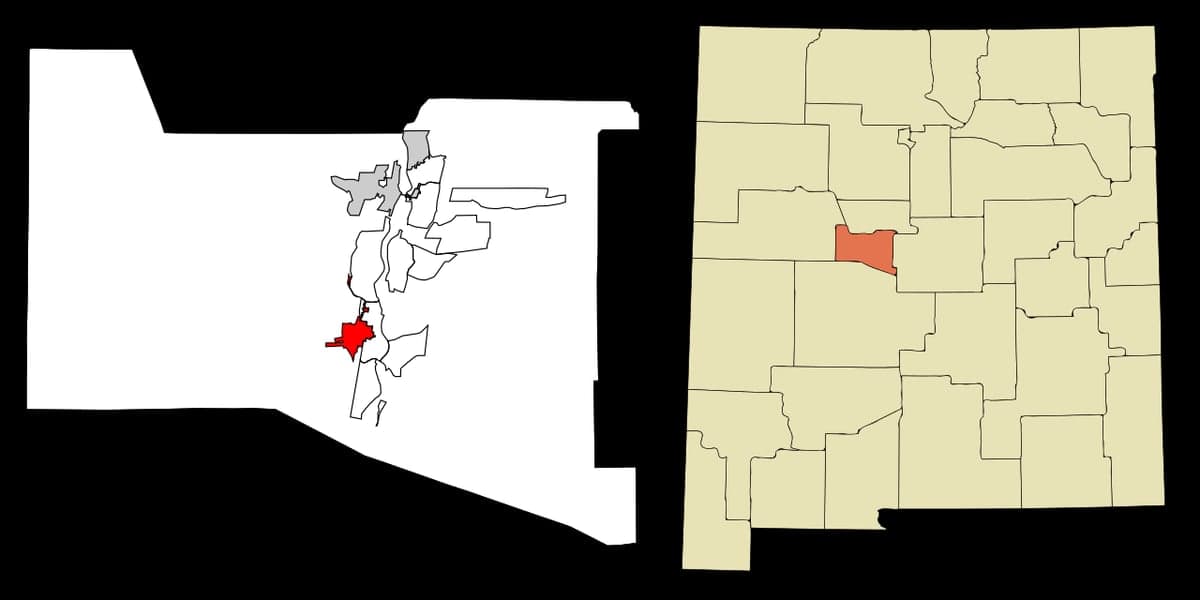
Photo: Wikipedia
Political ClimatePolitical Climate in Belen, NM
District shown is the primary district for this city’s centroid. Cities may span multiple districts.
Local Political AnalysisPolitical Analysis of Belen, NM
Belen, New Mexico, sits in a political spot that’s getting harder to pin down, and if you’ve been around here long enough, you can feel the shift. The Cook PVI rating of EVEN tells you the story: this isn’t a deep red or blue stronghold, but a community that’s been leaning conservative for generations, now seeing a slow, steady push from progressive policies coming out of Santa Fe and Bernalillo County. For a long time, Belen was reliably Republican, with folks voting their conscience on gun rights, taxes, and local control. But the last few election cycles have shown a tightening, and it’s not because people suddenly changed their values—it’s because outside money and messaging are flooding in, trying to turn a working-class railroad town into something it’s never been.
How it compares
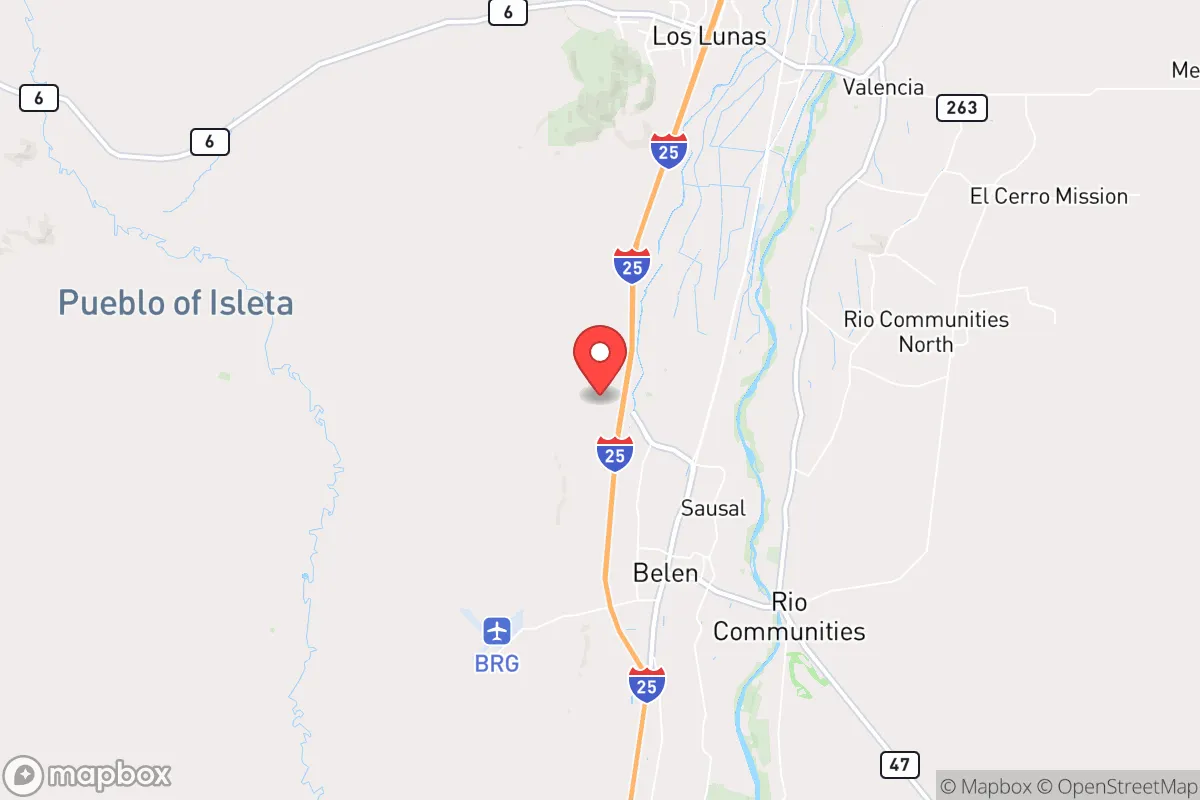
Drive 30 minutes north to Los Lunas, and you’ll see a similar story—a once-conservative area that’s now a battleground, with new housing developments bringing in folks from Albuquerque who bring their big-city politics with them. Head further north to Albuquerque itself, and you’re in deep blue territory, where government overreach on everything from mask mandates to zoning laws is the norm. South of Belen, places like Socorro and Magdalena still hold a more traditional, live-and-let-live conservative streak, but they’re feeling the pressure too. The real contrast is with Santa Fe, where the state legislature’s progressive agenda—think red flag laws, tax hikes, and energy regulations—gets crafted without much regard for how it plays in Valencia County. Belen’s EVEN rating means it’s a toss-up, but the trend line is concerning: if you look at precinct-level results from 2020 and 2024, the margins in some neighborhoods have shrunk by 5-10 points, driven largely by transplants and younger voters who don’t remember when this town didn’t have to fight for its Second Amendment rights or its local school board’s independence.
What this means for residents
For the folks who’ve lived here through the ups and downs, the biggest worry is that Belen’s character is being chipped away. The city council and county commission still lean conservative, but they’re constantly battling state mandates that feel like they’re designed to erode personal freedoms—whether it’s property rights, homeschooling flexibility, or the ability to run a small business without a stack of new permits. The school board has become a flashpoint, with progressive candidates pushing for curriculum changes and DEI initiatives that many locals see as unnecessary government meddling. On the ground, this means more time spent at public meetings fighting for the same common-sense values that used to be taken for granted. The long-term outlook? If the trend continues, Belen could flip blue within a decade, especially if the state keeps pouring resources into voter registration drives and the city keeps growing with people who don’t share the local mindset.
Culturally, Belen still holds onto its railroad and ranching roots, but you can see the cracks. The annual Belen Harvey House festival is a proud tradition, but newer residents often skip it for events in Albuquerque. There’s a quiet tension at the grocery store and the post office—people are polite, but you can tell the political divide is widening. The biggest policy distinction is that Belen has resisted adopting some of the more aggressive progressive ordinances seen in Santa Fe or Albuquerque, like sanctuary city policies or strict rent control, but that resistance takes constant vigilance. If you value your freedoms and want to keep government out of your backyard, Belen is still a decent place to be—but you’d better be ready to show up and vote, because the other side certainly is.

State Political ClimatePolitical Climate in New Mexico
State Political AnalysisPolitical Environment in the State
New Mexico has long been a reliably blue state in presidential elections, with Democrats holding the governorship for 12 of the last 16 years and controlling both legislative chambers since 2012. However, the state's political landscape is far more nuanced than its statewide results suggest, with a deep urban-rural divide and a growing conservative undercurrent in its eastern and southern regions. Over the past two decades, the state has shifted leftward on social and environmental policy, but a significant portion of the population—particularly in areas like Hobbs, Roswell, and Alamogordo—remains deeply skeptical of the progressive agenda coming out of Santa Fe.
Urban vs. rural divide
The political map of New Mexico is a tale of two worlds. The state's most populous county, Bernalillo County (home to Albuquerque), reliably delivers Democratic margins of 15-20 points, driven by a coalition of Hispanic voters, university faculty, and government employees. The Santa Fe metro area is even more liberal, routinely voting 30+ points Democratic, fueled by a large arts community and state government workforce. In contrast, the eastern plains—counties like Lea, Roosevelt, and Curry—are deeply conservative, often voting 40-50 points Republican. The Las Cruces area in Doña Ana County is a genuine battleground, with the city itself leaning Democratic but the surrounding agricultural areas trending red. The Farmington area in the northwest, historically a Democratic stronghold due to unionized coal miners, has shifted right in recent cycles as energy policy debates have polarized the region. This geographic split means that while Democrats dominate statewide, Republicans hold every congressional seat east of the Rio Grande and control most county commissions outside the central corridor.
Policy environment
New Mexico's policy environment reflects its Democratic control, with a tax structure that is moderately progressive but not aggressively so. The state has a graduated income tax with a top rate of 5.9%, and no state-level sales tax on groceries or prescription drugs. However, property taxes are among the lowest in the nation—a rare bright spot for conservatives. The regulatory posture is mixed: environmental regulations are stringent, particularly around oil and gas production in the Permian Basin near Carlsbad, but the state has resisted some of the more extreme green energy mandates seen in California or Colorado. Education policy is a flashpoint, with the state's public schools consistently ranking near the bottom nationally in math and reading proficiency, despite per-pupil spending that is above the national average. The 2023 passage of a universal school choice bill was a major victory for conservatives, allowing families to use state funds for private or homeschool expenses. Healthcare policy is dominated by the state's Medicaid expansion, which covers roughly 40% of residents—one of the highest rates in the country. Election laws are relatively accessible, with same-day voter registration and no-excuse absentee voting, though voter ID is required for in-person voting.
Trajectory & freedom
Over the past five years, New Mexico has moved in a decidedly less free direction on several key fronts. The 2021 passage of the Energy Transition Act effectively mandated a phase-out of coal-fired power plants by 2031, a move that devastated the economy of the Four Corners region and led to significant job losses in San Juan County. On gun rights, the state has tightened restrictions: in 2023, Governor Michelle Lujan Grisham signed a law raising the minimum age to purchase a semiautomatic rifle from 18 to 21, and in 2024 she issued a controversial public health order temporarily suspending the right to carry firearms in public in Albuquerque and surrounding areas—a move that was quickly blocked by federal courts. Parental rights have been a battleground, with the state's 2023 law requiring schools to adopt policies that affirm a student's "gender identity" without parental notification, sparking widespread backlash. On the positive side for conservatives, the state has not imposed a COVID-19 vaccine mandate for state employees, and property rights remain relatively strong, with no statewide rent control or restrictive zoning laws outside of Santa Fe and Albuquerque.
Civil unrest & political movements
New Mexico has seen its share of political flashpoints. The 2020 protests in Albuquerque over the death of George Floyd turned violent, with several nights of looting and arson that damaged over 100 businesses. The state's sanctuary policies—including a 2019 law prohibiting state and local law enforcement from cooperating with federal immigration authorities—have been a persistent source of tension, particularly in border communities like Sunland Park and Columbus, where illegal crossings have surged. The 2024 election integrity controversy centered on the state's use of same-day voter registration and the discovery of over 1,000 non-citizens on the voter rolls, leading to a federal lawsuit. On the right, the New Mexico Civil Guard—a militia group—has been active in border security operations, while the New Mexico Republican Party has seen a surge in grassroots activism around school board elections and county commission races. The 2023 legislative session saw a dramatic standoff over a proposed ban on assault weapons, which failed by a single vote in the state Senate, highlighting the deep divisions even within the Democratic majority.
Projection
Looking ahead 5-10 years, New Mexico's political trajectory is uncertain but leans toward continued Democratic dominance at the state level. The state's Hispanic population, which makes up nearly 50% of residents, has historically leaned Democratic, though there are signs of a shift: in 2024, Donald Trump improved his performance in heavily Hispanic counties like Valencia and Sandoval by 5-7 points compared to 2020. In-migration from blue states like California and Colorado is modest but growing, particularly in the Santa Fe and Taos areas, which is likely to reinforce progressive policies. However, the energy sector remains a wildcard: if the Permian Basin continues to boom, the eastern part of the state could become even more conservative and economically independent, potentially flipping a congressional seat or two. The biggest risk for conservatives is the state's fiscal dependence on oil and gas revenue—roughly 40% of the state budget comes from energy production—which means any future green energy mandates could trigger a fiscal crisis that accelerates the leftward drift.
For a conservative considering a move to New Mexico, the bottom line is this: you will find strong communities of like-minded people in the eastern and southern parts of the state, particularly in Hobbs, Roswell, and Alamogordo, where property taxes are low, gun rights are respected, and local schools are more responsive to parental concerns. But you will be living under a state government that is increasingly hostile to your values on issues like parental rights, gun ownership, and energy policy. The trade-off is a lower cost of living and a slower pace of life than in neighboring Texas or Arizona, but you should expect to be politically outgunned at the state level for the foreseeable future. If you value local control and community autonomy, New Mexico's rural counties offer a refuge—just don't expect Santa Fe to leave you alone anytime soon.
* Values derived from national, state, county, city and local statistics and may differ in a specific area. Last updated: 2026-05-01T03:48:03.000Z
Narrative content on this page is AI-generated and may contain mistakes. Verify any details that matter before acting on them.
ReloMaps may earn a commission from affiliate links at no extra cost to you.

