Photo: Wikipedia
Personal Sovereignty in Belfast, ME
Viable for self-reliance. Generally workable, though some barriers may limit total independence.
What does Personal Sovereignty tell us?
Personal Sovereignty measures your capacity for self-reliance and independence with minimal government friction. Higher scores mean fewer barriers between you and the way you want to live... but it assumes you have the space you need and good neighbors.
What does this tell us?
Personal Sovereignty measures your capacity for self-reliance and independence with minimal government friction. Higher scores mean fewer barriers between you and the way you want to live... but it assumes you have the space you need and good neighbors.
State Policy
Energy independence: Importer (30% of energy produced in-state)
Personal Liberty
Homesteading

Personal Liberty Analysis
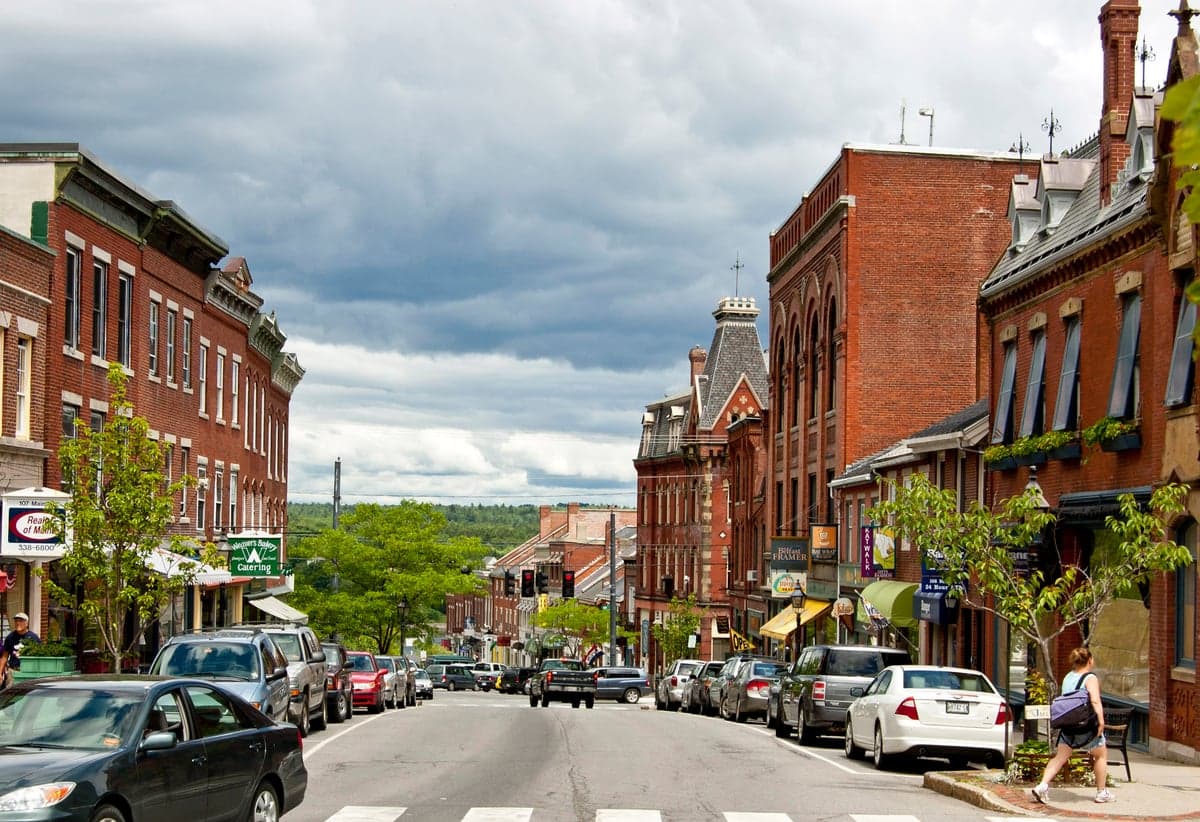
Belfast, Maine, offers a mixed bag for those prioritizing personal sovereignty, with a strong foundation in rural self-reliance but a state-level political climate that increasingly challenges individual autonomy. While the city itself leans progressive, its location in Waldo County provides a buffer of more conservative, independent-minded neighbors, and the area’s historical character of fishing, farming, and small-scale manufacturing still shapes daily life. For the survivalist or prepper, the key question is whether local freedoms can withstand the growing reach of state government into areas like property rights, medical choice, and self-defense.
Tax burden and regulatory posture: how Maine’s state policies affect your wallet and freedom
Maine’s tax burden is among the highest in the nation, ranking 7th worst for combined state and local taxes according to the Tax Foundation. This directly impacts personal sovereignty by reducing disposable income that could otherwise go toward preparedness, land improvements, or savings. The state’s income tax is progressive, topping out at 7.15%, and property taxes in Waldo County average around 1.3% of assessed value, which is moderate for Maine but still significant compared to lower-tax states. Sales tax is 5.5%, with no local option to increase it, but the state taxes a broad range of goods. Regulatory posture is mixed: Maine has a strong home-rule tradition, meaning Belfast can set its own zoning and land-use rules, but state-level environmental regulations are strict, particularly around coastal development, wetlands, and shoreland zoning. This can complicate building or expanding a homestead near the water. For the prepper, the biggest regulatory hurdle is likely the state’s building codes and energy efficiency standards, which can add cost and complexity to off-grid construction. However, Maine does not have a state-level property tax on personal vehicles or boats, which is a small win for asset ownership.
Self-defense and gun law specifics: what you can and cannot do in Belfast and Maine
Maine is generally considered a shall-issue state for concealed carry, but recent legislative changes have tightened restrictions. As of 2026, a permit is no longer required to carry a concealed firearm in public for those 21 and older who are legally allowed to possess a gun, thanks to the state’s constitutional carry law passed in 2015. However, the state has enacted a “red flag” law (extreme risk protection order) that allows law enforcement to petition a court to temporarily seize firearms from individuals deemed a risk to themselves or others, without a criminal conviction. This is a significant concern for those who view due process as a cornerstone of personal sovereignty. Additionally, Maine now requires background checks on all firearm sales, including private transactions, with limited exceptions for family transfers. There is no state preemption on local gun ordinances, meaning Belfast could theoretically pass its own restrictions, though as of 2026 it has not done so beyond federal compliance. Magazine capacity is not restricted, and there is no state registry of firearms. For the survivalist, the ability to own standard-capacity rifles and handguns remains intact, but the red flag law creates a vulnerability that could be exploited by bad actors or overzealous officials. Stand-your-ground laws are not explicitly codified in Maine, but the state’s castle doctrine allows the use of deadly force against an intruder in your home if you reasonably believe it’s necessary to prevent death or serious injury. This is a solid foundation, but not as robust as in states with clear stand-your-ground statutes.
Self-reliance and homesteading viability: lot sizes, zoning, and off-grid feasibility in Waldo County
Belfast and its surrounding rural areas offer genuine opportunities for self-reliance, but with important caveats. Minimum lot sizes in the city’s residential zones are typically around 10,000 to 20,000 square feet, but outside city limits in unincorporated Waldo County, you can find parcels of 2 to 10 acres or more at reasonable prices—often under $5,000 per acre for raw land. Zoning in the rural parts of the county is generally permissive, allowing for livestock, gardens, and small-scale agriculture without special permits. However, the state’s shoreland zoning act restricts building within 250 feet of any great pond, river, or coastal wetland, which can limit options for waterfront homesteads. Off-grid feasibility is high: Maine has no state law prohibiting rainwater collection, and many rural properties rely on private wells and septic systems. Solar panels are common and permitted, though net metering rules have become less favorable in recent years, reducing the financial incentive to feed power back to the grid. Wood heat is the norm for many rural homes, and firewood is abundant and affordable. The growing season is short (roughly 120-150 days), but cool-weather crops like potatoes, kale, and root vegetables thrive. For the prepper, the biggest challenge is the harsh winter: heating fuel storage, snow removal, and maintaining access to your property during storms require serious planning. The local culture of self-reliance is strong, with many neighbors willing to help each other, but formal mutual aid networks are limited. The city itself has a well-stocked hardware store and a farm supply co-op, but for major prepping supplies, you’ll likely need to drive to Bangor (about 45 minutes) or order online.
Personal liberties: parental rights, medical autonomy, speech, and property in Belfast
Parental rights in Maine are under increasing pressure. The state has a universal school choice program that includes charter schools and homeschooling, but homeschoolers must submit a notice of intent and annual assessment results to the local school district, which some view as an overreach. Maine also mandates vaccination for school attendance, with only medical exemptions allowed—no religious or philosophical exemptions. This is a red flag for parents who prioritize medical autonomy. On medical freedom, Maine has not enacted any broad emergency powers that would allow forced treatments, but the state did impose temporary mandates during the COVID-19 pandemic, and the legal framework for future mandates remains in place. The state’s “right to die” law allows medical aid in dying for terminally ill adults, which is a positive for personal autonomy, but it’s a narrow exception. Free speech is protected under the First Amendment, but Maine has a strong anti-discrimination law that can be used to penalize speech deemed harassing or discriminatory in public accommodations, which some conservatives view as chilling. Property rights are generally respected, but the state’s environmental regulations can feel like a taking if you own wetlands or coastal land. The Maine Land Use Planning Commission (LUPC) has authority over unorganized territories (townships without local government), which can impose restrictions on development in remote areas. For the prepper, the most concerning trend is the erosion of parental and medical autonomy, which could escalate in a future crisis. The local culture in Belfast is politically diverse, with a vocal progressive majority in the city center and a more libertarian-leaning rural population. This creates a dynamic where personal liberties are often debated but not yet severely curtailed at the local level.
Overall, Belfast and Waldo County offer a decent baseline for personal sovereignty compared to many New England locations, but the state-level trajectory is concerning for those who value maximum autonomy. The tax burden is high, the regulatory environment is tightening, and recent gun laws and medical mandates signal a government that is not afraid to intervene in personal decisions. However, the area’s rural character, affordable land, and strong tradition of self-reliance provide a buffer that is increasingly rare in the Northeast. For the survivalist or prepper willing to navigate the state’s bureaucracy and accept higher taxes, Belfast can be a viable base of operations—but it is not a sanctuary from government overreach. Those seeking maximum sovereignty would be better served by states with lower taxes, stronger gun protections, and fewer mandates, such as New Hampshire or parts of the Midwest. For those already rooted in Maine, the key is to build strong local networks, stay informed on legislative changes, and be prepared to adapt as the political landscape shifts.

* Values derived from national, state, county, city and local statistics and may differ in a specific area. Last updated: 2026-04-22T22:11:04.000Z
Narrative content on this page is AI-generated and may contain mistakes. Verify any details that matter before acting on them.
ReloMaps may earn a commission from affiliate links at no extra cost to you.

