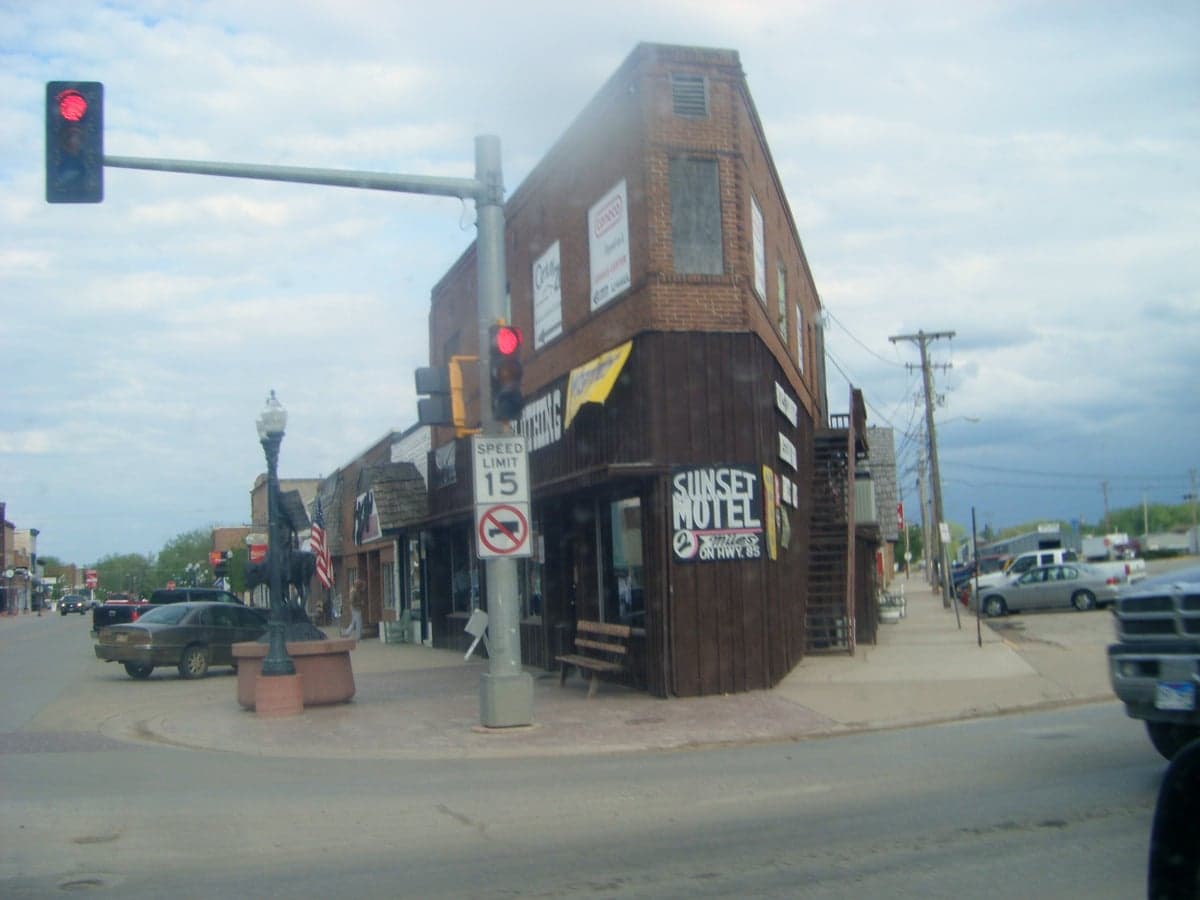
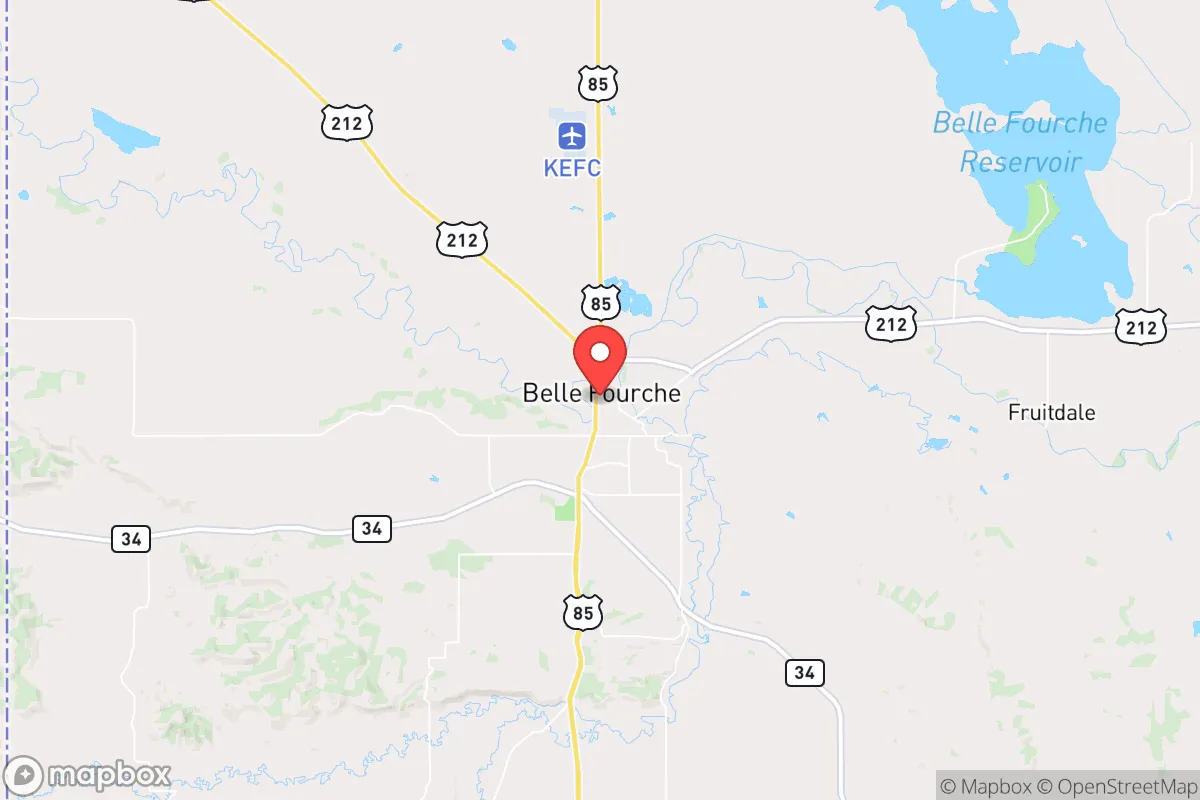
Photo: Wikipedia
Strategic Assessment of Belle Fourche, SD
Strong survivability profile. Good buffer from population centers, with manageable environmental and tactical risks.
What does the Strategic Assessment tell us?
Our Strategic Assessment grades tactical survivability of an area. Major population centers, military targets, fallout zones, natural disasters, and border exposure all drive risk — lower exposure means a more defensible position in a crisis.
This is heavily inspired by Joel Skousen's Strategic Relocation book. Highly recommended you checkout the book ($)What does this tell us?
Our Strategic Assessment grades tactical survivability of an area. Major population centers, military targets, fallout zones, natural disasters, and border exposure all drive risk — lower exposure means a more defensible position in a crisis.
This is heavily inspired by Joel Skousen's Strategic Relocation book. Highly recommended you checkout the book ($)Strategic Pillars

Key Distances
Regional Safe Places
Below is our recommended "safe zones" in South Dakota and the surrounding area based on our strategic heuristics. For most people, it's unrealistic to live in a “safe zone” full-time due to work, family or other personal reasons. They tend to be more rural. However, many of these areas are perfect for second homes and retreat properties that double as a vacation home or even a short-term rental.
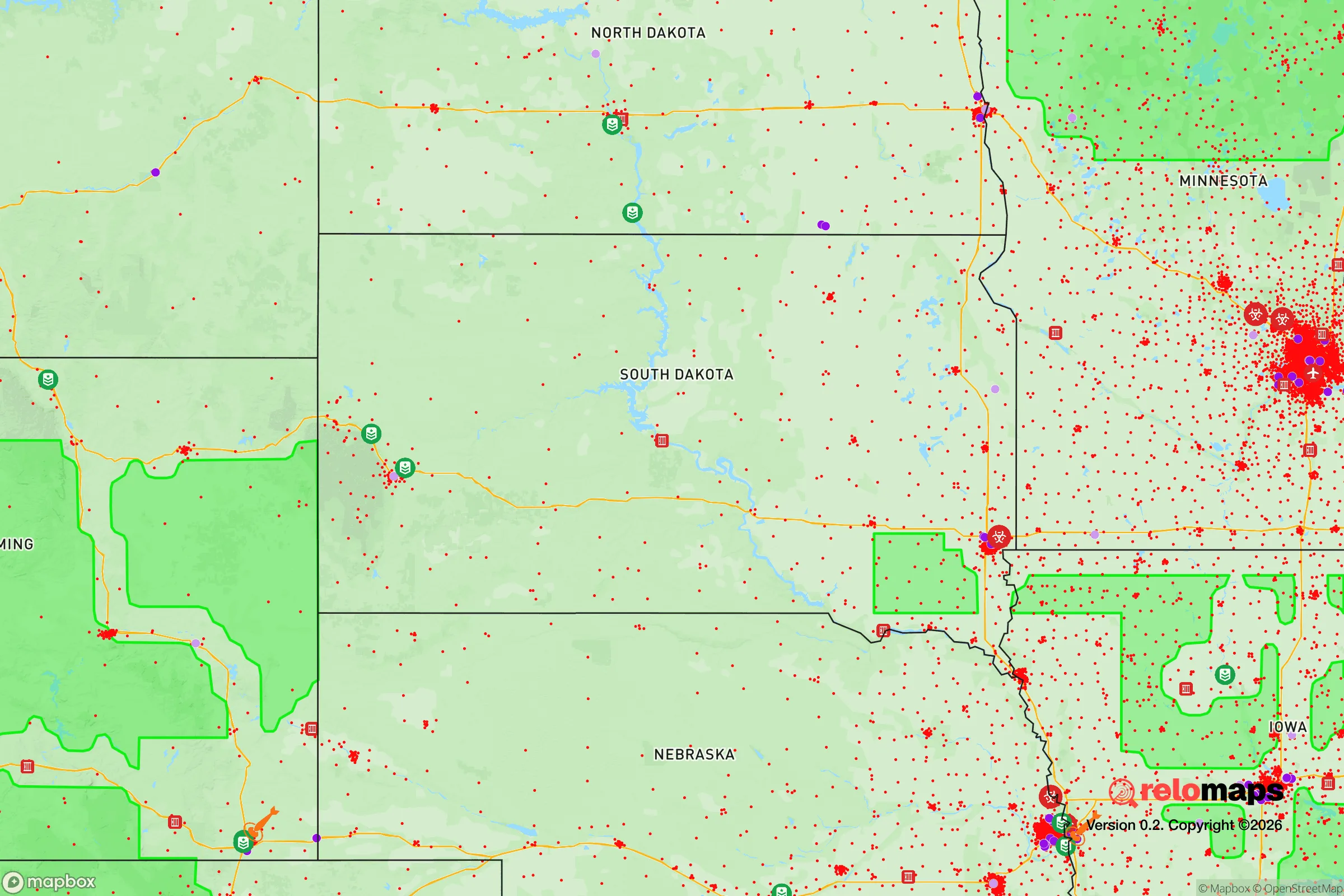


Important Note: For informational purposes only. This does not mean nothing bad ever happens in the green zones. Please use common sense. This is based on public data and modeled with AI. We tried to take a conservative approach but mistakes happen. We update this regularly as new information becomes available.
Solar Generator Recommendations
Backup power matters more here than in safer locations. We've picked three solar generators across budgets and capacity tiers — start with the budget unit if you only need a few essentials, or step up if you want to run a fridge and HVAC for days at a time.

Jackery Portable Power Station Explorer 300
Budget OptionPower on the Go: Weighing only 11 lbs, it's convenient to set up and store with book-sized foldable solar panels

BLUETTI Portable Power Station AC180
Designed for both indoor and outdoor scenarios, AC180 is highly capable as it has a robost capacity and continuous output power.

EF ECOFLOW DELTA Pro Ultra Power Station
Upgraded PickEcoFlow DELTA Pro Ultra is a whole-home energy system designed to grow with your family. Integrated with the Smart Home Panel 2, it scales to meet your evolving energy needs — keeping your home powered, intelligent, and secure through every stage of life.
We earn a commission, at no additional cost to you.
Strategic Assessment Analysis
Belle Fourche, South Dakota, offers a compelling strategic position for those prioritizing resilience and long-term security in an uncertain future. Its location in the far western part of the state, well away from major population centers and the vulnerabilities they bring, provides a natural buffer against the cascading effects of civic unrest, supply chain disruptions, and large-scale disasters. The area’s low population density, combined with its access to critical resources like water and agricultural land, makes it a serious candidate for anyone looking to establish a durable, self-reliant foothold in the Northern Plains.
Geographic position and natural advantages for long-term security
Belle Fourche sits at the geographic center of the nation, but more importantly, it’s positioned in a region that offers genuine strategic depth. The Black Hills lie to the west, providing rugged terrain and natural cover, while the surrounding prairie offers open sightlines and limited avenues of approach for any large-scale movement of people or goods. The area is far from the major interstate corridors—I-90 runs south of town, but it’s not a direct threat vector—and the nearest major city, Rapid City, is about 50 miles southwest. That distance is enough to insulate Belle Fourche from the immediate chaos of a metropolitan collapse, yet close enough to access medical and supply resources if needed. The Belle Fourche River and the nearby Orman Dam provide a reliable freshwater source, a critical advantage in a region where water scarcity is a growing concern elsewhere. The local climate, while harsh in winter, also limits the appeal of the area for mass migration during a crisis, which is a double-edged sword but ultimately a defensive benefit.
Risks, exposures, and proximity to fallout-relevant landmarks
No location is without vulnerabilities, and Belle Fourche has a few that demand attention. The most obvious is its proximity to Ellsworth Air Force Base, located about 60 miles southwest near Rapid City. Ellsworth is a major B-1B Lancer bomber base and a key strategic asset for the U.S. military. In a conflict scenario—whether conventional or nuclear—this base is a high-priority target. While Belle Fourche is far enough away to avoid the immediate blast zone of a direct strike, fallout patterns are unpredictable and could drift north or east depending on wind conditions. The prevailing winds in the region typically blow from the west, which means a strike on Ellsworth could send radioactive material toward the Black Hills and the Rapid City area, but Belle Fourche, being north-northeast, might be partially shielded depending on the specific weather pattern. Still, it’s a risk that cannot be ignored. Additionally, the area’s reliance on a single major highway (US-85) for north-south travel and the limited rail infrastructure could become chokepoints during an evacuation or supply disruption. The local economy is heavily tied to agriculture and energy extraction, which means any national-level economic collapse would hit hard, but that also means the community is accustomed to hardship and self-sufficiency.
Practical resilience for a relocator: food, water, energy, and defensibility
For a relocator with a prepper mindset, Belle Fourche checks several critical boxes. Water is the single most important resource, and the Belle Fourche River, combined with the Orman Dam reservoir, provides a year-round supply that is rare in the High Plains. The local aquifer is also accessible via wells, though depth varies. Food production is viable—the surrounding area is ranch and farm country, with cattle, hay, and small grains being the primary outputs. A family with a few acres can realistically establish a garden and small livestock operation, and the growing season, while short (about 120 days), is sufficient for cold-hardy crops. Energy independence is achievable through solar panels (the region gets over 280 sunny days per year) and small wind turbines, as the area is consistently windy. Wood for heating is available from the Black Hills, but that requires a trip or a supply chain. Defensibility is moderate—the town itself is small (around 6,000 people) and spread out, with open terrain that makes approach detection easy. However, the lack of natural barriers means a determined group could approach from multiple directions. The local community is tight-knit and largely self-reliant, with a strong ranching culture that values preparedness and mutual aid. The county sheriff’s office is responsive, but in a prolonged crisis, residents would largely be on their own—which is exactly the point for those seeking strategic independence.
The overall strategic picture for Belle Fourche is one of cautious optimism for the survival-minded relocator. It offers a rare combination of geographic isolation, access to water and agricultural land, and a community that understands hard work and self-reliance. The primary risks—proximity to a strategic military target and the harsh winter climate—are manageable with proper planning and preparation. For someone looking to step away from the vulnerabilities of urban and suburban life, and who is willing to invest in the infrastructure needed to thrive in a low-density, high-resilience environment, Belle Fourche represents a solid, defensible option in the Northern Plains. It’s not a perfect fortress, but in a world where few places are, it stands out as a practical, grounded choice for those serious about long-term preparedness.

* Values derived from national, state, county, city and local statistics and may differ in a specific area. Last updated: 2026-10-10T16:26:34.000Z
Narrative content on this page is AI-generated and may contain mistakes. Verify any details that matter before acting on them.
ReloMaps may earn a commission from affiliate links at no extra cost to you.

