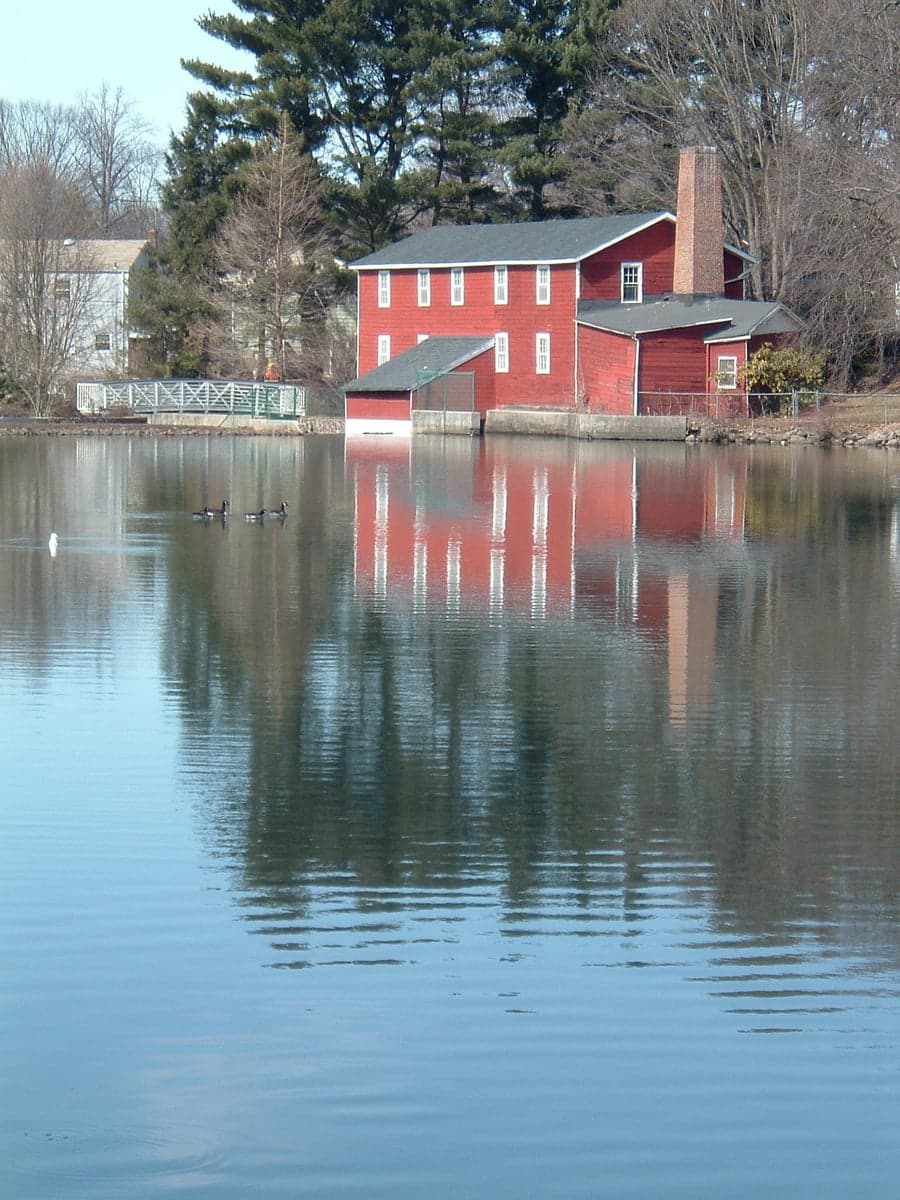
Photo: Wikipedia
Demographics of Bergenfield, NJ
Affluence Level in Bergenfield, NJ
An upper-middle-class area. Household wealth, education levels, and homeownership run ahead of national benchmarks.
People of Bergenfield, NJ
Bergenfield, New Jersey, is a densely settled borough of 28,269 residents where no single ethnic group holds a majority, creating a layered, multi-ethnic community distinct from many of its Bergen County neighbors. The population is 33.0% White, 30.2% Hispanic, 21.0% East and Southeast Asian, 8.4% Black, and 5.4% Indian, with 47.7% holding a college degree and 9.7% foreign-born. This is a place where a Filipino-American family might live next door to a Dominican-American household, with Korean-owned businesses lining Main Street and Orthodox Jewish families walking to synagogue on Saturdays. The borough’s identity is one of quiet, middle-class diversity — a suburban crossroads where successive waves of immigrants have layered their communities atop one another.
How the city was settled and grew
Bergenfield’s original population was drawn by the railroad and the promise of suburban escape from New York City. Incorporated in 1894 from portions of Palisades Township, the borough was farmland until the New Jersey and New York Railroad extended service, turning it into a commuter suburb for German, Irish, and Dutch families. The first major wave of development concentrated in North Bergenfield, where large Victorian homes were built along Washington Avenue for middle-class professionals, and in South Bergenfield, where smaller worker cottages housed railroad employees and tradesmen. By the 1920s, the borough’s population had surged past 6,000, with Italian and Polish immigrants arriving to work in local factories and construction. The post-World War II boom brought a second wave: Jewish families from New York City, who settled heavily in the East Bergenfield neighborhood around New Bridge Road, establishing synagogues and delis that anchored the community for decades. These groups built the borough’s original civic infrastructure — the public schools, the firehouses, the churches — and set the pattern of ethnic clustering that persists today.
Modern era (post-1965)
The 1965 Immigration and Nationality Act reshaped Bergenfield’s population more dramatically than any event since the railroad. The first post-1965 arrivals were Cuban and Puerto Rican families, who moved into the older housing stock of Central Bergenfield near the borough’s commercial spine on South Washington Avenue. By the 1980s, Dominican and Colombian immigrants had joined them, establishing bodegas, travel agencies, and Catholic congregations that made the area a Hispanic hub. Simultaneously, East and Southeast Asian families — primarily Filipino and Korean — began arriving, drawn by the borough’s affordable split-level homes and strong school reputation. They concentrated in West Bergenfield near the Dumont border, where Korean churches and Filipino grocery stores now dot the commercial strips. The 1990s and 2000s brought a smaller but significant Indian-subcontinent wave, mostly Gujarati and Punjabi families, who settled in the Southwest Bergenfield section near the River Edge border, often in newer townhouse developments. The White population, which was over 90% in 1970, has steadily declined to 33.0% as older Jewish and Italian families aged out or moved to retirement communities, while their homes were bought by younger immigrant families. The Black population, at 8.4%, is concentrated in the Cooper’s Pond area and has remained relatively stable, with roots in the 1970s migration from nearby Englewood.
The future
Bergenfield’s demographic trajectory points toward continued diversification, but with a notable plateau in foreign-born share at 9.7% — lower than many neighboring towns — suggesting that the borough is becoming a destination for second-generation families rather than new arrivals. The Hispanic population, now 30.2%, is likely to grow modestly as families age in place and new Dominican and Central American households arrive, but the rate of growth has slowed since 2010. The East and Southeast Asian share, at 21.0%, appears to be stabilizing as Filipino and Korean families who arrived in the 1980s and 1990s see their children move to larger homes in Ridgewood or Tenafly. The Indian population, at 5.4%, is the fastest-growing segment, driven by professionals in tech and healthcare who value the borough’s proximity to New York City and its strong school system. The borough is not homogenizing into a single ethnic identity; rather, it is tribalizing into distinct enclaves — Hispanic in Central Bergenfield, East Asian in West Bergenfield, Indian in Southwest Bergenfield, and a shrinking White population in North Bergenfield. The next 10-20 years will likely see the White share dip below 25%, while the Indian share could approach 10%, making Bergenfield a four-group mosaic rather than a melting pot.
For someone moving in now, Bergenfield offers a stable, middle-class environment where ethnic diversity is a lived reality rather than a talking point. The borough is not trendy or hip — it is a place of modest homes, good schools, and quiet streets where families from different backgrounds coexist without much friction. The population is becoming more educated (47.7% college graduates) and more professional, but the overall character remains that of a working-to-middle-class suburb where people keep to themselves and value safety and convenience over status. If you want a community where your children will grow up alongside Filipino, Dominican, Korean, and Indian classmates, and where the local politics are pragmatic rather than ideological, Bergenfield is a solid bet. Just understand that the ethnic enclaves are real — you will be choosing a neighborhood as much as a town.

* Values derived from national, state, county, city and local statistics and may differ in a specific area. Last updated: 2026-05-02T02:22:37.000Z
Narrative content on this page is AI-generated and may contain mistakes. Verify any details that matter before acting on them.
ReloMaps may earn a commission from affiliate links at no extra cost to you.

