 Popular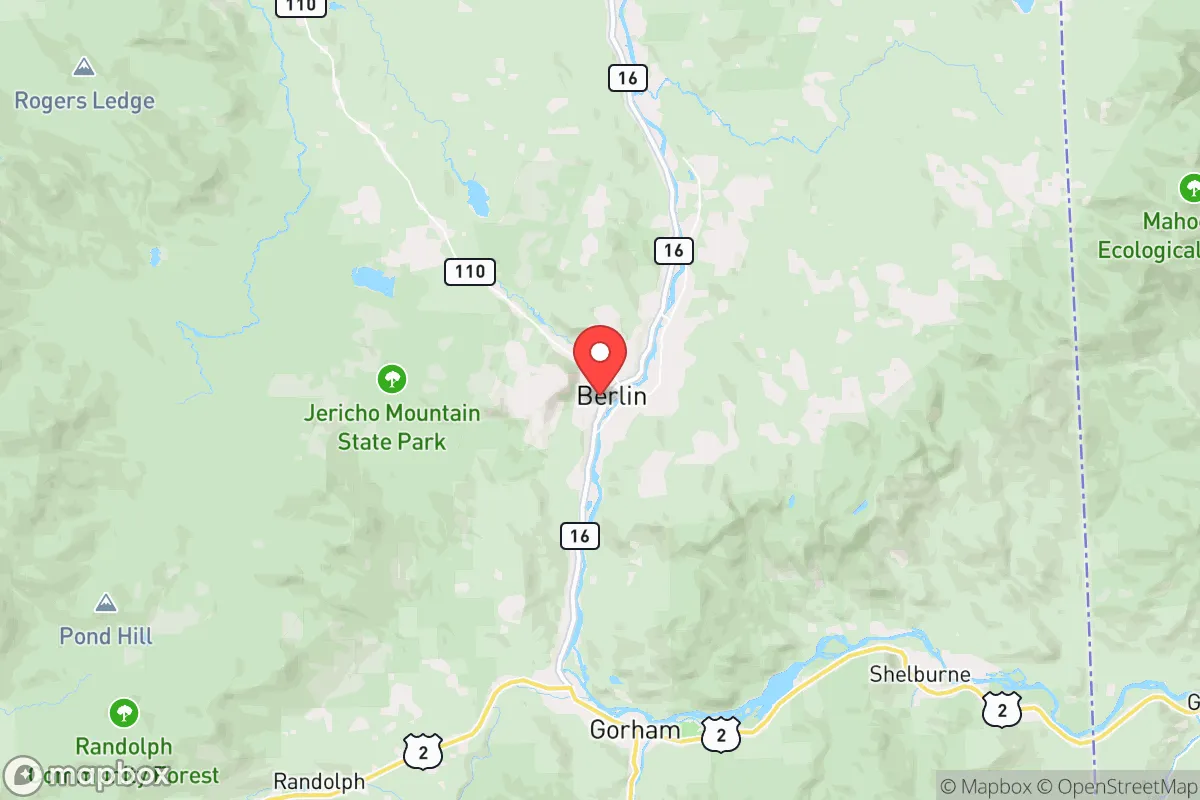
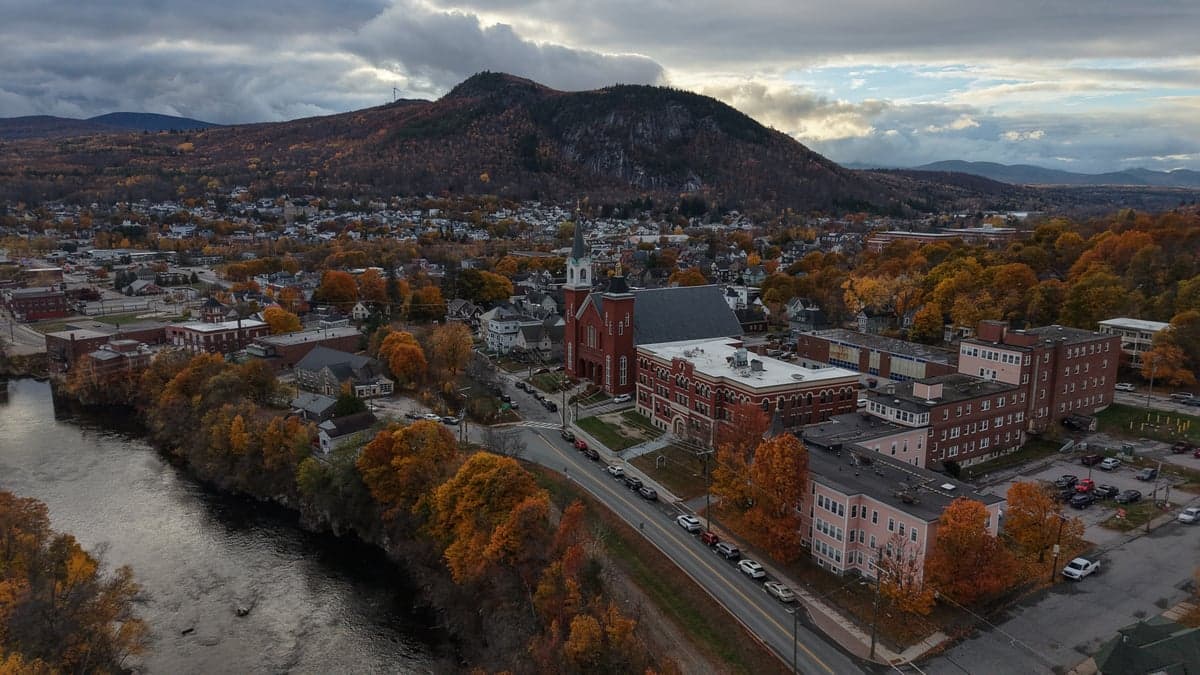
Photo: Wikipedia
Strategic Assessment of Berlin, NH
Meaningful friction. Expect exposure to either population pressure, blast zones, or natural disaster risk. Consider buying a retreat property.
What does the Strategic Assessment tell us?
Our Strategic Assessment grades tactical survivability of an area. Major population centers, military targets, fallout zones, natural disasters, and border exposure all drive risk — lower exposure means a more defensible position in a crisis.
This is heavily inspired by Joel Skousen's Strategic Relocation book. Highly recommended you checkout the book ($)What does this tell us?
Our Strategic Assessment grades tactical survivability of an area. Major population centers, military targets, fallout zones, natural disasters, and border exposure all drive risk — lower exposure means a more defensible position in a crisis.
This is heavily inspired by Joel Skousen's Strategic Relocation book. Highly recommended you checkout the book ($)Strategic Pillars

Key Distances
Regional Safe Places
Below is our recommended "safe zones" in New Hampshire and the surrounding area based on our strategic heuristics. For most people, it's unrealistic to live in a “safe zone” full-time due to work, family or other personal reasons. They tend to be more rural. However, many of these areas are perfect for second homes and retreat properties that double as a vacation home or even a short-term rental.
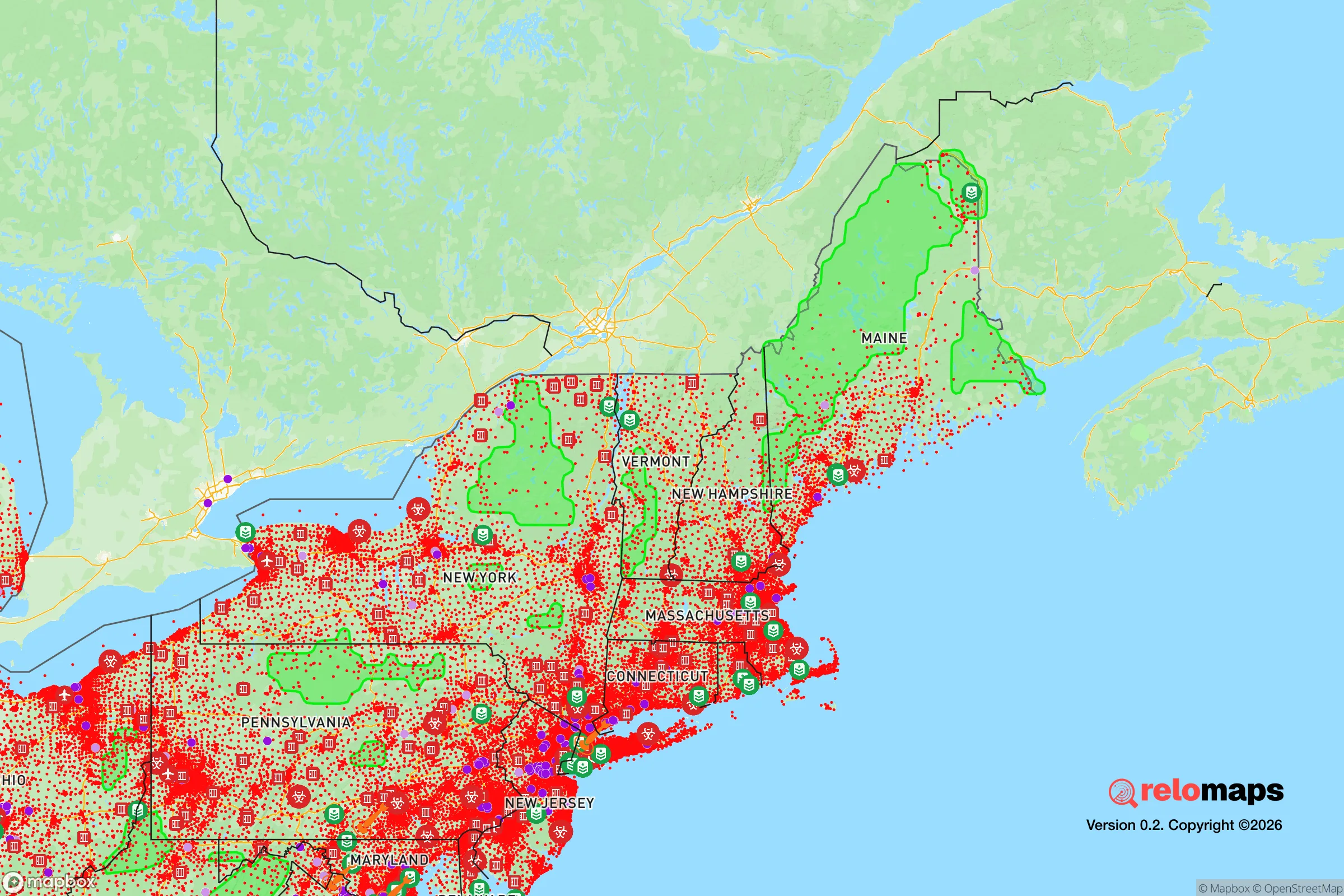
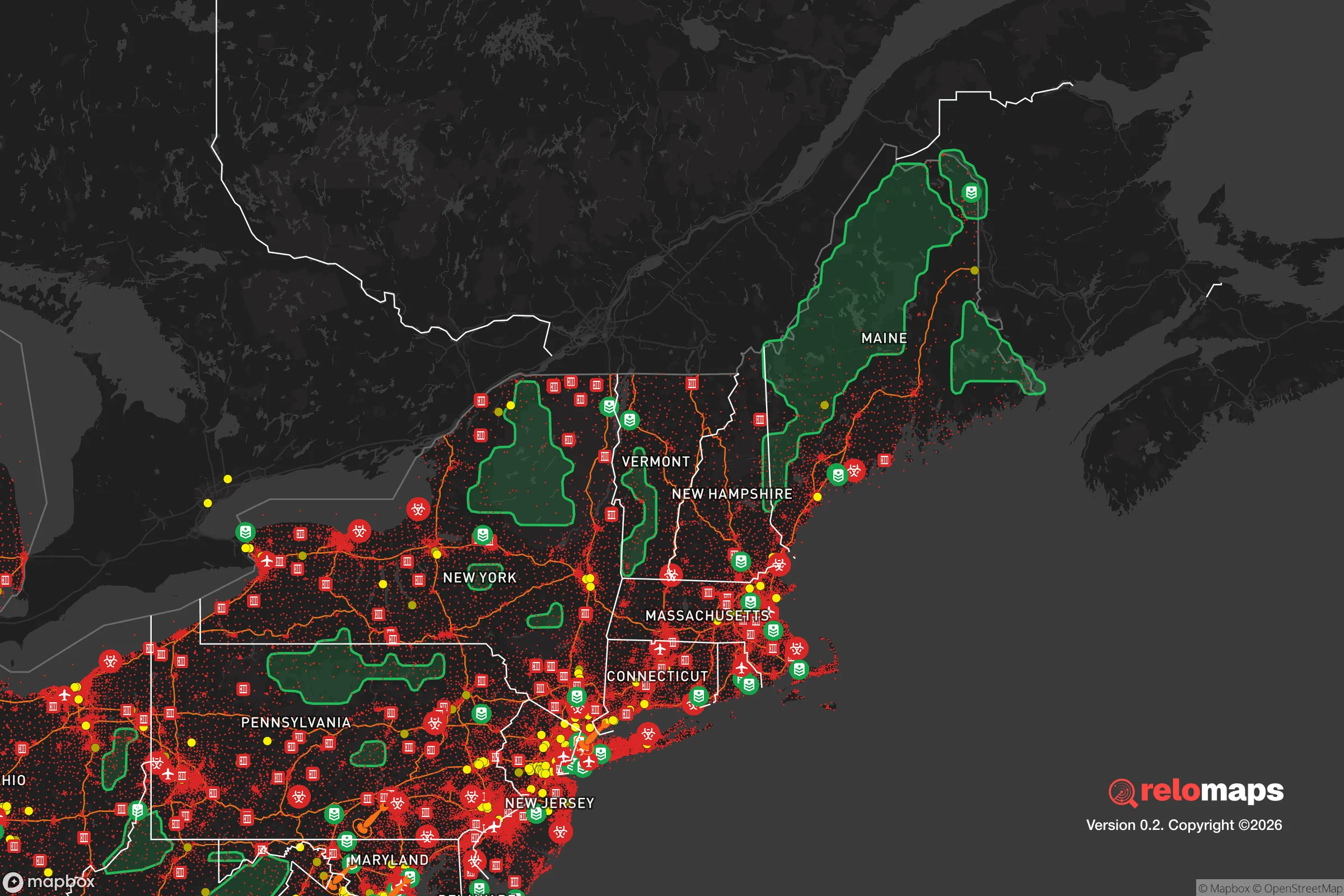


Important Note: For informational purposes only. This does not mean nothing bad ever happens in the green zones. Please use common sense. This is based on public data and modeled with AI. We tried to take a conservative approach but mistakes happen. We update this regularly as new information becomes available.
Solar Generator Recommendations
Backup power matters more here than in safer locations. We've picked three solar generators across budgets and capacity tiers — start with the budget unit if you only need a few essentials, or step up if you want to run a fridge and HVAC for days at a time.

Jackery Portable Power Station Explorer 300
Budget OptionPower on the Go: Weighing only 11 lbs, it's convenient to set up and store with book-sized foldable solar panels

BLUETTI Portable Power Station AC180
Designed for both indoor and outdoor scenarios, AC180 is highly capable as it has a robost capacity and continuous output power.

EF ECOFLOW DELTA Pro Ultra Power Station
Upgraded PickEcoFlow DELTA Pro Ultra is a whole-home energy system designed to grow with your family. Integrated with the Smart Home Panel 2, it scales to meet your evolving energy needs — keeping your home powered, intelligent, and secure through every stage of life.
We earn a commission, at no additional cost to you.
Strategic Assessment Analysis
Berlin, New Hampshire, sits as one of the most resilient outposts in the Northeast for those serious about strategic relocation. This former mill town, nestled in the heart of the North Country along the Androscoggin River, offers a combination of geographic isolation, abundant natural resources, and a low-profile existence that is increasingly rare south of the White Mountains. For the individual or family looking to put serious distance between themselves and the chaos of the Eastern Seaboard, Berlin provides a hard, cold, but defensible base of operations. The key here is not comfort—it's survivability, and Berlin delivers on that front in ways most of New England cannot.
Geographic position and natural advantages for long-term security
Berlin's primary strategic asset is its location. It sits at the northern edge of the White Mountain National Forest, roughly 60 miles from the Canadian border and over 100 miles from the nearest major population center—Portland, Maine. This distance is your first line of defense. In a scenario involving civil unrest, mass casualty events, or a breakdown of supply chains, the urban masses of Boston, Manchester, and Portland will not be walking to Berlin. The terrain alone—steep grades, narrow passes, and long stretches of unlit highway—acts as a natural funnel and barrier. The city itself is tucked into a valley, which limits approaches and makes it easier to monitor movement. For a prepper mindset, this is a textbook "hard target" location: hard to find, harder to reach, and easy to defend if you know the back roads. The Androscoggin River provides a reliable water source, and the surrounding forests offer timber for fuel, construction, and concealment. The area's low population density—under 10,000 people in the city proper and roughly 30,000 in the entire county—means fewer mouths to compete with when things get tight.
Risks, exposures, and proximity to fallout-relevant landmarks
No location is without its vulnerabilities, and Berlin has a few that demand attention. The most obvious is the proximity to the Seabrook Nuclear Power Plant, located about 120 miles south. While that distance is significant, prevailing winds from the southwest could carry fallout into the region in a catastrophic event. More concerning is the proximity to the Portsmouth Naval Shipyard (about 90 miles southeast) and the potential for that facility to become a target in a conflict. Berlin is also within 150 miles of the Boston metro area, which in a mass casualty event would become a humanitarian disaster zone. The risk of refugees fleeing north along Route 16 is real, though the terrain and limited road network make it manageable for those with a plan. Another exposure is the city's reliance on a single major road—Route 16—for resupply and egress. If that road is blocked or compromised, you're looking at long detours through Maine or Vermont. Winter is the great equalizer here: heavy snow can shut down the area for days, which is a double-edged sword. It keeps the unprepared out, but it also means you need to be self-sufficient for extended periods. The local economy is fragile, with a history of boom-and-bust cycles tied to paper mills and now tourism. That means local infrastructure—hospitals, law enforcement, emergency services—is thin and could be overwhelmed quickly in a crisis.
Practical resilience for a relocator: food, water, energy, and defensibility
For the serious relocator, Berlin offers a solid foundation for self-sufficiency. Water is not an issue: the Androscoggin River runs through town, and numerous streams and springs dot the surrounding hills. A simple hand pump or gravity-fed filter system will keep you hydrated indefinitely. Food is more challenging. The growing season is short—roughly 90 to 100 days—and the soil is rocky and acidic. You can grow potatoes, root vegetables, and cold-hardy greens, but you will not be feeding a family on a suburban garden plot. The real food security comes from hunting, fishing, and foraging. The region is thick with whitetail deer, moose, black bear, and small game. The Androscoggin and nearby lakes hold brook trout and landlocked salmon. Mushrooms, berries, and wild edibles are abundant in season. For long-term storage, you'll need to invest in canning, dehydrating, and a root cellar. Energy is a mixed bag. The grid is old and prone to outages, especially in winter storms. Solar is viable but limited by long, cloudy winters. A better bet is a wood stove for heat and a small generator or battery bank for essentials. Propane is widely available and can be stored in bulk. Defensibility is where Berlin shines. The valley layout means you can see threats coming from a distance. The surrounding forest provides cover and concealment for caches and bug-out locations. The local population is small, tight-knit, and generally armed—New Hampshire has some of the most permissive gun laws in the country, with no permit required for open or concealed carry. That means you're not alone in your preparedness. The downside is that everyone knows everyone, so a newcomer will be watched. Keep your head down, be neighborly, and don't flaunt your supplies.
The overall strategic picture for Berlin is one of high reward with manageable risk. It is not a place for the faint of heart or those accustomed to convenience. Winters are brutal, the economy is thin, and you will be far from modern medical care and supply chains. But for the individual or family who values distance from population centers, access to natural resources, and a community that understands self-reliance, Berlin is a strong candidate. The key is to arrive with a plan, build relationships slowly, and treat the location as a base for long-term survival, not a weekend retreat. In a world where the Eastern Seaboard is increasingly fragile, Berlin offers a cold, hard, but honest path forward.

* Values derived from national, state, county, city and local statistics and may differ in a specific area. Last updated: 2026-04-19T15:58:49.000Z
Narrative content on this page is AI-generated and may contain mistakes. Verify any details that matter before acting on them.
ReloMaps may earn a commission from affiliate links at no extra cost to you.

