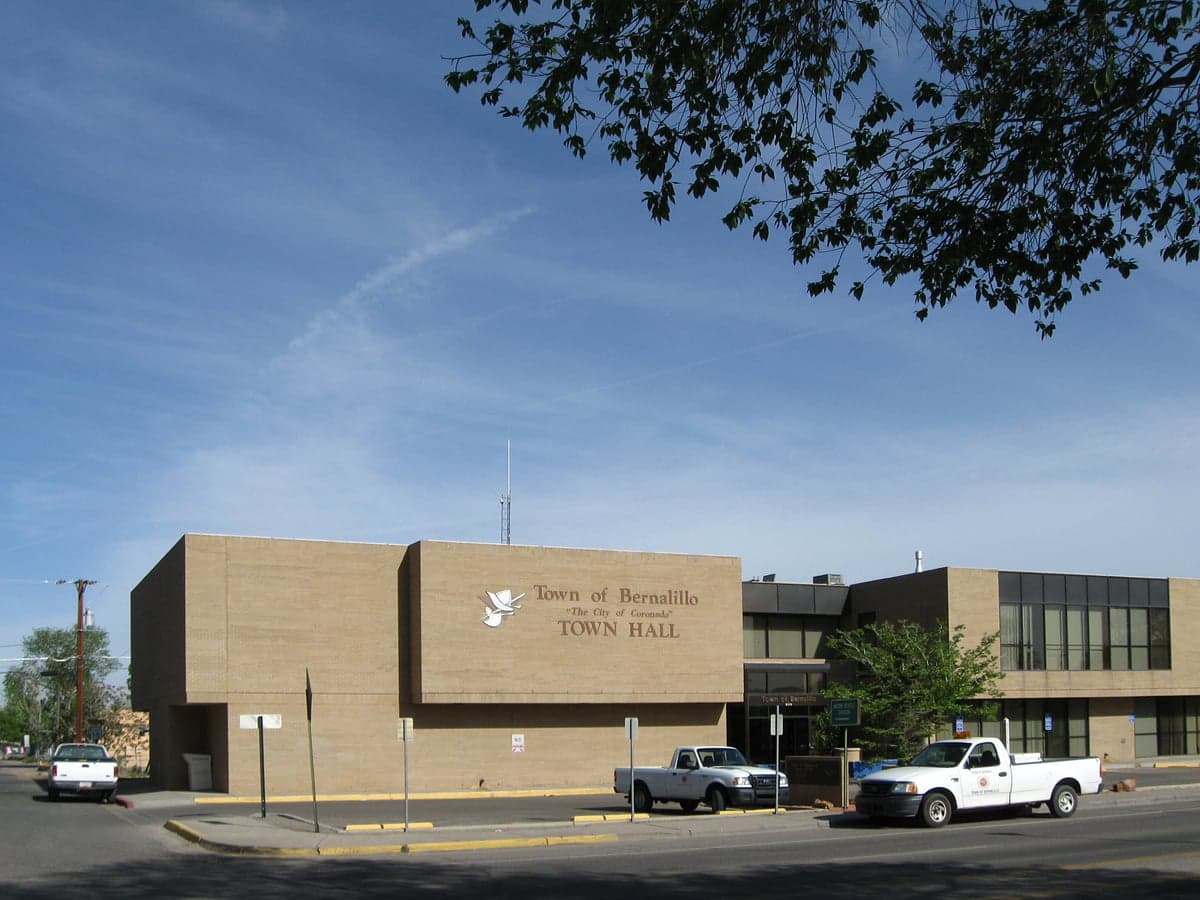
Photo: Wikipedia
Political ClimatePolitical Climate in Bernalillo, NM
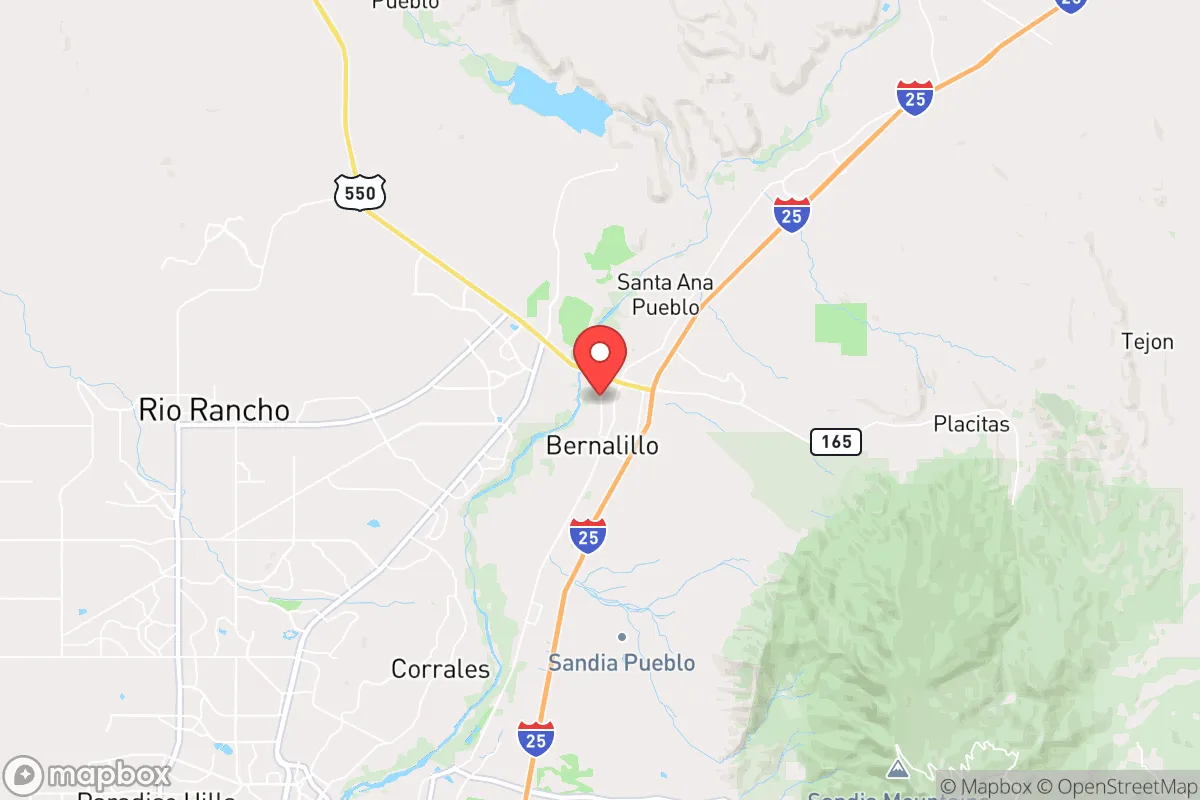
District shown is the primary district for this city’s centroid. Cities may span multiple districts.
Local Political AnalysisPolitical Analysis of Bernalillo, NM
Bernalillo, New Mexico, sits in a county that’s been trending blue for a while now, and the numbers back it up—Sandoval County’s Cook PVI is D+7, meaning it leans about seven points more Democratic than the nation as a whole. That’s a big shift from even twenty years ago, when this area was a lot more purple, with local races often going to conservatives who focused on keeping government small and out of our lives. Today, you see more progressive policies creeping in from the county and state level, and it’s changed the feel of things around here. If you’re looking for a place where personal freedoms and local control are still the priority, Bernalillo might feel like it’s slipping in the wrong direction.
How it compares
To really understand Bernalillo’s political climate, you have to look at the towns around it. Head north up I-25 to places like Rio Rancho or Placitas, and you’ll find a more mixed bag—Rio Rancho still has a strong conservative base, especially in the newer subdivisions, while Placitas has attracted a lot of out-of-state transplants who bring their progressive voting habits with them. Down south toward Albuquerque, it’s solidly blue, with policies that often feel like they’re written in a vacuum, far from the concerns of small-town residents. In contrast, Corrales, just a few miles west, has a more libertarian streak—people there value property rights and minimal interference, which is closer to the old-school Bernalillo mindset. The D+7 rating for Sandoval County as a whole masks these local differences, but if you live here, you feel the tension between the rural, independent spirit and the push for more government oversight.
What this means for residents
For folks living in Bernalillo, the shift toward progressive ideology translates into real-world changes that can feel like overreach. County and state mandates on land use, water rights, and even local business regulations have gotten stricter in the last five years, often overriding what used to be common-sense, community-driven decisions. You see it in things like new building codes that drive up costs for homeowners, or in the push for higher minimum wages that sound good on paper but squeeze the small shops and restaurants that are the backbone of this town. There’s also a growing concern about how state-level policies on taxes and energy are impacting the local economy—Bernalillo isn’t a wealthy enclave, and every new regulation feels like another weight on families trying to make ends meet. The trajectory here is clear: more government involvement in your daily life, whether you want it or not.
One cultural distinction that stands out is how the local identity is being reshaped. Bernalillo has deep roots in New Mexico’s Hispanic and Native American heritage, with traditions that emphasize community and self-reliance. But the recent political push is toward a more homogenized, progressive agenda that sometimes ignores those values. You’ll hear long-time residents grumble about how the county commission and school board are more focused on national talking points than on fixing potholes or keeping property taxes low. It’s not that everyone here is conservative—far from it—but there’s a growing sense that the pendulum has swung too far, and that personal freedoms are being traded for a vision of “progress” that doesn’t fit this place. If you’re considering a move, keep an eye on local elections; they’re where the real fight for Bernalillo’s future is happening.

State Political ClimatePolitical Climate in New Mexico
State Political AnalysisPolitical Environment in the State
New Mexico has long been a reliably blue state in presidential elections, but its political landscape is far more nuanced than the statewide results suggest. The Democratic coalition is anchored by a powerful Albuquerque-Santa Fe-Las Cruces axis, while the rest of the state—particularly the eastern plains and the oil-rich southeast—votes overwhelmingly Republican. Over the past 20 years, the state has shifted leftward on social and cultural issues, driven by rapid growth in Santa Fe and the Albuquerque metro, while rural resentment has deepened. The result is a state that feels like two different countries, with the urban core pulling policy in a progressive direction that many newcomers from Texas or the Midwest find jarring.
Urban vs. rural divide
The political map of New Mexico is a study in stark contrasts. Bernalillo County (Albuquerque) alone casts about 30% of the state's vote, and it leans Democratic by roughly 15 points. Santa Fe County is even bluer, often voting 2-to-1 for Democrats. Las Cruces in Doña Ana County adds another reliably Democratic bloc, driven by a large Hispanic population and a growing university presence. Meanwhile, the eastern counties—Roosevelt, Curry, and Lea—are deep red, often voting 70-80% Republican. The oil boom in Lea County (Hobbs) has only intensified that conservative tilt, as energy workers and their families prioritize low taxes and limited regulation. The rural north, including counties like Rio Arriba and Taos, is ancestrally Democratic but culturally distinct—more libertarian on land use and hunting, yet socially liberal. This urban-rural split means that a resident of Roswell or Farmington lives under a completely different political reality than someone in downtown Albuquerque.
Policy environment
New Mexico's policy environment is a mixed bag that leans progressive, with some notable exceptions. The state has a progressive income tax with rates up to 5.9%, and a gross receipts tax (essentially a sales tax) that can exceed 8% in some cities. Property taxes are relatively low, which is a plus for homeowners. On education, the state has poured money into early childhood programs and universal pre-K, but K-12 outcomes remain near the bottom nationally. Healthcare is heavily regulated, with a state-run insurance exchange and Medicaid expansion under the Affordable Care Act. Election laws are among the most permissive in the country: same-day registration, no-excuse absentee voting, and automatic voter registration are all in place. Gun laws have tightened significantly—the state now requires background checks on private sales and has a "red flag" law that allows temporary firearm seizure. For a conservative, the regulatory posture on energy is particularly frustrating: the state has aggressively pursued net-zero emissions goals, even as oil and gas remain the economic backbone of southeastern New Mexico.
Trajectory & freedom
Over the past five years, New Mexico has moved decisively toward greater government intervention in personal and economic life. The 2021 Energy Transition Act set a mandate for 100% carbon-free electricity by 2045, a policy that directly impacts energy costs and land use. In 2023, the legislature passed a package of gun control measures including the red flag law and a ban on firearms at polling places. Parental rights have been a flashpoint: the state expanded Medicaid coverage for gender-affirming care for minors, and the Public Education Department has pushed curriculum standards that some parents view as ideological. On medical autonomy, New Mexico legalized recreational cannabis in 2021 and has a broad medical marijuana program. Property rights are under pressure from the state's Oil Conservation Division, which has increased bonding requirements and setback rules for new wells. The overall trajectory is clear: the state is becoming less permissive of individual choice in areas like energy, education, and firearms, while expanding personal freedoms in drug use and medical decisions. A conservative moving here should expect to navigate a regulatory environment that is increasingly hostile to traditional values and economic liberty.
Civil unrest & political movements
New Mexico has seen its share of political flashpoints. In 2020, protests in Albuquerque over the death of George Floyd turned violent, with property damage and clashes with police. The state's sanctuary policies are a perennial source of tension: Albuquerque and Santa Fe have "immigrant-friendly" ordinances that limit cooperation with federal immigration enforcement, and the state has a law prohibiting local law enforcement from asking about immigration status. The Otero County Commission made national headlines in 2022 for refusing to certify primary election results, citing unfounded concerns about voting machines—a move that was eventually overruled by the state Supreme Court. On the right, the New Mexico Civil Guard and other militia-adjacent groups have been active in border areas, particularly around Sunland Park and Columbus. The left has organized around environmental justice, with activists targeting oil and gas infrastructure in the Permian Basin. A new resident will quickly notice that political signage and bumper stickers are more polarized than in many states, and that local news is dominated by debates over crime, immigration, and energy policy.
Projection
Looking ahead 5-10 years, New Mexico is likely to continue its leftward drift, but with important caveats. The in-migration from Texas and California is a wild card: many newcomers are retirees or remote workers drawn to lower housing costs and a slower pace of life, but they tend to bring their political preferences with them. If the influx is disproportionately from blue states, the Democratic majority could solidify. However, the oil and gas industry remains a powerful counterweight—it funds a significant portion of the state budget, and any serious attempt to restrict drilling would devastate the economy of southeastern New Mexico. The demographic trend is also shifting: the Hispanic population, historically a Democratic base, is becoming more politically diverse, with younger voters trending left while older, more religious Hispanics drift right. The state's high poverty rate and low educational attainment are structural problems that no party has solved, and these could fuel populist movements on either side. For a conservative, the realistic outlook is that New Mexico will remain a blue state with deep red pockets, and that policy will continue to reflect the priorities of Santa Fe and Albuquerque.
For a conservative considering a move to New Mexico, the bottom line is this: you can find a community that shares your values, particularly in the eastern plains, the oil patch around Hobbs, or the more rural counties like Otero and Lincoln. But you will be living under a state government that is actively pursuing policies you likely oppose—on guns, energy, education, and immigration. The trade-off is a lower cost of living, beautiful landscapes, and a slower pace of life. If you're willing to be a political minority at the state level and focus on local politics, New Mexico can still work. Just don't expect the state to become more conservative anytime soon.
* Values derived from national, state, county, city and local statistics and may differ in a specific area. Last updated: 2026-05-01T09:11:52.000Z
Narrative content on this page is AI-generated and may contain mistakes. Verify any details that matter before acting on them.
ReloMaps may earn a commission from affiliate links at no extra cost to you.

