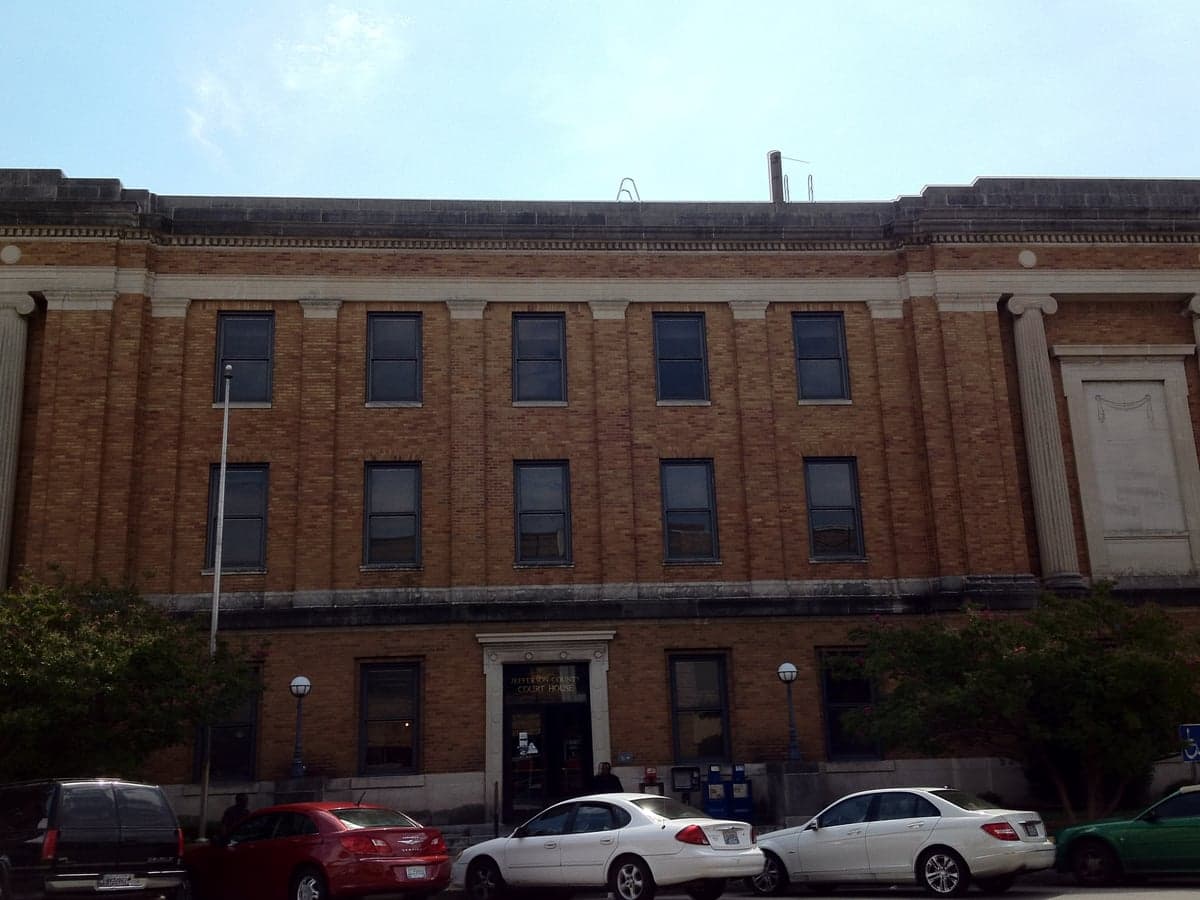
Photo: Wikipedia
Demographics of Bessemer, AL
Affluence Level in Bessemer, AL
A below-average socioeconomic profile. Incomes, home values, and educational attainment trail the U.S., with higher poverty and unemployment.
People of Bessemer, AL
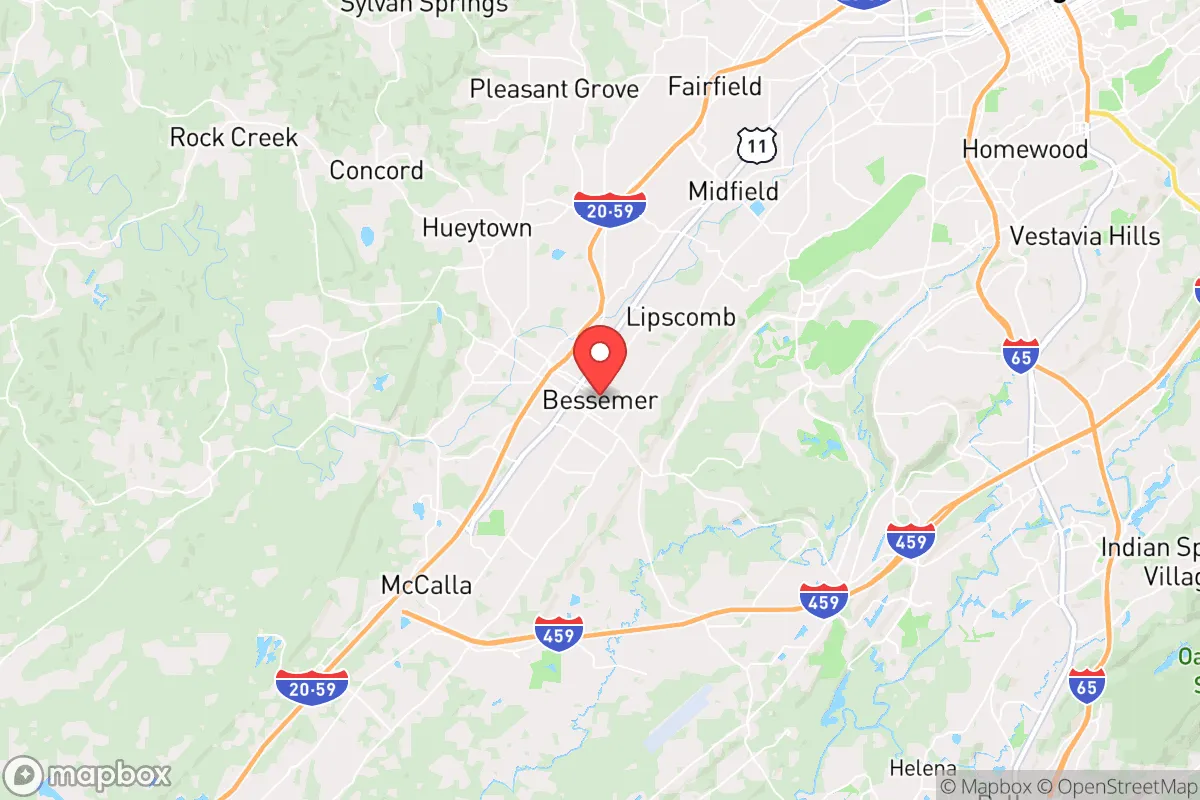
Bessemer, Alabama, is a city of 25,655 residents defined by its deep African American majority (70.6%) and a modest but growing Hispanic population (8.2%), set against a backdrop of industrial decline and suburban stagnation. The city remains predominantly working-class, with only 14.4% of adults holding a bachelor’s degree, and its foreign-born share sits at a low 3.1%. Bessemer’s identity is rooted in its history as a steel and railroad boomtown, but today it is a community grappling with population loss, economic transition, and the legacy of racial division that shaped its neighborhoods.
How the city was settled and grew
Bessemer was founded in 1887 as a planned industrial city, named after the Bessemer steel process, and built to capitalize on the region’s iron ore, coal, and limestone deposits. The original population was a mix of white native-born laborers from the Appalachian foothills and African American workers, many of whom were formerly enslaved or the children of enslaved people, who migrated from rural Alabama and Mississippi for jobs in the massive Tennessee Coal, Iron and Railroad Company (TCI) mills. The city’s early neighborhoods reflected this racial and economic hierarchy. White workers and managers settled in the western and northern sections, particularly in the Jonesboro and West Bessemer districts, while African American laborers were confined to the eastern and southern areas, notably the East Bessemer and Sand Ridge neighborhoods. By 1900, Bessemer’s population had surged past 6,000, and it became a classic “company town” where TCI controlled housing, stores, and even local politics. A second wave of growth came during the Great Migration (1910–1940), when tens of thousands of Black southerners moved to Bessemer for steel and railroad jobs, swelling the Black population to roughly 40% by 1930. These new arrivals packed into the East Bessemer and North Bessemer wards, creating dense, segregated communities that remain predominantly Black today. The city peaked at around 33,000 residents in the 1960 census, but the decline of domestic steel production after 1970 triggered a steady exodus of both white and Black families.
Modern era (post-1965)
After the 1965 Hart-Cellar Act, Bessemer saw only a trickle of foreign-born residents—today just 3.1% of the population—and those are overwhelmingly Hispanic (8.2% of the total), with negligible East/Southeast Asian (0.2%) and Indian subcontinent (0.0%) communities. The real demographic story of the modern era is domestic: white flight accelerated sharply after school desegregation orders in the 1970s. White residents, who made up roughly 55% of the city in 1970, dropped to 18.5% by 2020, with most relocating to nearby suburbs like Hoover, Alabaster, and Helena. This exodus hollowed out historically white neighborhoods such as West Bessemer and the Raimund District, which now have significant Black and Hispanic populations. The Hispanic community, largely Mexican and Central American, began arriving in the 1990s for construction, landscaping, and poultry-processing jobs in the broader Birmingham metro. They concentrated in the central Bessemer corridor along U.S. Highway 11 and in the West Bessemer area, where older, affordable housing stock and proximity to industrial employers drew families. The Black population, now 70.6%, remains concentrated in the historic East Bessemer, Sand Ridge, and North Bessemer neighborhoods, though upwardly mobile Black families have also moved to newer subdivisions on the city’s western fringe. The city’s overall population has declined by roughly 22% since its 1960 peak, a trend driven by deindustrialization and the pull of better schools and jobs in surrounding suburbs.
The future
Bessemer’s population is likely to continue shrinking slowly, with the Black majority plateauing and the Hispanic share growing modestly as families replace older white and Black residents. The city is not homogenizing; instead, it is tribalizing into distinct enclaves. East Bessemer and Sand Ridge remain overwhelmingly Black and low-income, while West Bessemer and the Raimund area are becoming more mixed, with a rising Hispanic presence. The white population, now a small minority, is aging and concentrated in a few pockets like the Jonesboro historic district. The foreign-born share (3.1%) is too small to drive a revival, and the city lacks the job base or housing stock to attract significant new immigration. The next 10–20 years will likely see continued population erosion, with the city becoming older, poorer, and more racially polarized between its Black and Hispanic residents. For a conservative-leaning mover, Bessemer offers low housing costs and a central location near Birmingham, but the trade-offs are weak schools, limited economic opportunity, and a social fabric still shaped by the racial divisions of its industrial past.
Bessemer is becoming a smaller, more segregated, and more Hispanic-influenced version of its former self—a place where the industrial boom that created it is a distant memory, and where the future depends on whether new investment can reverse decades of decline. For someone moving in now, the city offers affordability and proximity to the metro, but the demographic and economic headwinds are real and unlikely to shift quickly.

* Values derived from national, state, county, city and local statistics and may differ in a specific area. Last updated: 2026-04-19T18:44:17.000Z
Narrative content on this page is AI-generated and may contain mistakes. Verify any details that matter before acting on them.
ReloMaps may earn a commission from affiliate links at no extra cost to you.

