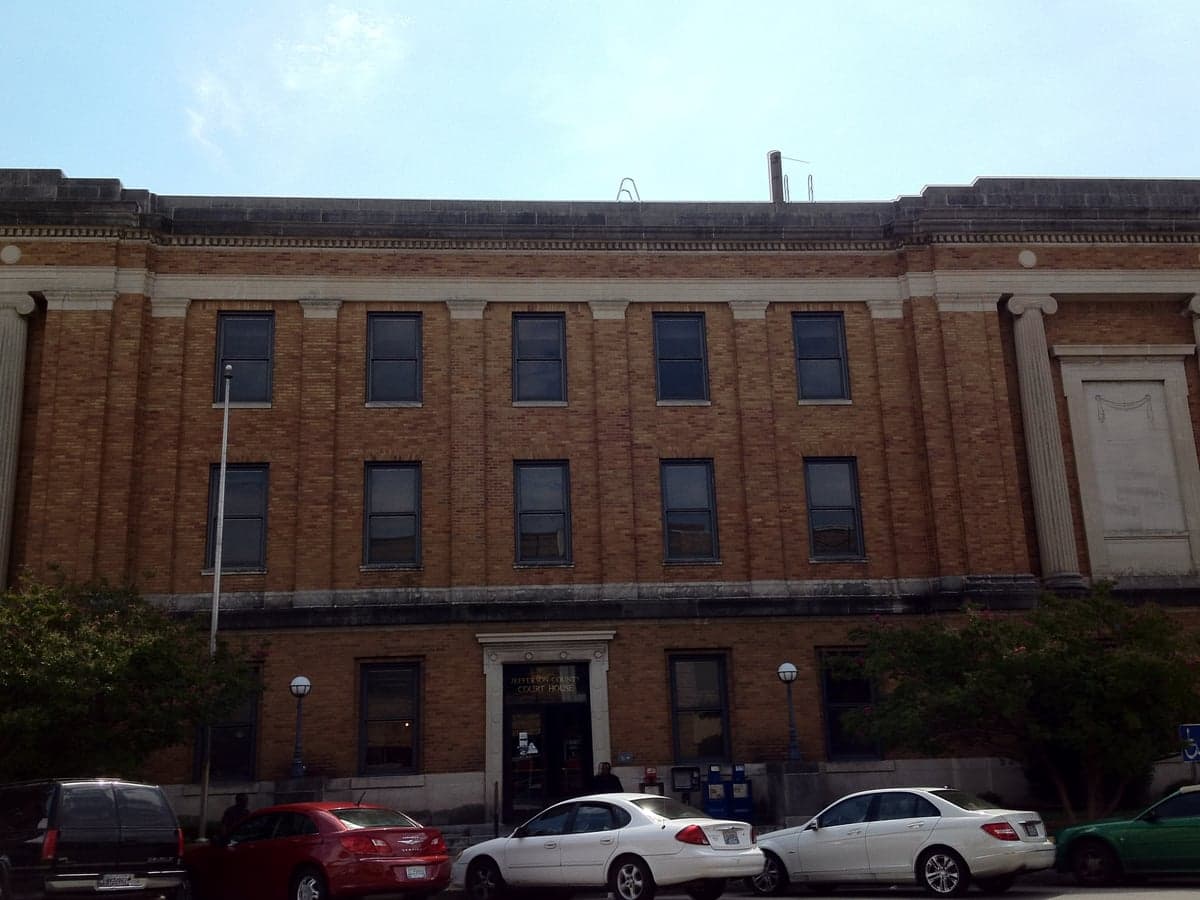
Photo: Wikipedia
Political ClimatePolitical Climate in Bessemer, AL
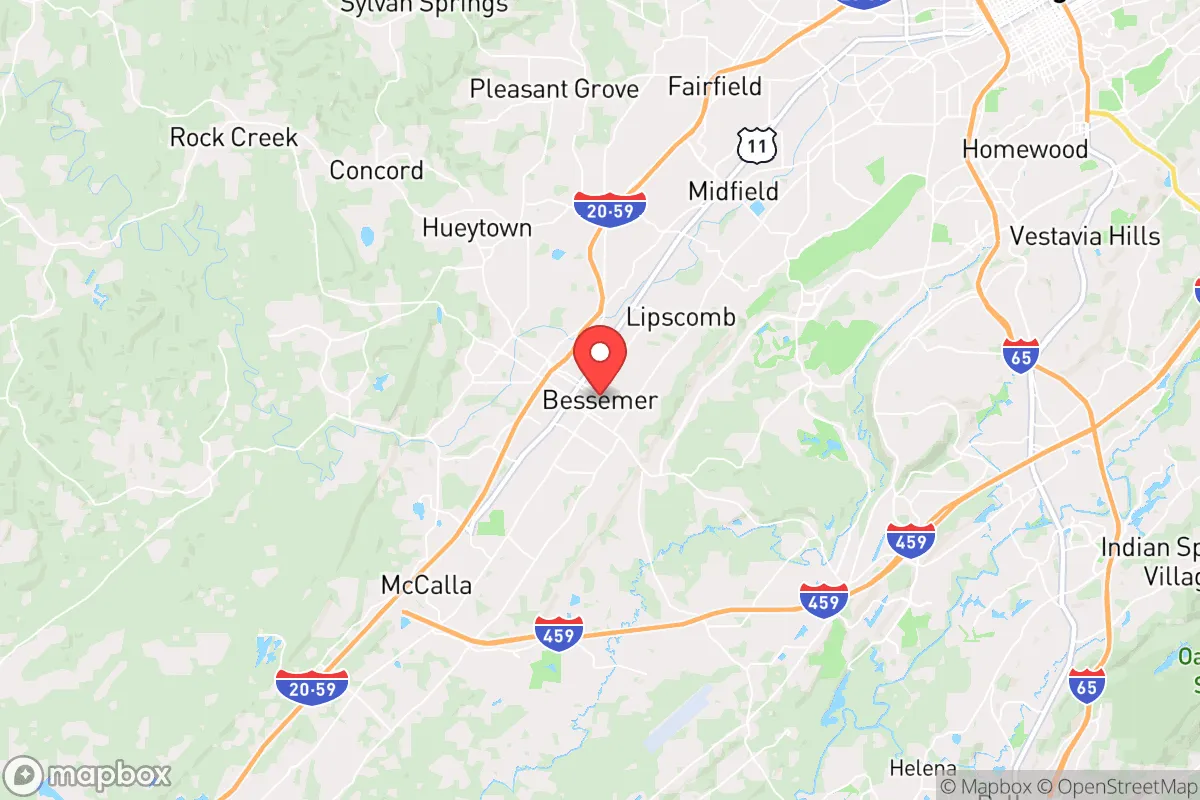
District shown is the primary district for this city’s centroid. Cities may span multiple districts.
Local Political AnalysisPolitical Analysis of Bessemer, AL
Bessemer, Alabama, leans heavily Democratic, with a Cook PVI of D+13, but that number doesn't tell the whole story of a city that's been through some serious political and economic shifts over the last few decades. Back in the day, this was a solidly blue-collar, union-heavy town where Democrats were the default, but the party's national move leftward has left a lot of longtime residents feeling like the local leadership is out of step with their values. You'll hear folks say things like "I've been a Democrat my whole life, but I don't recognize the party anymore" — and that sentiment is real, especially as progressive policies start creeping into local governance.
How it compares
Drive 15 minutes north to Hoover or Vestavia Hills, and you're in a completely different political world — those areas lean reliably Republican, with a focus on lower taxes, school choice, and less government interference. Bessemer, by contrast, has seen a steady push for more centralized control, from zoning ordinances that feel like overreach to public safety policies that prioritize social experiments over common-sense law enforcement. The contrast is stark: while nearby communities are cutting red tape and letting businesses thrive, Bessemer's leadership seems more interested in aligning with national progressive trends, which a lot of locals see as a direct threat to personal freedoms. Even the county-level politics in Jefferson County can feel like a tug-of-war, with Bessemer often being the outlier on issues like property rights and Second Amendment protections.
What this means for residents
For the average person living here, the biggest concern is that government overreach is chipping away at the things that used to make Bessemer a great place to raise a family. You see it in the way local officials handle everything from small business regulations to school board decisions — there's a growing sense that your voice doesn't matter as much as the agenda coming from Montgomery or Washington. Property taxes have crept up, and there's talk of more fees and mandates that hit working families hardest. The real worry, though, is the cultural shift: when your city council starts prioritizing symbolic gestures over fixing potholes and keeping streets safe, it's a sign that the people in charge have lost touch with what actually matters to the folks who live here day in and day out.
One of the most telling distinctions is how Bessemer handles the tension between tradition and change. You'll still find plenty of old-school barbecue joints and churches where folks know each other by name, but there's a palpable unease about where the city is headed. The long-term trajectory feels uncertain — if the current leadership keeps doubling down on progressive policies that don't reflect the values of the people who've been here for generations, you might see more families packing up for places like Helena or Alabaster, where the political climate is more aligned with personal responsibility and limited government. For now, Bessemer remains a place where you can still find good people and good values, but it's getting harder to ignore the feeling that the system is working against you rather than for you.

State Political ClimatePolitical Climate in Alabama
State Political AnalysisPolitical Environment in the State
Alabama is one of the most reliably Republican states in the country, with a deep-red partisan lean that has only deepened over the past two decades. The state hasn’t voted for a Democratic presidential candidate since 1976, and in 2024, Donald Trump carried it by roughly 30 points. The dominant coalition is a mix of rural conservatives, evangelical Christians, and a growing number of suburban families fleeing higher-tax, higher-regulation states. Over the last 10-20 years, the shift has been steady: Democrats held the governorship as recently as 2003, but today Republicans control every statewide office, both chambers of the legislature, and all seven U.S. House seats. The state’s political culture is defined by a strong preference for limited government, gun rights, and traditional social values.
Urban vs. rural divide
The political map of Alabama is starkly divided between a handful of urban centers and the vast rural countryside. The metro areas of Birmingham, Montgomery, and Mobile are the state’s Democratic strongholds, driven by higher concentrations of African American voters and younger professionals. Jefferson County (Birmingham) and Montgomery County consistently deliver 60-70% of their votes to Democrats. In contrast, the rural Black Belt counties—like Greene, Sumter, and Macon—are also heavily Democratic, but they are shrinking in population and influence. The real engine of Republican power is the suburban and exurban growth around these cities, plus the entire northern half of the state. Madison County (Huntsville) has flipped from purple to solid red as the aerospace and defense boom brought in conservative-leaning transplants. Auburn and Opelika in Lee County are reliably Republican, driven by the university and its surrounding conservative community. The Gulf Coast counties like Baldwin and Mobile are also red, though Mobile’s city proper remains a Democratic holdout. The divide isn’t just about geography—it’s about lifestyle: rural and suburban Alabamians want lower taxes and fewer regulations, while urban voters prioritize public transit, social services, and progressive policies.
Policy environment
Alabama’s policy environment is among the most conservative in the nation, and it’s been getting more so. The state has no income tax on retirement income, a flat 5% income tax on wages, and a low property tax rate—typically under 0.4% of assessed value. This is a major draw for retirees and families looking to stretch their dollars. The regulatory posture is business-friendly, with a right-to-work law and minimal zoning restrictions in most counties. On education, the state passed the Alabama Accountability Act in 2013, which expanded school choice through tax credits and scholarships, and in 2024, Governor Kay Ivey signed the CHOOSE Act, creating Education Savings Accounts (ESAs) for families. Healthcare policy is mixed: the state refused Medicaid expansion under Obamacare, keeping government out of that system, but rural hospital closures remain a concern. Election laws are strict: Alabama requires a photo ID to vote, has no same-day registration, and in 2021 passed a law banning curbside voting and limiting absentee ballot drop boxes. The state also passed a near-total abortion ban in 2019 (the Human Life Protection Act), which took effect after Dobbs. For a conservative moving in, the policy environment is largely aligned with limited-government principles, though some worry about the growing influence of federal mandates on local schools and businesses.
Trajectory & freedom
Alabama is moving in a direction that expands personal liberty in several key areas, but there are warning signs. On gun rights, the state passed constitutional carry in 2022, allowing permitless carry of handguns for anyone 21 or older—a clear win for Second Amendment advocates. On parental rights, the Alabama Parental Rights Protection Act (2022) requires schools to notify parents of any medical or counseling services provided to minors, and it prohibits classroom instruction on sexual orientation or gender identity in K-5. This is a strong step toward keeping government out of family decisions. On medical autonomy, the state banned gender-affirming care for minors in 2022 (the Vulnerable Child Compassion and Protection Act), and in 2024, the legislature passed a law protecting in vitro fertilization (IVF) providers from liability after a controversial state supreme court ruling. Property rights are generally strong, with no statewide zoning mandates and low property taxes. However, there are concerns: the state’s reliance on federal funding (over 40% of the budget) creates a vulnerability to federal overreach, and the growing influence of corporate interests in Montgomery—especially in the Birmingham and Huntsville areas—has led to some tax incentives that critics call corporate welfare. Overall, Alabama is becoming more free for individuals and families who value traditional liberties, but the creeping influence of federal money and corporate lobbying is something to watch.
Civil unrest & political movements
Alabama has a history of civil rights activism, but in recent years, political movements have been quieter than in many other states. The most visible flashpoint has been around immigration: in 2011, the state passed HB 56, one of the toughest anti-illegal immigration laws in the country, which led to protests and legal challenges. While parts of the law were struck down, the state remains a hardline on enforcement, with no sanctuary cities. In 2020, the Black Lives Matter protests in Birmingham and Montgomery were relatively small compared to national trends, and they were met with a strong police presence and little property damage. On the right, the Alabama Republican Party has seen internal battles between establishment conservatives and more populist, anti-establishment factions, particularly around the 2022 U.S. Senate primary. Election integrity has been a hot topic: after the 2020 election, the legislature passed the Alabama Election Protection Act, which banned ballot harvesting and limited absentee voting. There have been no major secession or nullification movements, though some rural counties have passed symbolic resolutions asserting local control. For a new resident, the political climate is stable—you won’t see daily protests or street-level conflict, but you will hear passionate debates at local coffee shops and church gatherings about school choice, gun rights, and the role of the federal government.
Projection
Over the next 5-10 years, Alabama is likely to become even more conservative, driven by two major trends: in-migration and demographic shifts. The Huntsville metro area is growing rapidly, attracting engineers and defense contractors from blue states like California and New York, and these newcomers tend to be fiscally conservative and socially moderate—but they are still voting Republican in most races. The Gulf Coast is also seeing an influx of retirees from the Midwest and Northeast, who are drawn to low taxes and warm weather. Meanwhile, the rural Black Belt counties are losing population, which reduces the Democratic base. The state’s Republican supermajority is likely to hold, and we may see further expansions of school choice, tax cuts, and gun rights. However, there is a risk: the growing influence of federal contracts in Huntsville and the aerospace industry could create a dependency on federal spending, which might soften the state’s anti-Washington rhetoric. Also, the state’s aging population (Alabama has one of the oldest median ages in the country) could lead to pressure for more government services, especially in healthcare. For a conservative moving in now, expect to find a state that is solidly red, with a government that generally respects personal freedom, but keep an eye on the balance between local control and federal money.
For a new resident, the bottom line is this: Alabama offers a political environment that aligns closely with conservative values—low taxes, strong gun rights, parental control in education, and a government that stays out of your personal life. You won’t find the culture wars of California or New York playing out in your neighborhood. The trade-off is that the state’s infrastructure, healthcare access, and public schools lag behind national averages, and you’ll need to be self-reliant in many ways. If you value freedom from government overreach and want a place where your vote actually counts, Alabama is a solid bet—just be prepared for a slower pace of life and a community that expects you to get involved at the local level.
* Values derived from national, state, county, city and local statistics and may differ in a specific area. Last updated: 2026-04-19T18:44:17.000Z
Narrative content on this page is AI-generated and may contain mistakes. Verify any details that matter before acting on them.
ReloMaps may earn a commission from affiliate links at no extra cost to you.

