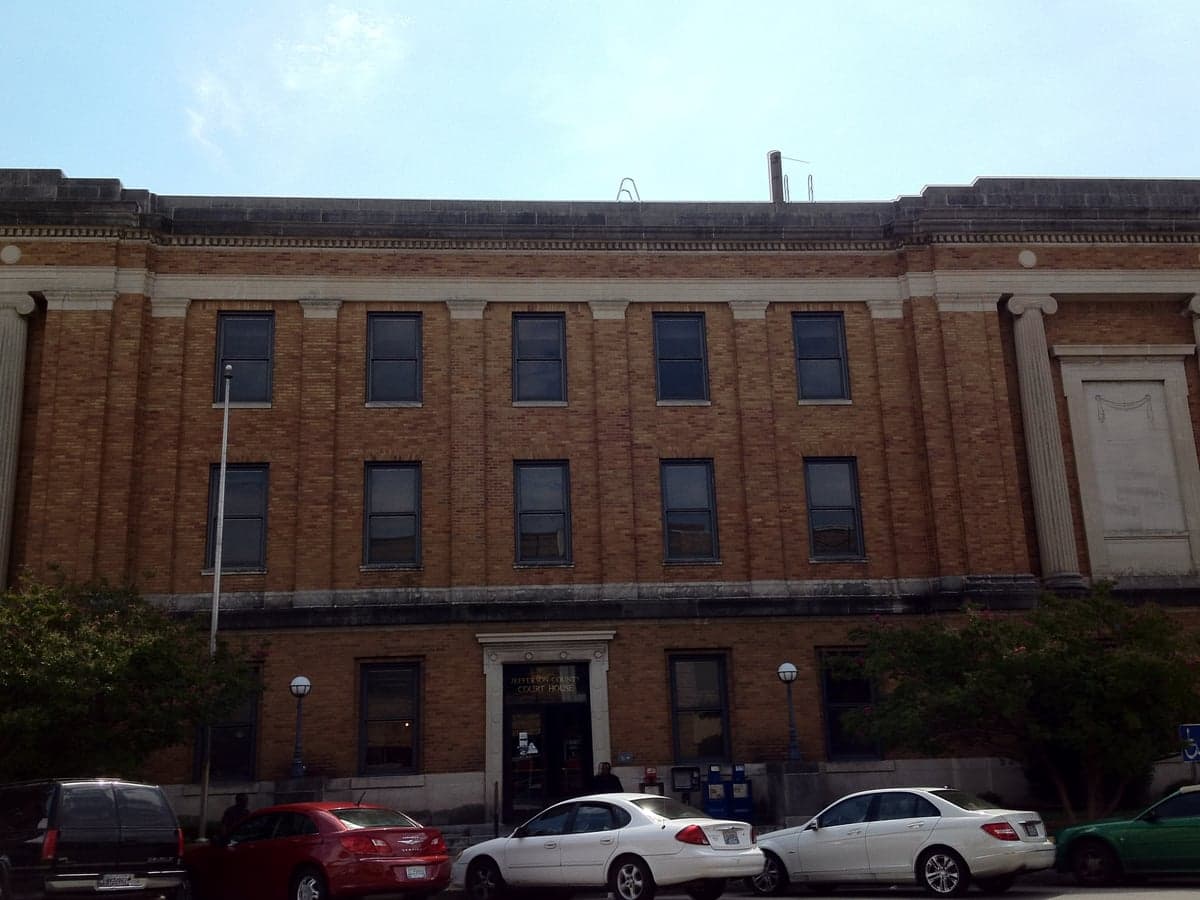
Photo: Wikipedia
Strategic Assessment of Bessemer, AL
Workable tactical position. Some exposure to population density or targets, but generally defensible in a crisis.
What does the Strategic Assessment tell us?
Our Strategic Assessment grades tactical survivability of an area. Major population centers, military targets, fallout zones, natural disasters, and border exposure all drive risk — lower exposure means a more defensible position in a crisis.
This is heavily inspired by Joel Skousen's Strategic Relocation book. Highly recommended you checkout the book ($)What does this tell us?
Our Strategic Assessment grades tactical survivability of an area. Major population centers, military targets, fallout zones, natural disasters, and border exposure all drive risk — lower exposure means a more defensible position in a crisis.
This is heavily inspired by Joel Skousen's Strategic Relocation book. Highly recommended you checkout the book ($)Strategic Pillars

Key Distances
Regional Safe Places
Below is our recommended "safe zones" in Alabama and the surrounding area based on our strategic heuristics. For most people, it's unrealistic to live in a “safe zone” full-time due to work, family or other personal reasons. They tend to be more rural. However, many of these areas are perfect for second homes and retreat properties that double as a vacation home or even a short-term rental.
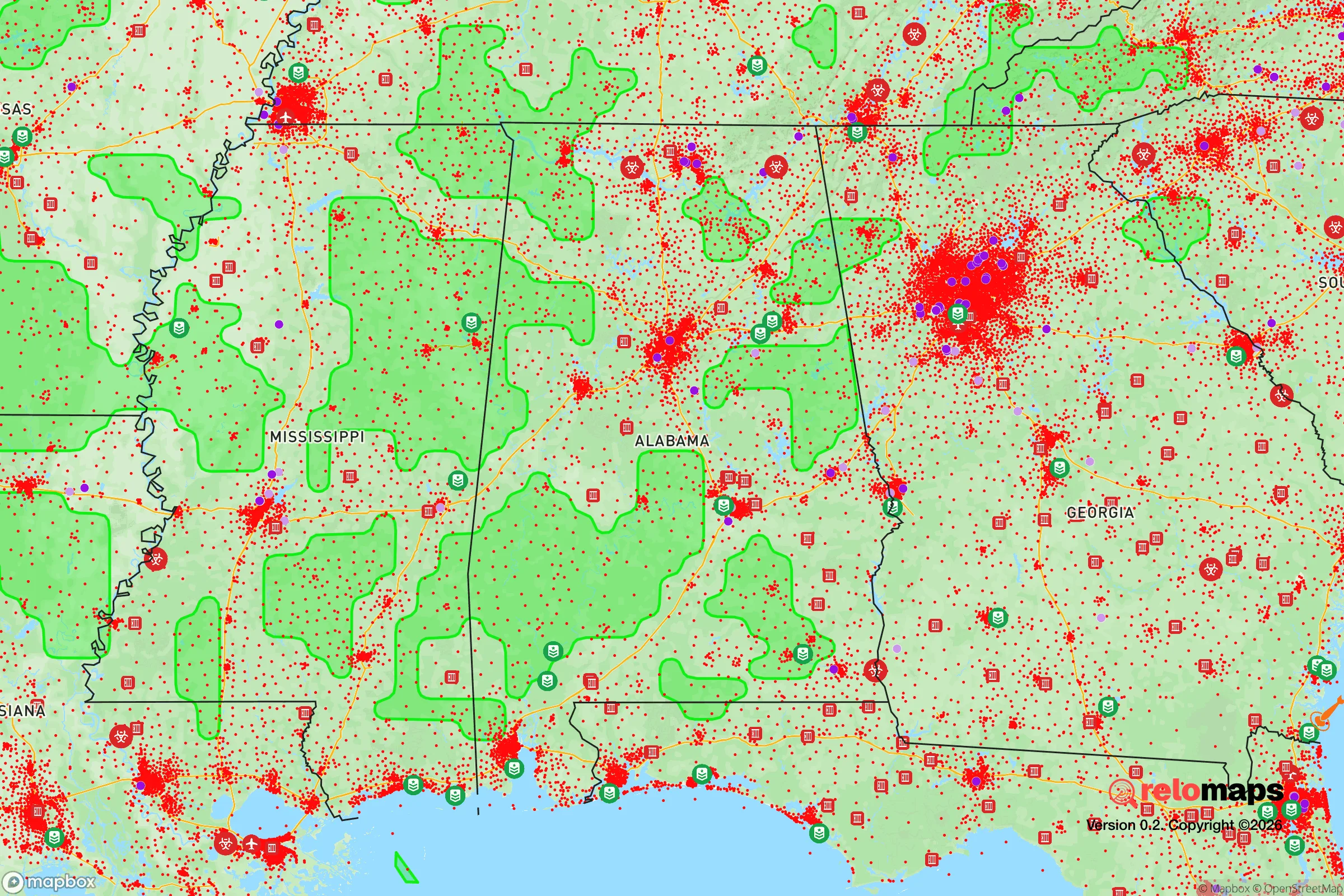
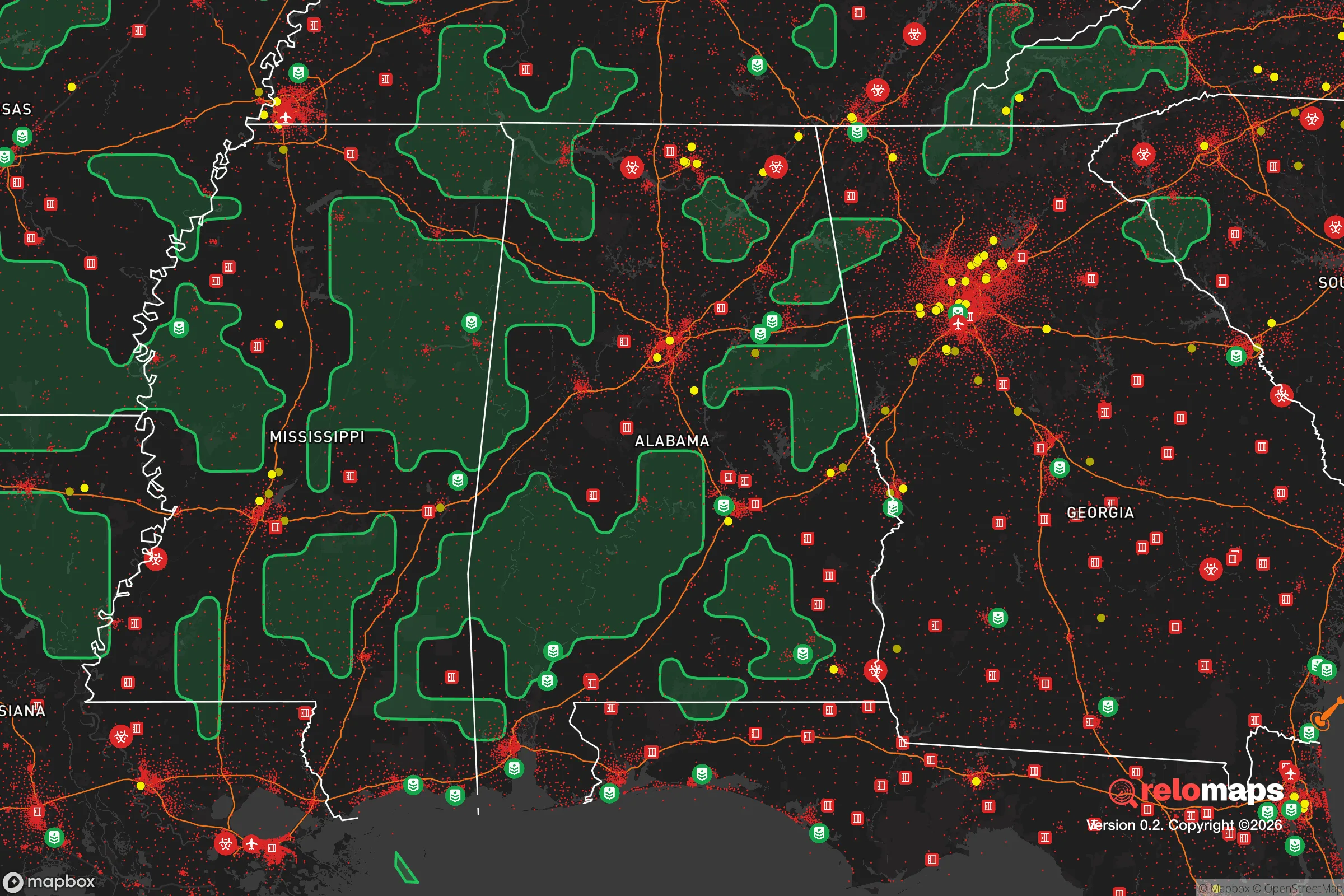


Important Note: For informational purposes only. This does not mean nothing bad ever happens in the green zones. Please use common sense. This is based on public data and modeled with AI. We tried to take a conservative approach but mistakes happen. We update this regularly as new information becomes available.
Solar Generator Recommendations
Backup power matters more here than in safer locations. We've picked three solar generators across budgets and capacity tiers — start with the budget unit if you only need a few essentials, or step up if you want to run a fridge and HVAC for days at a time.

Jackery Portable Power Station Explorer 300
Budget OptionPower on the Go: Weighing only 11 lbs, it's convenient to set up and store with book-sized foldable solar panels

BLUETTI Portable Power Station AC180
Designed for both indoor and outdoor scenarios, AC180 is highly capable as it has a robost capacity and continuous output power.

EF ECOFLOW DELTA Pro Ultra Power Station
Upgraded PickEcoFlow DELTA Pro Ultra is a whole-home energy system designed to grow with your family. Integrated with the Smart Home Panel 2, it scales to meet your evolving energy needs — keeping your home powered, intelligent, and secure through every stage of life.
We earn a commission, at no additional cost to you.
Strategic Assessment Analysis
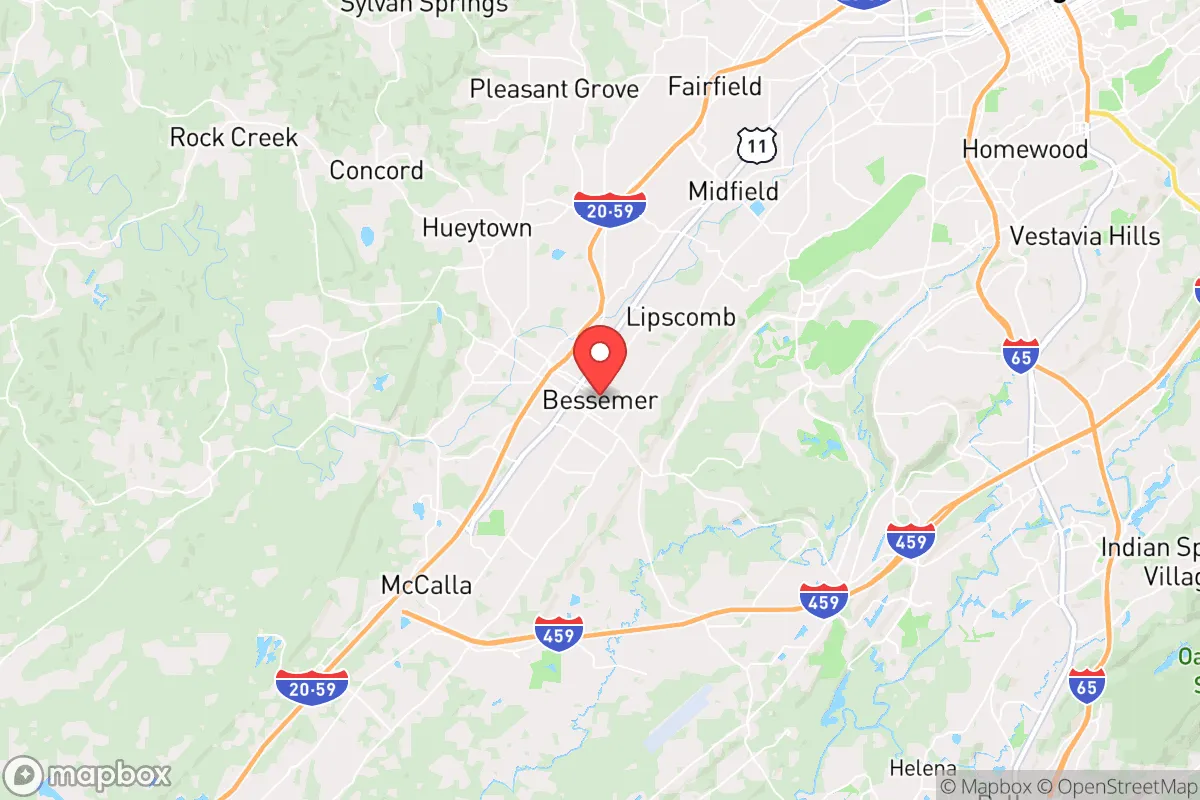
Bessemer, Alabama, sits about 15 miles southwest of Birmingham, a position that offers a mixed strategic picture for those prioritizing resilience and self-sufficiency. While its proximity to a major metro area introduces certain vulnerabilities, the city's location within the broader Appalachian foothills and its access to key transportation corridors provide tangible advantages for a relocator focused on preparedness. For a conservative-leaning individual or family assessing long-term stability, Bessemer represents a potential base of operations—provided you understand both its defensive strengths and its exposure to the risks that come with being near a population center.
Geographic position and natural advantages for long-term stability
Bessemer's geography is defined by its position in the Ridge-and-Valley region of the Appalachians, which offers natural terrain that can aid in both concealment and defense. The city itself is situated on a series of rolling hills, with the Cahaba River flowing to the east and the Black Warrior River system to the west. These waterways are not just scenic—they represent reliable freshwater sources in a grid-down scenario, provided you have the means to treat or filter. The surrounding area is heavily forested with mixed hardwoods and pines, offering cover and potential for foraging, hunting, and timber for construction or fuel. The climate is humid subtropical, with mild winters and long growing seasons—meaning you can realistically maintain a year-round garden or small farm. The average frost-free period runs from late March to early November, giving you a solid 220+ days for food production. Bessemer's elevation, around 500 feet, keeps it above the worst flood risks associated with the Gulf Coast, though low-lying areas near creeks can still flood during heavy rain events. For a relocator, the key takeaway is that the land itself is workable: water is accessible, the soil is decent for agriculture, and the terrain provides natural chokepoints and observation points if you're thinking about defensibility.
Risks, exposures, and proximity to fallout-relevant landmarks
The most significant strategic downside to Bessemer is its proximity to Birmingham, a city of roughly 200,000 people that sits just 15 miles northeast. In a scenario involving civil unrest, mass casualty events, or a major disaster, that distance becomes a liability. Birmingham is a regional transportation and industrial hub, with major rail lines, interstate highways (I-20, I-65, I-59), and a commercial airport. These are all potential targets for disruption or secondary effects. More specifically, Bessemer lies within the fallout zone of several potential high-value targets in the Birmingham metro area, including the U.S. Steel Fairfield Works and the Birmingham-Shuttlesworth International Airport. While no one can predict the exact contours of a major event, the general rule for preppers is that any location within 20-30 miles of a major city carries elevated risk from secondary effects like looting, refugee flows, and infrastructure collapse. Bessemer also sits near the intersection of I-20 and I-459, which means it's on a natural evacuation route from Birmingham—a double-edged sword. In a crisis, you could see a surge of people moving through or toward your area. On the positive side, Bessemer is not directly adjacent to any nuclear power plants (the nearest is the Browns Ferry plant in Athens, about 90 miles north), and it's far enough from the Gulf Coast to avoid the worst of hurricane storm surge. But the risk of tornadoes is real—Jefferson County is in the heart of Dixie Alley, and Bessemer has been hit by significant tornadoes in the past, including the April 2011 outbreak. You need a storm shelter or reinforced safe room if you're serious about resilience here.
Practical resilience for a relocator: food, water, energy, and defensibility
For a relocator looking to establish a self-sufficient household, Bessemer offers a mixed but workable baseline. Water is the first priority: the city's municipal supply comes from the Birmingham Water Works, which draws from the Cahaba River and the Inland Lake system. In a grid-down scenario, that supply could fail, but the presence of the Cahaba River and numerous smaller creeks within a short drive means you can secure a secondary water source. The key is to have a good filtration system—Berkey or similar—and a plan for hauling water if you're not on a well. For those buying property, a private well is a major advantage; the water table in this region is generally accessible at depths of 100-300 feet. Food production is viable: the growing season is long, and the soil, while clay-heavy in spots, can be amended with compost and raised beds. Local farmers' markets and the nearby Alabama Farmers Cooperative in Birmingham provide access to seeds, livestock, and supplies. For energy, Bessemer is served by Alabama Power, which has a relatively reliable grid, but any prepper should plan for solar backup. The region gets about 210 sunny days per year, which is enough for a modest solar array to power lights, a refrigerator, and communications. Defensibility is where Bessemer's terrain helps: the hills and wooded areas around the city offer natural cover, and many residential lots are large enough to create a perimeter. However, the city itself is not a fortress—it has a population of about 26,000, with a mix of older industrial neighborhoods and newer subdivisions. The crime rate in Bessemer is higher than the national average, particularly for property crime, which is a concern for those storing supplies. You'll want to be in a more rural pocket—think the area around McCalla or toward the Tannehill State Park—to get the balance of proximity to resources and actual defensibility.
The overall strategic picture for Bessemer is one of cautious viability. It's not a remote mountain redoubt, and it's not a self-sufficient homestead in the middle of nowhere. What it offers is a middle ground: access to the resources and infrastructure of a mid-sized metro area, combined with the natural advantages of the Appalachian foothills and a climate that supports year-round food production. For a conservative relocator who wants to be within striking distance of medical care, hardware stores, and supply chains, but also wants the ability to retreat to a more defensible property, Bessemer is a reasonable choice. The key is to treat it as a base, not a bunker. You need to be proactive about water security, storm preparedness, and perimeter security. You need to know your neighbors and build a local network—because in a crisis, isolation is a liability. If you're willing to put in the work on the land and the community, Bessemer can serve as a solid anchor point for long-term resilience. But if you're looking for complete isolation from the risks of the modern world, you'll want to go further south or deeper into the Appalachian backcountry. Bessemer is for those who want to be prepared without being completely disconnected.

* Values derived from national, state, county, city and local statistics and may differ in a specific area. Last updated: 2026-04-19T18:44:17.000Z
Narrative content on this page is AI-generated and may contain mistakes. Verify any details that matter before acting on them.
ReloMaps may earn a commission from affiliate links at no extra cost to you.

