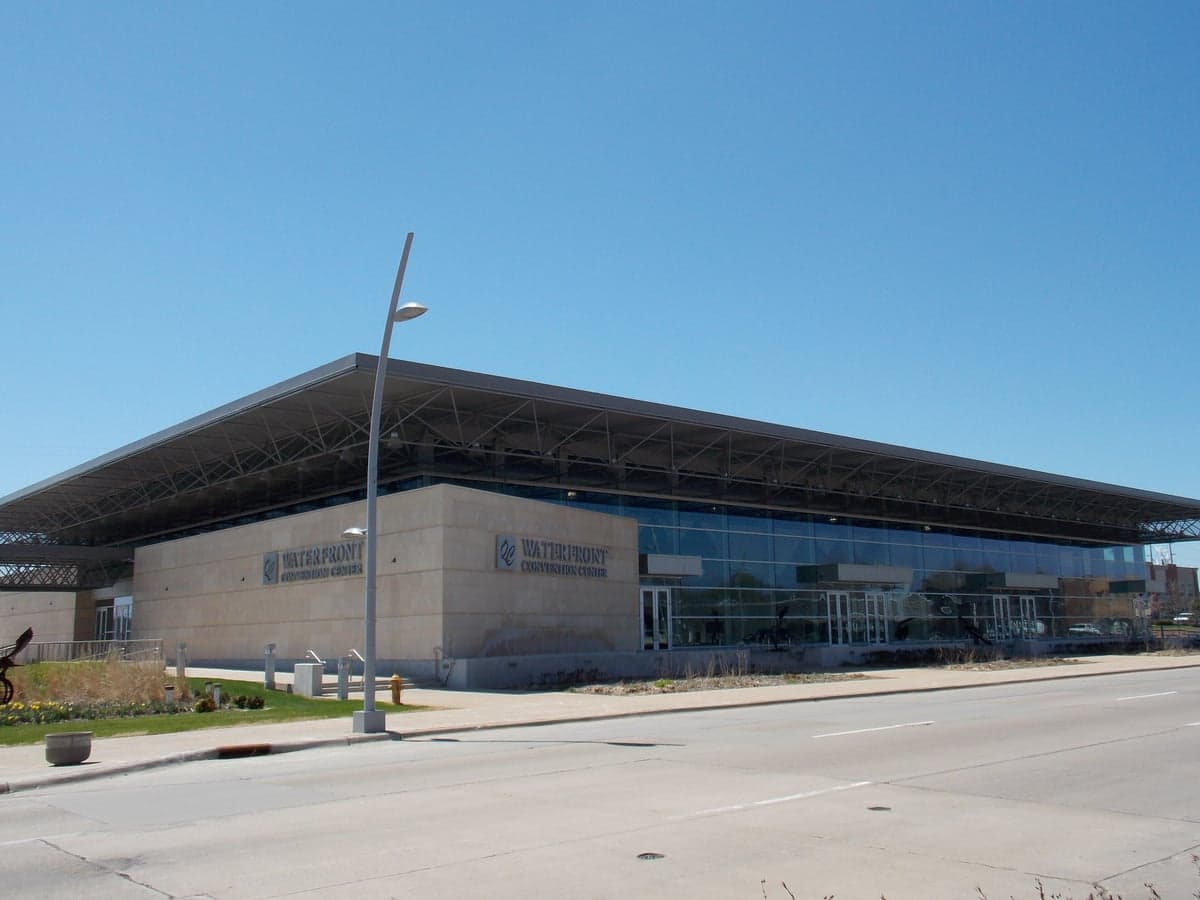
Photo: Wikipedia
Political ClimatePolitical Climate in Bettendorf, IA
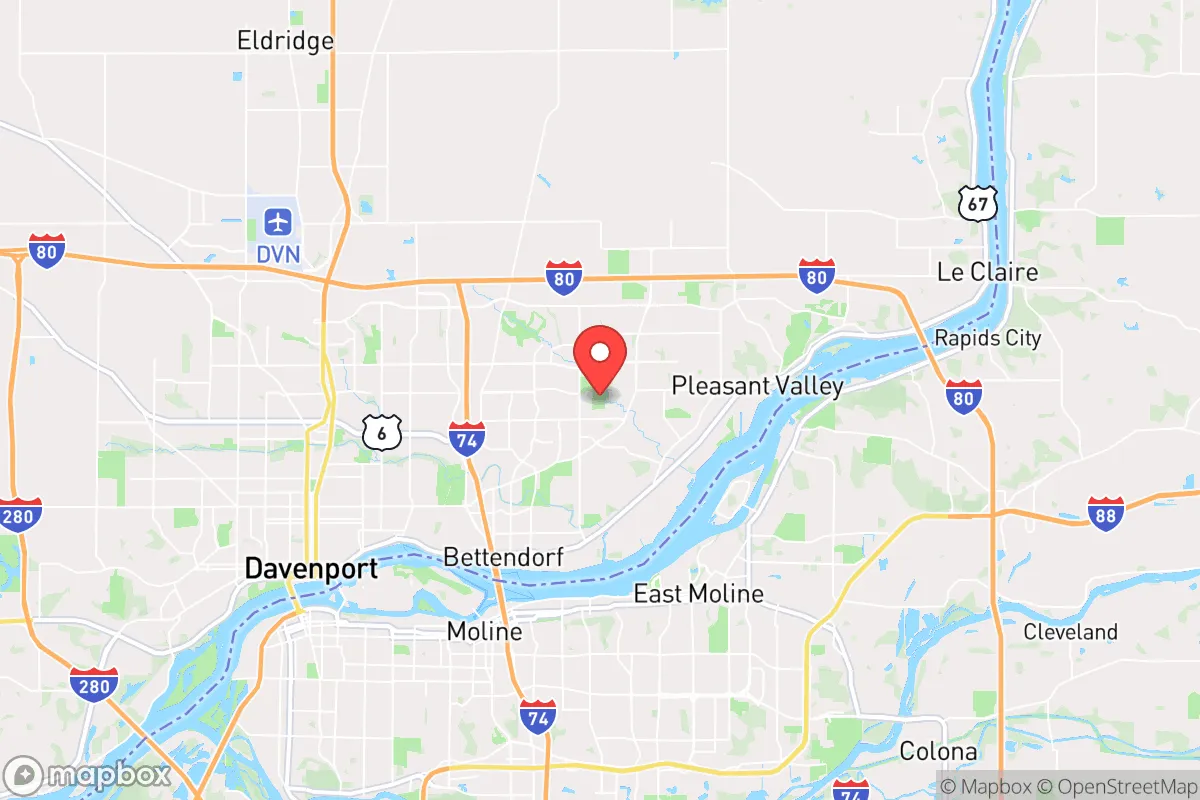
District shown is the primary district for this city’s centroid. Cities may span multiple districts.
Local Political AnalysisPolitical Analysis of Bettendorf, IA
Bettendorf leans reliably conservative, with a Cook PVI of R+4 that reflects its longstanding Republican tilt, but if you’ve lived here as long as I have, you’ve watched that lean get tested by waves of new development and shifting demographics. The city itself has been a solid GOP stronghold in presidential elections, routinely voting red by margins that outpace the national average, though the edge has narrowed slightly in recent cycles as more folks move in from blue-leaning parts of the Midwest. Down-ballot, local offices still trend conservative, but you’ll find a growing number of moderate Republicans and even a few Democrats winning seats on the city council—a sign that the old guard isn’t as untouchable as it used to be. The trajectory feels like a slow drift toward the center, not a full flip, but enough to make you wonder if Bettendorf will hold its ground or start mirroring the progressive shifts seen in nearby Davenport across the river.
How it compares
Drive five minutes west into Davenport, and you’re in a different political world—Scott County as a whole leans blue, with Davenport’s urban core voting heavily Democratic, especially in precincts near St. Ambrose University and the downtown corridor. Bettendorf, by contrast, sits squarely in the red column, but it’s not as deep red as the rural towns to the north and east, like DeWitt or Maquoketa, where Trump won by 20-plus points in 2020. The contrast is starkest in school board and county supervisor races: Bettendorf’s contests often hinge on tax rates and development regulations, while Davenport’s get tangled in social justice issues and union politics. If you’re looking for a place where conservative values still carry weight without the isolation of a tiny farm town, Bettendorf is that sweet spot—but you can feel the pressure from the left bleeding over the river, especially on issues like zoning and public spending.
What this means for residents
For a conservative resident, the practical takeaway is that Bettendorf still respects personal freedoms and limited government more than most of the Quad Cities, but you’ve got to stay vigilant. Property taxes here are higher than in surrounding rural counties, and every few years there’s a push from the city council to expand local ordinances—like rental registration rules or noise restrictions—that feel like creeping overreach into how you run your own home or business. The school district, one of the best in Iowa, has so far resisted the kind of curriculum battles that have erupted in larger districts, but the pressure is mounting, especially around library materials and parental rights. On the plus side, the city’s conservative fiscal habits mean debt is low and services are efficient, so you’re not paying for a bloated bureaucracy. The long-term concern is that as Bettendorf grows—and it is growing, fast—the new arrivals may not share the same skepticism of government expansion, and that could shift the balance in local elections within a decade.
Culturally, Bettendorf still feels like a place where you can mind your own business without the government breathing down your neck, but there are subtle signs of change. The city has embraced some progressive-friendly policies, like a formal diversity, equity, and inclusion office in the school district—a move that raised eyebrows among longtime residents who see it as unnecessary bureaucracy. Gun rights are generally respected here, with most local officials supportive of the state’s permitless carry law, but you’ll hear rumblings about potential local restrictions if the council shifts left. The biggest policy distinction from surrounding towns is Bettendorf’s aggressive annexation and development strategy, which keeps taxes stable but also invites more state oversight. If you value a community where conservative principles still guide the conversation—and where you can push back against overreach without being shouted down—Bettendorf is holding the line for now, but don’t take it for granted.

State Political ClimatePolitical Climate in Iowa
State Political AnalysisPolitical Environment in the State
Iowa has long been a reliably Republican state in presidential elections, voting for the GOP candidate in every cycle since 2000 except for the narrow 2020 loss of Donald Trump by less than a point. But the state’s political climate is more nuanced than a simple red-state label, with a deep urban-rural divide and a recent shift toward more conservative policy that has accelerated in the last five years. The dominant coalition is a mix of rural conservatives, evangelical Christians, and suburban families who have grown increasingly wary of progressive overreach, while the state’s two major metro areas—Des Moines and Iowa City—remain Democratic strongholds that often pull the state back toward the center.
Urban vs. rural divide
The political map of Iowa is a textbook case of the urban-rural split. The Des Moines metro area, including Polk County and its suburbs like Ankeny and West Des Moines, leans Democratic, with Polk County voting +18 for Biden in 2020. Iowa City, home to the University of Iowa, is the state’s most liberal enclave, with Johnson County going +40 for Biden. Meanwhile, the rest of the state is deeply red. Rural counties like Sioux County in the northwest (home to Orange City) and Grundy County in the north-central region routinely vote 70-80% Republican. The suburbs around Des Moines, such as Waukee and Johnston, are the real battlegrounds—they’ve trended rightward in recent cycles as families flee the city’s progressive policies. The 2024 election saw Trump flip several suburban precincts in Dallas County (west of Des Moines) that had gone for Biden in 2020, signaling a broader shift among middle-class homeowners.
Policy environment
Iowa’s policy environment has become a model for conservative governance over the past decade. The state has a flat income tax rate of 3.8% (down from 8.98% in 2018), with a plan to drop to 3.5% by 2027. Property taxes are relatively low, with a median effective rate of 1.5%, and there is no estate tax. The regulatory posture is business-friendly, with right-to-work laws intact and no state-level minimum wage above the federal $7.25. Education policy has been a flashpoint: in 2023, Governor Kim Reynolds signed a school choice law creating Education Savings Accounts (ESAs) worth about $7,600 per student, allowing families to use public funds for private or homeschool expenses. This was a major win for parental rights. Healthcare is mixed—Iowa expanded Medicaid under the Affordable Care Act, but the state has also imposed work requirements for able-bodied adults on the program. Election laws tightened in 2021 with a law reducing early voting days from 29 to 20, requiring absentee ballot applications to be returned by mail (not drop boxes), and banning private funding for election administration. The state also passed a voter ID law in 2017. These measures have been praised by conservatives as election integrity safeguards and criticized by progressives as suppression.
Trajectory & freedom
Iowa is becoming more free in several key areas, particularly around gun rights, parental rights, and taxation. In 2021, the state passed constitutional carry (permitless carry of handguns), making it the 21st state to do so. In 2023, the legislature passed a law banning transgender procedures for minors (HF 626), which was a major victory for parental rights advocates who argue that medical decisions for children should not be driven by ideology. The state also passed a law in 2023 prohibiting instruction on sexual orientation and gender identity in K-6 schools (SF 496), which has been challenged in court but remains in effect. On the economic freedom front, the flat tax reduction and elimination of the inheritance tax have made Iowa one of the most tax-friendly states in the Midwest. However, there are areas of concern: the state’s medical marijuana program is limited (only low-THC products), and recreational cannabis remains illegal. Some conservatives view the state’s continued participation in the federal Medicaid expansion as a step toward government overreach, though it has not been repealed. The trajectory is clearly toward more personal liberty in education, firearms, and taxation, but the state has not fully embraced libertarian ideals on drug policy or healthcare.
Civil unrest & political movements
Iowa has seen relatively little civil unrest compared to coastal states, but there have been notable flashpoints. The 2020 Black Lives Matter protests in Des Moines and Iowa City were largely peaceful, though there were isolated incidents of property damage. The state’s immigration politics are relatively quiet—Iowa has no sanctuary cities, and a 2023 law (SF 2340) requires local law enforcement to cooperate with federal immigration authorities. The most visible political movements in recent years have been on the right: the “Parents’ Rights” movement, which mobilized around school board elections in suburbs like Ankeny and Waukee, and the “Stand for Health Freedom” movement, which opposed COVID-19 mandates. In 2021, a group of parents in the Linn-Mar school district (near Cedar Rapids) successfully sued to overturn a mask mandate, a case that became a national rallying cry for parental control. Election integrity controversies have been minimal—Iowa’s 2020 election was widely seen as secure, though some rural counties saw calls for hand-count audits. The most significant political movement is the ongoing push by the Iowa Firearms Coalition to expand gun rights, which has been largely successful. There is no serious secession or nullification rhetoric in Iowa.
Projection
Over the next 5-10 years, Iowa is likely to become more conservative as in-migration patterns favor red-leaning areas. The state’s population is growing slowly (about 0.5% annually), but the growth is concentrated in the Des Moines suburbs and smaller cities like Cedar Rapids and Sioux City, while rural counties continue to lose population. The influx of remote workers from blue states (especially California and Illinois) is a wild card—many of these newcomers are fleeing high taxes and crime, but they may bring progressive voting habits. However, early data from the 2024 election suggests that many of these transplants are voting Republican, as they are motivated by economic freedom and school choice. The state’s Republican trifecta (governor, House, Senate) is likely to hold, and further conservative legislation is expected: a possible flat tax reduction to 3%, a ban on abortion at conception (the current law bans at 6 weeks, with exceptions), and expanded school choice. The biggest risk is a demographic shift in the Des Moines metro, which could turn Polk County more Democratic and make statewide races closer. But for now, the trajectory is toward a more conservative, freedom-oriented Iowa.
Bottom line for a new resident: If you’re moving to Iowa, you’ll find a state that respects your right to keep and bear arms, choose your child’s school, and keep more of your paycheck. The urban areas (Des Moines, Iowa City) are blue islands, but the suburbs and rural areas are solidly red and getting redder. You’ll notice a strong culture of self-reliance and a government that is generally hands-off on personal matters, though you’ll have to accept limited cannabis access and a health insurance market that is still tied to federal programs. For a conservative family or individual, Iowa is one of the safest bets in the Midwest for maintaining your way of life over the next decade.
* Values derived from national, state, county, city and local statistics and may differ in a specific area. Last updated: 2026-04-30T03:07:05.000Z
Narrative content on this page is AI-generated and may contain mistakes. Verify any details that matter before acting on them.
ReloMaps may earn a commission from affiliate links at no extra cost to you.

