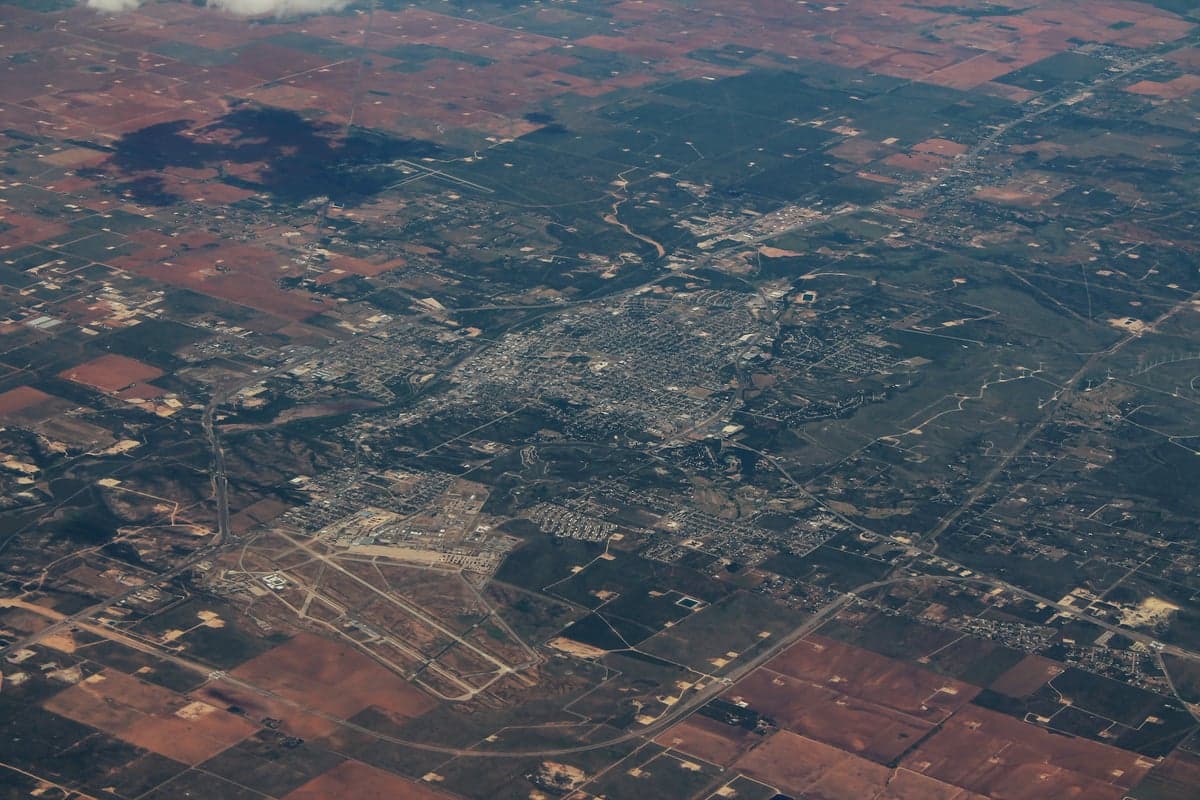
Photo: Wikipedia
Quality of Life in Big Spring, TX
A high quality of life with strong walkability, manageable living costs, healthy neighborhood signals, and solid amenity access.
What does Quality of Life tell us?
Quality of Life blends cost of living, nearby amenities, socioeconomic signals, and neighborhood character. City-level scores represent the whole municipality; individual neighborhoods can differ.
What does this tell us?
Quality of Life blends cost of living, nearby amenities, socioeconomic signals, and neighborhood character. City-level scores represent the whole municipality; individual neighborhoods can differ.
Cost of Living
28% below national average
The Real Cost of Living in Big Spring, TX for 2026
| Tier | Individual | Family (4) |
|---|---|---|
| Survival | $16k | $30k |
| Comfortable | $28k | $40k |
| Luxury | $112k+ | $173k+ |
| Elite (Top 5%) | $132k+ | $204k+ |
174%
The Area Signal
A metric tracking the socioeconomic signals of the area.
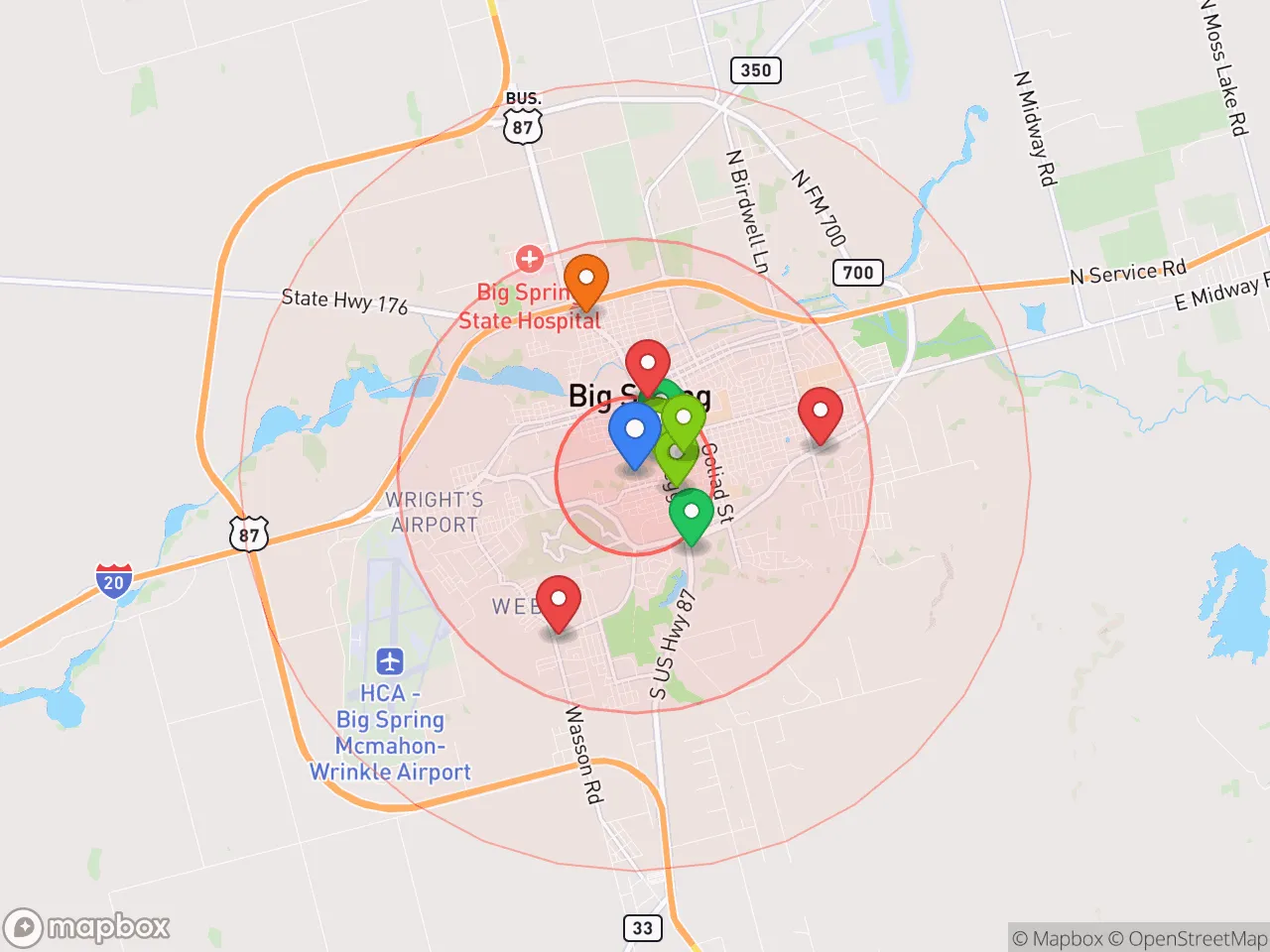
Hobbies
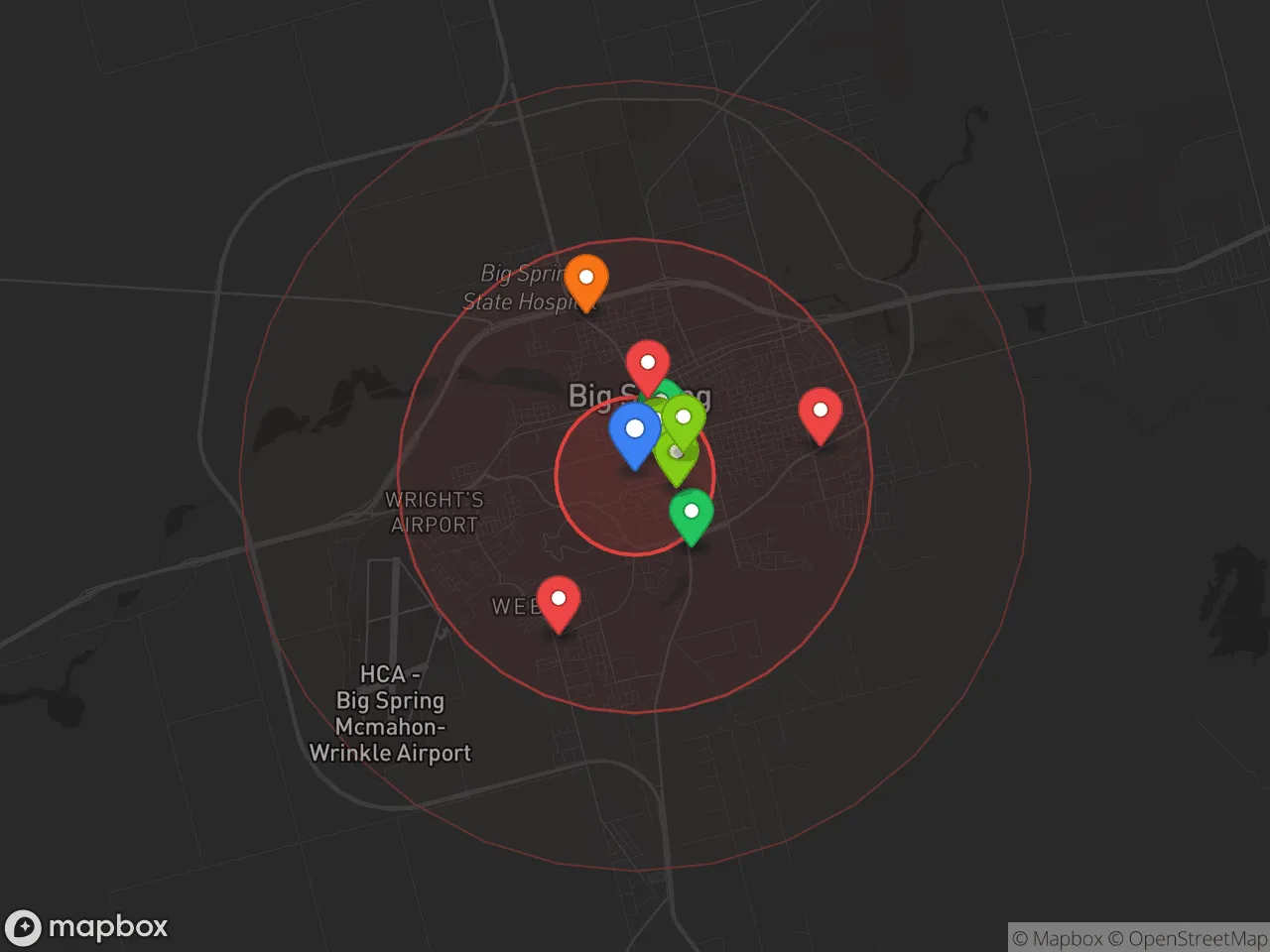
Explore the areaGroceries
2 within 10 miles
Gas
20 within 10 miles
Hospital
4 within 20 miles
Airport
SAN — San Angelo Regional
Post Office
USPS — Big Spring, TX
Critical Amenities
Quality-of-Life Analysis
Big Spring, Texas, offers a cost of living index of 72—28% below the national average—making it one of the most affordable communities in the Permian Basin region. The population skews toward working-class families, oil and gas industry employees, and retirees drawn by low housing costs and a slower pace of life. With a median home value of $138,800 and median rent of $1,009, the area provides significant financial breathing room compared to pricier hubs like Midland or Odessa.
How Big Spring's cost of living and housing market compare to nearby Texas cities
Big Spring's cost of living index of 72 is dramatically lower than the U.S. average of 100, and it undercuts neighboring Permian Basin cities by a wide margin. For context, Midland's median home value exceeds $300,000, while Odessa's hovers around $220,000—making Big Spring's median home value of $138,800 roughly half that of its larger neighbors. Renters also benefit: the median rent of $1,009 is about $400 less per month than in Midland. The average commute of 18.8 minutes is notably short, reflecting the town's compact layout and lack of severe traffic congestion. This combination of low housing costs and minimal commute times allows residents to stretch their incomes further than in most Texas metros.
Amenities, schools, and daily-life rhythm for Big Spring residents
Big Spring Independent School District serves the area with several elementary schools, a middle school, and Big Spring High School. The district offers career and technical education programs tied to local energy and agriculture sectors. Daily life centers on a handful of local parks, the Heritage Museum of Big Spring, and seasonal events like the Howard County Fair. The town's retail and dining options are modest but sufficient for routine needs; residents typically drive to Midland (about 40 minutes west) for major shopping or specialized healthcare. The overall rhythm is quiet and community-oriented, with a strong sense of neighborliness and lower crime rates than the national average for property crime.
Families seeking affordable homeownership, workers in the oil and gas industry, and retirees on fixed incomes are the groups most likely to thrive in Big Spring. The low cost of living and short commute reduce financial stress, while the slower pace appeals to those who prefer small-town life over urban bustle. However, professionals requiring diverse job markets or extensive cultural amenities may find the limited local options constraining. For anyone prioritizing budget-friendly housing and a straightforward daily routine, Big Spring delivers a stable, low-pressure environment.

Crime in Big Spring, TX
Higher crime rates than 70% of comparable U.S. locations.
Violent CrimeViolent Crime Analysis
Property CrimeProperty Crime Analysis
Crime Analysis
Big Spring, Texas, presents a crime profile that is notably safer than both state and national averages, with a violent crime rate of 344.4 per 100,000 residents and a property crime rate of 1,780.9 per 100,000. As a small West Texas city of roughly 27,000 people, Big Spring benefits from a tight-knit community and a law enforcement environment that contrasts sharply with the permissive policies seen in many large, progressive metro areas. The city’s overall safety picture is one of manageable risk, where serious violent incidents are uncommon and property crime, while present, does not dominate daily life.
Crime in context
When measured against the 2022 national violent crime rate of 380.7 per 100,000 and the Texas state rate of 447.7 per 100,000, Big Spring’s violent crime figure of 344.4 is 9% below the U.S. average and 23% below the Texas average. Property crime similarly undercuts both benchmarks: the national rate of 1,954.4 and the Texas rate of 2,366.0 are each higher than Big Spring’s 1,780.9. These figures reflect a community where crime is not out of control. Importantly, Big Spring operates under a traditional, conservative judicial philosophy. Unlike large metropolitan counties where progressive district attorneys have adopted policies of non-prosecution for certain offenses, reducing accountability and emboldening repeat offenders, Big Spring’s justice system maintains consistent enforcement. This approach directly supports public safety by keeping habitual criminals off the streets and ensuring victims receive due process.
What residents experience
In everyday terms, Big Spring residents are far more likely to encounter property crime—such as theft from vehicles or burglary—than violent offenses. The city’s violent crime is largely concentrated in isolated incidents rather than random street violence; aggravated assault makes up the bulk of that category. Property crime, while below state norms, still warrants standard precautions like locking cars and securing homes. The local police department maintains a visible presence, and community-oriented policing initiatives help build trust. Residents generally feel safe walking in downtown areas and using city parks during daylight hours. The absence of the gang-driven violence and open-air drug markets that plague many larger cities is a direct result of the area’s conservative legal environment, where prosecutors do not hesitate to seek meaningful sentences.
Neighborhood-level variation exists but is less extreme than in major urban centers. The highest crime rates are typically found in the older, more transient sections near the Interstate 20 corridor and around the historic downtown core. In contrast, newer subdivisions on the city’s north and west sides, as well as the rural outskirts, report very low crime. Overall, Big Spring offers a safety profile that is reassuring for families and retirees, especially when compared to the deteriorating conditions in many large metro areas where progressive policies have eroded public order.
* Values derived from national, state, county, city and local statistics and may differ in a specific area. Last updated: 2026-05-18T14:19:47.000Z
Narrative content on this page is AI-generated and may contain mistakes. Verify any details that matter before acting on them.
ReloMaps may earn a commission from affiliate links at no extra cost to you.

