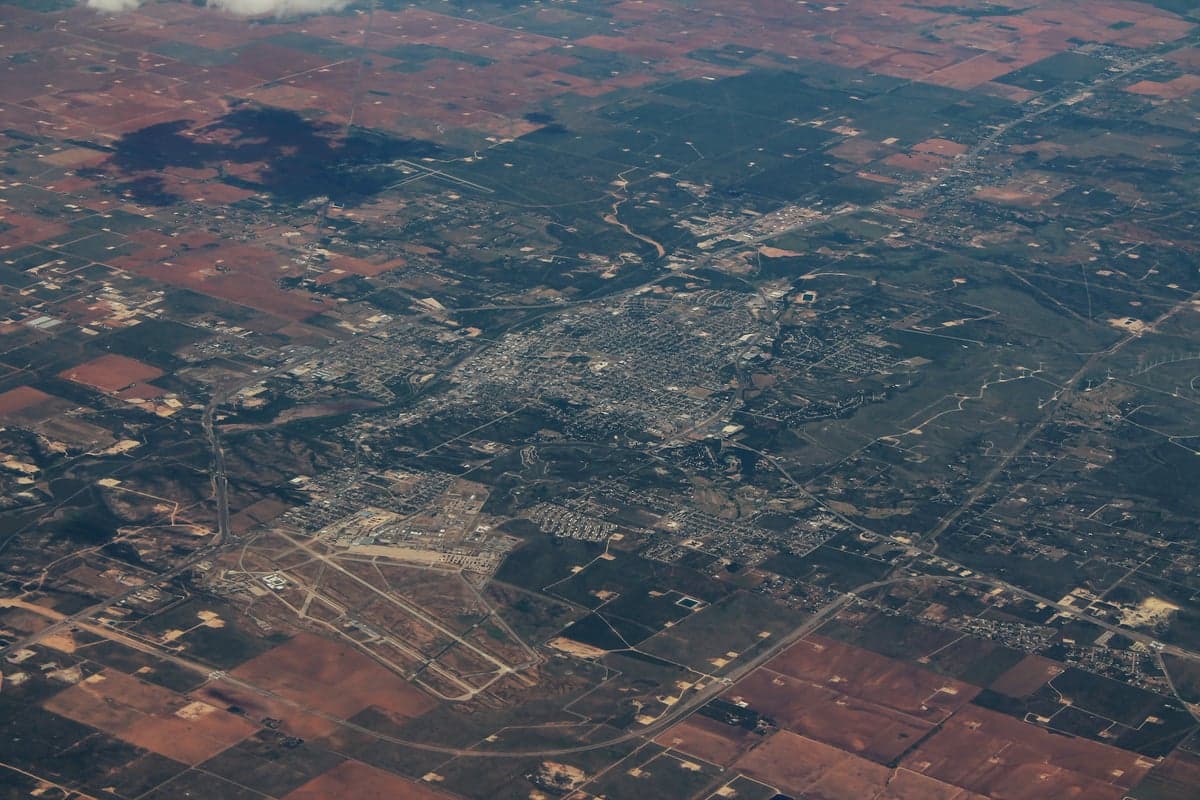
Photo: Wikipedia
Strategic Assessment of Big Spring, TX
Workable tactical position. Some exposure to population density or targets, but generally defensible in a crisis.
What does the Strategic Assessment tell us?
Our Strategic Assessment grades tactical survivability of an area. Major population centers, military targets, fallout zones, natural disasters, and border exposure all drive risk — lower exposure means a more defensible position in a crisis.
This is heavily inspired by Joel Skousen's Strategic Relocation book. Highly recommended you checkout the book ($)What does this tell us?
Our Strategic Assessment grades tactical survivability of an area. Major population centers, military targets, fallout zones, natural disasters, and border exposure all drive risk — lower exposure means a more defensible position in a crisis.
This is heavily inspired by Joel Skousen's Strategic Relocation book. Highly recommended you checkout the book ($)Strategic Pillars

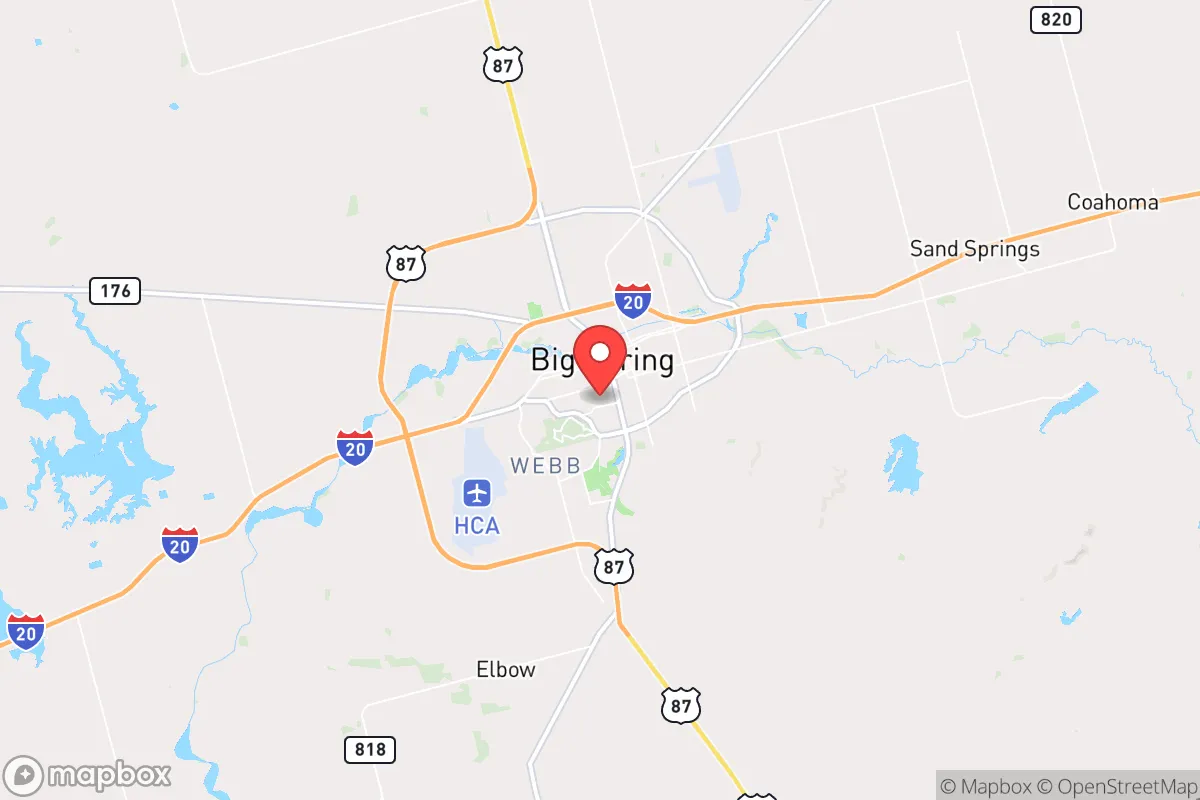
Key Distances
Regional Safe Places
Below is our recommended "safe zones" in Texas and the surrounding area based on our strategic heuristics. For most people, it's unrealistic to live in a “safe zone” full-time due to work, family or other personal reasons. They tend to be more rural. However, many of these areas are perfect for second homes and retreat properties that double as a vacation home or even a short-term rental.

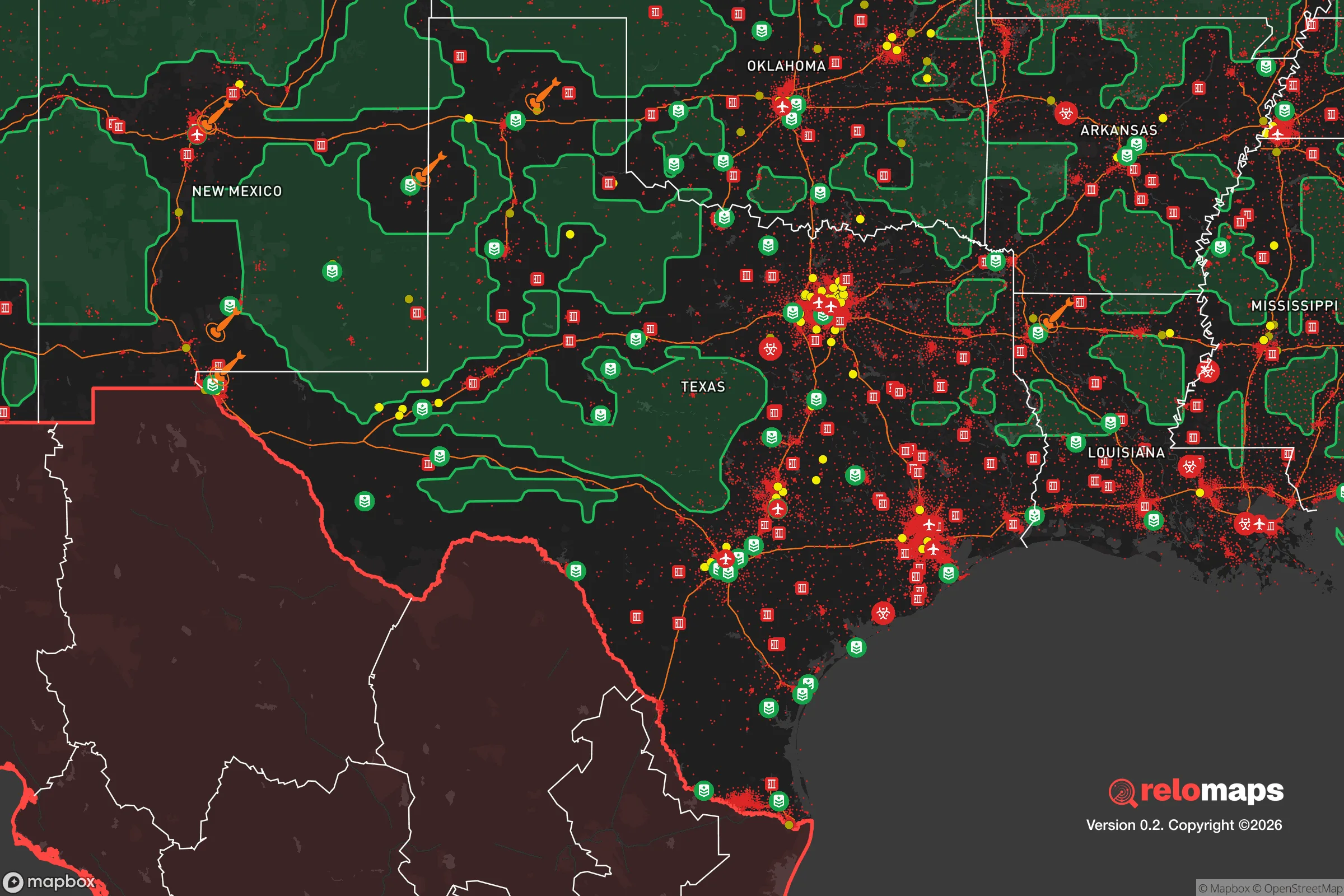


Important Note: For informational purposes only. This does not mean nothing bad ever happens in the green zones. Please use common sense. This is based on public data and modeled with AI. We tried to take a conservative approach but mistakes happen. We update this regularly as new information becomes available.
Solar Generator Recommendations
Backup power matters more here than in safer locations. We've picked three solar generators across budgets and capacity tiers — start with the budget unit if you only need a few essentials, or step up if you want to run a fridge and HVAC for days at a time.

Jackery Portable Power Station Explorer 300
Budget OptionPower on the Go: Weighing only 11 lbs, it's convenient to set up and store with book-sized foldable solar panels

BLUETTI Portable Power Station AC180
Designed for both indoor and outdoor scenarios, AC180 is highly capable as it has a robost capacity and continuous output power.

EF ECOFLOW DELTA Pro Ultra Power Station
Upgraded PickEcoFlow DELTA Pro Ultra is a whole-home energy system designed to grow with your family. Integrated with the Smart Home Panel 2, it scales to meet your evolving energy needs — keeping your home powered, intelligent, and secure through every stage of life.
We earn a commission, at no additional cost to you.
Strategic Assessment Analysis
Big Spring, Texas, sits in a part of the country that most people have already written off as flyover country. That's exactly what makes it worth a hard look if you're thinking about where to plant a flag when things go sideways. This is a town that has seen booms and busts—oil, ranching, railroads—and it's still standing. Its location in the Permian Basin gives it a natural energy advantage, and its distance from any major population center means you're not going to be caught in the crush when the evacuation orders come. For someone with a prepper mindset, Big Spring offers a rare combination of isolation and resource access that's hard to find in the lower 48.
Geographic isolation and natural resource advantages in West Texas
Big Spring sits roughly 40 miles east of Midland-Odessa, 150 miles south of Lubbock, and a solid 200 miles west of the Dallas-Fort Worth metroplex. That buffer is the first thing to note: you are not in the blast radius of any major city, and you are far enough off the I-20 corridor that a highway closure or refugee flow won't hit you immediately. The terrain is flat, semi-arid High Plains country—no hurricane storm surge, no earthquake zones, no wildfire corridors like California or the Pacific Northwest. The climate is harsh in both directions—summers regularly hit triple digits, winters with occasional ice storms—but that's manageable with proper planning. The real advantage is what's under your feet. Big Spring sits in the heart of the Permian Basin, one of the most productive oil and gas fields on the planet. That means energy independence is a realistic goal here: natural gas for heating and cooking, propane for backup, and a grid that isn't stretched to the breaking point like in coastal states. The area also has significant wind and solar potential, with commercial wind farms already operating in surrounding counties. Water is the limiting factor—the city draws from the Colorado River Municipal Water District's reservoirs, and the Ogallala Aquifer is to the north—but it's not a desert-adjacent,

* Values derived from national, state, county, city and local statistics and may differ in a specific area. Last updated: 2026-05-18T14:19:47.000Z
Narrative content on this page is AI-generated and may contain mistakes. Verify any details that matter before acting on them.
ReloMaps may earn a commission from affiliate links at no extra cost to you.

