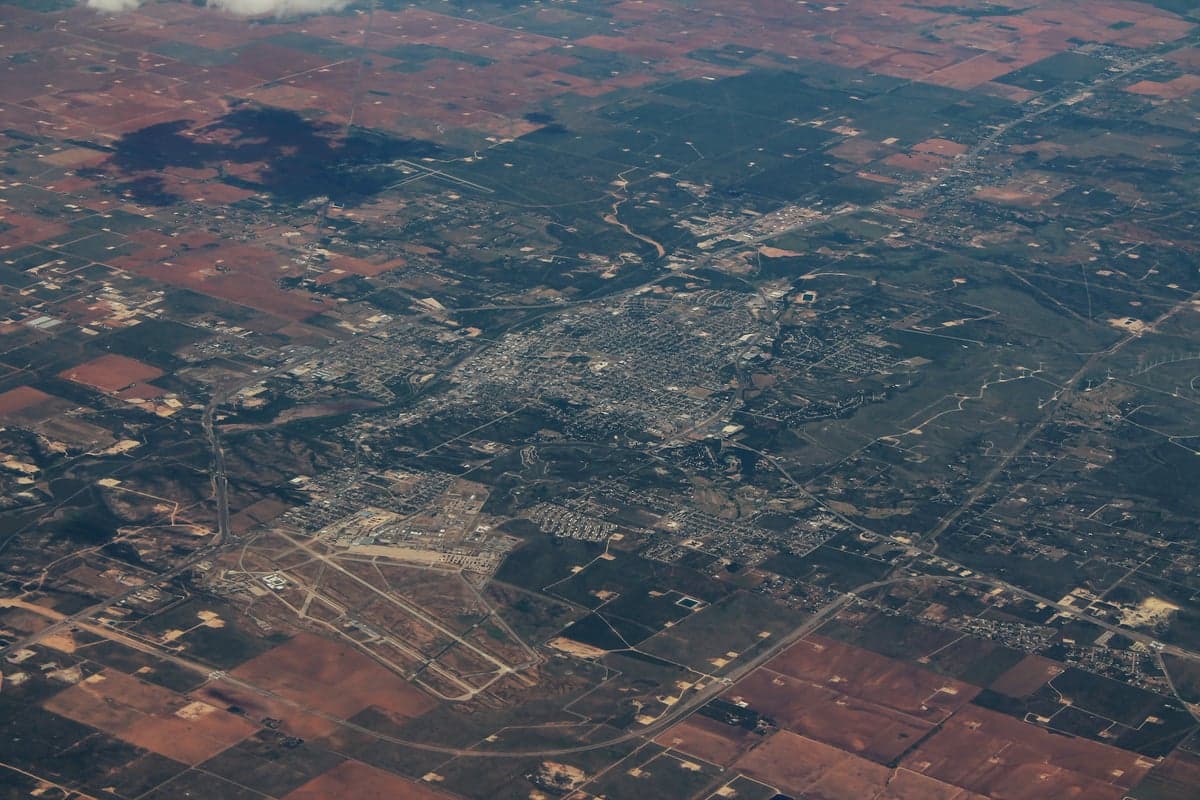
Photo: Wikipedia
Political ClimatePolitical Climate in Big Spring, TX
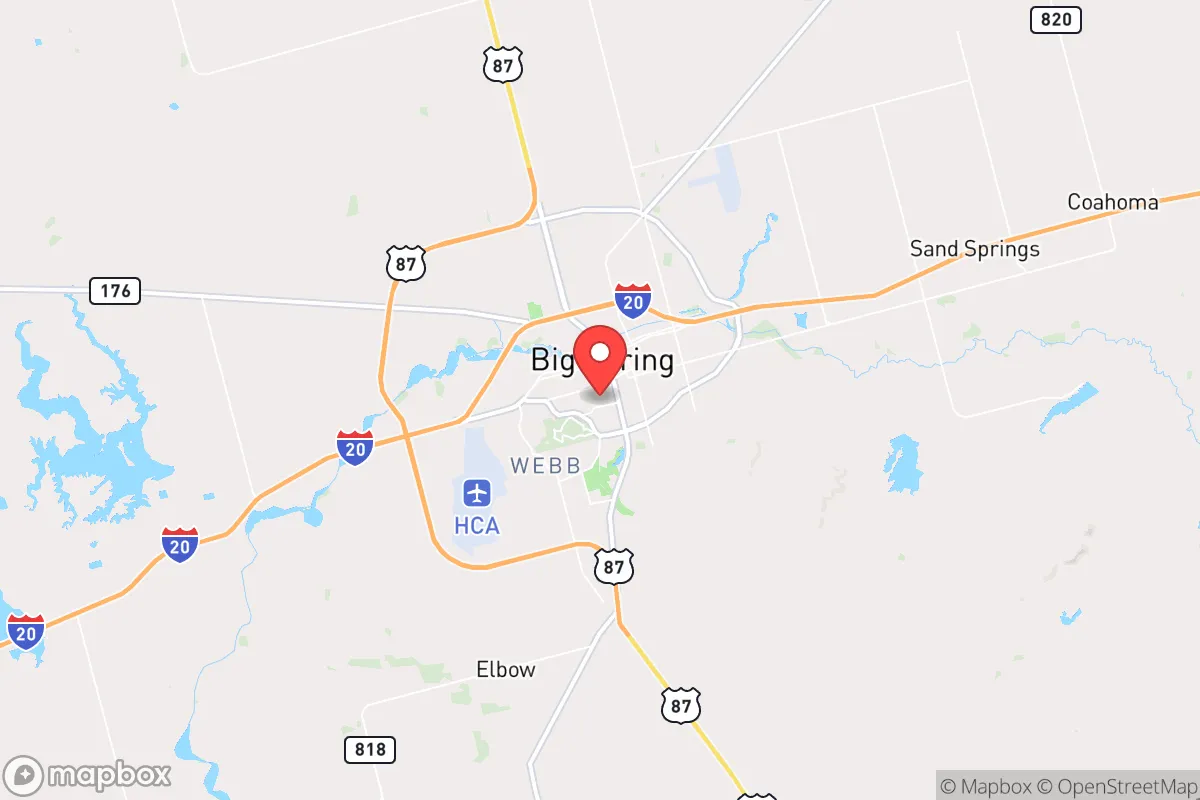
District shown is the primary district for this city’s centroid. Cities may span multiple districts.
Local Political AnalysisPolitical Analysis of Big Spring, TX
Big Spring has long been one of the most reliably conservative communities in West Texas, and that hasn't changed. The Cook Partisan Voting Index (PVI) for the area sits at R+25, meaning the district votes about 25 points more Republican than the national average. That's a deep red anchor in a state that itself leans right at R+4. If you've been around here a while, you've watched the national winds shift, but Big Spring stays steady. The local electorate hasn't budged much in the last decade, and I don't see it flipping anytime soon. The real story is how this place compares to the rest of Texas and what that means for the people who actually live here.
How it compares
When you stack Big Spring against the state of Texas as a whole, the difference is stark. Texas as a whole is R+4 — competitive enough that Democrats can win statewide races in a good cycle, and the big metro areas like Houston, Dallas, and Austin have been pulling the state toward the center. Big Spring, by contrast, is R+25. That's not just a little more conservative; it's a completely different political universe. Drive an hour east to Abilene and you'll find a similar vibe, but head two hours south to San Angelo and you'll see a slightly more moderate tilt, though still solidly red. The real contrast comes when you go west to Midland-Odessa — those areas are even more conservative, but they're also more tied to oil booms and busts. Big Spring sits in a sweet spot: conservative enough to feel safe from progressive overreach, but not so isolated that you lose touch with what's happening in the rest of the state. The surrounding Howard County has voted Republican by margins of 70% or more in recent presidential elections, while statewide races like the 2022 governor's race saw Texas go about 55% Republican. That gap matters because it means Big Spring residents often feel like their values are being steamrolled by policies written in Austin or Washington.
What this means for residents
For folks living here, the political climate translates directly into daily life. You don't see the kind of government overreach that's become common in blue-leaning cities — no mask mandates that drag on for years, no heavy-handed business closures, no zoning fights that tell you what you can do with your own property. The local city council and county commissioners tend to take a hands-off approach, "stay out of our way" approach. That's a big deal for anyone who values personal freedom and wants to raise a family without the government breathing down their neck. The school board here still focuses on academics and local control, not pushing national social agendas. Property taxes are a concern everywhere in Texas, but Big Spring's tax rate is reasonable compared to the inflated costs you see in places like Austin or Dallas. The biggest worry I hear from neighbors is that as Texas continues to grow and attract newcomers from California and the Northeast, some of that progressive ideology might trickle into state-level policy — things like expanded gun restrictions or environmental regulations that could hurt the local oil and gas economy. So far, Big Spring has held the line, but you can feel the tension between the state's shifting demographics and the community's desire to stay the same.
Culturally, Big Spring still feels like old-school Texas. The annual Cowboy Reunion, the strong church presence, the "neighbor helps neighbor" attitude — those aren't just slogans. There's a real distrust of federal programs that promise help but come with strings attached. You see it in the way people talk about healthcare, land use, and even education. The biggest distinction from the rest of Texas is that Big Spring hasn't been diluted by transplants. While cities like Austin and even Fort Worth have seen their political cultures shift, Big Spring remains a place where a conservative worldview isn't just tolerated — it's assumed. If that changes, it won't be because the locals wanted it. It'll be because outside forces pushed too hard, and that's exactly what keeps people here vigilant.

State Political ClimatePolitical Climate in Texas
State Political AnalysisPolitical Environment in the State
Texas is a solidly Republican state with a Cook PVI of R+4, but don't let that single number fool you — the political landscape here has been shifting under your feet for the past two decades. In 2004, George W. Bush carried Texas by over 22 points; by 2020, Trump won by just under 6, and in 2024 he bounced back to about 13.5 points, but the long-term trend is a slow squeeze from the coasts. The dominant coalition remains rural conservatives, suburban moderates, and a growing Hispanic electorate that's increasingly voting Republican, but the big metros — especially Austin, Dallas, Houston, and San Antonio — are pumping in enough blue voters to keep every statewide race competitive. If you're moving here expecting a rock-ribbed red state like you remember from the 90s, you'll find a place that's still conservative but fighting hard to stay that way.
Urban vs. rural divide
The political map of Texas is a study in contrasts. The vast rural stretches — the Panhandle around Lubbock, the Permian Basin around Midland, East Texas piney woods, and the Hill Country west of San Antonio — vote Republican by 40 to 60 points. Meanwhile, the major urban cores are deep blue: Harris County (Houston) went for Biden by 13 points in 2020, and Travis County (Austin) by a staggering 50. The real battleground is the suburbs. Tarrant County (Fort Worth) flipped from Trump in 2016 to Biden in 2020, then flipped back to Trump in 2024 by about 5 points — a bellwether for the whole state. Collin County (Plano, Frisco) was once a Republican stronghold but has drifted purple; Trump still won it in 2024 but by single digits. El Paso remains a Democratic fortress, while San Antonio's Bexar County is reliably blue but not as deep as Austin. The story of Texas politics right now is whether the fast-growing exurbs — places like Kyle, Buda, and Celina — stay red or turn purple as new arrivals pour in.
Policy environment
Texas's policy posture is aggressively pro-business and low-tax, but it's not a libertarian free-for-all. There is no state income tax — that's enshrined in the constitution — but property taxes are among the highest in the nation, and the state relies heavily on sales tax and fees. The regulatory climate is light: no state-level OSHA, minimal zoning in many cities, and a right-to-work law that keeps unions weak. On education, the state has expanded charter schools and recently passed a school voucher-like program (HB 3 in 2023) that lets families use public funds for private school tuition, though it's being challenged in court. Healthcare policy is defined by the state's refusal to expand Medicaid under Obamacare, leaving about 1.5 million Texans in the coverage gap. Abortion is effectively banned after a heartbeat is detected (SB 8, 2021), with a trigger law that made it a felony post-Roe. Election laws tightened with SB 1 in 2021, adding ID requirements for mail ballots and limiting drive-through voting. Gun rights are strong: permitless carry (HB 1927) passed in 2021, allowing most adults to carry a handgun without a license. For a conservative, the policy environment is largely friendly, but the property tax burden and the growing state budget (now over $300 billion) are real concerns.
Trajectory & freedom
On balance, Texas has been expanding personal freedom in several key areas over the last decade, but not without some worrying countercurrents. The biggest wins for liberty: permitless carry (HB 1927), the heartbeat abortion ban (SB 8), and parental rights legislation like HB 3979 (which limits how race and gender topics are taught in schools) and the 2023 law requiring school libraries to get parental consent before changing a student's pronouns. Property rights got a boost with the 2023 law limiting eminent domain for private development. On the other hand, the state has grown more interventionist in some areas: the 2021 election integrity law (SB 1) added bureaucratic hurdles that some conservatives argue suppress rural turnout, and the state's aggressive use of the "abortion bounty" mechanism in SB 8 created a private enforcement model that feels like government overreach by proxy. The COVID era saw Governor Abbott issue executive orders that shut down businesses and mandated masks — a temporary but real infringement that left a bitter taste. Overall, Texas is still a freedom-friendly state, but the trend is toward a more active state government, especially on social issues, which cuts both ways.
Civil unrest & political movements
Texas has seen its share of political flashpoints. The 2020 George Floyd protests in Austin, Dallas, and Houston were large and occasionally violent, leading to property damage and a lasting shift in how the state's big cities handle policing. The border crisis has been a constant source of tension: Governor Abbott's Operation Lone Star deployed state troopers and National Guard to the border, bused migrants to northern cities, and installed razor wire and buoys in the Rio Grande — all of which drew lawsuits from the Biden administration. The Texas Nationalist Movement, which advocates for secession, has a small but vocal following, though it's never gained serious traction. Election integrity remains a hot-button issue: the 2020 audit of four counties (including Harris and Dallas) found no widespread fraud, but many conservatives remain skeptical. School board meetings in suburbs like Frisco and Southlake became battlegrounds over critical race theory and library books. A new resident will notice the political energy: bumper stickers, yard signs, and a general willingness to talk politics. The state is polarized, but the polarization is mostly civil — except in Austin, where tensions can run high.
Projection
Over the next five to ten years, Texas is likely to remain Republican but with a narrower margin. The key demographic driver is Hispanic voters: in 2024, Trump won about 45% of the Hispanic vote, up from 38% in 2020, and that trend is accelerating. In-migration from California, New York, and Illinois brings both blue voters and conservatives fleeing high taxes — on balance, the newcomers are slightly more Republican than the national average, but they're also more moderate on social issues. The suburbs will continue to be the battleground: places like Tarrant County and Williamson County (north of Austin) could flip back and forth. The state legislature will likely stay in GOP hands, but the margin may shrink. Expect continued fights over school choice, property tax reform (a perennial issue), and water), and water rights. The biggest wildcard is the border: if the federal government doesn't secure it, Texas will keep spending billions on its own enforcement, and that could drive a more populist, anti-establishment GOP. For a new resident, the Texas of 2035 will probably look a lot like today — conservative, growing, and politically competitive — but with a more diverse Republican coalition and a Democratic party that's still struggling to win statewide.
Bottom line for someone moving to Texas: you're getting a state that's still fundamentally
* Values derived from national, state, county, city and local statistics and may differ in a specific area. Last updated: 2026-05-18T14:19:47.000Z
Narrative content on this page is AI-generated and may contain mistakes. Verify any details that matter before acting on them.
ReloMaps may earn a commission from affiliate links at no extra cost to you.

