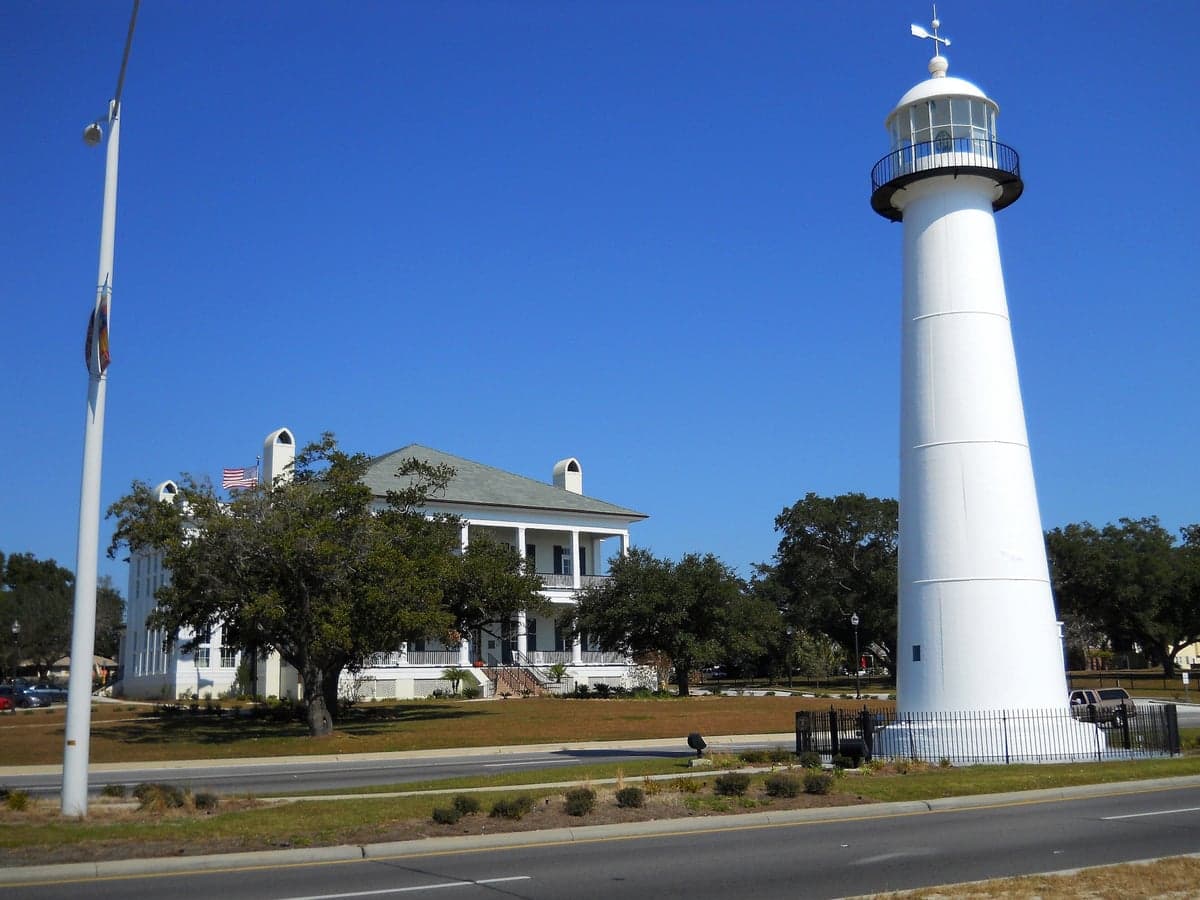
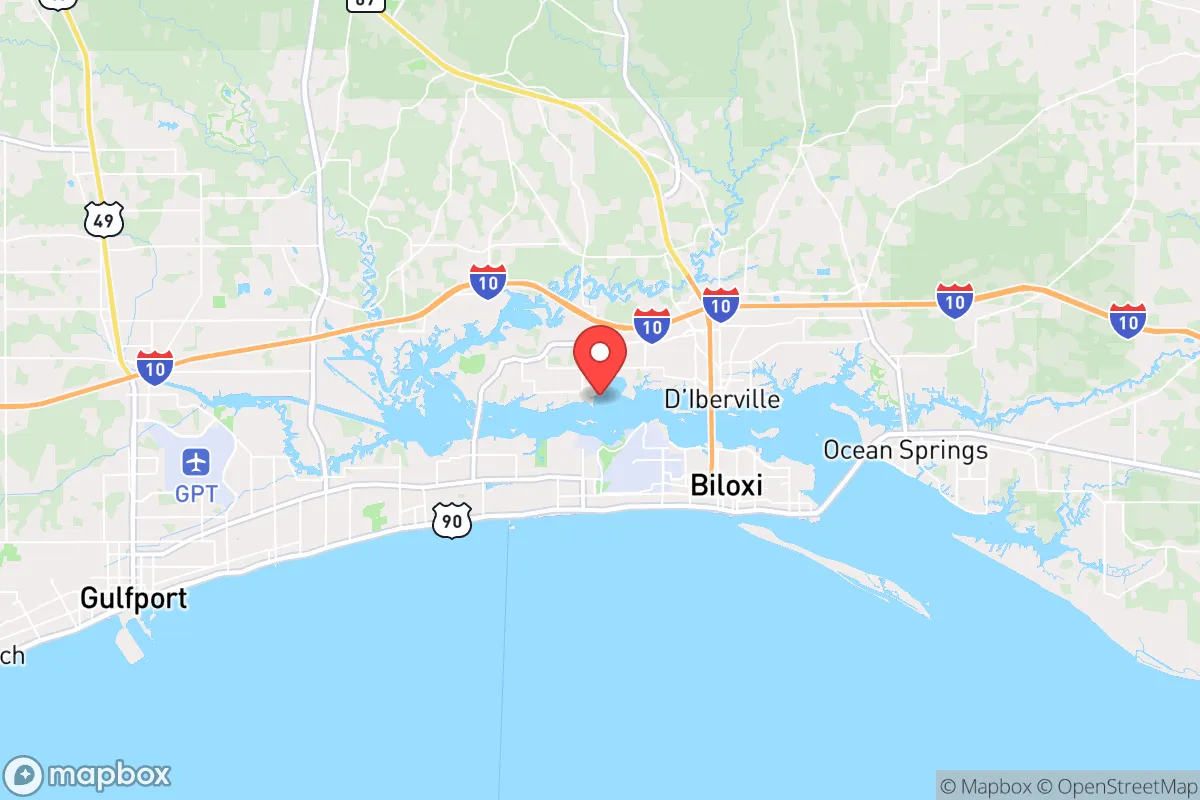
Photo: Wikipedia
Demographics of Biloxi, MS
Affluence Level in Biloxi, MS
A below-average socioeconomic profile. Incomes, home values, and educational attainment trail the U.S., with higher poverty and unemployment.
People of Biloxi, MS
The people of Biloxi, Mississippi today number roughly 49,000, forming a compact Gulf Coast city where a historic white and Black population base is now layered with a growing Hispanic community and a notable East and Southeast Asian presence tied to the seafood and casino industries. The city is denser and more urban than its suburban neighbors, with a distinctive identity shaped by French colonial roots, a century of immigrant-driven fishing and canning, and a post-Katrina rebuilding boom that shifted both housing stock and demographics. Biloxi remains majority white (59.5%) with a significant Black minority (19.7%), while Hispanic residents (10.3%) and East/Southeast Asian communities (3.0%) give the city a multiethnic character rare along the Mississippi coast. A small Indian-subcontinent population (0.8%) and a foreign-born share of just 4.0% mean Biloxi is less immigrant-heavy than many Gulf ports, but the groups that are present have deep, place-specific roots in particular neighborhoods.
How the city was settled and grew
Biloxi was founded by French colonists in 1699 as Fort Maurepas, making it one of the oldest European settlements on the Gulf Coast. The original population was a mix of French soldiers, Canadian voyageurs, and enslaved Africans brought to clear land and build fortifications. After the Louisiana Purchase, Anglo-American settlers arrived slowly, and the city remained a small fishing village through most of the 19th century. The real demographic transformation began in the 1880s with the rise of the seafood canning industry. Croatian immigrants, primarily from the Dalmatian coast, arrived to work the oyster and shrimp boats and quickly dominated the waterfront. They settled in Point Cadet, the easternmost neighborhood of Biloxi, building a tight-knit Catholic community with its own churches, social halls, and seafood packing houses. At the same time, Black families who had worked as fishermen and dockhands since slavery concentrated in East Biloxi along Division Street and the Back Bay, forming a separate but equally rooted community centered on churches and small businesses. By 1900, Biloxi was a tripartite town: white Anglo-Protestants on the west end, Croatian Catholics in Point Cadet, and Black families in East Biloxi. Vietnamese refugees began arriving in the mid-1970s after the fall of Saigon, drawn by the existing seafood industry and a federal resettlement program. They settled in the same Point Cadet and East Biloxi neighborhoods, often buying homes from aging Croatian families who were moving inland. This created a unique Vietnamese-Croatian-Black mix in the eastern wards that persists today.
Modern era (post-1965)
The post-1965 era reshaped Biloxi through two forces: the legalization of casino gambling in 1990 and Hurricane Katrina in 2005. Casino development along the beachfront brought a wave of new service-sector workers, many of them Hispanic from Texas, Louisiana, and Mexico, who settled in West Biloxi and the North Biloxi corridor near I-110. This Hispanic population grew from negligible to 10.3% of the city by 2020, concentrated in apartment complexes and older single-family homes west of the Biloxi Bay Bridge. Katrina destroyed roughly 90% of the housing in East Biloxi and Point Cadet, displacing thousands of Black and Vietnamese families. Post-storm rebuilding was uneven: many Black residents could not afford to return, while Vietnamese families rebuilt with church and community support, consolidating their hold on Point Cadet. The white population, which had been suburbanizing toward D'Iberville and Woolmarket since the 1980s, continued that trend, leaving the city proper with a higher share of renters and lower median income than the county average. The East/Southeast Asian community (3.0%) is overwhelmingly Vietnamese and remains anchored in Point Cadet, with a smaller Filipino presence in West Biloxi near Keesler Air Force Base. The Indian-subcontinent population (0.8%) is tiny and scattered, with no single neighborhood concentration. College education rates sit at 28.9%, below the national average, reflecting the city's blue-collar casino and service economy.
The future
Biloxi's population is slowly diversifying but not rapidly growing. The white share has declined from roughly 70% in 2000 to 59.5% today, while the Hispanic share has risen steadily. The Black population has held steady at around 19-20% since 2010, suggesting that post-Katrina displacement has stabilized. The Vietnamese community is aging and seeing some out-migration of younger generations to Houston and New Orleans, but remains the most cohesive ethnic enclave in the city. New residential development is concentrated in North Biloxi along the Popps Ferry Road corridor, where newer subdivisions are attracting a mix of white and Hispanic families from the broader Gulf Coast. The casino industry continues to draw Hispanic workers, and that population is likely to grow toward 15-18% over the next decade. The city is not tribalizing into hostile enclaves, but it is sorting by income and housing age: Point Cadet remains working-class and Vietnamese-Black, West Biloxi is increasingly Hispanic, and the northern neighborhoods are more mixed and suburban in character.
For someone moving to Biloxi now, the city offers a genuinely multiethnic Gulf Coast experience where no single group dominates and neighborhoods retain distinct identities. The trade-off is a modestly educated workforce, a casino-driven economy with limited white-collar jobs, and a housing stock still recovering from Katrina. The people of Biloxi are resilient, place-proud, and accustomed to newcomers, making integration relatively smooth for those who choose a neighborhood that fits their priorities.

* Values derived from national, state, county, city and local statistics and may differ in a specific area. Last updated: 2026-04-29T19:21:24.000Z
Narrative content on this page is AI-generated and may contain mistakes. Verify any details that matter before acting on them.
ReloMaps may earn a commission from affiliate links at no extra cost to you.

