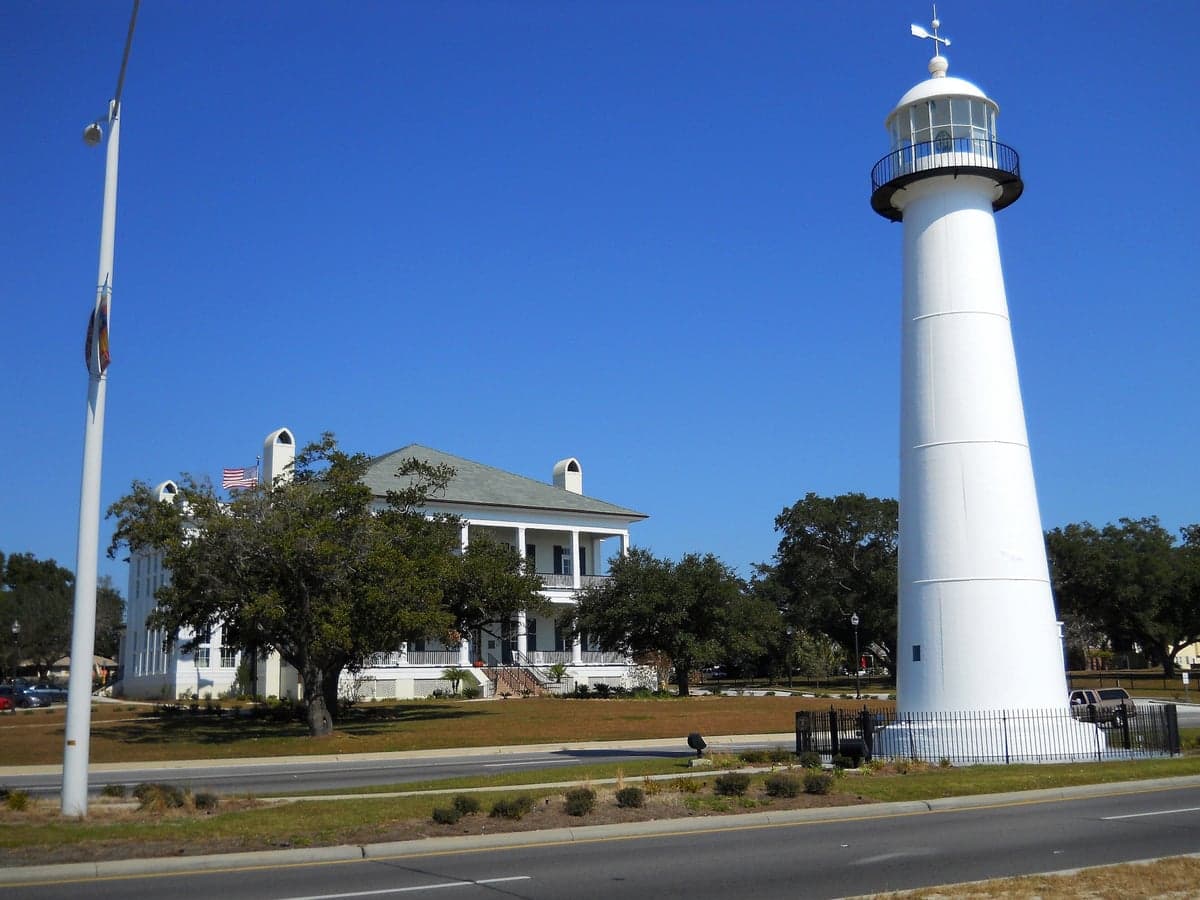

Photo: Wikipedia
Political ClimatePolitical Climate in Biloxi, MS
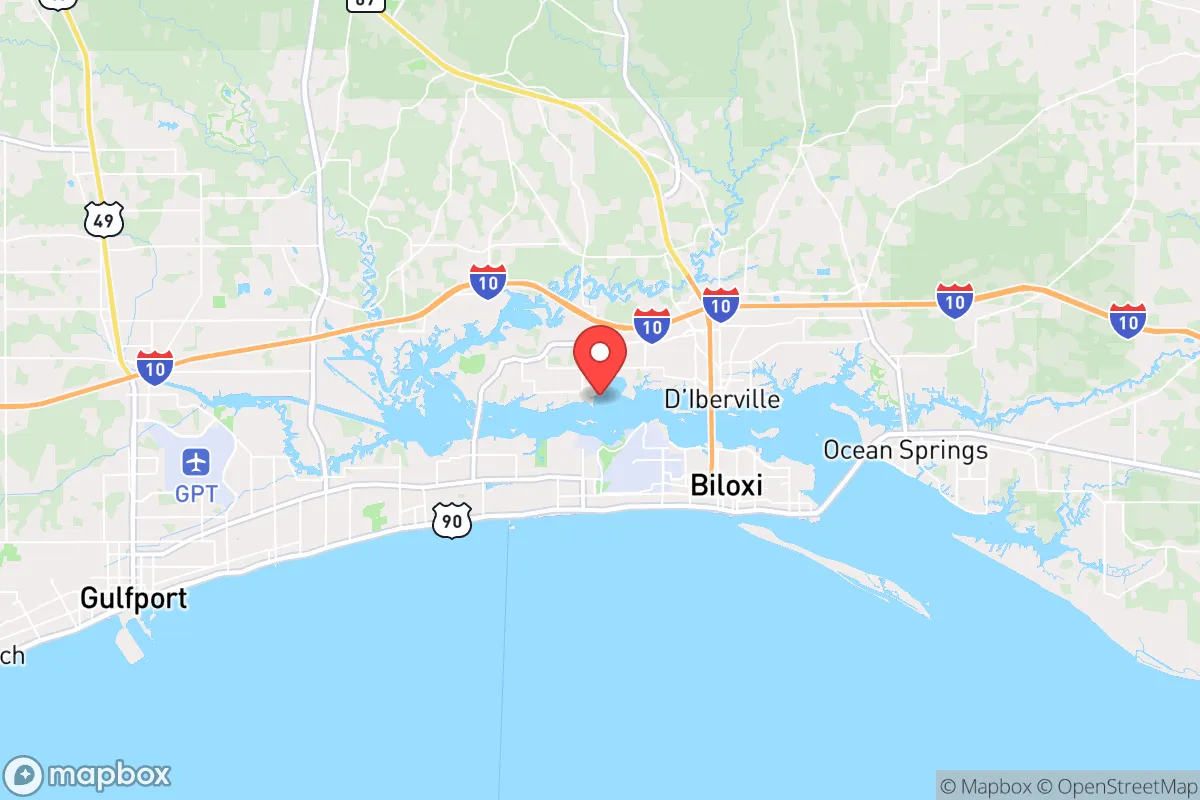
District shown is the primary district for this city’s centroid. Cities may span multiple districts.
Local Political AnalysisPolitical Analysis of Biloxi, MS
Biloxi, Mississippi, has long been a solidly conservative community, and that hasn't changed much. The Cook Partisan Voting Index (PVI) of R+21 tells you everything you need to know about the baseline here — this area votes Republican by a comfortable margin, and it's been that way for decades. You'll see that reflected in local elections, too, where the city council and mayor's office have historically leaned right, though you do get the occasional moderate Democrat who wins by running on local issues rather than national party lines. The real story, though, is how the political winds are shifting just enough to make you pay attention, especially if you value limited government and personal freedoms.
How it compares
If you drive west down the coast to Gulfport or Long Beach, you'll find a similar conservative vibe, though Gulfport's larger population brings a bit more diversity in opinion. Head east toward Ocean Springs, and you'll notice a slightly more artsy, independent streak — still conservative overall, but with a libertarian bent that sometimes bucks the party line. The real contrast is Biloxi versus Harrison County as a whole. The county itself is R+21, but Biloxi's casino-heavy economy and tourism base mean you get a mix of transplants and seasonal workers who don't always vote the same way as the old-timers. That said, the surrounding rural areas like Saucier or Lyman are deep red, and they keep the county's politics grounded. The biggest shift I've seen in the last ten years is the slow creep of progressive ideas into local school board races and city planning meetings — things like diversity initiatives or "equity" language in zoning documents. It's not widespread yet, but it's there, and it's something to watch if you're concerned about government overreach into how people live their lives.
What this means for residents
For the average Biloxi resident, the conservative lean means lower taxes and fewer regulations compared to blue states, but it's not a free-for-all. The city still has its share of ordinances — noise restrictions near the casinos, strict alcohol sales hours, and a pretty active code enforcement office that can get into your business if your grass gets too high. The good news is that property rights are generally respected, and you won't see the kind of zoning overreach you'd find in places like California or even New Orleans. The bad news is that the state government in Jackson has been pushing more centralized control over local decisions, especially around education and health mandates. That's a double-edged sword: it keeps progressive policies from taking root in Biloxi, but it also means local folks have less say in how their own town is run. If you're the type who wants to be left alone to raise your family, run your business, and keep your guns, Biloxi is still a safe bet — just don't expect total freedom from government meddling.
Culturally, Biloxi is a place where tradition still matters. The Catholic heritage from the French and Spanish settlers is strong, and you'll see that in the annual Blessing of the Fleet and the many church-run schools. The casino industry brings in a lot of out-of-state money and tourists, which keeps the economy humming but also introduces some cultural friction — you get more transient folks who don't always share the local values. The biggest policy distinction is that Mississippi is a constitutional carry state, and Biloxi respects that. You won't find the kind of gun control measures you see in coastal cities elsewhere. The city also has a strong pro-life sentiment, and you won't see any local push for abortion access beyond what the state already restricts. If you're looking for a place where the government stays out of your personal life and your wallet, Biloxi is still holding the line — but keep an eye on those school board meetings and city council votes, because the progressive foot is in the door.

State Political ClimatePolitical Climate in Mississippi
State Political AnalysisPolitical Environment in the State
Mississippi is a deeply conservative state, with Republicans holding every statewide office and supermajorities in both legislative chambers, a reality that has solidified over the past two decades. The state voted for Donald Trump by 17 points in 2024, consistent with a 20-year trend where the GOP has gained ground in once-competitive areas like the Gulf Coast and the Jackson suburbs. While Democrats still hold sway in the Mississippi Delta and a handful of majority-Black urban centers, the overall trajectory is one of steady, reliable red dominance that shows no signs of reversing.
Urban vs. rural divide
The political map of Mississippi is starkly divided between its rural, overwhelmingly white counties and its few urban centers. The state’s largest metro, Jackson, is a Democratic stronghold driven by a majority-Black population, but its influence is shrinking as the city loses residents to surrounding Rankin and Madison counties—both reliably Republican. Gulfport and Biloxi on the coast have shifted right over the past decade, with Harrison County now voting +15 R in presidential races, a flip from its purple status in the 1990s. The northeastern corner, anchored by Tupelo, remains solidly red, while the Delta—places like Greenville and Clarksdale—vote heavily Democratic but have declining populations. The real engine of conservative power is the sprawling rural landscape, where counties like DeSoto (just south of Memphis) and Lamar (near Hattiesburg) routinely deliver 70%+ Republican margins. The divide isn’t just cultural; it’s demographic, with urban centers losing influence as rural areas grow their political clout through consistent turnout.
Policy environment
Mississippi’s policy environment is among the most conservative in the nation, with a low tax burden and a regulatory posture that favors business. The state has a flat income tax rate of 4.7% (phasing down to 4% by 2026), no estate tax, and a sales tax capped at 7%. Property taxes are among the lowest in the country, averaging 0.52% of home value. Education policy leans toward school choice, with a robust charter school law and the state’s Education Scholarship Account program for students with disabilities. Healthcare is a mixed bag: Mississippi refused Medicaid expansion under Obamacare, keeping the program limited to the poorest residents, and the state has some of the strictest abortion laws in the country, with a near-total ban in effect since the Dobbs decision. Election laws are straightforward—voter ID is required, early voting is limited to absentee by mail, and same-day registration is not allowed. The state’s regulatory climate is business-friendly, with right-to-work laws and minimal red tape for small businesses, though critics note that this has not translated into robust economic growth in rural areas.
Trajectory & freedom
Mississippi has been on a trajectory of expanding personal freedom in several key areas, particularly around gun rights and parental authority. In 2023, the legislature passed a permitless carry law, allowing any adult who can legally possess a firearm to carry it openly or concealed without a license. The state also enacted a Parents’ Bill of Rights in 2022, which requires schools to notify parents of medical services offered to minors and prohibits instruction on sexual orientation or gender identity in K-3 classrooms. On the medical autonomy front, Mississippi has a strong conscience clause for healthcare providers and banned gender transition procedures for minors in 2023. However, the state still has a high incarceration rate and a criminal justice system that some argue infringes on personal liberty through mandatory minimums and asset forfeiture laws. Property rights are generally strong, with no statewide zoning mandates and low property taxes, though local governments in places like Oxford and Starkville have experimented with stricter land-use regulations that worry conservatives. The overall trend is toward more freedom in the cultural and economic spheres, but the state’s legacy of government overreach in criminal justice remains a concern for liberty-minded residents.
Civil unrest & political movements
Mississippi has seen relatively little civil unrest compared to other states, but there have been notable flashpoints. The 2020 Black Lives Matter protests in Jackson and Oxford were largely peaceful, though they sparked a backlash that energized conservative activism. The state’s immigration politics are muted—Mississippi has a small foreign-born population (about 2.5%), and there are no sanctuary cities. However, the issue of election integrity has been a recurring theme, with the state passing a strict voter ID law in 2011 and rejecting efforts to expand mail-in voting after 2020. There is a small but vocal secessionist movement, mostly online, but it has no real political traction. The most visible political movements are on the right: the Mississippi Republican Party is dominated by grassroots activists focused on school choice, gun rights, and anti-abortion legislation. The left is concentrated in the Delta and Jackson, where groups like the Mississippi Poor People’s Campaign advocate for economic justice, but they have little influence on state policy. A new resident would notice a general political calm, with most debates happening in the legislature rather than on the streets.
Projection
Over the next 5-10 years, Mississippi is likely to become even more conservative, driven by two demographic trends: the continued exodus of Black residents from the Delta to other states, and the in-migration of retirees and remote workers to the Gulf Coast and the Hattiesburg area. The state’s population is projected to grow slowly, but the growth is concentrated in already-red suburbs like Madison and Ocean Springs. The Democratic base in Jackson will continue to shrink, and the GOP supermajority is unlikely to be challenged. Policy-wise, expect further tax cuts (the flat income tax may be eliminated entirely), expanded school choice, and more restrictions on abortion and transgender rights. The biggest wildcard is economic development: if the state can attract more high-paying jobs in aerospace and manufacturing (like the recent expansions at Ingalls Shipbuilding in Pascagoula), it could see a modest influx of younger workers who might shift the political balance slightly, but not enough to threaten Republican control. For someone moving in now, the Mississippi of 2035 will look much like today, only redder and more culturally conservative.
For a new resident, the bottom line is that Mississippi offers a stable, low-tax environment where conservative values are enshrined in law and unlikely to change. You’ll find a state where your gun rights are protected, your kids won’t be exposed to controversial gender ideology in schools, and your taxes are among the lowest in the nation. The trade-off is a slower pace of life, limited urban amenities, and a political culture that can feel insular. If you value personal freedom from government overreach and want to live in a place where your vote actually counts in a Republican primary, Mississippi is a solid bet. Just be prepared for the heat—both political and meteorological.
* Values derived from national, state, county, city and local statistics and may differ in a specific area. Last updated: 2026-04-29T19:21:24.000Z
Narrative content on this page is AI-generated and may contain mistakes. Verify any details that matter before acting on them.
ReloMaps may earn a commission from affiliate links at no extra cost to you.

