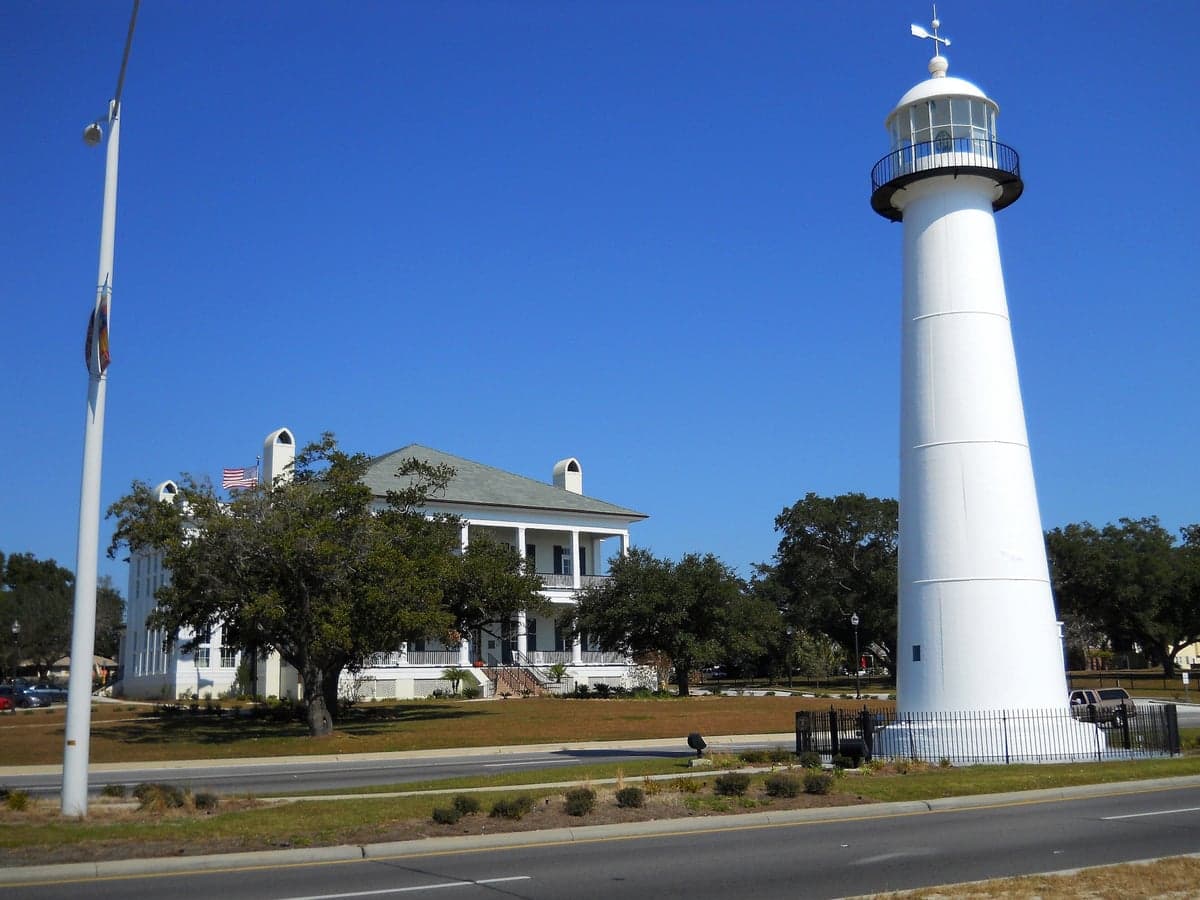
Photo: Wikipedia
Strategic Assessment of Biloxi, MS
Meaningful friction. Expect exposure to either population pressure, blast zones, or natural disaster risk. Consider buying a retreat property.
What does the Strategic Assessment tell us?
Our Strategic Assessment grades tactical survivability of an area. Major population centers, military targets, fallout zones, natural disasters, and border exposure all drive risk — lower exposure means a more defensible position in a crisis.
This is heavily inspired by Joel Skousen's Strategic Relocation book. Highly recommended you checkout the book ($)What does this tell us?
Our Strategic Assessment grades tactical survivability of an area. Major population centers, military targets, fallout zones, natural disasters, and border exposure all drive risk — lower exposure means a more defensible position in a crisis.
This is heavily inspired by Joel Skousen's Strategic Relocation book. Highly recommended you checkout the book ($)Strategic Pillars

Key Distances
Regional Safe Places
Below is our recommended "safe zones" in Mississippi and the surrounding area based on our strategic heuristics. For most people, it's unrealistic to live in a “safe zone” full-time due to work, family or other personal reasons. They tend to be more rural. However, many of these areas are perfect for second homes and retreat properties that double as a vacation home or even a short-term rental.
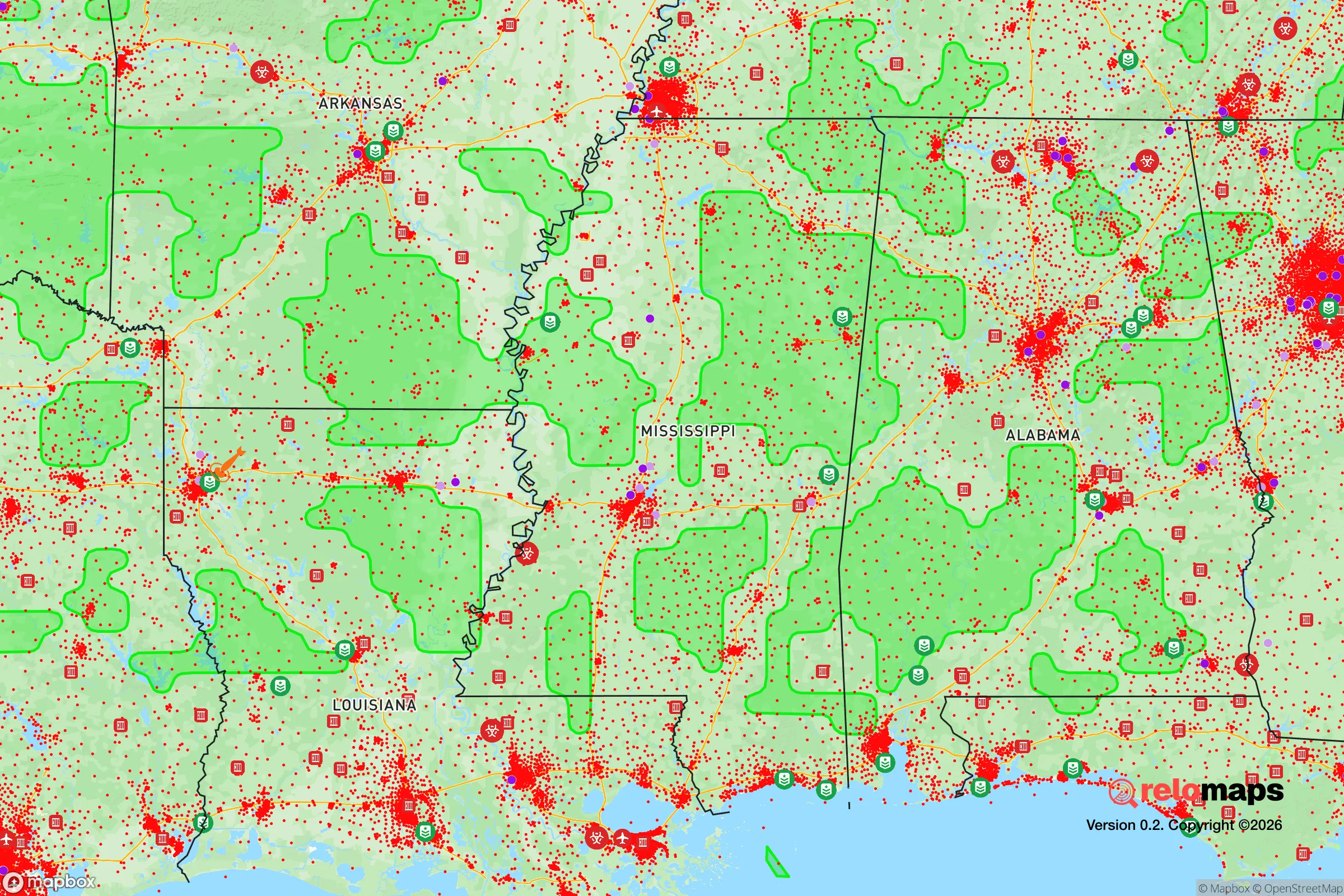
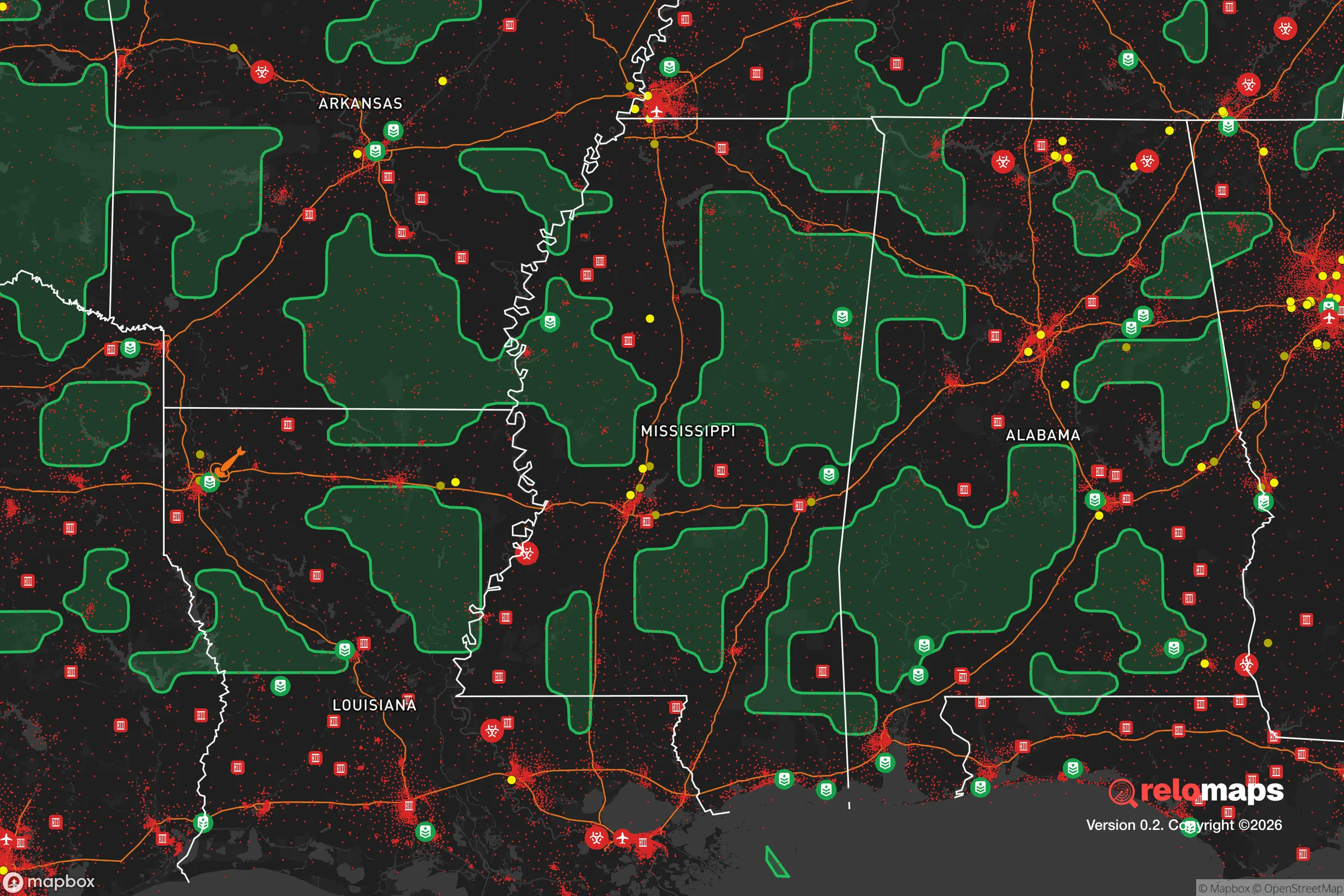


Important Note: For informational purposes only. This does not mean nothing bad ever happens in the green zones. Please use common sense. This is based on public data and modeled with AI. We tried to take a conservative approach but mistakes happen. We update this regularly as new information becomes available.
Solar Generator Recommendations
Backup power matters more here than in safer locations. We've picked three solar generators across budgets and capacity tiers — start with the budget unit if you only need a few essentials, or step up if you want to run a fridge and HVAC for days at a time.

Jackery Portable Power Station Explorer 300
Budget OptionPower on the Go: Weighing only 11 lbs, it's convenient to set up and store with book-sized foldable solar panels

BLUETTI Portable Power Station AC180
Designed for both indoor and outdoor scenarios, AC180 is highly capable as it has a robost capacity and continuous output power.

EF ECOFLOW DELTA Pro Ultra Power Station
Upgraded PickEcoFlow DELTA Pro Ultra is a whole-home energy system designed to grow with your family. Integrated with the Smart Home Panel 2, it scales to meet your evolving energy needs — keeping your home powered, intelligent, and secure through every stage of life.
We earn a commission, at no additional cost to you.
Strategic Assessment Analysis
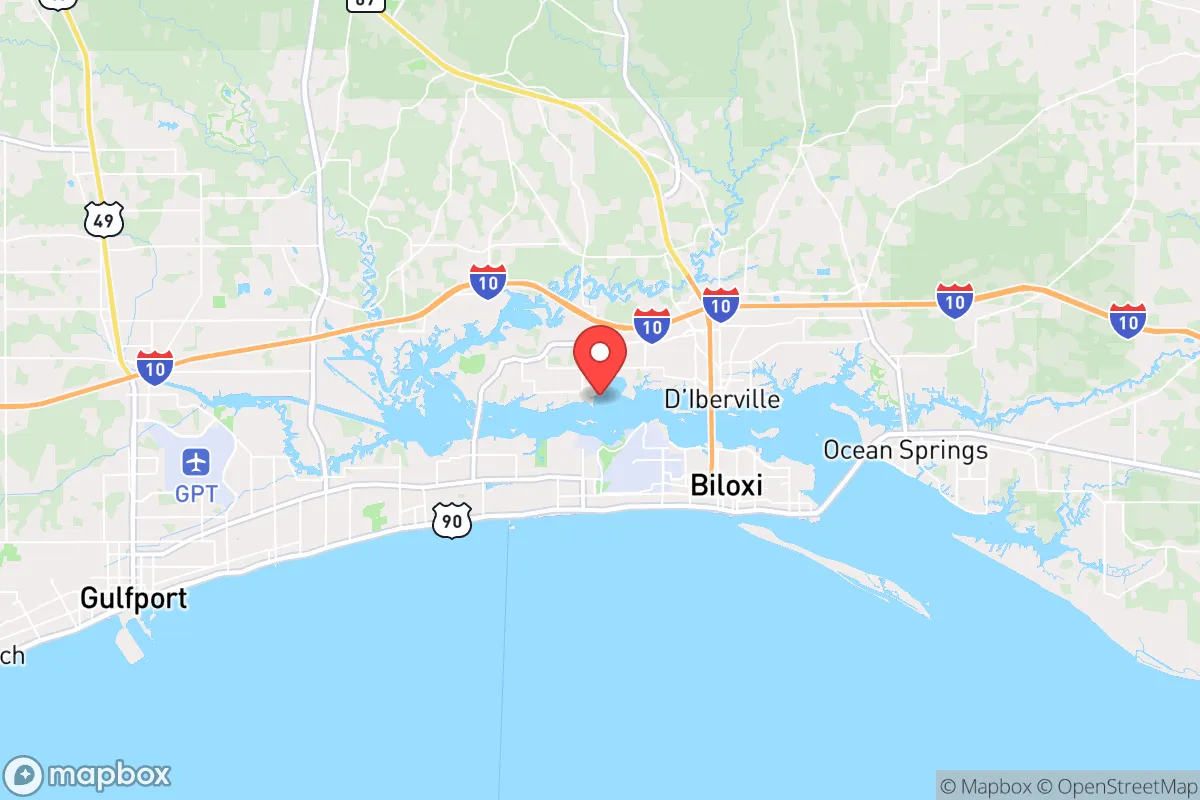
Biloxi, Mississippi, sits on a narrow peninsula between the Gulf of Mexico and the Back Bay, a geography that offers both strategic advantages and serious liabilities for a relocator with a survivalist mindset. The city’s resilience is tied directly to its ability to absorb shocks—hurricanes, economic swings, and civil unrest—but its low elevation and proximity to major infrastructure create exposure that demands careful planning. For a conservative-leaning individual or family looking to weather the coming storms, Biloxi presents a mixed picture: strong community bonds and a self-reliant culture, but a location that puts you in the path of both natural and man-made threats.
Geographic position and natural advantages for long-term survival
Biloxi’s location on the Mississippi Gulf Coast gives it access to the Gulf of Mexico’s vast marine resources, which is a major plus for food security. The Mississippi Sound is rich in shrimp, oysters, and finfish, and a family with basic fishing gear can supplement their diet year-round. The city sits at the southern terminus of Interstate 10, a major east-west evacuation and supply corridor, but that same highway also funnels traffic from New Orleans and Mobile—a double-edged sword in a crisis. The surrounding terrain is flat and marshy, with the DeSoto National Forest about 30 miles north offering a potential bug-out location with timber, water, and game. However, the lack of high ground within the city itself means that any storm surge over 15 feet would inundate most of Biloxi, including the historic downtown and beachfront neighborhoods. The city’s elevation averages just 20 feet above sea level, with many areas at 10 feet or less. For a prepper, this means your primary residence should be on the second floor or higher, and you need a vehicle capable of navigating flooded roads. The climate is humid subtropical, with hot summers and mild winters—good for year-round gardening but also for mold, rot, and insect-borne diseases like West Nile and dengue. The growing season is long, from March to November, allowing for multiple crop cycles if you have raised beds or a greenhouse.
Risks, exposures, and proximity to fallout-relevant landmarks
Biloxi’s biggest vulnerability is its location relative to high-value targets and industrial hazards. The city is less than 60 miles from the Louisiana Offshore Oil Port (LOOP), the largest oil import terminal in the United States, and about 80 miles from the Strategic Petroleum Reserve’s Bryan Mound site in Freeport, Texas. Both are potential targets for sabotage or military strike in a major conflict. The nearby Keesler Air Force Base, located in Biloxi itself, is a major training center for the Air Force and a likely target for any adversary seeking to disrupt U.S. military operations. A conventional or electromagnetic pulse (EMP) attack on Keesler could cripple the region’s power grid and communications for weeks. The city also sits in the heart of “Hurricane Alley,” with a direct hurricane hit occurring roughly once every 7-10 years—Katrina in 2005 was a Category 5 that destroyed 90% of the structures along the coast. For a prepper, this means you must have a robust plan for evacuation or sheltering in place with at least two weeks of supplies, including water purification, since municipal water systems often fail after a storm. The industrial corridor along the Gulf Coast, from Pascagoula to New Orleans, is dotted with chemical plants, refineries, and LNG terminals. A major accident or attack at any of these could release toxic clouds or cause fires that would make Biloxi uninhabitable for days. The city’s reliance on the Biloxi Bay Bridge and the I-10 bridge for evacuation is a single-point-of-failure risk—if either is damaged, you’re trapped on the peninsula.
Practical resilience for a relocator: food, water, energy, and defensibility
For a family or individual serious about self-sufficiency, Biloxi offers some advantages but requires significant upfront investment. Fresh water is the biggest challenge—the city’s water comes from the Biloxi Water System, which draws from the Pascagoula River and local wells, but a prolonged power outage or contamination event would leave you dependent on stored water or rainwater collection. The average annual rainfall is about 65 inches, so a 1,000-gallon cistern system can provide enough water for a family of four for several months if properly filtered. The soil is sandy and acidic, so raised beds with imported topsoil are necessary for gardening. The local climate supports year-round growing of collards, okra, sweet potatoes, and citrus trees, but you’ll need to protect plants from salt spray and high winds. For energy, solar is viable but not ideal—the region gets about 60% of possible sunshine, with frequent cloud cover from Gulf storms. A hybrid system with a small wind turbine and a propane generator is more reliable. The city’s defensibility is poor in a grid-down scenario: the flat terrain offers no natural chokepoints, and the population density of about 3,800 people per square mile means you’ll have neighbors close by. However, the strong local culture of hunting, fishing, and firearms ownership means you’re likely to find like-minded allies. Harrison County has a high rate of concealed carry permits, and the local gun culture is robust, with several gun stores and ranges in the area. For a relocator, the key is to buy property north of I-10, away from the flood zone and closer to the pine forests, where you can establish a more defensible homestead with well water and septic.
The overall strategic picture for Biloxi is one of calculated risk. It’s not a place for someone seeking total isolation or a fortress—the coast is too exposed, and the population too dense for that. But for a conservative-leaning individual or family who values community, access to marine resources, and a climate that supports self-sufficiency, it can work if you’re willing to invest in hardening your home, storing supplies, and building relationships with neighbors who share your mindset. The city’s history of bouncing back from hurricanes and economic downturns shows a resilient population, but that resilience is tested regularly. If you’re looking for a location that balances opportunity with exposure, Biloxi is a viable option—just don’t expect it to be a safe haven. Plan for the worst, prepare for the storms, and you’ll be as ready as anyone on the Gulf Coast.

* Values derived from national, state, county, city and local statistics and may differ in a specific area. Last updated: 2026-04-29T19:21:24.000Z
Narrative content on this page is AI-generated and may contain mistakes. Verify any details that matter before acting on them.
ReloMaps may earn a commission from affiliate links at no extra cost to you.

