Photo: Wikipedia
Political ClimatePolitical Climate in Bladensburg, MD
District shown is the primary district for this city’s centroid. Cities may span multiple districts.
Local Political AnalysisPolitical Analysis of Bladensburg, MD
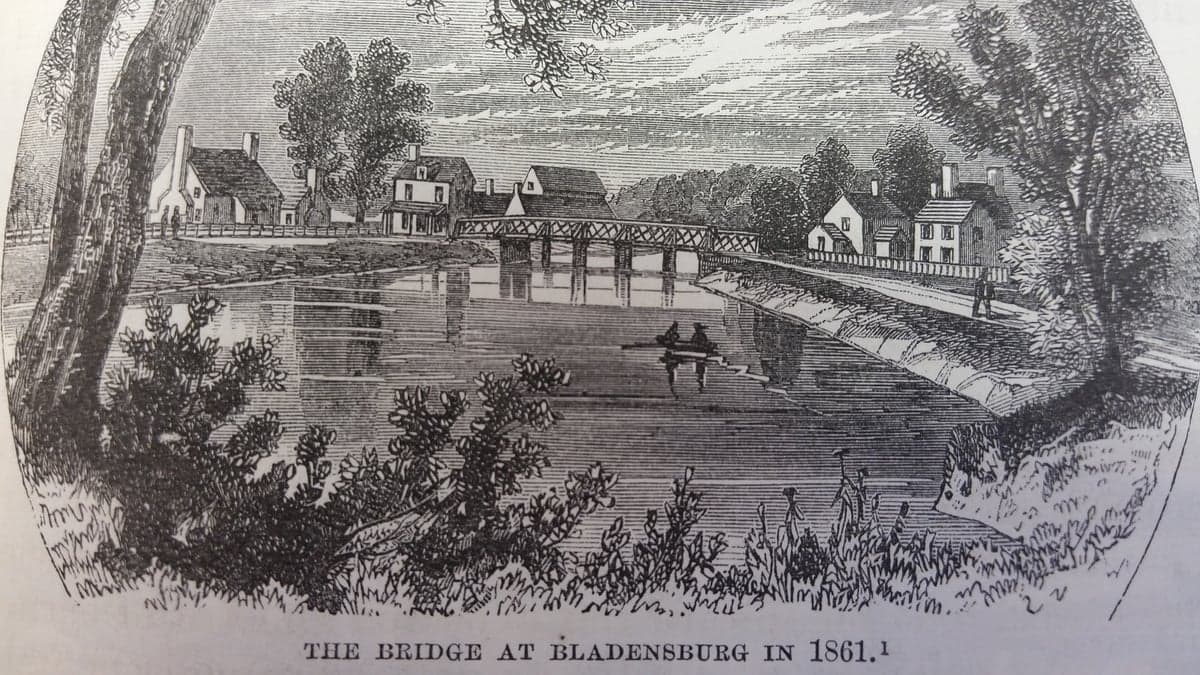
Look, I’ve lived in Bladensburg my whole life, and I’ve watched this town go from a quiet, working-class community to a place where the political machine runs everything. We’re deep in Prince George’s County, and that means we’re locked into a Democratic stronghold that hasn’t seen a real competitive election in decades. The Cook PVI here is D+39—that’s not just blue, it’s deep blue. You can feel it in every zoning meeting, every school board decision, and every new ordinance that comes down from the county. It wasn’t always this way, but the shift has been steady, and it’s not slowing down.
How it compares
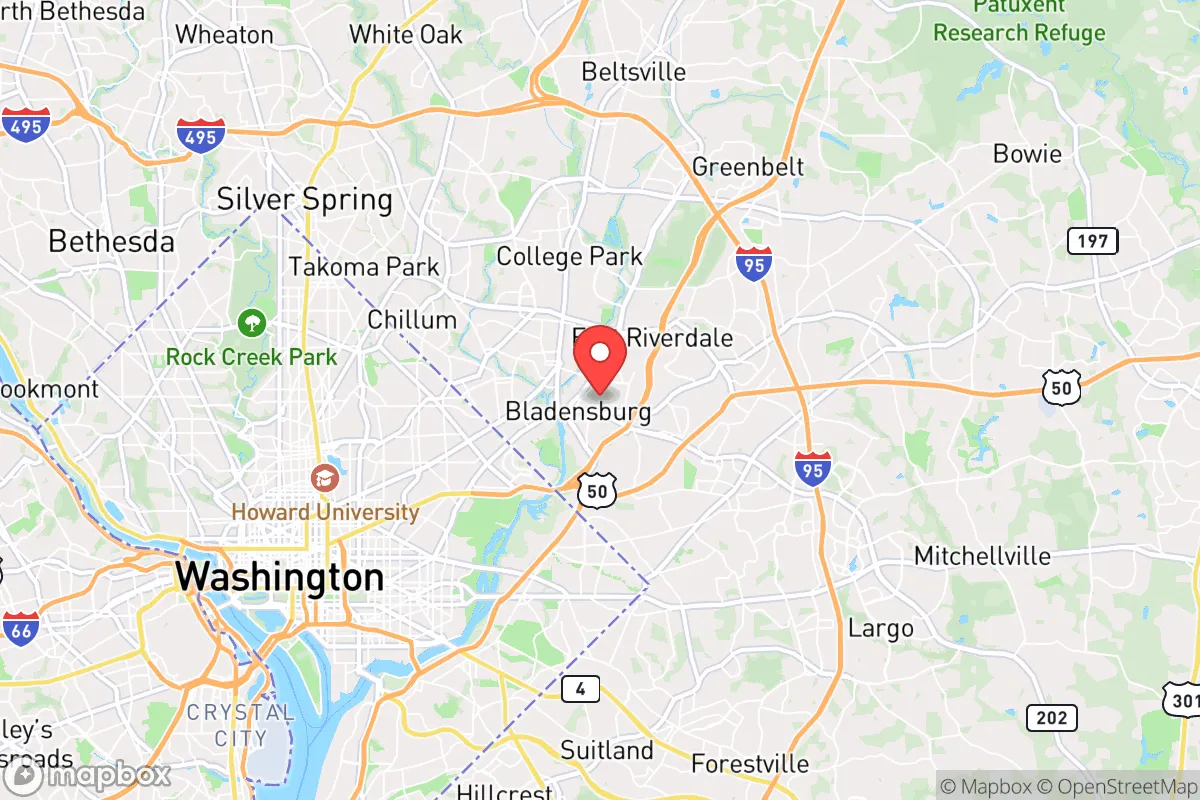
If you drive ten miles north to Bowie or fifteen miles west to College Park, you’ll find the same story—safe Democratic seats, progressive policies, and a government that’s happy to tell you how to live. But if you head east toward the more rural parts of Anne Arundel County, places like Davidsonville or even parts of Upper Marlboro, you’ll start to see a different vibe. Those areas still have a bit of that independent streak, where folks don’t want the county telling them what kind of fence they can put up or how many chickens they can keep. Bladensburg, though? We’re smack in the middle of the county’s political heartland. The contrast is stark: in Bladensburg, you’re surrounded by government employees, union households, and folks who see the state as a solution to every problem. In those neighboring towns, people still remember when the county let you run your own life.
What this means for residents
For the average person living here, the political climate means you’re constantly dealing with new rules and regulations that feel like they come from a place of distrust. Want to open a small business? Good luck with the permitting process—it’s designed to make sure nothing gets done without a dozen signatures. Property taxes? They’ve crept up every year, and the county keeps finding new ways to spend your money. The school system, which used to be a point of pride, is now more focused on social engineering than teaching kids how to read and do math. And if you’re a gun owner or someone who values privacy, you’re basically swimming against the tide. The county council and the state legislature in Annapolis are all-in on progressive priorities—red flag laws, higher minimum wages, stricter environmental mandates—and they don’t care if it squeezes the middle class. It’s not that people here are bad; it’s that the system has become a one-party machine that doesn’t have to listen to anyone who disagrees.
What really gets me is the cultural shift. Bladensburg used to have a real sense of community—neighbors knew each other, kids played in the streets, and the town felt like a place where you could raise a family without the government breathing down your neck. Now, it’s all about compliance. There’s a new housing mandate every year, a new environmental fee, a new diversity training requirement for contractors. It feels like the county is trying to engineer a perfect society, but they’re forgetting that freedom and personal responsibility are what made this country work. If you’re thinking about moving here, just know that you’re signing up for a place where the political culture is top-down, not bottom-up. The long-term trend? It’s only going to get more progressive, more regulated, and more expensive. If that’s your cup of tea, you’ll fit right in. But if you value your independence, you might want to look a little further east.

State Political ClimatePolitical Climate in Maryland
State Political AnalysisPolitical Environment in the State
Maryland has long been a deep blue state, but its political landscape is far more complex than a simple Democratic label suggests. The state’s overall partisan lean is solidly Democratic — Joe Biden won it by 33 points in 2020 — but that number masks a fierce urban-rural war and a growing conservative undercurrent in the exurbs and Eastern Shore. Over the last 10-20 years, the state has shifted leftward on social and economic policy, driven by the Washington D.C. suburbs, while rural and western counties have become more Republican and more vocal about feeling ignored by Annapolis. For a conservative considering relocation, the key question is whether you’re looking at the state as a whole or a specific county — because the difference between Montgomery County and Garrett County is night and day.
Urban vs. rural divide
The political map of Maryland is a textbook case of the urban-rural chasm. The Democratic stronghold is the D.C. metro area, particularly Montgomery County (Biden +80) and Prince George’s County (Biden +84), which together cast about a third of the state’s votes. Baltimore City is another deep-blue anchor (Biden +76). These three jurisdictions alone can decide statewide elections. In contrast, the rural western counties — Garrett, Allegany, and Washington — vote Republican by 30-40 point margins. The Eastern Shore, including Worcester County (Ocean City) and Queen Anne’s County, is also reliably red. The most interesting battlegrounds are the exurban counties like Frederick and Harford, which have trended rightward as D.C. commuters move further out. Frederick County, for example, went from a 7-point Obama win in 2012 to a 10-point Trump win in 2020 — a massive 17-point swing. That’s where the conservative growth is happening.
Policy environment
Maryland’s policy environment is a mixed bag for conservatives, with some bright spots and many red flags. On taxes, the state is high-cost: a progressive income tax that tops out at 5.75% (plus local piggyback taxes that can push the effective rate over 8%), a 6% sales tax, and some of the highest property taxes in the country, especially in the D.C. suburbs. The regulatory posture is heavy — Maryland has a statewide building code that’s among the strictest in the nation, and environmental regulations (especially on the Chesapeake Bay) can make development a nightmare. Education policy is dominated by the teachers’ unions, with per-pupil spending among the highest in the U.S. but middling outcomes. The Blueprint for Maryland’s Future law, passed in 2021, pours billions into public schools but also mandates union-friendly policies and centralizes control in Annapolis. On healthcare, the state expanded Medicaid and runs its own exchange, and it has some of the strongest abortion protections in the country (codified in 2024). Election laws are liberal: no-excuse mail-in voting, same-day registration, and automatic voter registration. For a conservative, the policy environment feels like a one-party state where the legislature often ignores rural and conservative voices.
Trajectory & freedom
Maryland is trending less free by almost any measure, and recent legislation confirms the direction. On gun rights, the state passed the Gun Safety Act of 2023, which bans carrying firearms in a long list of “sensitive places” (including parks, hospitals, and any private property without explicit permission), effectively gutting the Bruen decision. The law is being challenged in court, but for now, it’s a major restriction. On parental rights, the state passed a law in 2023 that prohibits school boards from notifying parents about a child’s gender identity or sexual orientation without the child’s consent — a direct blow to parental authority. On medical freedom, Maryland was one of the first states to mandate COVID-19 vaccines for healthcare workers and school staff, and it has not rolled back any emergency powers. Property rights are under pressure from the Maryland Department of the Environment, which has broad authority to deny permits for development near waterways. The state also passed a “sanctuary” law in 2023 that limits cooperation between local law enforcement and federal immigration authorities. For a conservative, the trajectory is clear: more government control, less individual liberty, and a legislature that sees no need to compromise.
Civil unrest & political movements
Maryland has seen its share of political flashpoints. The 2015 Baltimore riots after Freddie Gray’s death were a national story, and the city still struggles with high crime and a deep distrust between residents and police. On the left, activist groups like CASA de Maryland are powerful forces in Annapolis, pushing for sanctuary policies and driver’s licenses for undocumented immigrants. On the right, the Maryland Republican Party has been energized by the growth of the exurbs and the Eastern Shore, but it remains a minority party in a state where Democrats hold supermajorities in both legislative chambers. There have been secessionist murmurs in western Maryland — a 2021 poll found 42% of Garrett County residents supported joining West Virginia — but nothing serious has materialized. Election integrity has been a hot topic: the state’s widespread use of mail-in ballots (expanded during COVID and made permanent in 2021) has led to concerns about ballot harvesting and chain-of-custody issues, though no major scandals have been proven. For a new resident, the most visible flashpoint is likely the constant tension between the D.C. suburbs’ progressive agenda and the rest of the state’s desire for more local control.
Projection
Over the next 5-10 years, Maryland is likely to become more Democratic and more progressive, driven by continued in-migration from D.C. and Northern Virginia into Montgomery and Prince George’s counties, as well as the growing influence of federal contractors and tech workers in the I-270 corridor. The exurban counties like Frederick and Harford may continue to swing right, but they don’t have the population to offset the D.C. suburbs. The rural counties will become even more Republican and more frustrated, but they lack the legislative power to change state policy. The biggest wild card is whether the state’s high cost of living and heavy regulation will start driving out the middle class — including some of the very people who vote Democratic. If that happens, the political math could shift slightly, but don’t expect a red wave. For a conservative moving in now, expect to live in a state where your vote for governor or senator is essentially irrelevant, but where local elections (county council, school board) still matter a great deal.
Bottom line for a new resident: If you’re a conservative, Maryland is a state where you can find like-minded communities — especially in Frederick, Harford, Carroll, and the Eastern Shore — but you will be living under a state government that is actively hostile to many of your values. Your property taxes will be high, your gun rights will be restricted, and your voice in Annapolis will be drowned out by the D.C. suburbs. If you’re willing to fight for local control and can afford the cost of living, it’s possible to carve out a good life here. But if you’re looking for a state that respects individual liberty and fiscal conservatism, you’d be better off looking at Virginia, Pennsylvania, or even Delaware.
* Values derived from national, state, county, city and local statistics and may differ in a specific area. Last updated: 2026-04-22T02:45:51.000Z
Narrative content on this page is AI-generated and may contain mistakes. Verify any details that matter before acting on them.
ReloMaps may earn a commission from affiliate links at no extra cost to you.

