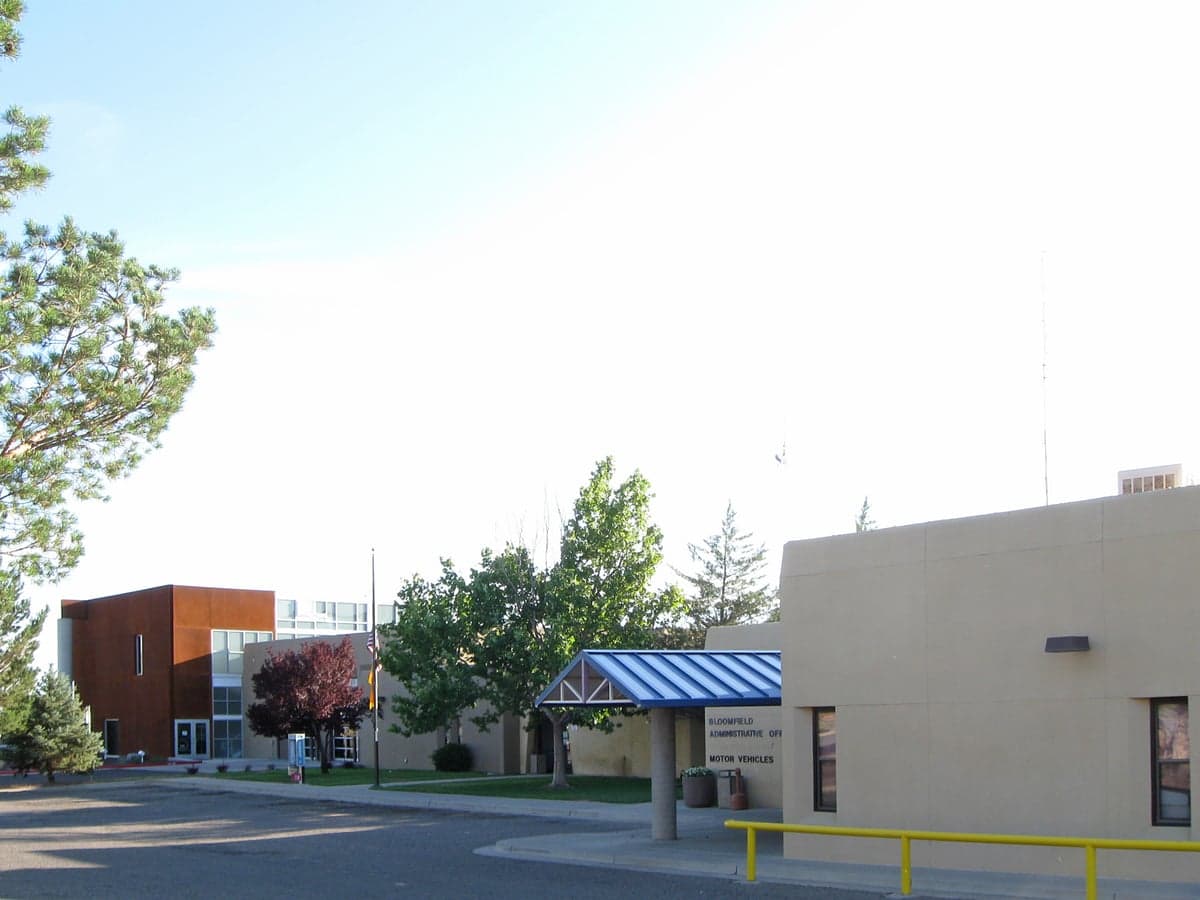
Photo: Wikipedia
Strategic Assessment of Bloomfield, NM
Workable tactical position. Some exposure to population density or targets, but generally defensible in a crisis.
What does the Strategic Assessment tell us?
Our Strategic Assessment grades tactical survivability of an area. Major population centers, military targets, fallout zones, natural disasters, and border exposure all drive risk — lower exposure means a more defensible position in a crisis.
This is heavily inspired by Joel Skousen's Strategic Relocation book. Highly recommended you checkout the book ($)What does this tell us?
Our Strategic Assessment grades tactical survivability of an area. Major population centers, military targets, fallout zones, natural disasters, and border exposure all drive risk — lower exposure means a more defensible position in a crisis.
This is heavily inspired by Joel Skousen's Strategic Relocation book. Highly recommended you checkout the book ($)Strategic Pillars

Key Distances
Regional Safe Places
Below is our recommended "safe zones" in New Mexico and the surrounding area based on our strategic heuristics. For most people, it's unrealistic to live in a “safe zone” full-time due to work, family or other personal reasons. They tend to be more rural. However, many of these areas are perfect for second homes and retreat properties that double as a vacation home or even a short-term rental.

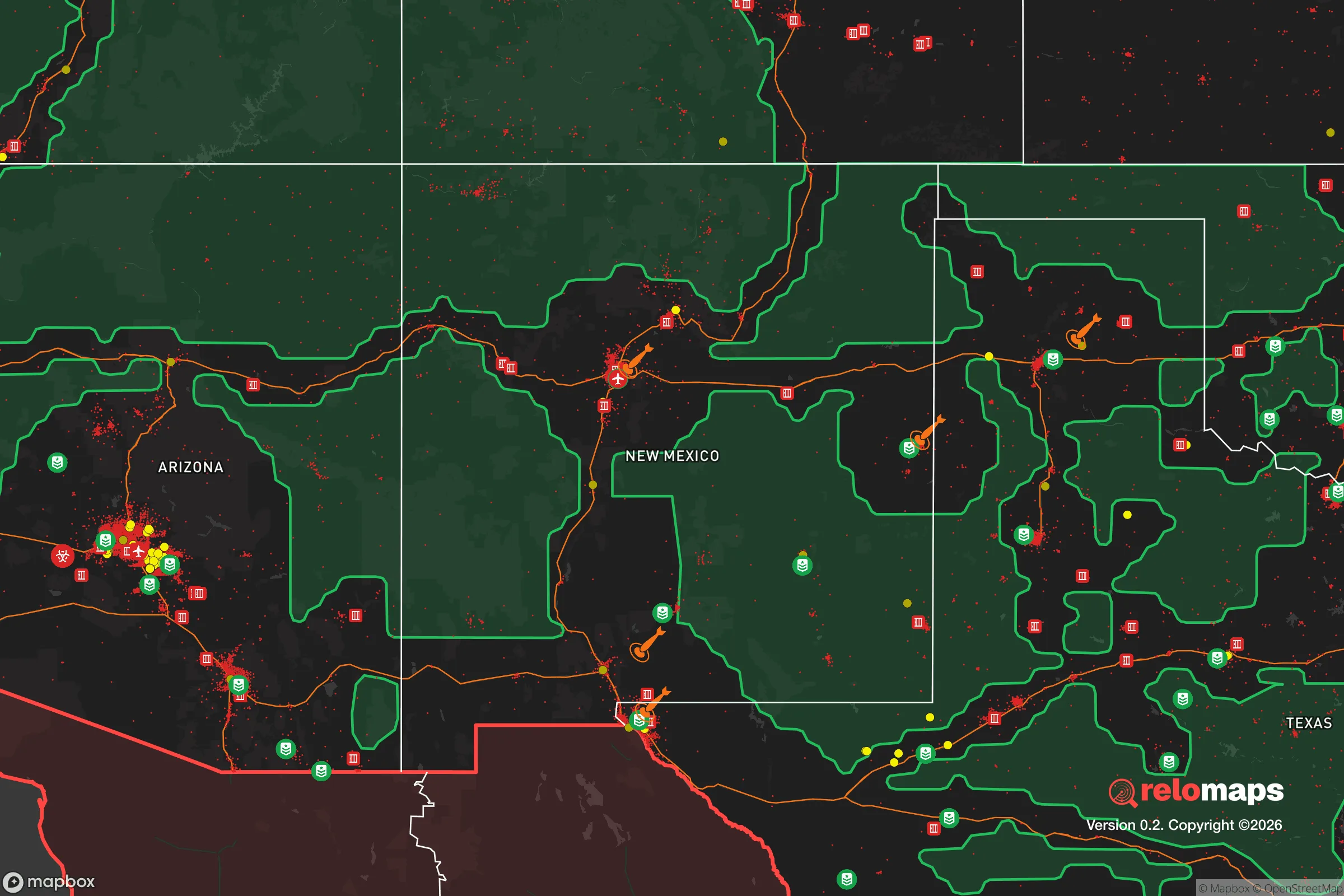


Important Note: For informational purposes only. This does not mean nothing bad ever happens in the green zones. Please use common sense. This is based on public data and modeled with AI. We tried to take a conservative approach but mistakes happen. We update this regularly as new information becomes available.
Solar Generator Recommendations
Backup power matters more here than in safer locations. We've picked three solar generators across budgets and capacity tiers — start with the budget unit if you only need a few essentials, or step up if you want to run a fridge and HVAC for days at a time.

Jackery Portable Power Station Explorer 300
Budget OptionPower on the Go: Weighing only 11 lbs, it's convenient to set up and store with book-sized foldable solar panels

BLUETTI Portable Power Station AC180
Designed for both indoor and outdoor scenarios, AC180 is highly capable as it has a robost capacity and continuous output power.

EF ECOFLOW DELTA Pro Ultra Power Station
Upgraded PickEcoFlow DELTA Pro Ultra is a whole-home energy system designed to grow with your family. Integrated with the Smart Home Panel 2, it scales to meet your evolving energy needs — keeping your home powered, intelligent, and secure through every stage of life.
We earn a commission, at no additional cost to you.
Strategic Assessment Analysis
Bloomfield, New Mexico, sits in a position that demands serious attention from anyone thinking about long-term strategic relocation. It’s not a flashy place, and that’s exactly the point. Located in the Four Corners region, this town of roughly 8,000 people offers a combination of geographic isolation, resource access, and low profile that makes it a viable option for those who want to be out of the way of major population centers and the chaos that tends to follow them. The resilience here isn’t theoretical—it’s built into the landscape, the local economy, and the community’s historical self-reliance. But no place is perfect, and understanding both the strengths and the liabilities is critical before making a move.
Geographic position and natural advantages for long-term security
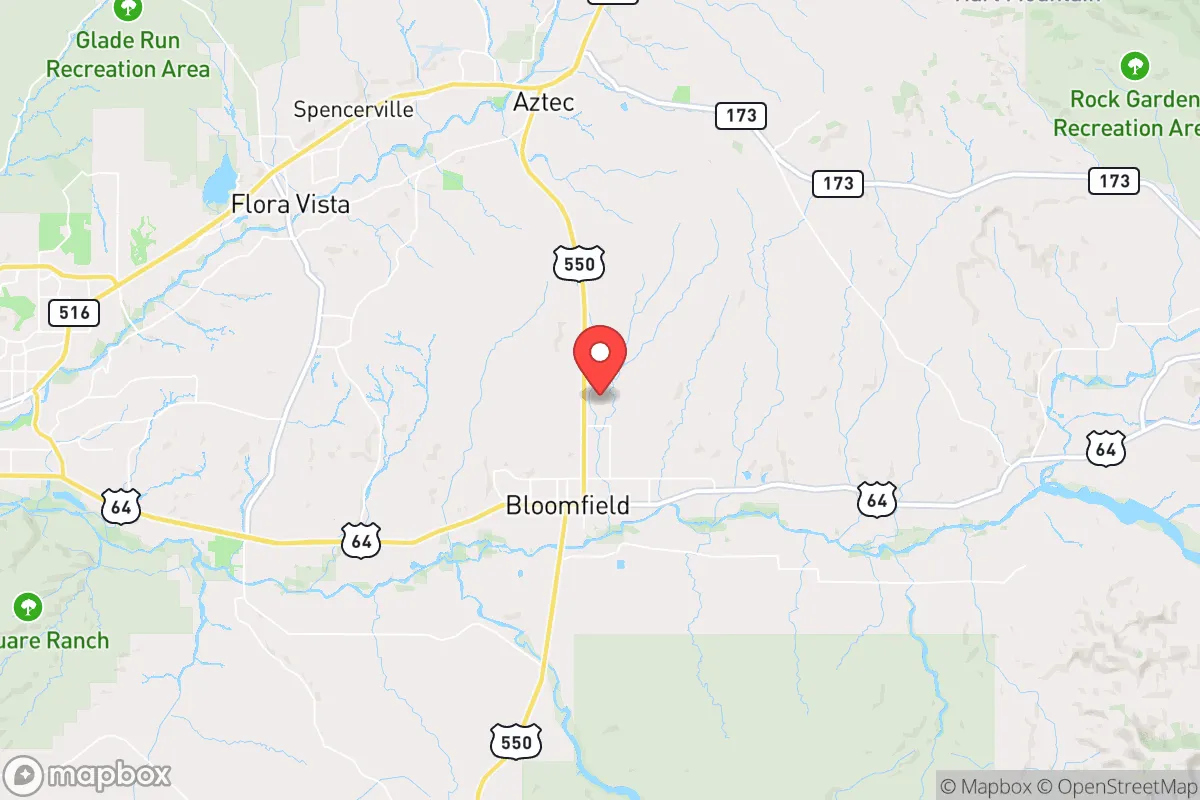
Bloomfield’s location is its primary strategic asset. It sits in the San Juan Basin, roughly 30 miles east of the Arizona border and 20 miles south of Colorado, placing it well away from any major metropolitan area. The nearest large city is Albuquerque, about 180 miles to the southeast—far enough that a cascading urban collapse or civil unrest in that city would have little direct impact on daily life here. The same goes for Denver, which is over 250 miles to the northeast. This distance from population centers is a major plus for anyone concerned with the stability of the country’s larger systems. The area is also surrounded by public lands, including the San Juan National Forest to the north and the Navajo Nation to the west and south, which creates a natural buffer zone. The terrain is high desert, with elevations around 5,500 feet, meaning summers are hot but dry, and winters bring snow that can be managed. The San Juan River runs right through town, providing a reliable surface water source—a critical factor for any long-term survival scenario. The local geology also includes the San Juan Basin’s natural gas and coal deposits, which have historically anchored the economy and could provide energy security in a grid-down situation.
Risks, exposures, and proximity to fallout-relevant landmarks
No strategic analysis is complete without a hard look at the downsides. Bloomfield’s biggest exposure is its proximity to the San Juan Generating Station, a coal-fired power plant about 15 miles northwest near Waterflow. While the plant has been partially decommissioned, the site still holds coal ash ponds and associated industrial infrastructure. In a major disaster scenario, any release of contaminants from that site could affect local water and air quality, though the prevailing winds generally blow from the southwest, pushing potential fallout away from Bloomfield itself. More concerning is the area’s proximity to the Los Alamos National Laboratory, roughly 150 miles to the east. While that’s a significant distance, Los Alamos is a high-value target in any major conflict or terrorist scenario, and the prevailing wind patterns could carry fallout across northern New Mexico depending on the season. The same logic applies to the Kirtland Air Force Base in Albuquerque. Bloomfield is far enough away that direct blast effects are not a concern, but secondary effects like refugee flows or supply chain disruptions could still reach the area. The town also sits in a seismically quiet zone, with no major fault lines nearby, and the risk of wildfires is moderate compared to other parts of the Southwest. Flooding along the San Juan River is a periodic concern, but the town’s flood control infrastructure has held up well in recent decades.
Practical resilience for a relocator: food, water, energy, and defensibility
For someone serious about self-sufficiency, Bloomfield offers a workable baseline. The San Juan River provides a year-round water source, and the local water table is accessible via wells in many areas outside the town limits. The growing season is short—about 120 to 150 days—but with proper planning, a family can produce a significant portion of its own vegetables, especially with hoop houses or cold frames. The local soil is alkaline and sandy, so amendments are necessary, but the area has a long history of small-scale agriculture. For protein, the surrounding public lands support mule deer, elk, and small game, and the river holds catfish and trout. The local economy is still tied to energy production, meaning there are people in the area who know how to work with generators, solar panels, and off-grid power systems. The town itself is compact and laid out in a grid, which makes it relatively easy to defend or secure a neighborhood if things go sideways. The population is small enough that most people know each other, and the local culture leans heavily toward self-reliance and mutual aid—traits that are hard to find in more suburban or urban settings. The nearest major hospital is in Farmington, about 10 miles west, which is close enough for routine care but far enough that a major event could strain that resource. For those with medical training or a stockpile of supplies, this is manageable.
The overall strategic picture for Bloomfield is one of cautious optimism for the prepared relocator. It offers genuine distance from the most likely flashpoints of civil unrest and mass casualty events, while still providing access to the resources needed for a sustainable, off-grid lifestyle. The risks are real but manageable—the proximity to energy infrastructure and research labs is a concern, but the distance and prevailing wind patterns mitigate much of the danger. For a conservative-leaning individual or family looking to step off the treadmill of urban vulnerability, Bloomfield represents a solid option that doesn’t require a complete retreat into the wilderness. It’s a place where you can still have a job, a community, and a life, while also having a plan for when the world outside those borders stops making sense. The key is to arrive prepared, with skills and supplies, and to integrate into the local network of people who already understand what it means to live in a place that doesn’t depend on the goodwill of distant systems. Bloomfield won’t save you from everything, but it gives you a fighting chance—and in the current climate, that’s more than most locations can offer.

* Values derived from national, state, county, city and local statistics and may differ in a specific area. Last updated: 2026-05-01T08:09:31.000Z
Narrative content on this page is AI-generated and may contain mistakes. Verify any details that matter before acting on them.
ReloMaps may earn a commission from affiliate links at no extra cost to you.

