Photo: Wikipedia
Political ClimatePolitical Climate in Bogalusa, LA
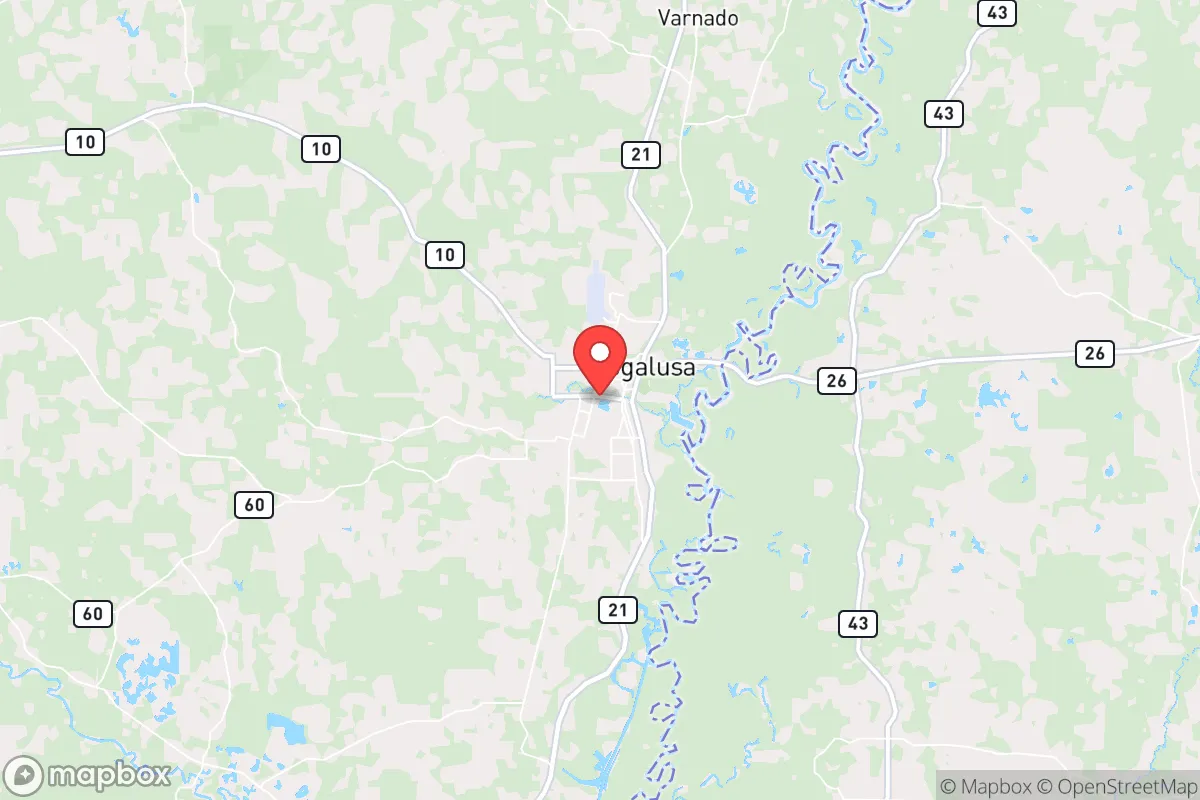
District shown is the primary district for this city’s centroid. Cities may span multiple districts.
Local Political AnalysisPolitical Analysis of Bogalusa, LA
Bogalusa leans heavily conservative, and it’s been that way for as long as anyone around here can remember. With a Cook Partisan Voting Index of R+18, this isn’t a purple area—it’s deep red, and the voting patterns reflect a community that values tradition, self-reliance, and a government that stays out of the way. You won’t find much appetite for progressive experiments here; folks tend to see those as a threat to the personal freedoms and local control that make life in a small Louisiana town worth living. The trajectory has held steady for decades, and if anything, the recent national shifts toward more centralized authority have only hardened local resolve to keep things conservative.
How it compares
Drive 45 minutes west to Baton Rouge, and you’ll hit a much more mixed political landscape—the state capital has pockets of progressive activism and a younger, more transient population that votes differently. Head south toward New Orleans, and the contrast is even starker: Orleans Parish routinely votes 70-80% Democratic, a world away from Bogalusa’s Republican stronghold. Even nearby Covington and Mandeville, while still conservative, show a softer edge—more suburban moderates who might compromise on certain issues. Bogalusa, by contrast, is the kind of place where the local paper’s letters to the editor still run hot against tax hikes and federal mandates. The surrounding Washington Parish votes similarly, but Bogalusa itself has a blue-collar, timber-town backbone that resists the gentler suburban conservatism you see closer to the lake.
What this means for residents
For the people who live here, the political climate translates into a daily life with fewer government intrusions. You don’t see the same overreach in local ordinances that you might in more progressive cities—no heavy-handed zoning battles, no aggressive mask mandates that linger past their usefulness, and a general expectation that the sheriff and city council will side with individual rights over bureaucratic convenience. Property taxes stay low, and the Second Amendment isn’t a debate; it’s a given. The downside is that this independence can mean less state funding for infrastructure, but most residents would trade a smoother road for the freedom to run their own lives without a bureaucrat’s permission. The real concern now is watching how national trends—like federal education policies or environmental regulations that target timber and paper mills—could trickle down and chip away at that local autonomy.
Culturally, Bogalusa still carries that old-school Louisiana feel: church on Sunday, hunting camps on weekends, and a deep skepticism of anyone who thinks they know better from a desk in Washington. There’s a quiet pride in being off the beaten path, and the policy distinctions reflect that—local leaders prioritize public safety and low regulation over social experiments. The biggest shift I’ve seen in my years here is the growing unease about how far the federal government might push into local schools and land use. If that keeps up, you’ll see even more folks digging in their heels. For now, though, Bogalusa remains a place where a conservative worldview isn’t just the default—it’s the foundation.

State Political ClimatePolitical Climate in Louisiana
State Political AnalysisPolitical Environment in the State
Louisiana has long been a reliably conservative state in federal elections, voting for the Republican presidential candidate in every cycle since 2000, but its political climate is far more complex than a simple red-state label suggests. The state’s dominant coalition is a mix of culturally conservative Cajun and Protestant voters, combined with a growing suburban and exurban base, though the Democratic Party still holds significant power at the local level, particularly in New Orleans and Baton Rouge. Over the past 20 years, the state has shifted from a competitive purple state to a solidly red one, driven by the realignment of white working-class voters and the rapid growth of the Northshore suburbs north of Lake Pontchartrain.
Urban vs. rural divide
The political map of Louisiana is a textbook example of the urban-rural split. New Orleans and its inner suburbs remain the state’s most reliably Democratic stronghold, with Orleans Parish consistently delivering 75-80% of its vote to Democratic candidates. Baton Rouge is a battleground within itself: East Baton Rouge Parish has trended blue in recent cycles, but the surrounding suburban parishes like Livingston and Ascension are among the most conservative in the nation. The Acadiana region, centered on Lafayette, is culturally conservative but has pockets of Democratic strength in the African American communities of Opelousas and New Iberia. The Florida Parishes—St. Tammany, Tangipahoa, and Washington—are the state’s fastest-growing and most reliably Republican areas, with St. Tammany Parish often voting 70%+ Republican. The rural Delta parishes along the Mississippi River, like Tensas and Madison, are heavily African American and vote overwhelmingly Democratic, but their populations are shrinking. The real story is the Northshore, where families fleeing New Orleans and Baton Rouge have created a booming conservative suburbia that now drives statewide elections.
Policy environment
Louisiana’s policy environment is a mixed bag for conservatives. On the plus side, the state has no personal property tax, and its homestead exemption is generous, protecting the first $75,000 of a home’s value from parish property taxes. The state income tax is a flat 3% for most earners, and the corporate tax rate was cut from 8% to 7.5% in 2021. However, the state’s sales tax is among the highest in the nation, averaging over 9.5% when local taxes are included, which hits low-income families hardest. Education policy is a bright spot: Louisiana has a robust school choice program, including the Louisiana Scholarship Program and a thriving charter school sector in New Orleans, which has become a national model for school reform. On the downside, the state’s healthcare system is heavily reliant on Medicaid expansion, which was accepted under Governor John Bel Edwards, a Democrat, and now covers over 500,000 residents. Election laws are moderately conservative: voter ID is required, but early voting is available for 7 days, and no-excuse absentee voting was expanded during COVID and remains in place. The state has a closed primary system, which tends to favor more partisan candidates.
Trajectory & freedom
Louisiana has been on a trajectory toward greater personal freedom in several key areas, but the progress is uneven. In 2021, the state passed a constitutional carry law (Act 123), allowing any law-abiding adult to carry a concealed firearm without a permit, a major win for Second Amendment advocates. The same year, the legislature passed a near-total abortion ban (Act 6) that took effect immediately after the Dobbs decision in 2022, with no exceptions for rape or incest. Parental rights were strengthened in 2023 with the passage of the Parents’ Bill of Rights (Act 432), which requires schools to notify parents of any changes to a student’s mental, emotional, or physical health. However, the state’s tax burden remains a concern: the sales tax is regressive, and the state’s gasoline tax is among the highest in the South. Property rights are generally strong, with no statewide zoning in most rural parishes, but coastal erosion and flood insurance mandates have created a de facto regulatory burden in south Louisiana. Medical freedom took a hit during COVID, when Governor Edwards imposed mask and vaccine mandates that were later struck down by the courts, but the legislature has since passed laws limiting the governor’s emergency powers (Act 5 of 2021).
Civil unrest & political movements
Louisiana has a history of political flashpoints that new residents should be aware of. The most visible recent unrest was the 2016 Baton Rouge protests following the shooting of Alton Sterling, which led to the killing of three police officers by a gunman from out of state. The Black Lives Matter movement has a strong presence in New Orleans and Baton Rouge, but it has not translated into sustained political power outside of those cities. Immigration politics are relatively muted compared to border states, but the influx of Central American migrants through the I-10 corridor has sparked local tensions in towns like Kenner and Gretna. There is no sanctuary city policy in Louisiana; in fact, the state passed a law in 2024 (Act 318) requiring local law enforcement to cooperate with federal immigration authorities. Election integrity has been a hot topic since 2020, with the state’s Republican Secretary of State, Kyle Ardoin, implementing stricter voter roll maintenance and signature verification. Secessionist rhetoric is rare, but there is a strong strain of Cajun cultural nationalism in Acadiana that manifests in opposition to coastal restoration projects and federal land management. The most visible political movement is the rise of the Louisiana Republican Party’s grassroots wing, which has pushed for term limits and fiscal restraint, often clashing with the more establishment GOP leadership in Baton Rouge.
Projection
Over the next 5-10 years, Louisiana is likely to become more conservative, but not necessarily more libertarian. The demographic trends favor the GOP: the Northshore and the Baton Rouge suburbs are growing rapidly, while the Democratic-leaning rural Delta parishes continue to lose population. The state’s Hispanic population is growing, particularly in the New Orleans metro area, but it is not yet large enough to shift the political balance. The biggest wildcard is the ongoing coastal erosion crisis, which could force the relocation of entire communities in south Louisiana, potentially reshaping the political map. Expect continued fights over education reform, with the school choice movement likely to expand, and over tax reform, with pressure to reduce the sales tax in favor of a broader income tax base. The state’s political culture is deeply personal and relationship-driven, so newcomers should expect to engage with local politics through civic organizations and church networks rather than through partisan activism. The bottom line for a conservative moving to Louisiana: you will find a state that broadly shares your values on guns, abortion, and parental rights, but you will also encounter a high sales tax, a complex insurance market, and a political system that rewards connections over ideology. If you can navigate those realities, Louisiana offers a level of cultural freedom and community that is increasingly rare in the modern United States.
* Values derived from national, state, county, city and local statistics and may differ in a specific area. Last updated: 2026-05-01T13:51:23.000Z
Narrative content on this page is AI-generated and may contain mistakes. Verify any details that matter before acting on them.
ReloMaps may earn a commission from affiliate links at no extra cost to you.

