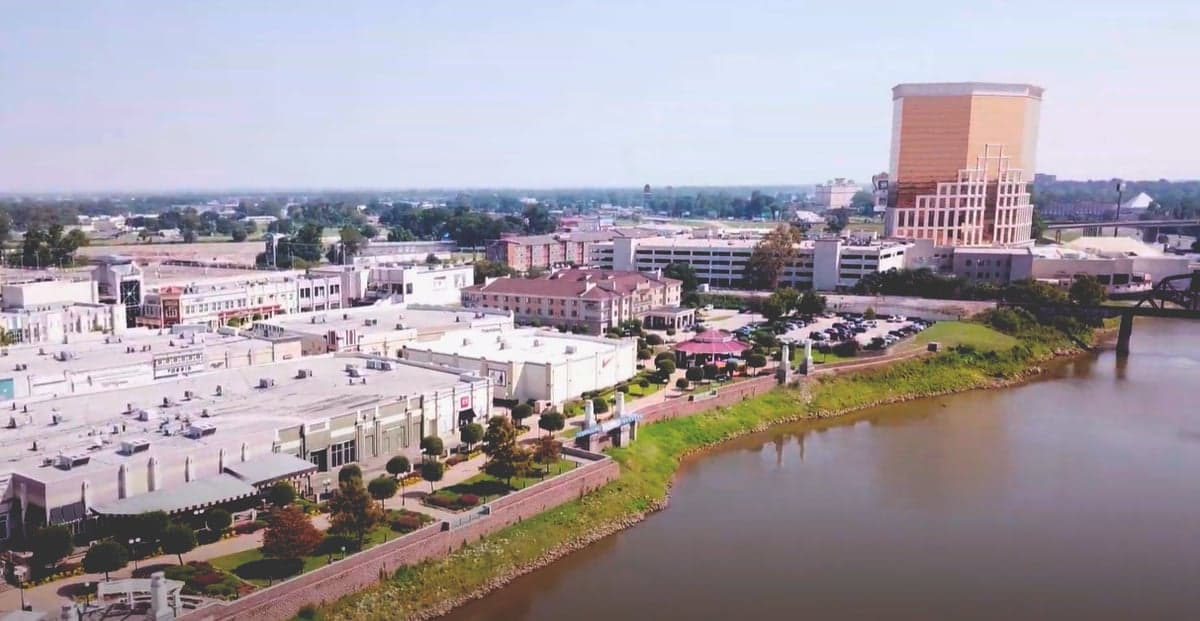
Photo: Wikipedia
Political ClimatePolitical Climate in Bossier City, LA
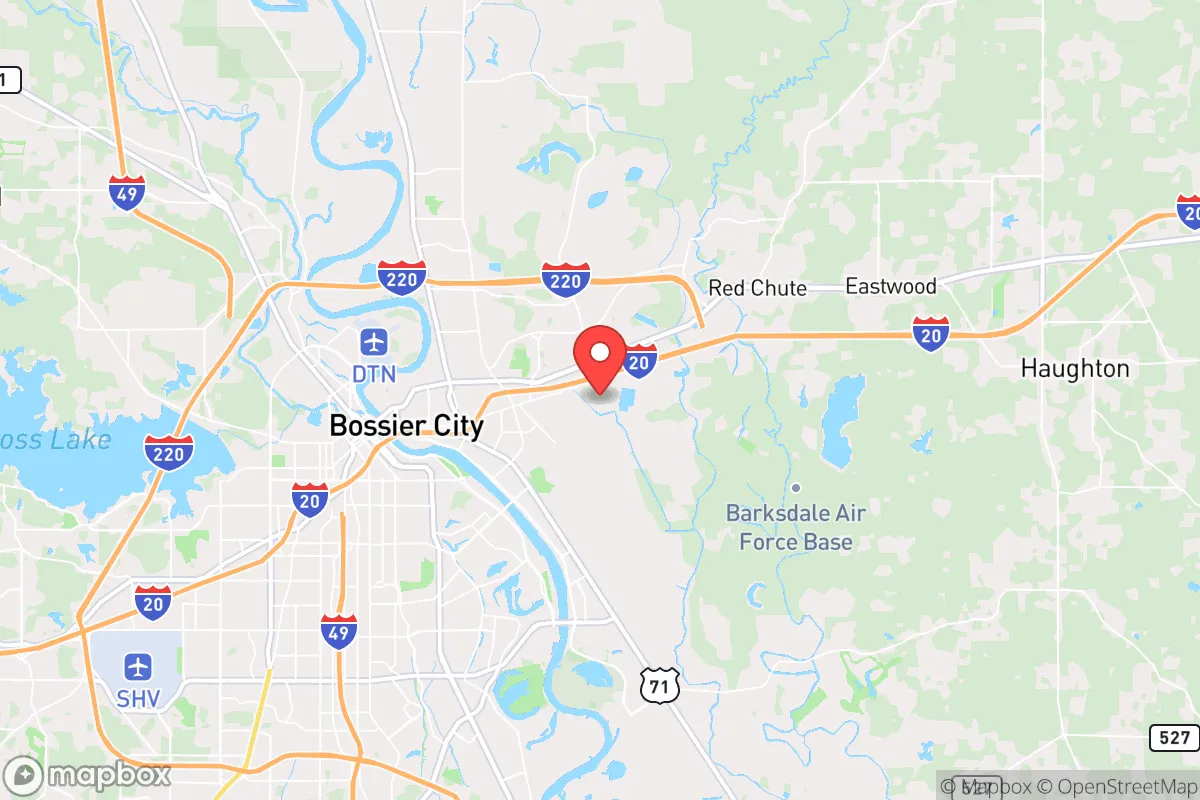
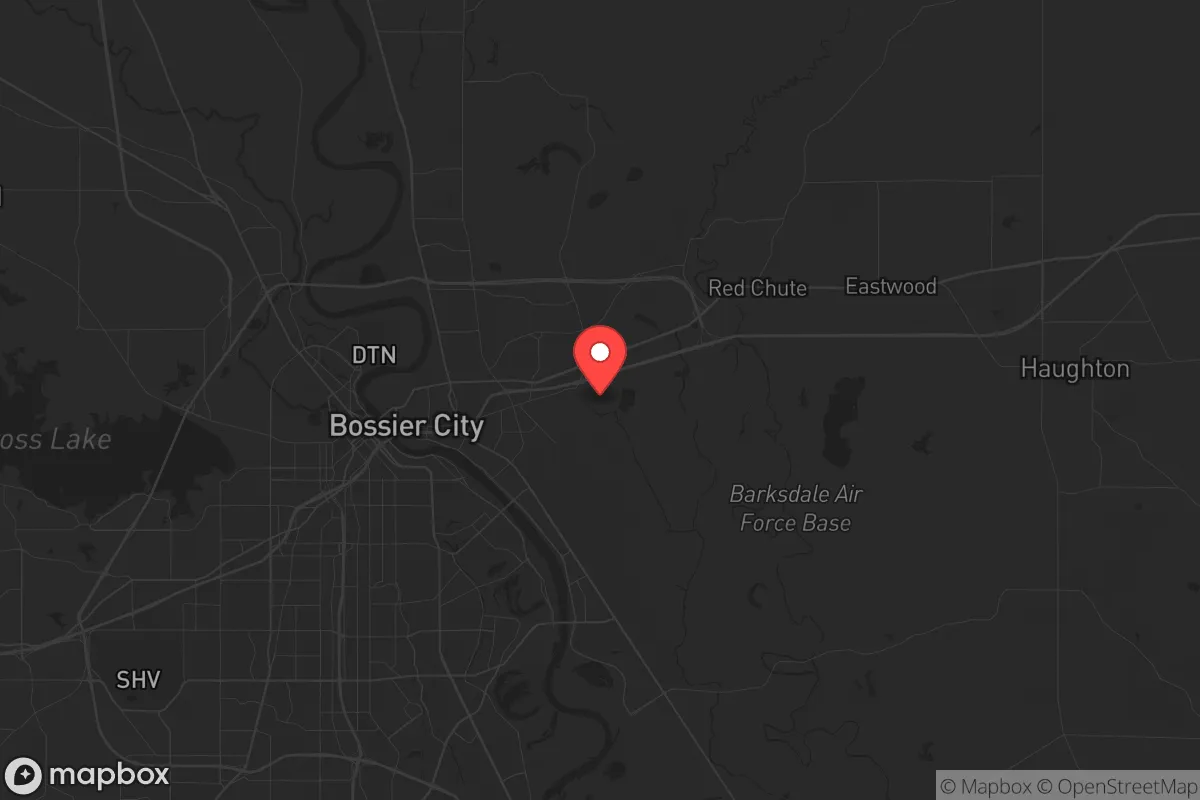
District shown is the primary district for this city’s centroid. Cities may span multiple districts.
Local Political AnalysisPolitical Analysis of Bossier City, LA
Bossier City leans heavily conservative, and that’s not just a talking point—it’s baked into the numbers. The Cook Partisan Voting Index (PVI) for the area sits at R+26, meaning the district votes about 26 points more Republican than the national average. That’s not a fluke; it’s been the reality for as long as most folks around here can remember. The city itself, along with the broader Bossier Parish, has consistently backed Republican candidates in presidential, state, and local races, and there’s no sign of that shifting anytime soon. If you’re looking for a place where traditional values and limited government are still the norm, this is it.
How it compares
Drive 15 minutes south across the Red River into Shreveport, and you’ll feel the political climate shift like stepping into a different state. Shreveport leans Democratic, with a Cook PVI of D+8, and its city council and mayor have pushed progressive policies on everything from zoning to public spending. That contrast is stark—Bossier City’s leadership has historically resisted the kind of government overreach you see in Shreveport, like heavy-handed business regulations or tax hikes for social programs. Further out, towns like Minden (Webster Parish) and Ruston (Lincoln Parish) are also conservative, but they don’t have the same military and aerospace influence that keeps Bossier City’s politics grounded. The presence of Barksdale Air Force Base here means a steady influx of veterans and active-duty families who tend to vote with a strong sense of personal responsibility and skepticism of big government.
What this means for residents
For the people living here, the conservative lean translates into a few concrete realities. First, property taxes and sales taxes are relatively low compared to neighboring Shreveport, and the city government has historically been hesitant to impose new fees or mandates on homeowners or small businesses. Second, you’re not going to see the kind of progressive social experiments that pop up in larger cities—no defund-the-police movements, no radical school board policies, and no push for sanctuary city status. The local school system, Bossier Parish Schools, has kept its focus on core academics and discipline, avoiding the ideological battles over curriculum that have hit other districts. That said, there’s been a quiet concern among longtime residents about creeping federal overreach, especially with environmental regulations tied to the Red River and the nearby Haynesville Shale natural gas fields. The worry is that outside pressure could eventually force local leaders to adopt policies that hurt the energy sector, which is a major employer here.
One cultural distinction that stands out is the strong sense of community self-reliance. People here don’t look to the government to solve their problems—they handle things through churches, civic clubs, and neighbor-to-neighbor help. The annual Bossier City Christmas parade and the Mudbug Madness festival are more than just events; they’re reminders that local traditions matter more than national trends. Looking ahead, the biggest threat to this way of life isn’t from within—it’s from the slow creep of progressive ideology through state and federal mandates. If you value personal freedoms, low taxes, and a government that stays out of your business, Bossier City is still a stronghold. But keep an eye on the next few election cycles—if the national Democratic machine starts pouring money into Louisiana, even a R+26 district could feel the pressure. For now, though, it’s one of the few places left where common sense still rules the day.

State Political ClimatePolitical Climate in Louisiana
State Political AnalysisPolitical Environment in the State
Louisiana has long been a reliably red state in federal elections, but its political climate is far more complex than a simple partisan label suggests. The state has voted for the Republican presidential candidate in every election since 2000, with Donald Trump winning by nearly 20 points in 2020 and again in 2024. However, down-ballot races often tell a different story, with Democrats still holding significant local offices, particularly in the state’s major urban centers. Over the past two decades, the shift has been unmistakable: the rural and suburban areas have moved decisively rightward, while New Orleans and Baton Rouge have become increasingly blue, creating a sharp urban-rural divide that defines Louisiana politics today.
Urban vs. rural divide
The political map of Louisiana is a study in contrasts. The state’s two largest metros, New Orleans and Baton Rouge, are Democratic strongholds. Orleans Parish consistently delivers 70-80% of its vote to Democratic candidates, while East Baton Rouge Parish, though more moderate, still leans blue thanks to its large university population and state government workforce. Meanwhile, the state’s third-largest city, Shreveport, in Caddo Parish, is also reliably Democratic. But drive 20 minutes outside any of these cities, and the landscape flips dramatically. The Florida Parishes north of Lake Pontchartrain—places like Livingston Parish, St. Tammany Parish, and Tangipahoa Parish—are among the most conservative in the nation. Livingston Parish, for example, gave Trump over 80% of the vote in 2024. The Acadiana region, centered around Lafayette, is culturally conservative and reliably red, though Lafayette itself has a growing moderate streak. The rural northern parishes, from Bossier to Ouachita, are deeply Republican, while the Mississippi River parishes south of Baton Rouge, like St. James and St. John the Baptist, have seen a slow but steady shift toward the GOP as the white working class has realigned. The key takeaway: if you want deep-red politics, look to the suburbs and small towns; if you want a blue enclave, stick to the urban cores.
Policy environment
Louisiana’s policy environment is a mixed bag that reflects its unique blend of conservative populism and old-school Democratic influence. The state has no personal income tax on Social Security benefits and a flat income tax rate of 3% for individuals, which was reduced from 4.25% in 2024 as part of a broader tax reform package. Sales taxes are high, often exceeding 10% in some parishes when local taxes are added, which hits lower-income families harder. The regulatory posture is generally business-friendly, especially in the energy sector, but the state’s legal climate is notoriously plaintiff-friendly, which has been a drag on economic growth. On education, Louisiana has a robust school choice program, including the Louisiana Scholarship Program and a thriving charter school sector, particularly in New Orleans, which has one of the highest rates of charter school enrollment in the nation. However, the state’s public school system ranks near the bottom nationally in outcomes. Healthcare is a flashpoint: Louisiana expanded Medicaid under the Affordable Care Act in 2016, a decision that remains controversial among conservatives, though it has provided coverage to hundreds of thousands of residents. Election laws are relatively secure—voter ID is required, and the state has no widespread mail-in voting system, though early voting is available. Overall, the policy environment leans conservative on fiscal and social issues, but the legacy of Democratic control still lingers in areas like tort law and Medicaid expansion.
Trajectory & freedom
Over the past five years, Louisiana has moved decisively toward expanding personal freedoms in several key areas, though the pace has been uneven. In 2024, the state passed a landmark constitutional carry law, allowing law-abiding citizens to carry a concealed firearm without a permit—a major win for gun rights advocates. The same year, the legislature passed a near-total abortion ban, with no exceptions for rape or incest, reflecting the state’s strong pro-life stance. On parental rights, Louisiana enacted the “Parents’ Bill of Rights” in 2023, which requires schools to notify parents of any changes to a student’s mental or physical health and prohibits classroom instruction on sexual orientation or gender identity in grades K-12. This law has been a flashpoint, with the ACLU filing lawsuits, but it remains in effect. On the economic freedom front, the state passed a right-to-work law decades ago, and union membership remains low. However, property taxes are relatively low, and there is no state-level property tax on vehicles. The biggest concern for freedom-minded residents is the state’s high incarceration rate and the lingering influence of the old political establishment, which has historically resisted criminal justice reform. Recent efforts to reduce mandatory minimum sentences have been modest. Overall, the trajectory is positive for conservatives: the state is becoming more aligned with traditional values and individual liberty, but the pace is slower than in states like Texas or Florida.
Civil unrest & political movements
Louisiana has a history of political volatility, but the past few years have been relatively quiet compared to the national scene. The most visible flashpoint has been the debate over Confederate monuments, particularly in New Orleans, where the removal of several statues in 2017 sparked both protests and counter-protests. The issue has largely subsided, but it remains a cultural touchstone. Immigration politics are less heated here than in border states, but the influx of migrants into New Orleans and Baton Rouge has led to localized tensions, particularly over housing and public services. There is no sanctuary city policy in Louisiana; in fact, the state passed a law in 2024 requiring local law enforcement to cooperate with federal immigration authorities. Election integrity has been a topic of concern among conservatives, but Louisiana’s system is generally seen as secure, with no major controversies in recent cycles. The most organized political movements are on the right, with groups like the Louisiana Family Forum and the Republican Party of Louisiana driving the agenda on social issues. On the left, the Louisiana Progress Action network and local chapters of the NAACP remain active, but their influence is largely confined to New Orleans and Baton Rouge. Secession rhetoric is virtually nonexistent; Louisianans are generally proud of their state but not inclined toward radical separatism.
Projection
Looking ahead five to ten years, Louisiana is likely to become more conservative, not less. The demographic trends favor the GOP: the white population, which votes heavily Republican, is aging but still dominant in rural and suburban areas, while the Black population, which votes overwhelmingly Democratic, is concentrated in shrinking urban cores. In-migration is modest, but the people moving in tend to be retirees and remote workers from blue states seeking lower taxes and a slower pace of life—a demographic that leans conservative. The state’s economy, heavily dependent on oil and gas, will continue to shape its politics, with any shift toward green energy likely to be resisted. The biggest wild card is the state’s education system: if school choice continues to expand, it could attract more families from outside the state, but if public schools continue to decline, it could drive out the middle class. Expect the legislature to continue pushing on social issues—more restrictions on abortion, more parental rights, and possibly a push to eliminate the state income tax entirely. The urban-rural divide will likely widen, with New Orleans and Baton Rouge becoming more isolated as blue islands in a red sea. For a conservative moving in now, the state will feel increasingly familiar over the next decade.
For a new resident, the bottom line is this: Louisiana offers a deeply conservative environment outside of its major cities, with low taxes, strong gun rights, and a culture that values family and tradition. The trade-offs are real—poor public schools, high crime in some urban areas, and a legal system that can be unpredictable. But if you’re looking for a place where your values are reflected in state law and where the pace of change is slow enough to feel stable, Louisiana is a solid bet. Just know that the politics are as spicy as the gumbo—and you’ll want to pick your parish carefully.
* Values derived from national, state, county, city and local statistics and may differ in a specific area. Last updated: 2026-04-23T05:00:50.000Z
Narrative content on this page is AI-generated and may contain mistakes. Verify any details that matter before acting on them.
ReloMaps may earn a commission from affiliate links at no extra cost to you.

